

|
wallis
Wallis
| Color: | |
|---|---|
| Thickness: | |
| Application: | |
| Quantity: | |
Custom Compostable PLA Cold Food Meal Boxes
Wallis custom compostable PLA cold food meal boxes are designed for salads, fruit, bakery products, deli foods, chilled meals and other temperature-controlled takeaway applications. Clear, white or custom-colored containers can be developed for foodservice distributors, supermarkets, restaurants, meal-prep brands, caterers and private-label packaging companies.
Standard transparent PLA is primarily a cold-food packaging material. It should not be positioned as a universal hot-meal, microwave or oven container. Buyers should confirm the maximum filling temperature, food type, storage period, lid design, freezer requirement, compostability certification and destination-market food-contact regulations before approving a production specification.
Wallis can review hinged clamshells, two-piece containers with lids, rectangular deli boxes, round bowls, trays and customized thermoformed formats. Capacity, dimensions, wall distribution, transparency, anti-fog requirements, stacking, carton quantity and private-label packaging can be tailored according to tooling and order volume.
| Product Type | PLA cold food containers, deli boxes, salad boxes and hinged clamshell formats; compostability claims require grade- and SKU-specific evidence |
| Material | Food-contact PLA or project-specific certified compostable thermoforming grade |
| Typical Capacity Range | Approximately 8–48oz or customized metric capacities, subject to container geometry and tooling |
| Primary Use | Cold and chilled food, including salads, fruit, bakery, deli products and prepared cold meals |
| Customization | Size, shape, capacity, compartments, color, embossing, lid, label and carton packing |
| B2B Support | Samples, food testing, lid-fit trials, tooling review, certification matching, QC planning and export supply |
Request PLA Meal Box Samples and Quote
PLA, or polylactic acid, is a bio-based polyester commonly made from plant-derived sugars. In an amorphous transparent form, it can be thermoformed into clear food containers, lids, bowls and clamshells that provide visibility similar to conventional clear plastic packaging.
Transparent PLA allows customers and staff to see salads, fruit, desserts, bakery items and chilled prepared foods. Optical quality should be approved for haze, gloss, tint, black spots, gels, scratches, forming lines and condensation behavior.
A well-designed PLA container balances low material weight with adequate flange strength, lid retention, stacking stability and crack resistance. Finished performance depends on sheet gauge, draw ratio, corner radius, rib design and wall-thickness distribution after forming.
Standard clear PLA has limited heat resistance. It is generally selected for refrigerated, chilled or carefully controlled room-temperature food rather than freshly cooked meals, boiling liquids, microwave reheating or oven use.
Cold Food Container Options
Clear Deli and Lunch Box Formats
| Container Format | Typical Application | Key Validation Point |
|---|---|---|
| Hinged Clamshell | Bakery, fruit, salads, sandwiches and grab-and-go food | Hinge fatigue, tab closure, stacking and lid alignment |
| Rectangular Deli Container | Cold pasta, deli salads, cut fruit and prepared chilled meals | Lid retention, corner strength, leak behavior and nesting |
| Round Bowl with Lid | Salads, yogurt, desserts, fruit and cold grain bowls | Rim fit, lid rotation, stacking and spoon clearance |
| Two-Piece Tray and Lid | Retail display, meal-prep programs and supermarket packing | Base/lid material compatibility, sealing, transport and merchandising |
| Compartment Meal Box | Cold bento meals, snack combinations and portion-controlled packs | Compartment volume, divider strength and cross-leakage |
| Custom Thermoformed Tray | Brand-specific food, bakery or retail packaging | Tooling, draw depth, wall distribution and packing-line compatibility |
Thermoformed food containers should be specified by more than starting sheet thickness. Wall thickness can vary across corners, sidewalls, flanges and the base after forming. Confirm the container drawing, finished unit weight, critical wall profile, usable volume, lid fit and stacking performance for each approved design.
| Parameter | Specification and Buying Note |
|---|---|
| Material | Transparent or colored PLA thermoforming grade with food-contact and compostability requirements defined by market |
| Capacity | Market reference formats include 8, 12, 16, 24, 32 and 48 fl oz. Confirm available Wallis molds and usable filling volume for each SKU |
| Dimensions | Custom length × width × height, rim profile, compartment dimensions and internal usable volume |
| Color and Clarity | Clear, natural, white or custom color subject to resin, pigment, MOQ and certification scope |
| Lid Style | Integrated hinged lid, separate snap-on lid, flat lid, raised lid or custom display lid |
| Functional Options | Vent holes, anti-fog grade, tamper-evident feature, label area and stacking ribs subject to validation |
| Branding | Embossed logo, material code, disposal message, paper label, sleeve or printed carton |
| MOQ | Depends on existing tooling, dimensions, material, color, lid, certification, packing and annual forecast |
Custom Sizes and Shapes
Matched Container and Lid Systems
A lid that looks compatible may still open during delivery, crack at the flange or leak around the rim. The base and lid should be approved as a matched system using the actual food, fill weight, storage temperature and transport method.
| Closure Feature | Required Test |
|---|---|
| Snap-On Rim | Installation force, full engagement, removal force and pop-off resistance |
| Hinged Tab Closure | Tab alignment, repeated opening, hinge cracking and accidental release |
| Liquid-Rich Food | Tilt, shake, inversion and delivery tests; do not claim leakproof without evidence |
| Tamper-Evident Feature | Visible evidence after opening, label placement and production consistency |
| Stacked Delivery | Compression, lid deformation, sliding, condensation and transport vibration |
Standard clear PLA containers are primarily developed for cold and chilled foods. Their temperature limits depend on PLA grade, wall thickness, geometry and exposure duration; no universal maximum temperature should be assumed. Validate the finished container through the intended filling, storage, display and distribution temperatures.
| Condition | Recommended Position |
|---|---|
| Refrigerated Food | Primary application; test clarity, lid fit, condensation and stacking over the target shelf life |
| Room-Temperature Cold Food | Generally suitable within the approved grade and exposure duration |
| Warm Filling | Requires deformation, lid-fit and migration testing at the actual food temperature |
| Hot Meals and Soups | Standard clear PLA is not recommended; evaluate bagasse, CPLA, PP or another validated heat-resistant structure |
| Microwave | Not recommended unless the exact finished product is specifically tested and labeled for microwave use |
| Freezer | Possible for suitable designs, but low-temperature brittleness and freeze-thaw cycling must be tested |
| Oven or Grill | Not suitable for standard PLA meal boxes |
| Material / Format | Best Use | Main Limitation |
|---|---|---|
| Clear PLA | Salads, fruit, bakery, chilled deli food and clear retail presentation | Heat sensitivity and limited microwave suitability |
| CPLA | Selected higher-temperature components and opaque applications | Usually opaque; exact heat and compostability performance is grade-specific |
| Bagasse / Molded Fiber | Hot meals, takeaway boxes and selected microwave applications after validation | Opaque, moisture/grease performance and PFAS requirements require review |
| PP | Hot-fill and microwave-ready food containers where permitted | Not compostable; recycling depends on local collection and cleanliness |
| Food Application | Recommended Review |
|---|---|
| Salads and Fresh Produce | Respiration, condensation, anti-fog, ventilation, refrigeration and produce damage |
| Fruit and Desserts | Juice leakage, acidic contact, clarity, odor transfer and lid security |
| Bakery Products | Crumb puncture, grease, moisture retention, crush protection and display height |
| Deli and Prepared Cold Meals | Oil, acidity, sauce leakage, fill temperature, transport and storage duration |
| Dairy and Yogurt | Cold-chain control, odor, migration, lid seal and spoon use |
PLA containers do not automatically provide a long oxygen or moisture barrier for every food. The complete package should be tested through the intended shelf life, particularly for aroma-sensitive, high-moisture, fatty or acidic products.
A statement that PLA is “non-toxic” is not a complete food-contact assessment. The finished container—including resin, colorant, additives, anti-fog agent, ink, label and adhesive—must be suitable for the intended food type, temperature, contact time and destination market.
Identify the destination country and applicable food-contact framework.
Define aqueous, acidic, alcoholic, dairy, dry, oily or fatty food contact.
Specify maximum filling temperature, storage temperature and contact duration.
Include pigments, processing aids, anti-fog additives, printing and labels in the review.
Request overall and specific migration documentation where required.
Confirm odor and taste neutrality using the customer's actual food where necessary.
| Claim | Correct B2B Interpretation |
|---|---|
| Industrial Compostable | Designed for controlled municipal or commercial aerobic composting under an applicable standard such as ASTM D6400 or EN 13432 |
| Home Compostable | Requires separate certification for lower-temperature home-compost conditions |
| Biodegradable | Incomplete unless environment, test method and time are stated |
| Recyclable | PLA is a separate polymer and may not be accepted in PET or mixed-plastics recycling streams |
| Landfill or Natural Environment | Not automatically covered by compostability certification; do not claim rapid breakdown without specific testing |
Certification of the raw PLA resin does not automatically certify every finished meal box. Thickness, pigments, anti-fog additives, labels, lids and production site may affect the certificate scope. Local composting facilities may also reject rigid PLA packaging even when certified.
A quoted capacity such as 16 fl oz or 24 fl oz does not fully identify a food box. Confirm whether the figure is nominal brimful volume or recommended usable fill, then review the actual food portion, lid headspace, dimensions and closure. The selection process is especially important for prepared salads, desserts and meals with sauces.
| Buyer Requirement | What to Specify | Sample Approval Check |
|---|---|---|
| Food Portion and Fill Level | Target portion weight or volume, maximum fill height and headspace | Fill with actual food; verify closing clearance and presentation |
| Outer Geometry | Overall length, width, height, rim shape and compartment layout | Compare measured parts with signed drawings and shelf space |
| Lid Type and Seal | Hinged tab or separate snap-on lid; matching resin and locking profile | Check closure engagement, opening force and delivery leakage |
| Display Conditions | Refrigerator temperature, condensation, stacking and expected display time | Review haze, fogging, warpage and lid fit over a full storage cycle |
| Bulk Packing | Nesting height, per-sleeve count, cartons per pallet and shipping route | Check denesting, compression and carton volume during handling |
Buying tip: Request a filled sample pack, not just an empty container. For cold meals with dressings, tilt and transport trials are more meaningful than a generic “leakproof” description.
Most complaints about disposable cold food containers come from a mismatch between the material, the molding process and actual use conditions. Use production samples and a documented test method before changing a design or making performance claims.
| Problem | Possible Cause | Recommended Corrective Action |
|---|---|---|
| Box or lid warps | High filling temperature, hot storage or unsuitable PLA grade | Validate cold-fill conditions, revise storage instructions and test grade-specific heat resistance |
| Cracks at corners or hinges | Excessive drawing, thin corners, sharp radii or brittle material | Optimize mold radius and wall distribution; conduct drop and hinge-cycle tests |
| Lid pops open | Mismatched base and lid, uneven flange or inadequate snap geometry | Approve matched-tool parts, measure rim dimensions and repeat closure tests |
| Sauce leaks during delivery | Incomplete lid engagement, flexible rim or an unsealed drainage path | Test filled packs by tilting, vibration and transport; consider a separate sealing solution |
| Condensation hides the food | Temperature differential, insufficient ventilation or no suitable anti-fog grade | Evaluate approved anti-fog formulation or venting against the actual chilled product |
| Containers stick when nested | Poor draft angle, excessive compression or nesting geometry | Check tooling draft, nest stops, denesting force and carton stack height |
| Cartons arrive deformed | Hot freight exposure, stacking load or weak packaging | Set shipment temperature precautions, reinforce cartons and run compression trials |
For a production order, the buyer and supplier should use one signed specification covering the container, lid, packaging and performance. This reduces differences between attractive pre-production samples and the containers supplied in multiple export batches.
| Approval Document | Required Information |
|---|---|
| Technical Drawing | Material grade, overall dimensions, tolerances, nominal and usable volume, wall profile and finished weight |
| Matched Lid and Closure | Lid model, snap design, hinge or tab, closure force and defined leak-test conditions |
| Appearance Standard | Approved clarity, color, haze, scratches, specks, warpage and edge trimming quality |
| Use Conditions | Food type, maximum fill temperature, chilled storage, freezer only if verified and transport duration |
| Regulatory and Compostability Evidence | Applicable food-contact declarations, test reports, product/SKU compostability scope and any authorized marks |
| Pack-Out Standard | Pieces per sleeve and carton, carton dimensions, pallets, lot label and export protection |
| Trial and Release | Signed reference samples, sampling method, acceptance criteria, responsible approvers and change control |
If a compostability certificate is required, confirm it covers the finished container thickness, colors, additives and any separate lid. A certificate for PLA raw material alone is not sufficient evidence for all finished boxes.
| Inspection Area | Recommended Control |
|---|---|
| Dimensions and Capacity | Length, width, height, rim geometry, compartment volume and usable capacity |
| Unit Weight and Wall Profile | Average weight, flange thickness, corners, base and draw-depth distribution |
| Appearance | Haze, gloss, black spots, gels, scratches, contamination, warpage and incomplete forming |
| Lid and Closure | Fit, snap engagement, hinge cycles, tab closure, leak behavior and pop-off resistance |
| Load and Stacking | Filled weight, top-load, nested separation, stacked transport and refrigerator storage |
| Temperature Performance | Refrigeration, freezer where applicable, warm fill, condensation and temperature cycling |
| Food Application | Acid, oil, sauce, odor, taste, migration and shelf-life testing as specified |
| Packing and Traceability | Piece count, sleeve sealing, carton strength, SKU, batch code and pallet stability |
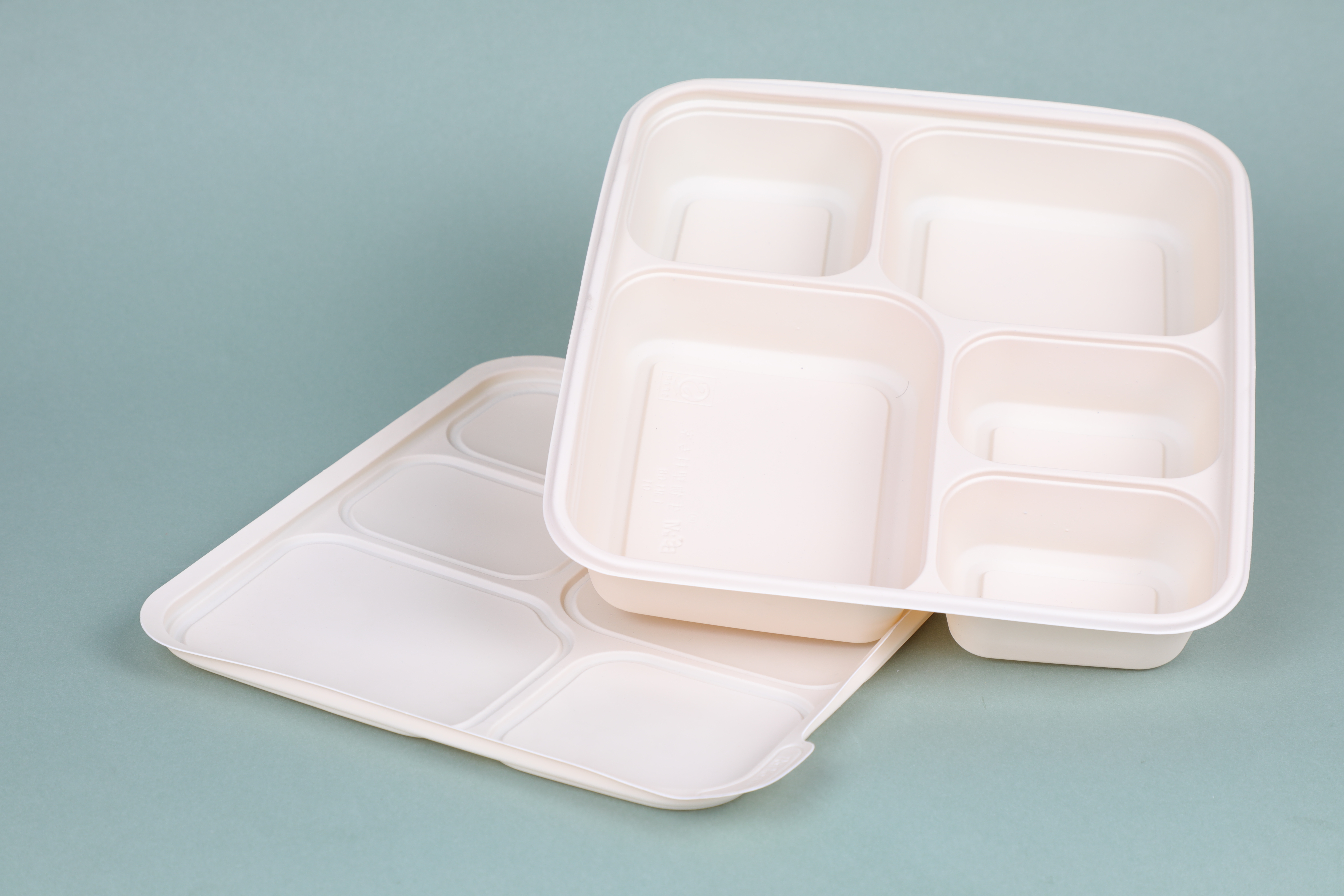
Factory-Direct Cold Food Packaging Supply
| Embossed Logo | Brand mark, material code, cavity number or disposal instruction subject to tooling |
| Color and Tint | Transparent tint, white or custom color subject to food-contact and certification review |
| Paper Label or Sleeve | Branding, ingredient information, barcode and disposal instructions |
| Inner Packing | Food-safe sleeves, controlled count, nested protection and dust control |
| Master Carton | Private-label artwork, SKU, size, capacity, batch, carton quantity and shipping marks |
| Pallet Configuration | Cartons per layer, maximum stack height, corner protection and export wrapping |
Define the food application: Confirm food type, filling temperature, storage, transport and shelf life.
Select the container format: Provide target capacity, dimensions, compartments, lid and reference samples.
Review the material: Confirm clarity, color, freezer requirement, anti-fog and compostability standard.
Evaluate tooling: Review existing molds or prepare a custom thermoforming-tool proposal.
Test samples: Check food contact, temperature, lid fit, leakage, stacking, transport and appearance.
Approve branding and packing: Confirm embossing, labels, sleeve count, carton and pallet.
Release mass production: Sign the drawing, approved sample, QC limits, certificate scope and delivery schedule.
PLA containers can deform when stored near heat or in direct sunlight. Warehouse and transport conditions should be defined for the exact product, particularly for clear thin-wall containers and high-temperature shipping routes.
Store sealed cartons in a cool, dry, clean and ventilated warehouse.
Keep away from direct sunlight, heaters, hot roofs and high-temperature containers.
Protect rims, hinges and lid flanges from crushing or deformation.
Control stack height to prevent nesting pressure and carton collapse.
Identify material, capacity, size, lot, production date and approved shelf life.
Use first-in, first-out inventory and recheck fit and brittleness after prolonged storage.
A complete cold-food service program may include compatible cups, PLA cold cup lids, bags, cutlery and PLA straight drinking straws. Each component requires its own food-contact and compostability assessment. A certified meal box does not automatically certify the label, outer sleeve, straw or other accessory used with it.

Complementary Compostable Foodservice Items
Cold-food application focus: Container design is matched to food type, temperature, storage and transport.
Multiple container formats: Hinged clamshells, trays, bowls, deli containers and compartment boxes can be reviewed.
Matched lid development: Lid fit, closure, leakage and stacking can be tested as one system.
OEM customization: Size, capacity, color, compartments, embossing, labels and cartons can be discussed.
Compliance coordination: Food-contact and compostability requirements can be matched to the destination market.
Factory-direct B2B supply: Suitable for food brands, restaurants, supermarkets, distributors and importers.
Food type, filling temperature, storage temperature and required shelf life.
Hinged clamshell, separate lid, bowl, tray or compartment-box format.
Required capacity, length, width, height and compartment dimensions.
Clear, white, tinted or custom-colored material.
Lid profile, closure, vent, anti-fog and tamper-evident requirements.
Refrigeration, freezer, warm-fill or transport-temperature conditions.
Destination-market food-contact documents and migration test conditions.
Industrial or home-compostability standard and certification marks.
Embossed logo, label, sleeve, inner-pack count, carton and pallet requirements.
Order quantity, annual forecast, destination port and delivery schedule.
Discuss Your PLA Food Box Project
Standard transparent PLA meal boxes are mainly designed for cold foods. Hot meals, soup and freshly cooked food can deform the container. Use a validated bagasse, CPLA, PP or other heat-resistant solution for hot applications.
The maximum temperature depends on the resin grade, wall distribution, lid structure and exposure time. Clear PLA is mainly selected for cold foods. Obtain grade-specific test data and approve the finished box at the actual filling, transport and storage temperatures.
Standard clear PLA containers are generally not microwave-safe. Do not make a microwave claim unless the exact finished container has been specifically tested and labeled for that use.
Suitable designs may be freezer compatible, but low-temperature cracking, lid fit and freeze-thaw performance must be tested with the actual food and container.
Common applications include salads, fruit, bakery products, desserts, deli food, cold pasta, yogurt and chilled prepared meals. Food temperature and storage duration should remain within the approved range.
Common market sizes include 8, 12, 16, 24, 32 and 48 fluid ounces, but availability and usable volume depend on the specific mold. Provide your target fill volume and dimensional drawing for an existing-tool or custom-tool quotation.
One-, two- or multi-compartment designs can be reviewed. Divider height, food volume, lid clearance, cross-leakage and thermoforming depth must be confirmed.
Hinged-lid and separate-lid formats can be supplied according to the product design. Buyers should confirm whether the quotation includes the base, lid, labels and packing as separate SKUs or a complete set.
Leak resistance depends on the closure, rim, food viscosity and transport conditions. Do not use an absolute leakproof claim without tilt, shake and delivery testing using the intended food.
An approved anti-fog grade may be selected for chilled food display. The additive must meet food-contact and compostability requirements and should be tested through the expected refrigeration cycle.
Only when the exact finished container carries suitable home-compost certification. Industrial-compostability certification does not automatically support a home-compost claim.
Landfill does not normally provide the controlled heat, oxygen and moisture used in industrial composting. PLA meal boxes should not be marketed as rapidly degrading in landfill or the natural environment.
PLA and PET are different polymers. PLA may not be accepted in conventional PET recycling streams, so disposal instructions should follow local collection and composting infrastructure.
Embossed logos, custom colors, labels, sleeves and private-label cartons can be discussed. Pigments, inks and adhesives must remain compatible with food-contact and compostability requirements.
Store sealed cartons in a cool, dry location away from direct sunlight, heaters, hot vehicles and high-temperature shipping containers. Excess heat can cause warpage or poor lid fit.
Yes. Buyers should test samples for food contact, fill temperature, lid fit, leakage, stacking, refrigeration, freezer use where applicable, transport and shelf-life performance.
MOQ depends on container shape, dimensions, material, color, lid design, tooling, embossing, certification and private-label packaging.
Provide food type, temperature, capacity, dimensions, container format, lid, color, anti-fog requirement, certification, packing, order quantity, destination and delivery date.
Nominal capacity is often measured close to the container brim. Usable fill volume must leave sufficient headspace for the food, lid, transport and presentation. Ask for a dimensioned drawing and test the actual portion before bulk purchasing.
Test the actual filled box for lid engagement, handling, tilt, vibration, stacking and delivery conditions. The closure should be assessed with the intended food and lid design; a firm snap does not automatically mean a liquid-tight seal.
Check the mold draft angle, nesting stops, wall rigidity, stacking pressure and cooling consistency. Measure the force required to separate nested containers after packing, transport and cold storage.
Not automatically. The final certification scope should be checked for each separate lid, pigment, label, adhesive and printed component. Request the applicable certificate and product codes before publishing a whole-pack compostability claim.
Contact Wallis Plastic for custom compostable PLA cold food boxes, deli containers, salad bowls, trays and hinged clamshells. Our team supports size selection, lid development, food-contact review, certification matching, sample testing, private-label packaging and factory-direct B2B supply.
Request Samples and Factory Quote


