|
PC/PMMA Composite Board
Wallis
| Color: | |
|---|---|
| Thickness: | |
| Application: | |
| Advantage: | |
| Quantity: | |
Transparent PC/PMMA Composite Sheet for Display Covers and Equipment Windows
Wallis transparent PC/PMMA composite sheet combines a tough polycarbonate (PC) core with a clearer, harder polymethyl methacrylate (PMMA) surface to balance impact resistance, optical appearance and resistance to everyday scratching. The material is intended for display cover lenses, industrial equipment windows, transparent control panels, protective covers and custom fabricated parts.
Buyers can evaluate PC/PMMA two-layer sheet with a PMMA face or PMMA/PC/PMMA three-layer sheet with PMMA on both faces. These constructions are distinct from polycarbonate with a separately applied hard coat. The appropriate structure depends on surface exposure, print orientation, forming requirements and the end-product performance specification.
Wallis works with OEM display manufacturers, equipment builders, plastics fabricators, interior-component suppliers and wholesale distributors. Specify the required layer structure, gauge, optical criteria, abrasion test, sheet size, process and annual volume to obtain material samples and a project quotation.
| Material Structure | PC core with PMMA surface, or PMMA/PC/PMMA multilayer structure |
| Main Benefits | PC-core impact resistance, clear PMMA viewing face, improved inherent surface hardness and optional grade-specific protective finishes. |
| Listed Thickness Range | 1.5 mm shown as a reference product gauge; thicker 2–10 mm options are described for project-specific configurations. Confirm actual availability for each structure. |
| Standard Sheet Sizes | 1220 × 2440 mm and 2050 × 3050 mm as reference formats; availability and tolerances depend on gauge and project. |
| Supply Options | Clear, tinted, gloss, matte, textured, masked and optional hard-coated grades |
| B2B Services | Samples, OEM dimensions, grade matching, fabrication support, inspection and export packaging |
Request PC/PMMA Samples and B2B Quote
A PC/PMMA composite sheet is a multilayer transparent thermoplastic produced by bonding or co-extruding polycarbonate and polymethyl methacrylate. The material is designed to combine the toughness and formability of PC with the harder, glossier and more scratch-resistant surface of PMMA.
The PMMA surface layer is part of the composite construction; it is not the same as an applied anti-scratch hard coating. Some applications need an additional hard coat for abrasion, chemical-cleaning or high-touch performance. Specify whether the requirement is an uncoated PMMA cap layer, a coated PC/PMMA structure, or a dual-sided PMMA/PC/PMMA sheet.
Transparent Composite Structure
Clear Surface with Protective Masking
These procurement specifications are reference information rather than one universal set of guaranteed values. The website product summary identifies 1.5 mm, while the detailed product description mentions 2–10 mm configurations; Wallis should confirm the exact available grade, thickness, surface construction, sheet size, optical results and applicable test reports on the approved quotation.
| Parameter | Specification and Purchasing Note |
|---|---|
| Material Structure | PC base with PMMA surface; two-layer or three-layer construction should be specified |
| Thickness Range | Reference product gauge: 1.5 mm. Project description also identifies 2–10 mm options; confirm gauge, PMMA cap thickness and minimum quantity by grade before ordering. |
| Standard Sheet Size | 1220 × 2440mm / 2050 × 3050mm; custom conversion available subject to yield and MOQ |
| Surface Finish | High gloss, matte or customized texture, subject to grade and tooling |
| Scratch Resistance | The PMMA face is harder than uncoated PC, but not scratch-proof. For higher requirements, specify a separately hard-coated grade and an agreed pencil-hardness or abrasion test. |
| Water Exposure | Solid sheet resists moisture, but water tightness of an installed cover depends on sealants, gaskets, holes, mounting and drainage. |
| UV and Weathering | Specify a documented UV-stabilized construction for outdoor exposure; confirm the protected face, test conditions and service requirements. |
| Impact Performance | Higher toughness than standard PMMA is expected from the PC core; numerical values depend on structure and test method |
| Light Transmission | Clear-grade reference: up to 88% reported; actual visible-light transmission and haze depend on thickness, layer ratio, surface finish and the test method. |
| Service Temperature | A previously quoted -40°C to +120°C range is not a verified continuous-use rating. Obtain grade-specific thermal performance under actual load, exposure duration and temperature. |
| Processing Methods | Saw cutting, CNC routing, drilling, bending, printing and thermoforming after grade-specific validation |
| Selection Factor | PC/PMMA Two-Layer | PMMA/PC/PMMA Three-Layer |
|---|---|---|
| Surface Protection | PMMA layer on one specified face | PMMA surfaces on both faces |
| Typical Use | One exposed decorative or viewing face with controlled cost | Parts requiring balanced appearance or protected surfaces on both sides |
| Processing Note | Orientation of the PMMA face must be controlled during fabrication and installation | Thermal balance and forming behavior should be validated for the complete structure |
| Cost and Performance | Cost-efficient where only one face requires premium surface performance | Higher material complexity with potential benefits for symmetry and two-sided exposure |
Standard polycarbonate is tough but can scratch relatively easily. The PMMA surface improves hardness and gloss retention for display covers, equipment windows and frequently handled transparent components. For severe abrasion, repeated cleaning or chemical exposure, an additional hard-coat grade and test specification may be required.
The PC core reduces the brittleness associated with pure acrylic and helps lower breakage risk during fabrication, transport and installation. Impact performance should still be confirmed at the selected thickness and temperature using the required test method.
The PMMA face provides a smooth, glossy appearance suitable for windows, displays and decorative components. Optical requirements should specify light transmission, haze, distortion, surface defects and viewing distance rather than relying only on the word “transparent.”
PC and PMMA sheets do not absorb water and swell in the same way as wood-based boards. However, joints, drilled holes, adhesives, printed layers and supporting structures determine whether a finished product is watertight. Outdoor or wet-area assemblies require proper sealing and drainage design.
Outdoor use should be based on a UV-stabilized construction with the protected face installed toward sunlight. Weathering expectations depend on climate, sheet orientation, color, coating and exposure time, so accelerated and real-world testing may be required.
The material can be cut, routed, drilled, printed, bent or thermoformed using suitable equipment. Processing parameters must protect the PMMA layer and any hard coating from chipping, cracking, stress whitening or delamination.

Combined Optical, Surface and Impact Performance
Impact-Resistant Clear Panel
PMMA Surface with PC Toughness
| Material | Impact | Surface Hardness | Formability | Typical Selection Logic |
|---|---|---|---|---|
| Standard PC | High | Lower; scratches more easily | Good | Impact and forming are more important than premium surface durability |
| Standard PMMA | Lower than PC | Better than standard PC | Application-dependent | Optical clarity, gloss and weatherability are primary requirements |
| PC/PMMA Composite | Higher than PMMA | Improved over standard PC | Must match layer structure | Balanced impact, visual quality and surface performance |
| Hard-Coated PC | High | Potentially highest, grade-specific | Often limited after coating | Severe abrasion, cleaning or chemical exposure requires validated coating |
A statement such as “scratch resistant” is not a complete material specification. Specify the intended contact, cleaning frequency, optical viewing distance, test method, pass criteria and whether one or both faces require protection. Pencil hardness and abrasion haze are different measurements and should not be treated as interchangeable.
| Property | Example Evaluation | What the Buyer Should Specify |
|---|---|---|
| Surface hardness | Pencil hardness using an agreed procedure such as ASTM D3363 | Load, surface face, expected grade and acceptance threshold |
| Abrasion resistance | Taber abrasion / haze change using an agreed method such as ASTM D1044 | Wheel, load, cycles and permissible haze increase |
| Optical quality | Visible transmission and haze using an agreed method such as ASTM D1003 | Thickness, light source, transmittance, haze and visual defects |
| Layer integrity | Cross-section inspection and appropriate bond or peel evaluation | Number of layers, cap-layer orientation and adhesion requirements |
| UV weathering | Grade-specific accelerated exposure and color/gloss review | Exposure period, yellowing/color change, installation face and expected climate |
| Impact and forming | Part-level impact and production forming trials | Use temperature, mounting geometry, bend radius and allowable defects |
These are possible qualification methods, not claims that every Wallis grade has been tested or certified to every listed standard. Ask for the relevant grade-specific results before approval.
PC/PMMA composite sheet can be evaluated for machine enclosures, inspection windows and equipment covers where visibility, impact resistance and repeated cleaning are important. Safety certification, thickness and mounting design must be determined by the equipment manufacturer.
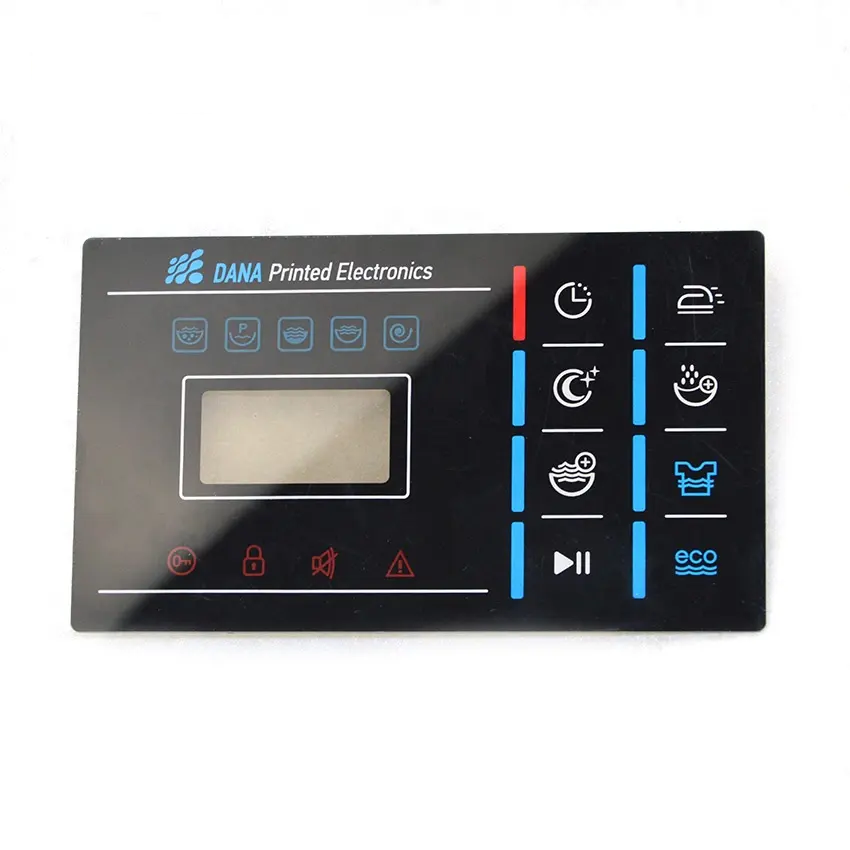
The clear, glossy surface suits display windows, instrument covers, information panels and human-machine-interface components. Optical distortion, printability, anti-glare treatment, touchscreen function and cleaning chemicals should be included in the specification.
Retail covers, partitions, display guards and high-touch transparent components can benefit from the combination of toughness and improved surface durability. Fire classification and building-code requirements should be confirmed for the installation.
PC/PMMA composites are used in automotive interior display covers, control panels and decorative trim. Use in regulated vehicle glazing, windshields or safety-critical exterior parts requires an application-specific certified grade and formal homologation; the general sheet should not be presented as automatically approved.
The material can be evaluated for non-implant medical-equipment covers, observation windows and barriers. Chemical resistance to disinfectants, cleaning frequency, stress cracking, fire performance and regulatory requirements must be tested for the finished application.
Outdoor signs, covers and transparent architectural elements require a UV-stabilized grade, suitable support spacing, thermal-expansion allowance and correct sealing. Roof glazing, skylights and safety barriers require structural engineering and applicable certification.
Protective and Display Components
Transparent Fabricated Parts
Industrial Viewing Window
Commercial and Decorative Use
Use sharp carbide tools, stable support and controlled feed rates. Leave protective masking in place where practical. Excessive heat or vibration can cause melted edges, chipping, stress or damage to the PMMA surface.
Drill with suitable plastic-cutting geometry and provide adequate edge distance. Holes and frames must allow thermal expansion. Overtightened fasteners can introduce stress and initiate cracking.
Minimum bend radius and forming window depend on thickness, layer structure and coating. Hard-coated grades may have limited forming capability. Drying requirements and heating profile should be confirmed before production trials.
Ink, adhesive and cleaner compatibility must be tested because certain solvents can cause crazing or stress cracking. Use a soft cloth and approved mild cleaner; avoid abrasive pads and unverified solvents.
The solid plastic sheet itself is resistant to moisture and does not rot, but an installed enclosure, facade or cover is only watertight when joints, holes, edges, gaskets and sealants are correctly designed. “Waterproof” should therefore be treated as an assembly requirement rather than an unconditional property claim.
Outdoor projects also require confirmation of the UV-protected face, expansion allowance, wind load, support spacing, coating warranty and expected climate. Transparent sheets expand more than glass or metal, so rigid installation without movement allowance can lead to bowing or stress.
| Layer Structure | PC/PMMA or PMMA/PC/PMMA, subject to application and production capability |
| Thickness and Size | Standard or custom gauge, sheet dimensions and cut-to-size service |
| Surface Finish | Gloss, matte, textured, anti-glare or decorative finish subject to tooling and MOQ |
| Functional Grade | UV-stabilized, hard-coated, printable, anti-static or other grade subject to technical availability |
| Color | Clear, smoke, tinted or customized transparent colors subject to sample approval |
| Masking and Packaging | Protective film, custom labels, reinforced pallets and export packaging |
Most processing issues depend on a combination of material, tooling and application. Review the following checks before changing the sheet grade or releasing bulk production.
| Observed Issue | Possible Causes | Practical Checks |
|---|---|---|
| Visible surface scratches | Unprotected PMMA face, rough separators or cleaning tools | Keep masking during machining; test wiping method; consider qualified hard coat |
| Edge cracking or stress whitening | Excess cutting heat, incorrect drill geometry or tight fasteners | Reduce cutting heat, increase edge clearance and allow thermal expansion |
| Haze or optical distortion | Unsuitable finish, overheating, residual stress or inconsistent thickness | Measure haze and transmission; check forming temperatures and approved grade |
| Layer separation or blistering | Processing stress, incompatible bonding chemistry or inadequate drying | Verify layer structure; trial adhesives; review processing and storage conditions |
| Warping after thermoforming | Uneven heat/cooling, asymmetric layer structure or poor part support | Validate full heating/cooling cycle and select the appropriate two- or three-layer grade |
| Clouding or chemical crazing | Incompatible cleaners or solvents acting on stressed areas | Run chemical-compatibility trials and use approved cleaning instructions |
Testing should be selected according to the application rather than applying one generic quality claim to every grade. Wallis can coordinate available inspections and sample evaluation based on the agreed purchase specification.
Dimensions and thickness: Sheet size, profile, tolerances and squareness.
Optical performance: Light transmission, haze, tint, distortion and surface defects.
Surface durability: Pencil hardness, Taber abrasion or customer-specified scratch test.
Impact performance: Impact strength at the required thickness and service temperature.
Weathering: UV aging, yellowing, gloss retention and coating adhesion for outdoor grades.
Chemical compatibility: Cleaners, disinfectants, inks, adhesives or process chemicals.
Fabrication trial: Cutting, drilling, bending, printing, bonding or thermoforming.
Packaging inspection: Masking quality, surface protection, pallet security and identification.

Material Testing and Quality-Control Equipment
Transmittance & Haze
Taber Abrasion Testing
Salt Spray Evaluation
UV Weathering Testing
Coating Line
Protective Mask Film
Export Packaging
Application-based grade selection: Layer structure, coating, UV requirement and fabrication process are reviewed before recommendation.
Sample-first process: Buyers can test optics, abrasion, impact, fabrication and installation before bulk purchasing.
OEM specifications: Thickness, size, color, finish, masking and packaging can be discussed.
Quality-control support: Inspection items can be aligned with the agreed project requirements.
Processing coordination: Cutting, CNC routing, drilling, printing or forming requirements can be reviewed.
Global B2B supply: Export packaging supports fabricators, manufacturers, contractors and distributors.
For repeat supply, Wallis can coordinate approved samples, grade references, surface orientation, optical requirements, packaging and production schedules with international plastic fabricators and equipment OEMs. Retain the approved physical sample and test criteria for subsequent batches.

International B2B Project Coordination
For each project, the buyer and supplier should agree on the PC/PMMA layer structure, optical target, scratch or abrasion test method, any UV/hard-coat grade, drawing revisions, packaging and batch acceptance criteria. Critical components require finished-part testing as well as raw-sheet inspection.

A practical qualification process reduces the risk of ordering the wrong optical or surface grade and helps align purchasing, engineering and production teams.
Confirm the application: Describe the finished part, viewing face, indoor/outdoor exposure and expected cleaning conditions.
Select the construction: Choose PC/PMMA or PMMA/PC/PMMA; state whether an additional hard coat is required.
Approve the specification: Confirm gauge, PMMA cap layer, dimensions, transparency, haze and scratch-test method.
Test production samples: Validate CNC machining, drilling, printing, bonding, forming and final installation on the buyer’s equipment.
Lock the approved standard: Sign off the sample, masking orientation, packaging, acceptance criteria and order volume.
Review repeat batches: Check key optical and dimensional data against the approved sample before shipment.
Finished application and indoor or outdoor environment.
Two-layer PC/PMMA or three-layer PMMA/PC/PMMA preference.
Required thickness, sheet size, color and annual quantity.
Light transmission, haze, surface-defect and optical-distortion targets.
Pencil hardness, Taber abrasion, chemical or cleaner-resistance requirements.
Impact, fire, weathering or other certification requirements.
Cutting, drilling, bending, printing, bonding or thermoforming process.
Drawings, tolerances, masking and packaging requirements.
Destination port, delivery schedule and sample size.
Discuss Your Transparent Sheet Project
PC/PMMA uses a PMMA cap layer bonded to a PC core, while hard-coated PC uses a separate abrasion-resistant coating on polycarbonate. They can differ in hardness, chemical resistance, formability, weathering and cost, so the correct grade depends on the application.
The PC core normally provides greater toughness than standard PMMA. Actual impact performance varies with thickness, layer ratio, temperature and test method, so numerical requirements should be stated in the purchase specification.
No transparent plastic is completely scratch-proof. The PMMA layer improves scratch resistance compared with standard PC, while demanding abrasion or cleaning applications may require a validated hard coating.
The solid sheet resists water and does not swell like wood, but a finished product is only watertight when edges, joints, holes, seals and frames are designed correctly.
Outdoor use requires a confirmed UV-stabilized grade, correct orientation of the protected face, thermal-expansion allowance and project-specific weathering expectations. Standard indoor grades should not be assumed suitable outdoors.
Not without an application-specific certified and homologated grade. General PC/PMMA sheet can be evaluated for interior display covers and trim, but regulated glazing requires formal testing and approval.
Suitable composite grades can be thermoformed, but the layer structure, drying, heating profile, draw ratio and surface coating must be validated. Some hard coatings significantly limit forming.
Mechanical saw cutting or CNC routing is generally preferred for thick transparent PC-based sheets. Laser cutting can create heat-affected edges, discoloration, stress or fumes and should only be used after equipment-specific testing.
Use a soft cloth and a mild cleaner approved for the exact grade. Avoid abrasive pads and unverified solvents. Disinfectants and strong chemicals should be tested for haze, cracking, coating damage and stress crazing.
A 1.5 mm reference gauge is displayed in the product listing, and 2–10 mm project options are described in the product information. Reference sheet formats are 1220 × 2440 mm and 2050 × 3050 mm. Exact availability depends on the layer construction, surface treatment, order volume and agreed tolerance.
Yes. Sample testing is recommended for optics, abrasion, impact, cleaning chemicals, cutting, drilling, forming, bonding and installation before confirming volume production.
MOQ depends on layer structure, thickness, sheet size, color, texture, coating, masking and whether the specification is standard or customized.
Provide the application, environment, structure, thickness, size, quantity, optical target, scratch or abrasion method, impact requirement, processing method, packaging and destination.
No. PMMA is a co-extruded or bonded surface layer within the composite. A hard coating is an additional surface treatment chosen for specific abrasion or cleaning requirements. The two should be specified and tested separately.
For a two-layer structure, orient the PMMA viewing face toward the specified exposure or touch surface. If outdoor protection is required, verify the UV-protected side and follow the approved drawing and masking labels.
Use the test that reflects actual use. Pencil hardness evaluates one kind of surface response, while Taber abrasion evaluates wear under repeated contact. Define load, cycles, sample thickness and acceptance criteria before comparing grades.
Contact Wallis Plastic to discuss transparent PC/PMMA composite sheets for equipment windows, displays, protective covers, control panels and OEM fabricated parts. Our team supports grade selection, custom specifications, sample evaluation and export-ready B2B supply.
Request Samples and Factory Quote