
|
wallis
Wallis
| Color: | |
|---|---|
| Thickness: | |
| Application: | |
| Quantity: | |
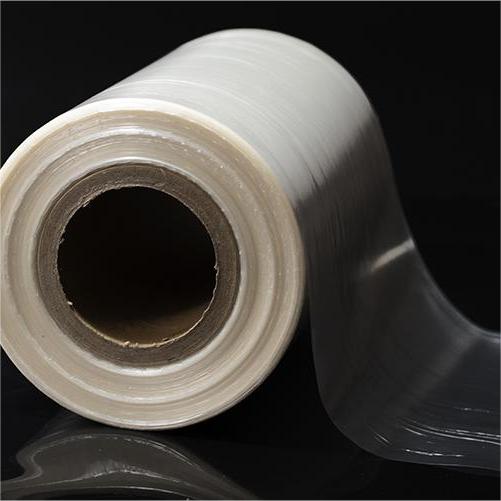
Custom Compostable PLA-Based Flexible Packaging Film Roll
Wallis custom compostable PLA-based flexible packaging film is developed for brands, packaging converters and product manufacturers seeking transparent or colored rollstock for food packaging, produce bags, bakery packs, apparel bags, retail overwrap and other validated flexible-packaging applications. The film can be supplied in customized widths, thicknesses, reel lengths, core sizes and converting formats.
High-performance compostable packaging film is usually produced from a certified blend of compostable polymers that may include PLA, PBAT and other application-specific components. PLA can contribute clarity and bio-based content, while flexible polymers improve elongation, toughness, sealability and machine performance. The final formulation—not one resin name—determines the film's mechanical, optical, barrier and compostability properties.
For packaging converters, the film is selected according to rollstock processing requirements : printing, heat sealing, bag making and automated packaging. The material should be matched to the product, machine speed, sealing method, barrier requirement, shelf-life target and destination-market certification before a production trial.
| Product Type | Compostable flexible packaging film, printed rollstock and converting film |
| Material Options | PLA/PBAT-based or other compostable formulations, with certification verified for the exact finished film |
| Typical Thickness | Common industry reference: approximately 15–80 μm for selected single-ply films; confirm actual supply range by grade |
| Film Formats | Transparent, tinted or opaque rollstock; printable, sealable or laminating grades subject to validation |
| Conversion Options | Flow wrapping, VFFS/HFFS, bag making, pouch conversion, overwrap and lamination trials |
| B2B Services | Custom reels, sample trials, print and seal testing, compliance matching, QC planning and export packaging |
Request Packaging Film Samples and Quote
Compostable flexible packaging film is a thin rollstock material designed to protect, contain or present products while meeting a recognized compostability standard under specified conditions. Depending on the grade, the film may be used as a standalone monofilm, a sealant layer in a compostable laminate or a converting film for bags and pouches.
Pure PLA is transparent but relatively stiff and brittle for many flexible-packaging processes. Commercial compostable films often combine PLA with flexible compostable polymers and modifiers to achieve usable elongation, puncture resistance, sealing strength, coefficient of friction and roll handling.
The film may be converted through printing, slitting, heat sealing, bag making, horizontal flow wrapping or vertical form-fill-seal equipment. Machine compatibility should be verified with the actual line because sealing temperature, dwell time, tension, friction and web stiffness differ from conventional PE or PP films.
Industrial or home-compostability certification applies to defined material codes, thicknesses, colors, inks, adhesives and structures. Certification of a resin pellet does not automatically cover every printed film, laminate or finished package.
Transparent Compostable Rollstock
Film for Printing and Conversion
| Material Component | Typical Function | B2B Selection Note |
|---|---|---|
| PLA | Can provide transparency, stiffness and renewable carbon content | Usually blended or co-extruded for demanding flexible-film applications |
| PBAT or Flexible Compostable Polyester | Improves elongation, impact, tear resistance and seal performance | PBAT is commonly fossil-derived; verify bio-based content independently from compostability |
| Starch or Bio-Based Modifier | May increase renewable content and alter processing or composting behavior | Moisture sensitivity, odor and mechanical consistency require control |
| Functional Additives | Control slip, anti-blocking, anti-static, processing, color or anti-fog performance | Must remain within food-contact and compostability certificate limits |
| Compostable Laminate | Combines print, barrier and sealing layers for higher-protection packaging | Every layer, ink and adhesive must be included in the final assessment |
For flexible packaging rollstock, film thickness is specified in microns (μm), not general-purpose rigid-sheet gauges. Practical selection also requires reel width, core diameter, roll outside diameter, winding direction, surface treatment and converting method. The approximate values below are application references; Wallis should confirm availability and tolerances for the selected formulation before order acceptance.
| Parameter | Typical Option and Procurement Note |
|---|---|
| Film Structure | Single-ply blown or cast film, co-extruded film or compostable laminate subject to production capability |
| Thickness | Indicative 15–80 μm for selected flexible-film applications; agree actual grade, tolerance and certified thickness range |
| Reel Width | Customized according to printing, bag-making, HFFS, VFFS or overwrap equipment |
| Core and Roll Diameter | 3-inch, 6-inch or other core; maximum roll OD and weight must match the machine unwinder |
| Color and Appearance | Transparent, translucent, tinted, white or opaque subject to formulation, MOQ and certification |
| Surface Treatment | Corona or application-specific print treatment with target dyne level defined at shipment |
| Printing | Flexographic, gravure or other validated process; ink system and color count subject to compostability review |
| MOQ | Depends on film grade, structure, gauge, width, print, certification and annual demand |
| Format | Typical Use | Critical Specification |
|---|---|---|
| Unprinted Rollstock | Printing, lamination, bag making and downstream conversion | Dyne level, thickness profile, slip, winding and splice policy |
| Printed Rollstock | Brand packaging on HFFS, VFFS or flow-wrap machinery | Repeat length, eye mark, color tolerance, print direction and registration |
| Center-Folded Film | Bag making, overwrap and garment or product covers | Fold position, lay-flat width, edge alignment and blocking |
| Tubular Film | Bag conversion and sleeve applications | Lay-flat width, gusset, tube uniformity and sealing orientation |
| Laminating / Sealant Film | Compostable barrier laminates and printed flexible packs | Bond strength, seal initiation, hot tack and certified adhesive system |
The film must tolerate web tension, forming shoulders, bag opening and product handling without uncontrolled stretching or breakage. Tensile and elongation targets should be specified in both machine and transverse directions.
Product edges, stems, frozen food, apparel hardware and packing equipment can puncture thin films. Dart impact, puncture energy and actual-pack drop tests should be considered when selecting thickness and structure.
A usable sealing window is essential for automated packaging. Buyers should test seal-initiation temperature, dwell time, pressure, seal strength, hot tack, contamination tolerance and jaw-release behavior on the intended machine.
Surface friction affects unwinding, forming, product loading and finished-bag handling. Excessive slip can create tracking problems, while excessive blocking can prevent bags or film layers from separating. COF requirements should be defined by the converter.
Clear packaging should be approved for haze, gloss, tint, gels, black spots, die lines and optical distortion. A highly transparent grade may use a different film structure or production process from a general-purpose compostable bag film.
Oxygen and water-vapor barrier vary by material and thickness. Single-ply compostable film may suit breathable produce or short-shelf-life goods, while dry, oily or aroma-sensitive products may require a certified compostable laminate. OTR and WVTR targets should be based on a shelf-life study.
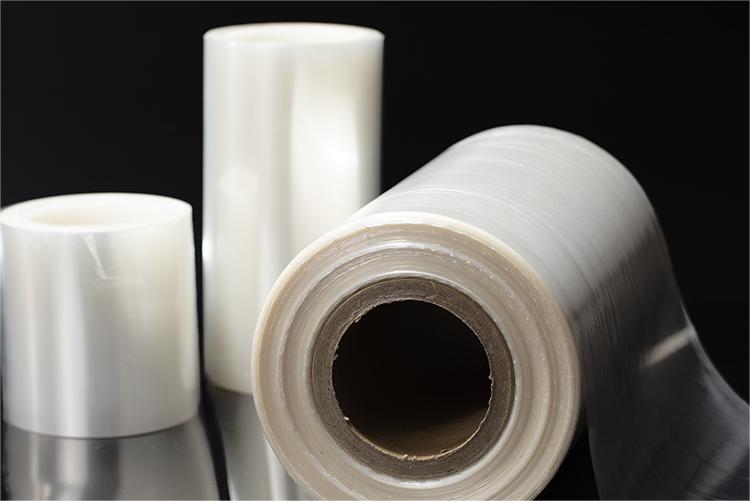
Flexible Film for Multiple Packaging Formats
A film datasheet is a starting point, but finished-pack performance must be verified with the actual machine, product and storage conditions. Agree on test methods, acceptance limits and reference samples before approving the bulk specification.
| Evaluation | What to Measure | Why It Matters |
|---|---|---|
| Seal performance | Seal initiation, seal strength, hot tack, temperature / dwell-time / pressure window | Prevents leaking seams and weak seals during HFFS, VFFS or pouch making |
| Web handling | Coefficient of friction (COF), anti-block, tension stability, static and unwind force | Reduces web wandering, roll blocking, jams and machine stoppages |
| Optics and print | Haze, gloss, surface energy, ink adhesion, rub resistance and color tolerances | Supports retail presentation and stable printing during conversion |
| Mechanical protection | MD/TD tensile, elongation, puncture, impact, tear and filled-pack drops | Protects products through filling, transport and retail handling |
| Shelf life and barrier | OTR, WVTR, seal integrity, gas flushing and food-specific shelf-life trials | Identifies when a mono-film is sufficient or a compostable laminate is required |
| End-of-life and compliance | Finished-structure certification, food-contact documents and facility acceptance | Prevents unsupported compostability or food-contact claims |
| Application | Recommended Film Focus | Validation Required |
|---|---|---|
| Fresh Produce | Transparent breathable film, produce bags and pillow packs | Respiration, perforation, condensation, puncture and shelf life |
| Bakery Products | Printable, sealable film for bread, pastries and dry baked goods | Moisture control, grease, aroma, crumb puncture and seal integrity |
| Dry Food and Snacks | Printed monofilm or compostable laminate with suitable barrier | OTR, WVTR, light, aroma, fat contact and shelf life |
| Chilled and Frozen Food | Low-temperature flexible film or laminate | Brittleness, impact, seal, condensation and freeze-thaw cycles |
| Apparel and Retail Products | Transparent or printed garment bags, overwrap and product sleeves | Clarity, tear, static, ventilation holes, closure and transport |
| Mailers and E-Commerce | Opaque or printed film with adhesive closure | Tear, puncture, seal, adhesive compatibility and privacy |
Compostable film can support custom branding when the surface treatment, ink, drying or curing process and final compostability assessment are compatible. Printed rollstock should be approved using physical proofs because film transparency, white ink, reverse printing and lamination can change the final appearance.
| Artwork | Editable AI or print-ready PDF with dieline, repeat length, bleed and barcode |
| Print Direction | Surface or reverse print, inside/outside winding and eye-mark orientation |
| Color Control | Pantone references, white ink, transparent ink, color tolerance and approved printed sample |
| Environmental Claims | Certification logo, disposal instructions and certificate code only when authorized |
| Traceability | Batch code, production date, material code and customer SKU where required |
Define the machine: Provide machine type, model, maximum reel width, core, roll OD, speed and web path.
Confirm the package: Supply the dieline, bag dimensions, seal type, product weight and target output rate.
Review film handling: Test unwind, tracking, tension, static, friction, forming and cutting.
Develop the seal window: Evaluate temperature, pressure, dwell, seal strength and hot tack.
Run product trials: Pack the actual food or product and complete leak, drop, transport and shelf-life tests.
Approve printed rollstock: Confirm registration, color, eye marks, print direction and repeat length.
Lock the specification: Record grade, thickness, width, winding, splices, QC limits and pallet standard.
During qualification, ask the converter to record machine speed, line settings, roll batch, defect photographs and conditions at the moment of failure. The actions below are troubleshooting starting points, not fixed settings for every formulation.
| Observed Issue | Likely Factors | Practical Corrective Action |
|---|---|---|
| Weak or opening seals | Seal jaw temperature, pressure or dwell time; contaminated seal area; incompatible layer | Measure a seal curve and hot tack; adjust the window or evaluate a different sealant grade |
| Film sticks to jaws | Excessive heat, insufficient release, unsuitable film surface | Review jaw temperature and release properties; test a grade approved for that sealer |
| Wrinkling or web tracking errors | Unbalanced unwind tension, reel telescoping, poor alignment, COF variation | Inspect roll winding and edge alignment; reset tension and confirm COF range |
| Roll blocking or difficult unwind | High surface tack, storage heat/humidity, excessive winding pressure | Check storage history, slip/anti-block selection and winding tension |
| Tearing at forming shoulder | Low tear resistance, sharp equipment edge, excessive stretch | Inspect contact points, reduce local strain, increase appropriate gauge or change film grade |
| Poor print adhesion | Low surface energy, aged treatment or incompatible inks | Specify dyne level at use, validate inks and curing, and test rub resistance |
| Shorter-than-required shelf life | Wrong OTR/WVTR profile, weak seals, punctures, product sensitivity | Conduct product-specific shelf-life tests and evaluate certified barrier laminate alternatives |
| Unacceptable finished-package certification | Unapproved ink, adhesive, printed coverage, color or thickness | Check certificate scope for the complete structure before production release |
Compostability does not replace food-contact compliance. For food packaging, the exact film, additives, inks, adhesives and use conditions should comply with the destination market's requirements.
Identify food type, direct-contact side, temperature and contact duration.
Define aqueous, acidic, alcoholic, dairy, dry or fatty-food simulants.
Request overall and specific migration documentation where applicable.
Include printing inks, adhesives, coatings and anti-fog additives in the review.
Evaluate odor, taste and product interaction for sensitive foods.
Do not extend one certificate to different structures, thicknesses or production sites without verification.
| Claim | Correct B2B Interpretation |
|---|---|
| Industrial Compostable | Intended for controlled commercial or municipal composting under standards such as EN 13432 or ASTM D6400 |
| Home Compostable | Requires separate certification for lower-temperature home-compost conditions |
| Biodegradable | Incomplete unless environment, test method and time are stated |
| Bio-Based | Describes renewable carbon content and is separate from compostability |
| Landfill, Soil or Marine Degradation | Not automatically covered by compostability certification and should not be claimed without specific testing |
Buyers should verify the finished film in the relevant certification database and confirm the permitted thickness, printing, color and logo use. Local composting facilities may still reject flexible film, so collection-system acceptance is essential.
| Factor | Compostable Film | PE / PP Film |
|---|---|---|
| End-of-Life | Certified composting where accepted and properly collected | Recycling potential depends on format, cleanliness and collection infrastructure |
| Machine Setup | May require different tension, heat and speed settings | Established settings on most packaging machinery |
| Heat Resistance | Grade-specific and often more heat-sensitive | Wide range depending on polymer and structure |
| Barrier | Single films may be breathable; laminates can provide higher barrier | Broad range of established high-barrier structures |
| Commercial Approval | Both require actual machine trials, package testing, shelf-life evaluation and regulatory review | |
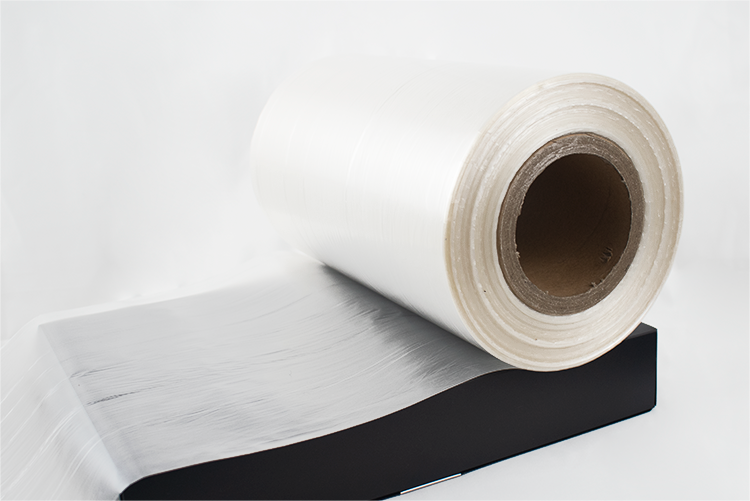
Custom Printed and Converted Film Options
Flexible packaging rollstock and food cling film may both be supplied in reels, but they serve different converting processes. Packaging rollstock is specified for printing, heat sealing, bag making and automatic filling. Food cling film is engineered for direct wrapping and adhesion to trays or bowls, often in a dispenser roll. Cling performance should not be assumed for every compostable packaging film.
For catering wrap, hand stretch and cutter-box projects, explore Wallis Compostable PLA-Based Food Cling Film . For printed flexible packs, HFFS/VFFS equipment or converter reels, specify the rollstock construction described on this page.
| Inspection Area | Recommended Control |
|---|---|
| Thickness Profile | Average gauge, cross-web variation and roll-to-roll tolerance |
| Reel Dimensions | Width, length, core ID, roll OD, net weight, winding and edge alignment |
| Optical Quality | Haze, gloss, tint, gels, black spots, contamination, wrinkles and die lines |
| Mechanical Properties | Tensile, elongation, tear, dart impact, puncture and modulus |
| Surface Properties | Dyne level, COF, blocking, static and print adhesion |
| Seal Performance | Seal initiation, seal strength, hot tack, contamination and leak testing |
| Printed Rollstock | Color, registration, repeat, eye marks, rub resistance and solvent retention where relevant |
| Traceability and Certification | Grade code, batch, production date, certificate scope and supporting documents |
Compostable films can be sensitive to prolonged heat and humidity. Storage conditions, shelf life and transport protection should be defined for the exact formulation and reel size.
Store sealed reels in a cool, dry and clean warehouse.
Keep away from direct sunlight, heaters, hot roofs and high-temperature containers.
Protect reel edges, cores and surfaces from impact, dust and moisture.
Use suspended or palletized roll packing appropriate to reel weight and width.
Identify grade, thickness, width, length, batch, winding direction and production date.
Apply first-in, first-out stock management and re-test aged film before critical production.
A complete compostable packaging program may combine rollstock with certified bags, trays, labels, cups, lids, cutlery or straws. Each component must be assessed independently, and the complete package should meet the required food-contact, mechanical and compostability conditions.

Complementary Compostable Foodservice Products
Application-based film selection: Packaging machine, product, barrier, sealing and certification are reviewed together.
Custom rollstock: Thickness, width, core, roll OD, winding, color and printing can be discussed.
Machine-trial support: Samples can be evaluated for unwind, tracking, forming, sealing and cutting.
Compliance coordination: Food-contact, industrial-compost and home-compost requirements can be matched to the destination market.
Quality specification: Optical, mechanical, surface, seal and reel parameters can be included in the order standard.
Factory-direct B2B supply: Suitable for converters, food brands, apparel companies, importers and packaging distributors.
Finished package type and packed product.
Food or non-food use and destination-market compliance requirements.
Single-ply film, laminating film or complete laminate structure.
Required thickness, reel width, length, core ID, roll OD and winding direction.
Packaging machine type, speed, sealing method and existing film reference.
Transparency, color, COF, dyne, tensile, puncture and seal targets.
OTR, WVTR, anti-fog or other barrier and shelf-life requirements.
Printing colors, repeat, eye mark, artwork and barcode.
Industrial or home-compostability standard and authorized certification marks.
Trial quantity, annual forecast, destination port and delivery schedule.
Discuss Your Flexible Packaging Project
Usually not. Pure PLA is relatively stiff. Flexible packaging films commonly use certified blends or co-extruded structures containing PLA and flexible compostable polymers to provide elongation, toughness and sealability.
Cling film is a finished wrap designed to adhere around food or containers. Packaging film rollstock is a broader material category used for printing, sealing, bag conversion, flow wrapping and automated packaging.
Many single-ply compostable packaging films fall within approximately 15–80μm. The correct thickness depends on the structure, product weight, puncture risk, machine and certification scope.
Suitable grades can run on conventional equipment, but web tension, friction, sealing temperature, dwell time and speed may need adjustment. A machine trial is required before bulk conversion.
Yes, when the surface treatment, ink and curing system are compatible. The printing system must also remain within food-contact and compostability requirements for the finished package.
Heat-sealable grades are available subject to structure. Seal initiation, strength, hot tack and machine settings should be tested using the intended package and product.
Yes, when the exact film, inks, adhesives and use conditions comply with the destination market's food-contact requirements. Provide food type, temperature and contact time for document review.
Barrier varies by grade and structure. Breathable monofilm can suit produce, while dry food, snacks or aroma-sensitive products may require a compostable high-barrier laminate.
Suitable low-temperature grades can be evaluated. Freezer approval requires testing for brittleness, puncture, impact, seal strength and freeze-thaw cycling.
Not automatically. Home composting occurs at lower and less controlled temperatures. The exact film structure requires separate home-compost certification before that claim can be used.
Compostability certification does not prove rapid degradation in landfill, soil or marine environments. Claims outside the certified composting environment require separate testing.
Not necessarily. Some flexible compostable polymers are fossil-derived. Bio-based content and compostability are different attributes and should be supported by separate evidence.
Transparent, tinted, white and opaque options can be discussed. Pigments and masterbatch must be compatible with the required mechanical, food-contact and compostability specifications.
Provide width, length, core ID, maximum roll OD, maximum weight, winding direction, splice allowance and machine-unwinder details.
Yes. Samples should be evaluated for printing, web handling, sealing, bag conversion, puncture, drop performance, barrier and product shelf life.
MOQ depends on film grade, thickness, width, color, printing, laminate structure, certification and whether the order uses an existing production specification.
Provide the product, package type, machine, film structure, thickness, reel dimensions, print, barrier, seal, certification, quantity, destination and delivery date.
Common causes include excessive reel tension, unsuitable coefficient of friction, roll blocking, poor tracking and mismatch between film stiffness and forming equipment. Review machine parameters and run a controlled trial before changing grade or gauge.
Test seal-initiation temperature, pressure, dwell time, seal strength and hot tack using the actual packaging machine and product. Different compostable monofilms and laminates require their own settings.
A monofilm uses one film structure, while a laminate combines functional layers to support printing, sealing or higher oxygen and moisture barrier. All layers, adhesives and inks must be reviewed for the finished package and its compostability claim.
Not automatically. Packaging rollstock is generally selected for machine running and sealing, while cling wrap depends on adhesion to containers and manageable hand stretch. Specify the intended conversion and test the actual application.
Contact Wallis Plastic for custom compostable PLA-based flexible packaging film rollstock for food, bakery, produce, apparel, retail and converting applications. Share your machine type, reel drawing, target seal performance, certification needs and forecast volume so our team can review film selection, print and sealing trials, sample approval and B2B bulk supply.
Request Samples and Factory Quote


