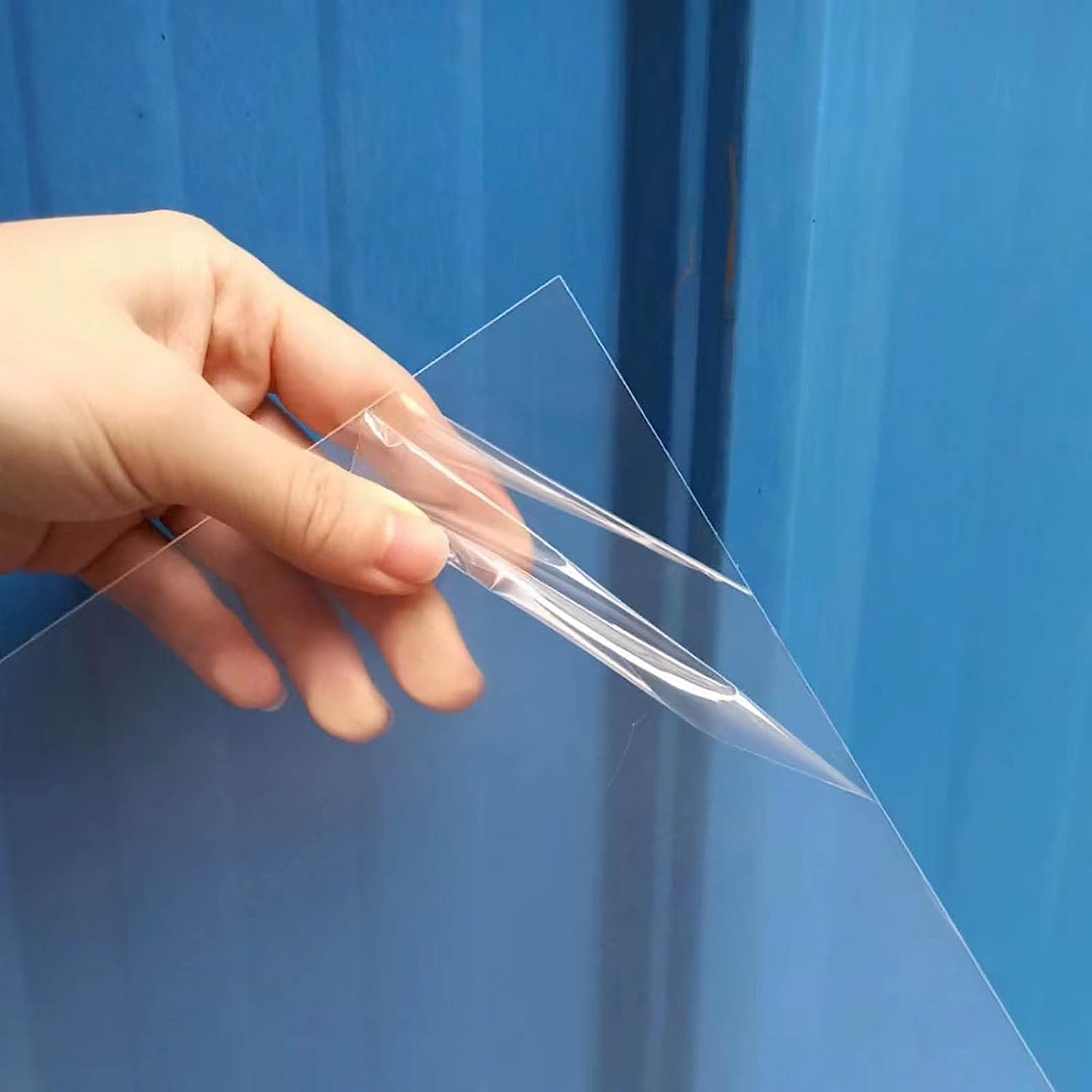
High Transparency Anti-Blue Light PET TV Screen Protector
A high transparency anti-blue light PET TV baffle is an optical PET screen protection panel designed for televisions, computer monitors, commercial displays, educational screens, digital signage, and other electronic displays. It combines high optical clarity, selective blue-light filtering, physical screen protection, lightweight construction, and flexible customization for different screen sizes and installation systems.
For TV accessory brands, electronics distributors, display manufacturers, schools, offices, commercial projects, and OEM buyers, the most important consideration is not simply whether a panel is described as “anti-blue light.” Buyers should evaluate measurable optical performance such as light transmittance, haze, spectral filtering, color shift, surface reflection, hardness, thickness, dimensional accuracy, and installation compatibility.
Wallis can support customized PET optical panels according to screen dimensions, thickness requirements, surface design, edge processing, installation method, optical specification, packaging, and B2B project requirements.
What Is an Anti-Blue Light PET TV Baffle?
An anti-blue light PET TV baffle, also called a PET TV screen protector or optical screen filter panel, is positioned in front of a television or display. Its optical structure is designed to reduce selected wavelengths within the blue portion of visible light while maintaining sufficient transmission of the rest of the visible spectrum.
Unlike a standard transparent plastic sheet that primarily provides physical protection, an optical PET panel can be engineered around screen-related requirements such as high transparency, controlled haze, spectral filtering, anti-glare performance, surface hardness, scratch resistance, color neutrality, and optical consistency.
The panel also creates a physical barrier between the display surface and the surrounding environment, helping reduce direct contact with fingerprints, dust, accidental touches, and light surface scratches.
Key Optical Parameters Buyers Should Evaluate
Professional screen-filter selection should be based on measurable optical and mechanical properties rather than marketing terminology alone. The following parameters are especially important for customized PET TV baffles and monitor screen protectors.
| Parameter | Why It Matters | Buyer Consideration |
| Visible Light Transmittance | Influences overall screen brightness and visual transparency. | Higher transparency is generally preferred where image brightness must be maintained. |
| Haze | Affects image sharpness and perceived clarity. | Low haze is normally preferred for high-definition display applications unless anti-glare diffusion is required. |
| Blue-Light Filtering | Determines how the panel modifies selected wavelengths in the blue region. | Specify wavelength range and test method rather than relying only on a general blocking percentage. |
| Color Shift | Strong spectral filtering can affect white balance and color reproduction. | Request sample evaluation when accurate screen color is important. |
| Surface Reflection | Reflections can reduce visibility under bright ambient lighting. | Anti-glare or anti-reflective options may be considered for offices, schools, retail, and public displays. |
| Surface Hardness | Influences resistance to handling and surface scratching. | Confirm hard-coating requirements for high-use commercial environments. |
| Thickness | Controls rigidity, weight, handling, and installation design. | Large TV panels generally require a suitable balance between stiffness and overall weight. |
Why High Transparency Matters for TV Screen Protection
A TV screen protector sits directly in the optical viewing path. If the PET panel has poor transparency, excessive haze, inconsistent coating, or noticeable color distortion, the apparent brightness, contrast, sharpness, and color quality of the display may be reduced.
Maintaining Image Brightness
High-transparency PET allows a large proportion of visible display light to pass through the panel. This helps minimize the loss of screen brightness caused by adding an external protective layer.
Controlling Haze
Low haze can help maintain sharp text, fine details, and high-resolution image quality. However, some applications may intentionally use a controlled matte or anti-glare surface to reduce reflections. The optimum haze level therefore depends on the viewing environment.
Reducing Unwanted Color Shift
Blue-light filtering should be balanced with color performance. Excessive filtration can create a yellow or warm visual appearance. For televisions, commercial displays, design monitors, and advertising screens, buyers should evaluate both spectral filtering and actual displayed color before approving production.
Understanding Blue-Light Filtering Performance
Blue light is part of the visible-light spectrum. An anti-blue light PET panel does not need to eliminate all blue wavelengths. Instead, an optical filter can be designed to reduce selected spectral regions while maintaining acceptable visible-light transmission and color performance.
When comparing materials, buyers should ask which wavelength range is being measured, what test method is used, and how filtration affects overall transmittance and color. A single “blue-light blocking percentage” without a wavelength specification provides limited technical information.
Anti-blue light PET TV baffles should be positioned as optical screen accessories rather than medical treatment products. Current clinical evidence does not establish blue-light filtering products as a treatment for digital eye strain, so product selection should focus on measurable optical filtering, display quality, physical protection, and application requirements.
Benefits of Anti-Blue Light PET TV Baffles
Selective Blue-Light Filtering
The optical PET structure can be designed to reduce selected blue-light wavelengths emitted by displays while allowing most of the useful visible spectrum to pass through.
High Optical Clarity
High-transparency PET helps maintain screen visibility, image detail, and color performance. This is especially important for 4K televisions, digital signage, meeting-room screens, educational displays, and other applications where image quality is a priority.
Physical Screen Protection
The external PET panel helps separate the original screen from direct contact, dust, fingerprints, light scratches, and accidental touches. This can be particularly useful in schools, exhibitions, retail locations, hotels, hospitals, meeting rooms, and other high-use environments.
Lightweight PET Construction
PET provides a useful combination of transparency, toughness, processability, and relatively low weight. This makes it practical for customized screen panels where installation, shipping weight, and handling need to be considered.
Flexible Customization
Panels can be developed according to different screen dimensions, thicknesses, shapes, corner designs, hole positions, hanging structures, optical specifications, surface treatments, protective films, and packaging requirements.
Customizable Design for Different Screen Sizes
TVs and professional displays vary significantly in diagonal size, visible display area, bezel width, overall dimensions, aspect ratio, stand position, thickness, ventilation design, and mounting configuration. For this reason, a universal screen protector may not provide an acceptable fit for every device.
Custom Width and Height
B2B buyers should provide the actual outer dimensions of the television or display rather than only the diagonal screen size. Two televisions described as the same inch size can have different bezel and housing dimensions.
Custom Thickness
Thickness affects panel stiffness, total weight, edge stability, packaging, and installation. Larger screens may require greater rigidity, while smaller monitor filters may prioritize lower weight and thin construction.
Custom Corners, Holes, and Edge Processing
PET panels can be designed with rounded corners, custom edge profiles, mounting holes, slots, hanging positions, or other mechanical features according to the installation structure.
Custom Installation Method
Depending on the application, a screen baffle may use hanging structures, hooks, slots, clips, tabs, removable fixing points, or a custom frame. The mounting design should avoid interfering with sensors, ventilation openings, speakers, touch functions, or screen controls.
Discuss Your Custom PET Screen Protector
How an Anti-Blue Light PET TV Baffle Works
The screen emits visible light across multiple wavelengths. An optical PET filter placed in front of the display modifies the transmission spectrum before the light reaches the viewer.
The filtering effect can be created through specialized PET material formulation, optical coating technology, multilayer structures, or other optical treatments depending on the required design. The goal is to achieve the required spectral performance without unnecessarily reducing overall image brightness or causing excessive color shift.
Actual performance should therefore be evaluated as a combination of spectral transmittance, visible light transmittance, haze, color difference, reflection, surface properties, thickness, and final screen appearance.
Applications Beyond TV Screens
Computer Monitors
Customized PET screen filters can be produced for office monitors, design workstations, control-room displays, reception computers, and shared screens where physical screen protection and optical filtering are required.
Educational Displays and Smart Boards
Schools, training centers, lecture rooms, and universities increasingly use large digital displays. External PET panels can help protect these screens from frequent physical contact while providing customized optical performance.
Commercial Digital Signage
Retail stores, shopping centers, exhibition halls, hotels, restaurants, banks, and transportation facilities use digital signage for long operating periods. High-transparency PET protection helps maintain display visibility while reducing direct contact with the original screen.
Medical and Public Information Displays
Hospitals, clinics, public service centers, and reception areas may use protective PET panels for information screens and shared displays. Material and cleaning compatibility should be confirmed according to the actual use environment.
Industrial and Control-Room Displays
Factories, security centers, monitoring rooms, broadcasting facilities, and industrial control systems may require large protective display panels with customized dimensions and durable surface performance.
PET TV Baffle vs Other Screen Filtering Solutions
PET TV Baffle vs Software Blue-Light Mode
Software night modes modify the display output electronically, usually by changing color temperature. A PET screen filter is a physical optical component that works independently of the television or operating system and can also provide mechanical screen protection.
PET Baffle vs Adhesive Screen Protector Film
Adhesive protector films are typically applied directly to the screen. A rigid or semi-rigid PET baffle can be removable, making replacement, cleaning, handling, and installation easier for larger televisions and commercial displays.
PET Baffle vs Ordinary Transparent Plastic Sheet
A standard transparent plastic sheet may provide basic physical protection, but an optical PET TV baffle can be specified according to light transmission, haze, blue-light filtering, glare, surface hardness, and other display-related performance requirements.

How to Customize an Anti-Blue Light PET TV Baffle
1. Confirm the Exact Screen Dimensions
Provide the television or monitor model, overall width and height, visible screen dimensions, bezel width, thickness, aspect ratio, and any sensors, cameras, speakers, or ventilation openings that must remain uncovered.
2. Choose the Required Thickness
Select thickness according to screen size, rigidity requirement, overall weight, installation method, handling frequency, and transportation requirements.
3. Define Optical Performance
Specify required visible-light transmission, haze, blue-light filtering range, color requirements, anti-glare performance, surface reflection, and any other optical target important to the project.
4. Select Surface Protection
For commercial or frequently handled displays, buyers may need enhanced scratch resistance, hard coating, anti-fingerprint performance, anti-glare treatment, or protective masking film during transportation and installation.
5. Confirm Edge and Mounting Design
Confirm corner radius, holes, slots, edge finish, hooks, clips, hanging structures, protective pads, or other installation components according to the final screen design.
6. Test Samples Before Mass Production
Sample approval is especially important for OEM brands and commercial projects. Evaluate actual screen brightness, clarity, color reproduction, reflection, surface quality, dimensional fit, edge finish, installation stability, and packaging before confirming volume production.
Quality Control for Optical PET Screen Panels
Optical Inspection
Optical inspection may include visible-light transmittance, haze, spectral transmission, color consistency, coating uniformity, reflection, and visual defects depending on the agreed specification.
Surface Inspection
The panel should be checked for scratches, contamination, particles, bubbles, coating defects, marks, edge damage, and other appearance issues that may become visible when installed in front of a bright display.
Dimensional Inspection
Overall panel dimensions, thickness, hole position, corner radius, slot dimensions, and mounting features should be inspected according to the approved drawing and tolerance requirements.
Final Screen Evaluation
For important OEM projects, the most useful validation is testing the finished panel on the target television or display. This makes it possible to evaluate real-world image quality, color shift, reflection, fit, vibration, mounting stability, and cleaning performance.
What Information Should B2B Buyers Provide?
TV or display model and application.
Overall panel width and height.
Required PET thickness.
Required visible-light transmittance and haze.
Required blue-light filtering wavelength or performance target.
Glossy, matte, anti-glare, anti-reflective, or hard-coated surface requirements.
Corner radius, holes, slots, or edge-processing drawing.
Installation method and accessories.
Protective film and packaging requirements.
Sample quantity and expected production volume.
Request Samples & Custom Specification
Why Choose Wallis for Customized PET TV Baffles?
Wallis supplies PET sheet and customized plastic material solutions for electronics, display, printing, card, packaging, decoration, and industrial applications. For PET TV baffle projects, customization can be developed according to the customer's screen dimensions, optical requirements, thickness, surface properties, mechanical processing, packaging, and volume-production needs.
Custom Optical Requirements
Different projects prioritize different combinations of transparency, haze, filtering performance, glare control, scratch resistance, and color neutrality. Specifications should therefore be confirmed according to the actual display and viewing environment.
Custom Mechanical Processing
Size, shape, corner design, holes, slots, mounting locations, and other structural requirements can be evaluated according to the customer's drawing or physical screen sample.
Sample-to-Mass-Production Support
For OEM manufacturers, distributors, electronics accessory brands, and project buyers, sample validation before bulk production helps confirm appearance, screen compatibility, optical quality, installation, and final packaging.
FAQ About Anti-Blue Light PET TV Baffles
What is an anti-blue light PET TV baffle?
It is a transparent PET optical panel installed in front of a television or electronic display. It can combine selective blue-light filtering with physical screen protection and customized optical or mechanical properties.
Does an anti-blue light PET screen protector affect picture quality?
Any additional optical layer can influence light transmission, reflection, haze, or color to some degree. A high-quality PET panel should therefore be designed to balance filtering performance with high transparency and low visual distortion. Sample testing on the target screen is recommended.
Can the PET TV baffle be customized for different TV sizes?
Yes. Panels can be developed according to screen width, height, thickness, aspect ratio, bezel configuration, corner radius, hole position, mounting design, and other structural requirements.
How should blue-light filtering performance be specified?
Rather than specifying only a general blocking percentage, buyers should ideally define the wavelength range, spectral transmission requirement, visible-light transmission target, and acceptable color shift. This provides a more meaningful technical specification.
What is the difference between low haze and anti-glare PET?
Low-haze PET prioritizes maximum image clarity and sharpness. Anti-glare surfaces intentionally diffuse some reflected light to improve viewing in bright environments. The best choice depends on lighting conditions and image-quality requirements.
Can PET TV screen protectors have anti-scratch or hard-coated surfaces?
Surface protection options can be evaluated according to the project requirements. Buyers should specify the expected level of scratch resistance, handling frequency, cleaning method, and target application when requesting a customized solution.
Can these PET panels be used for computer monitors and commercial displays?
Yes. Customized PET optical panels can be developed for televisions, desktop monitors, digital signage, advertising displays, educational screens, conference-room displays, industrial monitors, and other electronic screens.
Is an anti-blue light PET TV baffle a medical product?
No. It should be treated as an optical screen accessory and physical screen protector unless it has been specifically developed, tested, and approved under an applicable medical-device framework. Blue-light filtering performance should not be presented as a medical treatment for digital eye strain.
Should I request samples before placing a bulk order?
Yes. Sample testing is recommended for B2B and OEM projects because the final viewing result depends on the interaction between the PET material, optical treatment, television display, ambient lighting, panel dimensions, and installation method.
Conclusion
A high transparency customizable anti-blue light PET TV baffle combines optical filtering, high visual transparency, physical screen protection, lightweight PET construction, and flexible dimensional customization. It can be used for TVs, monitors, digital signage, educational displays, commercial screens, control-room monitors, and other large electronic displays.
For professional buyers, the best solution should be selected using measurable specifications such as visible-light transmittance, haze, wavelength-specific filtering, color performance, surface reflection, hardness, thickness, dimensional tolerance, and mounting compatibility rather than relying only on general marketing descriptions.
By confirming the target display, optical requirements, panel dimensions, surface treatment, installation design, and sample performance before mass production, OEM manufacturers and distributors can develop a more reliable PET screen protection solution for their target market.
Contact Wallis for Custom PET TV Baffles