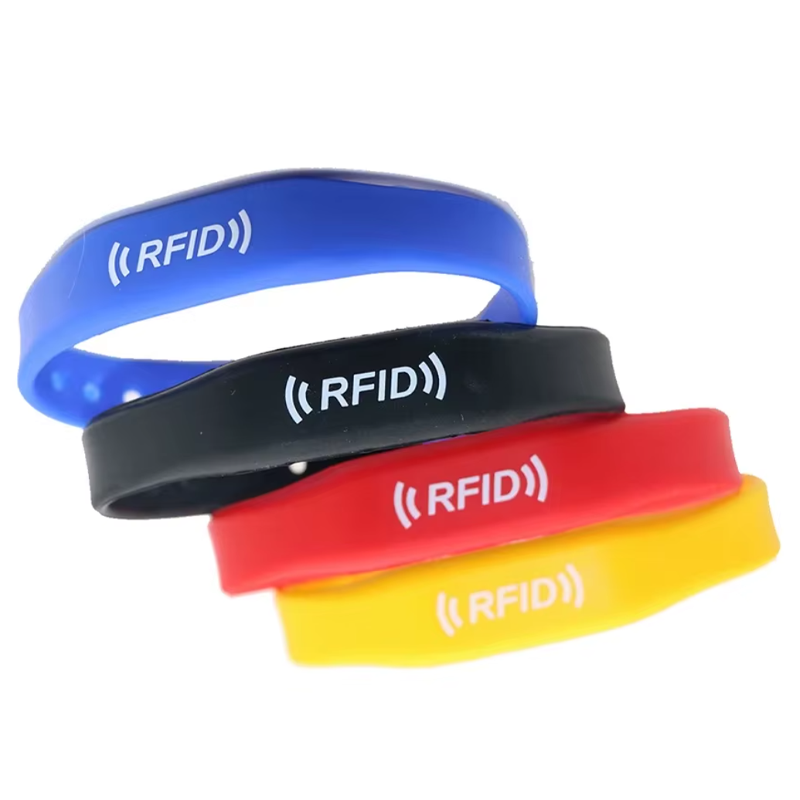
Custom PVC and Silicone RFID Wristbands with Embedded Chips
Wallis offers customized plastic products and card-related solutions for business customers. For projects requiring wearable identification, custom PVC and silicone RFID wristbands can combine a branded bracelet design with an embedded RFID or NFC chip for contactless identification, subject to the selected product configuration.
Designed for B2B sourcing projects, custom RFID wristbands can be developed for events, membership programs, hotels, leisure facilities, gyms and access control applications. Buyers can specify the wristband material, color, dimensions, logo, chip technology and packaging requirements to match their project.
Whether you are sourcing PVC RFID wristbands for event distribution or reusable silicone RFID bracelets for membership management, the appropriate solution depends on the application, reader compatibility and required service life.

Product Specifications
| Parameter | Specification |
| Product Name | Custom PVC and Silicone RFID Wristbands |
| Product Type | RFID Wristband / NFC Bracelet |
| Material | PVC or silicone, according to selected model |
| RFID Technology | LF, HF/NFC or UHF, subject to compatibility |
| Frequency Options | 125 kHz, 13.56 MHz or 860–960 MHz, where supported |
| Chip Type | Selected according to the application and reader system |
| Color | Standard or customized colors |
| Logo | Custom logo, text and graphic design |
| Decoration | Printing, embossing, debossing or other compatible methods |
| Size | Standard or customized dimensions, subject to model |
| Closure | Fixed, adjustable or other compatible structures |
| Data Personalization | Encoding or serialization, subject to confirmation |
| Applications | Events, membership, access control and identification |
| Customization | OEM/ODM requirements can be reviewed |
| MOQ | Confirmed according to model and order requirements |
| Packaging | Bulk or customized packaging, subject to confirmation |
What Are RFID Wristbands with Embedded Chips?
RFID wristbands are wearable identification products that incorporate a radio-frequency identification chip and antenna into a bracelet or wristband structure.
When presented to a compatible reader, the wristband can transmit identification data according to the selected chip technology and system configuration. Depending on the application, this data can be used to identify a registered user, validate an access credential or associate a wristband with a membership record.
NFC wristbands use compatible high-frequency technology, commonly operating at 13.56 MHz. Some NFC chips can also interact with compatible NFC-enabled smartphones, depending on the chip, device and intended function.
An RFID wristband is not automatically compatible with every reader or payment system. Chip selection, communication protocol, encoding requirements and backend software should be confirmed before production.
PVC RFID Wristbands vs. Silicone RFID Bracelets
PVC and silicone are two different materials that may be used for RFID wristband products. The best option depends on the desired appearance, wearing experience, reuse requirements and application.
1. Custom PVC RFID Wristbands
PVC RFID wristbands are suitable for projects that prioritize customized graphics, printed designs and branded identification products.
Depending on the model, PVC wristbands can incorporate logos, text, color graphics and an embedded RFID inlay. They may be considered for event identification, visitor management, promotional programs and selected access applications.
Potential advantages:
Flexible graphic and branding options
Custom colors, shapes and dimensions
Suitable for project-specific identification designs
Options for different closure and distribution requirements
The final durability, flexibility, water resistance and reuse potential depend on the specific PVC formulation and product construction.
2. Custom Silicone RFID Bracelets
Silicone RFID bracelets are commonly considered for reusable wristband projects where flexibility and wearing comfort are important.
Depending on the model, they can feature a molded logo, printed details, custom colors and an integrated RFID or NFC component.
Potential advantages:
Flexible bracelet designs
Options for molded or printed branding
Reusable configurations where the design permits
Suitable for selected membership, leisure and access applications
Waterproof performance, chemical resistance and temperature tolerance must be verified for the actual wristband model rather than assumed from the material name alone.

RFID Chip and Frequency Options
Choosing the correct RFID chip is essential because different frequencies and protocols serve different systems.
LF RFID Wristbands — 125 kHz
Low-frequency RFID may be used in certain proximity identification and legacy access control systems.
The wristband must contain a compatible chip and work with the intended reader. LF systems should not be assumed to support NFC smartphone interaction.
HF RFID and NFC Wristbands — 13.56 MHz
High-frequency RFID and NFC wristbands are used in a range of contactless identification and interaction applications.
Depending on system requirements, possible chip families include selected MIFARE and NTAG products. The exact chip should be confirmed against the existing reader, protocol, memory requirements and intended functionality.
Potential applications include compatible membership systems, event credentials and selected contactless access solutions.
UHF RFID Wristbands — 860–960 MHz
UHF RFID operates in a different frequency range and is designed for compatible UHF reader systems. It may be considered for applications requiring identification across a different reading environment.
Actual read performance depends on the chip, antenna, reader, orientation, nearby materials and operating environment. UHF should not be selected solely on the assumption that it always offers a longer or better reading range.
Important: LF, HF/NFC and UHF technologies are not interchangeable. Share your reader model, system protocol or existing credential specifications before selecting a chip.

Customization Options for RFID Wristbands
Custom Logo and Branding
Add a company logo, event identity, organization name or other approved artwork to the wristband. Depending on the material and model, decoration options may include printing, embossing, debossing or other compatible techniques.
Custom Colors
Select colors to match your brand identity or event theme. Provide Pantone references or an approved sample when color consistency is important.
Customized Sizes and Shapes
Specify the required wrist circumference, band width, thickness and overall shape. The final design should accommodate the chip and antenna while maintaining the intended wearing experience.
Chip Encoding and Data Personalization
Some RFID projects require pre-encoded chip data, unique identifiers or a predefined data structure. These requirements should be discussed before ordering.
Encoding services, UID customization, secure credentials and access-system integration depend on the selected chip and technical requirements. Confirm what can be supported for your specific project.
Closure and Packaging Options
Closure options may vary according to whether the wristband is intended for one-time distribution, controlled entry or repeated use.
Packaging can also be discussed according to order quantity, labeling requirements and the destination market.

Applications of Custom PVC and Silicone RFID Wristbands
Events and Festivals
RFID wristbands can serve as contactless event credentials when integrated with compatible readers and event management systems.
Possible applications include attendee identification, designated-area access and linking a credential to a registered event participant.
Hotels, Resorts and Leisure Facilities
Compatible RFID wristbands can be used in selected guest identification and access systems. Integration with room access, lockers or other services depends on the facility's hardware and software.
Gyms and Sports Clubs
RFID wristbands can be configured for compatible membership identification or facility access systems, helping organizations manage registered users through their existing infrastructure.
Swimming Pools and Water Parks
For aquatic environments, the complete wristband must meet the required water-exposure conditions. Choose a model with verified water resistance and a suitable closure, chip enclosure and antenna construction.
Membership and Visitor Management
Organizations may use RFID wristbands as wearable credentials linked to membership records, visitor registrations or approved access permissions.
The wristband itself does not manage user accounts or permissions. Those functions depend on the connected reader and software system.
Promotional and Branded Merchandise
Custom RFID or NFC bracelets can combine brand identity with a compatible digital interaction. Depending on the chip and system, NFC designs may support opening a programmed link or presenting other supported data.

Why Choose Wallis for Custom Wristband Projects?
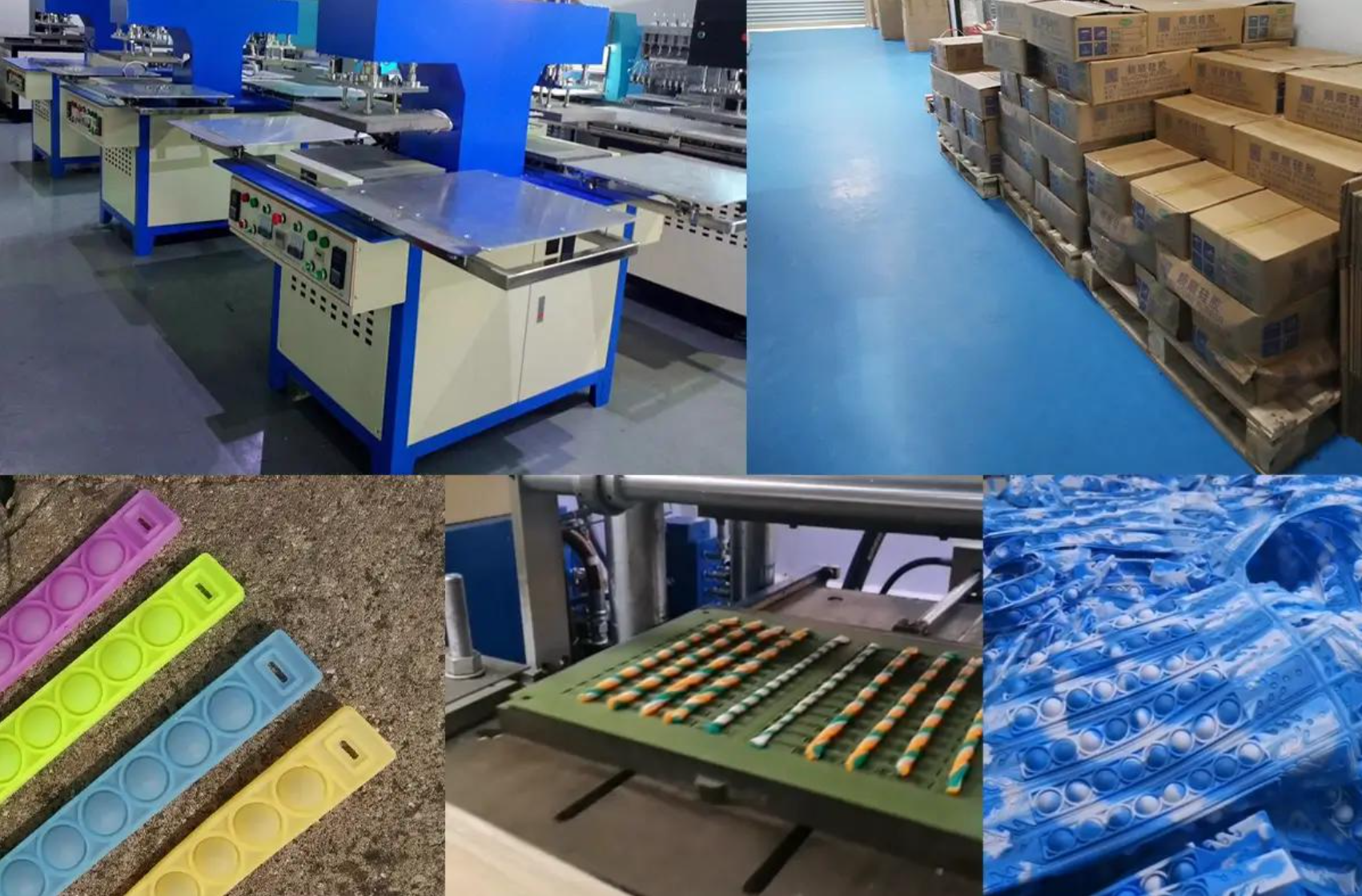
Wallis is a supplier of plastic sheets, card materials, finished cards and customized plastic products. Our experience in plastic product applications provides a starting point for reviewing customer-specific product requirements.
For RFID wristband projects, the most important step is to align the material, wristband construction and chip technology with the intended use.
Project-Based Customization
Provide your design, dimensions, preferred material and intended application so the product requirements can be reviewed.
Material and Design Evaluation
PVC and silicone have different characteristics. The selected construction should match the required appearance, wearing conditions and expected product life.
Chip Compatibility Planning
Share your existing reader or system information to help identify the relevant chip technology and protocol before confirming specifications.
Bulk Order Coordination
For wholesale projects, confirm the required quantity, packaging, personalization, delivery destination and production schedule before placing the order.
Final manufacturing scope, chip sourcing, encoding services, testing and product availability should be confirmed directly with Wallis for each project.
![factory]()
Frequently Asked Questions
1. Can I customize PVC RFID wristbands with my company logo?
Custom logo and color requirements can be reviewed according to the selected product construction. Provide your artwork and required dimensions to determine the suitable decoration method.
2. What is the difference between PVC and silicone RFID wristbands?
PVC and silicone have different material properties and construction possibilities. PVC may suit certain printed and customized designs, while silicone is commonly selected for flexible, reusable bracelet styles. The best choice depends on the product model and intended application.
3. Which RFID frequencies are available?
Common RFID frequency categories include LF at 125 kHz, HF/NFC at 13.56 MHz and UHF at 860–960 MHz. Availability depends on the selected wristband construction and chip configuration.
4. Can an RFID wristband work with my existing access control system?
Compatibility depends on the chip, frequency, protocol, reader and credential configuration. Provide the existing system details before ordering and test a sample with the intended equipment.
5. Are RFID wristbands the same as NFC bracelets?
NFC is a subset of high-frequency contactless technology. Not every RFID wristband supports NFC smartphone interactions, and not every RFID chip is compatible with the same reader or application.
6. Can the chips be pre-encoded?
Pre-encoding may be available for compatible configurations, but the exact service must be confirmed. Specify the required data format, identifier structure and any system-specific security requirements.
7. Are PVC and silicone RFID wristbands waterproof?
Water resistance varies by construction and model. Confirm the expected exposure, such as occasional splashes, showers or prolonged immersion, and request supporting test information for the selected product.
8. Can RFID wristbands be reused?
Some models are designed for repeated use, while others are intended for single-use distribution. Reusability depends on the wristband construction, closure, chip integration and operational requirements.