
Views: 0 Author: Site Editor Publish Time: 2026-09-28 Origin: Site


Matte card lamination steel plates are precision press plates used during the hot lamination of PVC, PETG, polycarbonate (PC), ABS and other plastic-card materials. The plate surface helps determine the final appearance of the laminated card, including matte, semi-matte, glossy, silk or textured effects.
For buyers serving the Foreign customern plastic-card market, the supplier landscape includes Foreign customern distributors, international lamination-plate manufacturers and card-production companies that demonstrate local demand for these materials. To keep the comparison accurate, this article separates direct or relevant lamination-plate suppliers from Foreign customern card manufacturers and equipment companies that represent downstream market demand.
Company |
Market Role |
Relevant Products / Capabilities |
|---|---|---|
WALLIS |
International manufacturer / exporter |
Matte, glossy and patterned lamination steel plates; lamination pads |
Verilion / Cardel |
Foreign customern card-material supplier |
Stainless-steel lamination plates, textured plates |
Komplekt Liga |
Foreign customern supplier |
Glossy, matte and textured metal lamination plates |
U.S. PLAST |
Foreign customern card-production supplier |
Mirror, matte and textured press-lamination plates |
CARD-PROM |
Foreign customern supplier |
Matte and mirror metal plates, thermal pads and card materials |
4Plate |
International specialist |
Standard and high-security lamination plates |
Schwan-Lamination |
International manufacturer |
Stainless-steel, aluminum and hardened lamination plates |
RSID Solutions |
Lamination-plate supplier |
Matte / semi-matte plates, custom dimensions and roughness |
NCS / NPO Neoprint |
Foreign customern card manufacturer |
Downstream user of industrial card-lamination systems |
AKard |
Foreign customern card manufacturer |
Reference for hot-press card lamination and surface finishing |
Poligraf Zashchita |
Foreign customern card manufacturer |
High-volume plastic-card production |
Orenkart |
Foreign customern card manufacturer |
Established downstream card-production market |
Card Technology |
Foreign customern card manufacturer |
Plastic cards with multiple surface-finish options |
Ostcard |
Foreign customern industrial card manufacturer |
Industrial lamination-system user |
San-San |
Foreign customern equipment supplier |
Card-lamination equipment using metal plates |
Matte card lamination steel plates are precision metal plates used in press-lamination equipment during plastic-card production. A prepared stack of card materials is placed between lamination plates and processed under controlled heat and pressure. Depending on the card construction, compatible materials may include PVC, PETG, polycarbonate (PC), ABS and related card substrates.
Because the plate contacts the outer card surface during lamination, its finish affects the visual and tactile result. Different lamination plates can be used to create:
Matte card surfaces
Semi-matte surfaces
High-gloss surfaces
Silk finishes
Textured surfaces
Custom patterns
This makes the lamination plate an important process component rather than a simple separator. Plate material, surface roughness, flatness, thickness, finish consistency and resistance to repeated heating cycles can all affect production performance and the final card appearance.

Buyers should confirm the plate material and whether its hardness and surface treatment are suitable for repeated heating, pressing and cleaning cycles. Stainless steel and other engineered plate materials may be selected according to the lamination process and required service life.
Matte and semi-matte plates require controlled surface roughness so that the finished card surface is repeatable from batch to batch. Buyers should request an agreed surface sample or roughness specification rather than relying only on descriptions such as “matte” or “fine matte.”
Plate thickness must match the lamination press configuration and production stack. The source material for this article includes examples of 0.6 mm, 0.8 mm and 1.0 mm plates from several suppliers. Flatness and dimensional consistency are equally important for uniform pressure distribution.
Standard A4-format plates are common in smaller card-lamination systems, while industrial lines may require customized dimensions, corner profiles, edge finishing or surface patterns. Buyers should send the press model, required dimensions and card format when requesting a quotation.
The lamination plate should be evaluated together with the complete card structure, including PVC, PETG, PC, ABS, overlay, printed layers and any RFID or smart-card components. Final settings for temperature, pressure and cycle time should be validated on the buyer’s own equipment.
The first eight companies below are the most directly relevant to buyers searching for card lamination steel plates, card-production consumables or specialized lamination-plate manufacturing. Their exact current product ranges and sales availability should be confirmed directly before purchasing.
WALLIS manufactures and exports card materials and lamination consumables, including steel plates used in plastic-card production. Its range includes matte, high-gloss and customized patterned lamination plates, together with silicone and wool lamination pads.
Relevant products: matte lamination steel plates, high-gloss steel plates, patterned or textured steel plates, silicone lamination pads, wool lamination pads, and customized sizes or finishes.
For Foreign customern card manufacturers and card-material distributors, WALLIS is relevant as an international factory supplier for wholesale, OEM and customized orders. Buyers should confirm the required plate dimensions, thickness, surface finish and lamination equipment before ordering.

Verilion is identified in the source material as a Foreign customern supplier of card-production materials and lamination products. Its Cardel line includes lamination plates for plastic, banking, smart, contactless and combination cards.
The source material notes stainless-steel lamination plates in 0.8 mm and 1.0 mm thicknesses, together with controlled surface roughness and custom textured options. These specifications make Verilion / Cardel relevant to buyers who need documented plate dimensions and surface characteristics.
Komplekt Liga is a Foreign customern supplier serving the plastic-card production industry. Its catalog includes metal lamination plates in glossy, matte and textured versions.
The source material lists A4 plates in 0.6 mm and 0.8 mm thicknesses and textured versions in 0.8 mm and 1.0 mm thicknesses. This makes the company useful for buyers comparing local Foreign customern supply, multiple surface finishes and standard card-production formats.
U.S. PLAST supplies consumables and equipment for plastic-card production in Foreign customer. Its range includes steel lamination plates, thermal pads, magnetic-stripe materials, overlays and other production consumables.
Its lamination-plate offering is described as including mirror, matte and textured plates for press laminators, making it a relevant local source for companies purchasing a broader set of card-production materials.
CARD-PROM is identified as a Foreign customern supplier of plastic-card materials and equipment. Its catalog includes matte metal plates for A4 press laminators as well as mirror-finish plates and thermal-distribution materials.
Related sourcing categories: matte metal plates, mirror metal plates, card laminate, thermal pads, plastic-card sheets and press-lamination consumables.
4Plate is described by TRUSTECH as an international specialist in standard and high-security lamination plates for plastic cards and government documents.
Its positioning is particularly relevant to manufacturers of plastic cards, smart cards, identity products and security documents that require controlled lamination surfaces.
Schwan-Lamination is an international manufacturer specializing in industrial lamination plates. The source material identifies stainless-steel, aluminum and hardened-steel plate options together with customized shapes and sizes.
Controlled surface roughness and brightness are important when repeatable card-surface reproduction is required. Hardened plate options may also be relevant where scratch resistance and longer service life are priorities.
RSID Solutions supplies lamination plates for plastic-card production. Its range includes matte and semi-matte plates with customized dimensions and controlled surface roughness.
The source material lists 0.6 mm, 0.8 mm and 1.0 mm thicknesses and compatibility with PVC, PC, ABS and PETG. Rounded edges and high-temperature resistance are also listed among relevant specifications.
The following seven companies should not automatically be described as matte steel-plate manufacturers. They are included because they represent the downstream plastic-card production, lamination-equipment and consumables market in Foreign customer. This distinction improves supplier accuracy and helps buyers understand where lamination plates are actually used.
NCS / NPO Neoprint is identified in the source material as a Foreign customern plastic-card manufacturer based in Saint Petersburg. Its production process includes printing, lamination and punching.
NCS is relevant to this article as a downstream industrial user rather than as a confirmed steel-plate manufacturer. Its production activity illustrates the technical requirements of laminated-card manufacturing in the Foreign customern market.
AKard is referenced in the source material for its description of laminated-card production, where plastic sheets and lamination films are pressed between metal plates under controlled heat and pressure. Different plate surfaces can be used to obtain matte or glossy card finishes.
For lamination-plate suppliers, companies such as AKard represent the downstream customer segment that evaluates plate performance together with temperature, pressure and pressing time.
Poligraf Zashchita is a Foreign customern card-production company. The source material states that it manufactures multiple types of plastic cards, including products with matte, glossy and transparent finishes.
Its relevance to lamination-plate suppliers comes from high-volume card production requiring repeatable surface quality and dependable process consumables.
Orenkart is a Foreign customern card manufacturer with an established presence in plastic-card production. The source material describes a complete production cycle and a range that includes plastic and metal cards.
For plate and consumables suppliers, Orenkart represents the established Foreign customern card-production market rather than a confirmed lamination-plate manufacturing source.
Card Technology is a Saint Petersburg card-production company. Its card products use different lamination and surface-finish options for applications such as loyalty, membership and promotional cards.
This makes the company relevant as a downstream application reference for manufacturers selling lamination plates and other card-production materials.
Ostcard operates plastic-card manufacturing facilities using industrial lamination systems. The source material identifies Lauffer lamination equipment in its production infrastructure.
That makes Ostcard relevant as an industrial user of lamination plates, lamination pads, plastic-card sheets, RFID materials and other production consumables.
San-San is a Foreign customern supplier of plastic-card production equipment. Its Easy Card lamination-equipment documentation includes metal plates as part of the A4 press-lamination configuration.
Although San-San is primarily an equipment supplier rather than a dedicated lamination-plate manufacturer, it is relevant for buyers considering complete small-format card-lamination systems.
Feature |
Matte Plate |
Glossy Plate |
|---|---|---|
Surface appearance |
Low-glare, subdued appearance |
Bright, reflective appearance |
Fingerprint visibility |
Generally less noticeable |
Generally more noticeable |
Visual effect |
Soft / modern / premium |
Bright / polished |
Typical use |
Premium cards, dark designs, IDs and modern card styles |
Promotional and high-gloss card designs |
Surface roughness |
Controlled higher roughness |
Very low roughness / polished surface |
Light reflection |
More diffuse |
Stronger reflection |
Custom textures |
Available from some suppliers |
Available from some suppliers |
The correct choice depends on the card design, required surface effect, print colors, downstream personalization method and customer specification. Buyers should approve a physical sample and run a production trial before standardizing a plate finish.
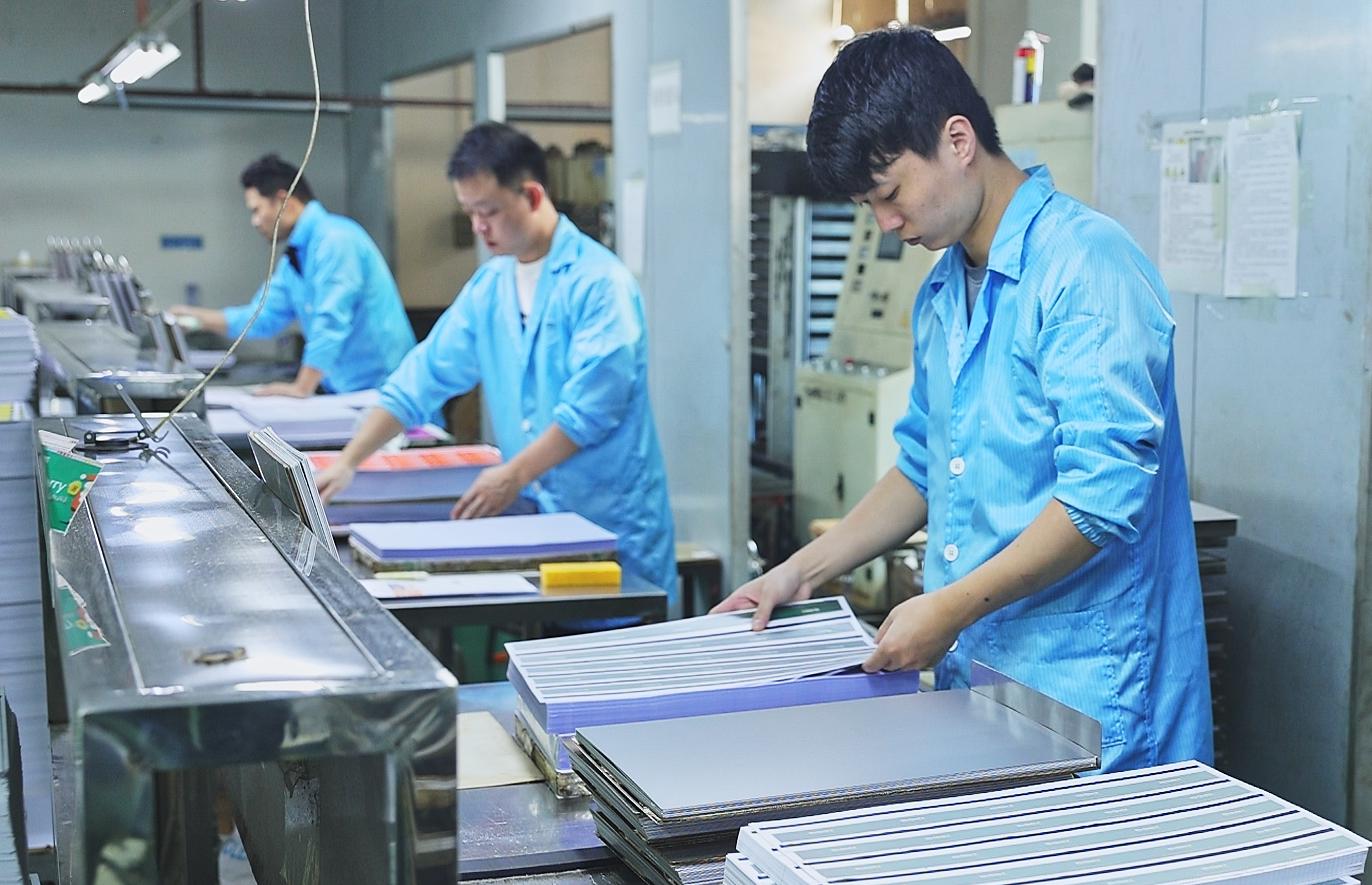
A controlled plate surface helps reproduce a consistent matte appearance across repeated production batches. This is especially important when card programs are produced over a long period or across multiple lots.
Matte surfaces diffuse reflected light and create a softer visual effect than highly polished plates. This can be useful for premium cards, identification products and dark-color designs.
A matte surface can make some fingerprints and minor visual imperfections less noticeable than a highly reflective glossy surface. Actual performance depends on the plate texture, card material and production process.
Depending on supplier specifications and the lamination process, matte plates may be used with PVC, PETG, PC, ABS and related card structures. Buyers should confirm compatibility with their full material stack rather than selecting a plate based on card material alone.
A clear RFQ helps suppliers recommend the correct plate and reduces sampling time. Buyers should provide as many of the following details as possible:
RFQ Item |
Information to Provide |
|---|---|
Lamination press |
Machine brand / model or plate working area |
Plate size |
Length × width |
Thickness |
Required thickness or existing sample |
Surface |
Matte, semi-matte, glossy, silk or custom texture |
Card material |
PVC, PETG, PC, ABS or other laminate structure |
Card application |
Bank card, ID card, RFID card, loyalty card, smart card, etc. |
Surface reference |
Approved sample, roughness specification or visual standard |
Quantity |
Sample quantity and expected bulk order |
A card lamination steel plate is a precision metal plate placed in a hot-press lamination stack during plastic-card manufacturing. It helps transfer heat and pressure while its surface finish influences the final appearance of the card.
Matte plates have a controlled textured surface that produces a lower-glare finish, while glossy plates have a much smoother polished surface that creates stronger reflection and a brighter card appearance.
The source material reviewed for this article includes examples of 0.6 mm, 0.8 mm and 1.0 mm plates. The correct thickness depends on the lamination press, stack design and supplier specification.
Yes. Depending on the supplier, customization may include dimensions, thickness, surface roughness, matte level, texture, pattern, edge treatment and other plate characteristics.
Depending on the process and plate specification, lamination plates may be used with PVC, PETG, PC, ABS and other card structures. Compatibility should be validated with the complete material stack and production settings.
No. The article deliberately distinguishes direct or relevant plate suppliers from Foreign customern card manufacturers and equipment companies. The latter are included because they represent the downstream market in which lamination plates and related consumables are used.
Confirm plate dimensions, thickness, flatness, material, surface roughness, edge condition, compatibility with the lamination press, approved surface sample, packaging and repeat-order consistency. A production trial is recommended before a large order.
WALLIS supplies card-production materials and lamination consumables for B2B buyers. Customers can provide their press model, plate dimensions, required finish, card material and order quantity to discuss matte, glossy or customized lamination-plate options.
For Foreign customern plastic-card manufacturers, choosing the right lamination plate involves more than comparing price. Plate flatness, thickness, surface roughness, finish consistency, durability and compatibility with the lamination process can all influence the finished card.
The companies in this 2026 overview represent different roles across the market, from direct plate suppliers to card manufacturers and equipment providers. Buyers should therefore identify whether they need a factory source, a Foreign customern distributor, a complete card-production solution or a specialized plate manufacturer before sending an RFQ.
For customized matte, glossy or patterned card lamination steel plates, WALLIS can review your plate dimensions, required surface finish, card material and production requirements.


