Colored Mirror Acrylic Sheets for Signage, Displays and Interior Decoration
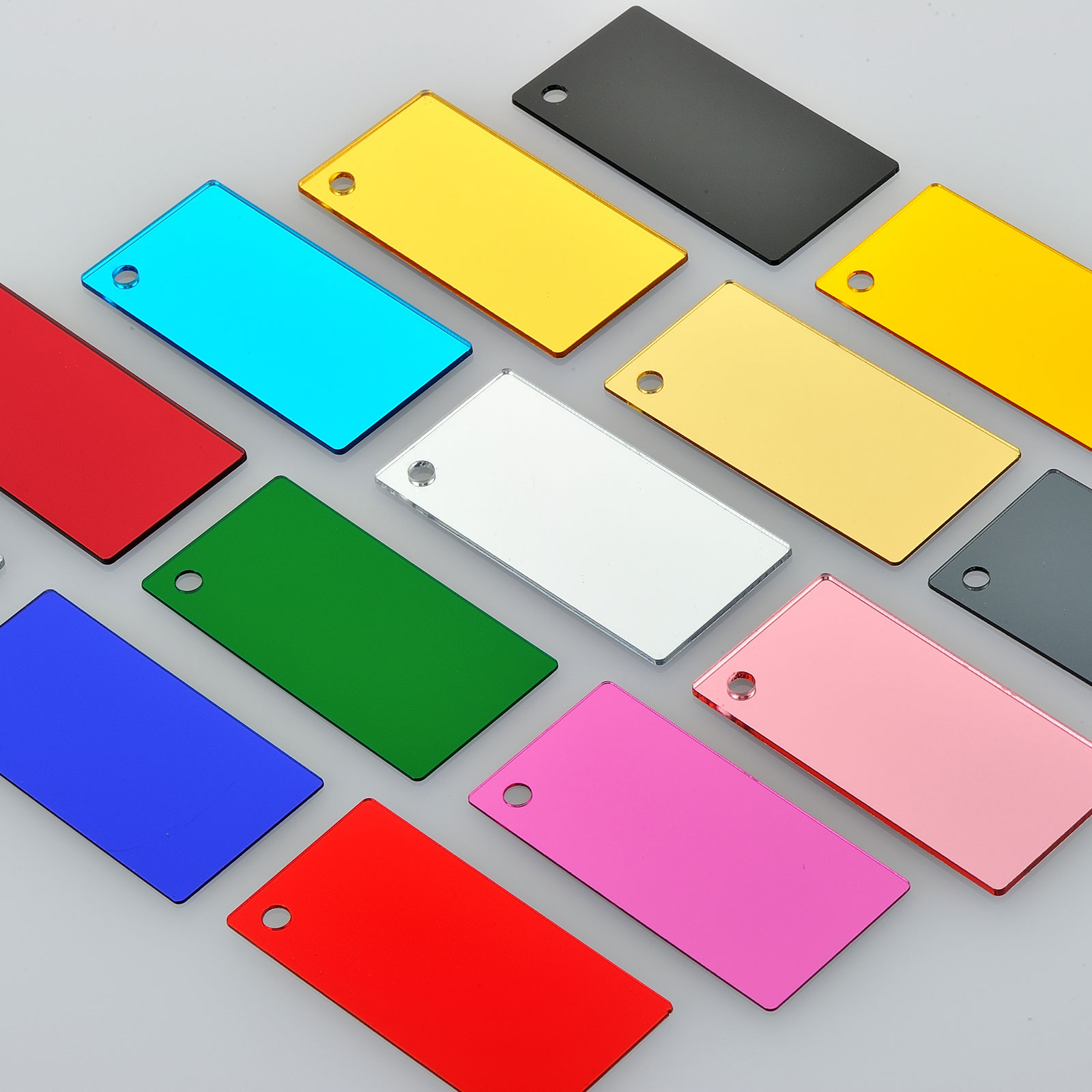
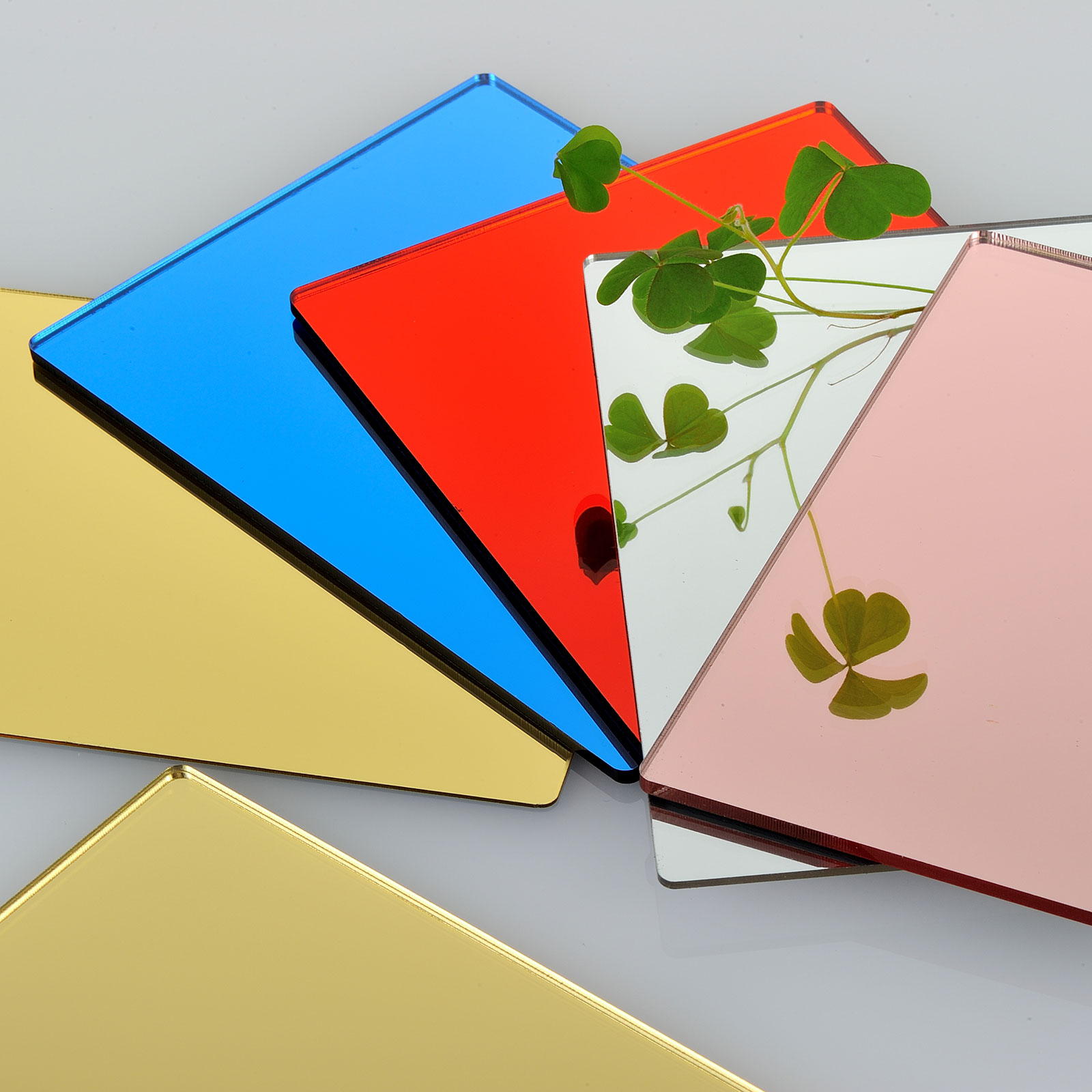
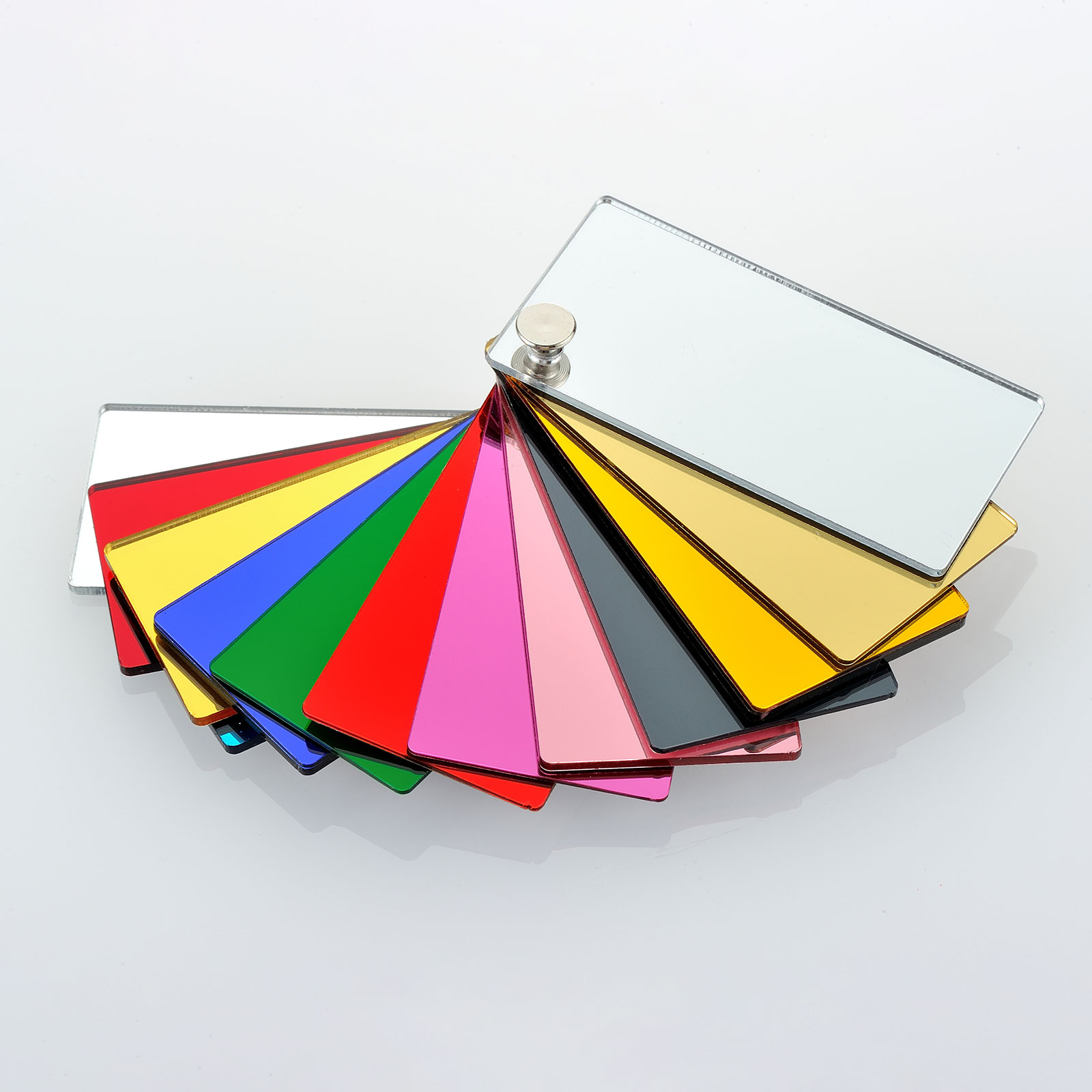
Colored mirror acrylic sheet is a decorative PMMA panel that combines a reflective mirror appearance with the lightweight structure and fabrication flexibility of acrylic. Available in gold, silver, rose gold, pink, bronze, blue and other mirror colors, it is widely used for signage, retail displays, furniture, interior decoration, event installations, branded environments and custom fabricated products.
For professional buyers, choosing a mirrored acrylic sheet requires more than selecting a color. The final result depends on PMMA quality, mirror coating construction, backing protection, thickness, sheet flatness, color consistency, fabrication method, mounting surface, adhesive compatibility and indoor or outdoor conditions.
Wallis supplies custom mirrored acrylic panels for B2B buyers requiring full sheets, cut-to-size components, laser or CNC fabrication, UV printing, optional adhesive backing and project-specific colors.
What Is Colored Mirror Acrylic?
Colored mirror acrylic is a PMMA-based reflective plastic sheet. Instead of transmitting light like ordinary transparent acrylic, mirrored acrylic incorporates a reflective layer so the visible surface creates a mirror or metallic reflection.
Depending on the product construction, the color can be created through the acrylic substrate, mirror system or combination of decorative layers. The rear reflective layer is normally protected by a backing system to reduce damage during fabrication, installation and handling.
Compared with conventional glass mirror, acrylic mirror is lighter and easier to cut into complex shapes. It is also less prone to dangerous shattering when broken. However, acrylic is more flexible than glass, which means mounting flatness is particularly important when accurate reflection is required.
How Colored Mirror Acrylic Is Constructed
PMMA Acrylic Base Sheet
The foundation of the product is a PMMA acrylic sheet. Base-sheet consistency influences thickness tolerance, surface quality, flatness and downstream laser, CNC, drilling and thermoforming performance.
Reflective Mirror Layer
The mirror effect is created by applying a reflective layer to the acrylic construction. Vacuum metalizing is a widely used commercial method for producing mirrored acrylic.
Protective Backing
A protective backing helps protect the reflective layer from mechanical damage, handling and installation conditions. The backing should not be scratched or attacked by incompatible adhesives or chemicals.
Protective Film on the Mirror Face
The visible mirror surface should remain covered with protective film for as long as practical during cutting, CNC processing, packing and installation. Removing the film too early increases the risk of scratches and handling marks.
Wallis Colored Mirror Acrylic Specifications
Wallis currently lists mirrored acrylic panels in multiple thicknesses, sheet sizes, colors and fabrication configurations. Exact reflectivity, color, mirror backing and fabrication performance should be confirmed for the selected grade before commercial production.
| Material | PMMA Acrylic |
| Thickness | 1–6 mm current listed mirror acrylic range |
| Standard Sheet Size | 1220 × 2440 mm / 4 × 8 ft |
| Other Listed Sizes | 1000 × 2000 mm / 1220 × 1830 mm / custom sizes |
| Mirror Colors | Gold / Silver / Brown / Pink / Rose Gold / additional project-specific colors |
| Mirror Configuration | One-side mirror / two-side mirror options subject to selected construction |
| Reflectivity | Color and grade dependent; confirm technical specification for selected mirror product |
| Fabrication | Laser cutting / CNC routing / saw cutting / drilling / custom shapes |
| Printing | UV printing available for suitable projects |
| Adhesive Backing | Optional; installation substrate and environment should be confirmed |
| Supply | Full sheet / cut-to-size / custom fabricated components |
Popular Colored Mirror Acrylic Options
Gold Mirror Acrylic
Gold mirror acrylic sheet provides a warm metallic reflection widely used for luxury signage, cosmetics displays, hotel interiors, event decoration, furniture accents and premium branded environments.
Silver Mirror Acrylic
Silver mirror acrylic produces a more traditional neutral mirror appearance. It is often selected for decorative mirrors, displays, signage, wall panels and lightweight reflective components.
Rose Gold and Pink Mirror Acrylic
Rose gold and pink mirror acrylic are popular in beauty, cosmetics, wedding décor, fashion retail and contemporary interior projects requiring a softer metallic color.
Bronze and Brown Mirror Acrylic
Bronze and brown mirror finishes create warmer, darker reflections for furniture, hospitality interiors, decorative wall panels and architectural accents.
Blue, Green, Red and Custom Mirror Colors
Colored mirror acrylic can also be produced or sourced in stronger decorative colors for retail branding, signage, exhibitions, art installations and customized consumer products. Physical samples should be approved when exact color matching is important.
Colored Mirror Acrylic vs. Glass Mirror
| Property | Colored Mirror Acrylic | Glass Mirror |
| Weight | Lightweight PMMA construction | Heavier at comparable dimensions |
| Breakage Behavior | Less prone to dangerous shattering than conventional glass | Can shatter when broken |
| Laser/CNC Fabrication | Suitable grades can be laser cut, CNC routed and drilled | Requires glass-specific processing |
| Custom Shapes | Well suited to logos, letters and complex decorative shapes | More specialized fabrication required |
| Rigidity | More flexible; requires flat support for accurate reflection | More rigid |
| Mirror Colors | Wide decorative color range | Colored mirror options exist but usually require different processing systems |
| Typical Use | Signage, displays, décor, furniture and creative fabrication | Traditional functional mirrors and architectural glazing applications |
Applications of Colored Mirror Acrylic Sheet
Signage, Logos and Mirror Letters
Colored mirror acrylic is well suited to laser-cut company names, logos, reception signs, menu boards, dimensional letters and branded decorative signage.
Retail Displays and Visual Merchandising
Retail display manufacturers use gold, rose gold, silver and other mirror colors for cosmetic displays, jewelry stands, product risers, point-of-sale displays, shelves and decorative backgrounds.
Interior Decoration
Mirror acrylic can be used for decorative wall features, ceiling accents, reception areas, hotel interiors, restaurants and other indoor architectural details where a metallic reflective appearance is required.
Furniture and Cabinet Decoration
Mirror panels can be incorporated into cabinet fronts, furniture accents, shelving, display fixtures and customized commercial furniture.
Events and Wedding Decoration
Laser-cut gold and rose-gold mirror acrylic is frequently used for table numbers, welcome signs, name plates, backdrops, event logos and decorative props.
Cosmetics and Consumer Products
Lightweight colored mirror panels can be fabricated into cosmetic-display components, decorative packaging elements, fashion accessories, clocks, ornaments, craft products and customized gifts.

How to Laser Cut and Fabricate Mirror Acrylic
Laser Cutting
Suitable mirrored acrylic grades can be laser cut into letters, logos, decorative patterns and complex shapes. CO₂ laser systems are commonly used for acrylic fabrication, but power, speed, focus and cutting direction should be tested on the actual mirror grade.
Leave the protective film on during processing whenever possible to minimize scratches.
CNC Routing
CNC routing is suitable for full-size panels, letters, logos, slots, holes and components requiring controlled dimensions. Correct tooling, feed speed and panel support help reduce chipping and surface damage.
Saw Cutting and Drilling
Conventional acrylic fabrication tools can be used for straight cutting and drilling. Tool geometry and drilling technique should be appropriate for PMMA to reduce cracking and edge damage.
UV Printing
Suitable mirror acrylic can be UV printed with logos, graphics, patterns and customized branding. Ink adhesion and color appearance should be approved on a production sample.
Thermoforming
Selected mirror acrylic can be thermoformed, but stretching can change mirror appearance and reflection quality. Wallis currently lists approximately 150–160°C for its mirror acrylic forming reference, but actual parameters should be verified for the selected thickness, color and mirror construction.
Why Does Acrylic Mirror Sometimes Look Distorted?
Mirror acrylic is more flexible than glass. If a large sheet bends, bows or follows an uneven wall, the reflected image can appear distorted even when the mirror surface itself was manufactured correctly.
Uneven Mounting Surface
Installing a thin mirror panel over an uneven wall can cause the acrylic to follow the substrate and create visible waves in the reflection.
Insufficient Thickness
Large unsupported panels generally need greater stiffness than small decorative pieces. Thicker acrylic can reduce flexing but still requires suitable mounting support.
Uneven Adhesive Application
Thick or uneven spots of adhesive behind the sheet can create localized deformation. Mounting systems should distribute support as evenly as possible.
How to Mount Colored Mirror Acrylic
Use a Flat, Rigid Substrate
A smooth, rigid and flat mounting surface helps minimize mirror distortion, particularly for large decorative panels.
Confirm Adhesive Compatibility
Use an adhesive system specifically confirmed as compatible with acrylic and the mirror backing. Some aggressive solvent-containing adhesives can damage PMMA or attack the protective mirror backing.
Test Before Full Installation
For large commercial projects, test the adhesive, substrate, panel flatness and final reflection using a representative sample before installing the full batch.
Is Colored Mirror Acrylic Suitable for Outdoor Use?
Standard colored mirror acrylic should primarily be treated as an indoor decorative material unless the exact grade has been qualified for outdoor service.
Outdoor exposure introduces UV radiation, temperature cycling, moisture, rain and other environmental conditions that can affect both the acrylic and mirror backing.
For outdoor signage or architectural projects, buyers should specify the installation environment, expected service life, UV exposure and backing-protection requirement before material selection.
Choosing the Right Colored Mirror Acrylic Thickness
1–2 mm Mirror Acrylic
Thin mirror acrylic is useful for decorative overlays, craft components, small laser-cut letters, lightweight signs and applications where the panel is fully supported by another rigid surface.
3–4 mm Mirror Acrylic
Medium thicknesses are commonly considered for signage, logos, display components, decorative panels, event fabrication and furniture accents where greater rigidity is useful.
5–6 mm Mirror Acrylic
Thicker panels provide greater stiffness for larger fabricated components. However, even thick acrylic remains more flexible than glass, so large mirror installations still require a sufficiently rigid and flat support.
Quality Control for Colored Mirror Acrylic Sheets
Mirror Surface Inspection
The visible mirror surface should be checked for scratches, coating defects, contamination, spots, lines and other visual imperfections.
Mirror Color Consistency
Batch consistency is particularly important when multiple mirror panels are installed side by side in retail, furniture or interior projects. Color-sensitive jobs should be produced from controlled batches whenever practical.
Thickness and Dimension Control
Thickness and dimensional accuracy affect CNC fabrication, laser cutting, assembly, mounting and panel flatness.
Protective Backing Inspection
The mirror backing should remain continuous and undamaged because scratches or chemical attack to the rear structure can affect the appearance and durability of the reflective layer.
Protective Film and Packaging
Mirror acrylic requires protective film and suitable export packaging to minimize scratches during transportation, warehousing and fabrication.
What Information Should Buyers Include in a Mirror Acrylic RFQ?
Mirror color: gold, silver, rose gold, pink, bronze or custom color.
Thickness: required 1–6 mm grade or existing material specification.
Sheet size: full sheet, custom panel or finished component dimensions.
Quantity: sample, trial order and expected commercial volume.
Mirror configuration: one-side or two-side mirror.
Application: signage, display, furniture, wall panel, event, retail or another use.
Fabrication: laser cutting, CNC routing, drilling, engraving or thermoforming.
Drawing: DXF, CAD, PDF or dimensional drawing for custom parts.
Printing: specify UV printing or other decorative requirements.
Adhesive: state whether adhesive backing is required and identify the mounting substrate.
Environment: indoor or outdoor use and expected service conditions.
Color matching: provide a physical reference or approved sample for color-critical projects.
Protective film: specify any special fabrication-film requirement.
Packaging: sheet pallet, cut-panel packaging or customized export protection.
Why Choose Wallis for Custom Colored Mirror Acrylic?
Multiple Mirror Colors
Wallis supports gold, silver, rose gold, brown, pink and additional colored mirror options for decorative B2B projects.
Full Sheets and Cut-to-Size Panels
Buyers can source full sheets for their own fabrication or provide drawings for custom-sized panels and components.
Laser and CNC Processing
Project-based laser cutting, CNC routing, drilling and custom shapes can reduce secondary fabrication work for signage, display and decoration manufacturers.
UV Printing and Adhesive Options
UV printing and adhesive-backed configurations can be discussed according to the final design and installation substrate.
Sample Evaluation Before Bulk Production
Physical samples allow buyers to evaluate mirror color, reflection quality, thickness, surface finish, laser or CNC performance, printing and adhesive compatibility before commercial production.
Frequently Asked Questions About Colored Mirror Acrylic
What is colored mirror acrylic made from?
Colored mirror acrylic is based on PMMA acrylic combined with a reflective mirror layer and protective backing. The exact color and mirror construction depend on the selected grade.
Is acrylic mirror the same as a glass mirror?
No. Acrylic mirror is lighter and easier to fabricate but more flexible than glass. Glass generally provides greater rigidity, while acrylic is particularly useful for custom shapes, signage, displays and decorative applications.
Is acrylic mirror shatterproof?
It should be described as shatter-resistant rather than completely shatterproof. Acrylic is less likely than ordinary glass to break into dangerous sharp fragments, but it can still crack or break under sufficient force.
What thicknesses of mirror acrylic does Wallis offer?
Wallis currently lists a 1–6 mm mirror acrylic range. The best thickness depends on panel size, rigidity requirement, mounting method and fabrication process.
What is the standard mirror acrylic sheet size?
A current Wallis standard size is 1220 × 2440 mm / 4 × 8 ft. Other listed sizes include 1000 × 2000 mm and 1220 × 1830 mm, with custom dimensions available.
What colored mirror acrylic options are available?
Common options include gold, silver, rose gold, pink, bronze, brown, blue, green and other decorative colors. Availability varies by thickness, size and order quantity.
Can colored mirror acrylic be laser cut?
Yes. Suitable mirror acrylic grades can be laser cut for lettering, logos and custom shapes. Processing parameters should be tested on the actual sheet because thickness and mirror construction can influence the result.
Can mirror acrylic be CNC routed?
Yes. CNC routing is suitable for custom panels, holes, slots, logos and fabricated components when correct acrylic tooling and panel support are used.
Why does my acrylic mirror reflection look wavy?
Wavy reflections usually occur because the acrylic panel is bending or following an uneven mounting surface. A smooth, flat and rigid backing together with suitable panel thickness helps improve reflection quality.
What adhesive should be used for acrylic mirror?
Use an adhesive confirmed as compatible with both acrylic and the mirror backing. Some aggressive or solvent-containing adhesives can damage PMMA or the protective rear coating, so sample testing is recommended.
Can Wallis supply self-adhesive mirror acrylic?
Adhesive-backed mirror acrylic can be discussed for suitable projects. Buyers should provide the installation substrate, indoor or outdoor environment and expected service conditions.
Can colored mirror acrylic be used outdoors?
Standard colored mirror acrylic is primarily recommended for indoor applications unless the exact grade is qualified for outdoor exposure. UV, temperature, humidity, backing protection and expected service life should be confirmed for outdoor projects.
Can mirror acrylic be UV printed?
Yes. UV printing can be used on suitable mirror acrylic for branding, patterns and decorative graphics. Ink adhesion and visual appearance should be tested before bulk production.
Can mirrored acrylic be thermoformed?
Selected mirrored acrylic grades can be thermoformed, but stretching may change the reflection and mirror appearance. Prototype forming should be completed before mass production.
How should colored mirror acrylic be cleaned?
Use a soft non-abrasive cloth with a mild acrylic-compatible cleaning method. Avoid abrasive pads and aggressive chemicals that may scratch or attack the mirror surface.
Should I request a physical color sample before ordering?
Yes. Mirror colors can look different under daylight, warm lighting, cool lighting and surrounding interior colors. Physical sample approval is especially important for furniture, luxury retail and multi-panel installations.
Can Wallis cut mirror acrylic to custom shapes?
Yes. Custom cut-to-size panels, letters, logos and other fabricated parts can be discussed according to drawings, thickness, mirror color, quantity and processing requirements.
Choose Colored Mirror Acrylic Based on the Finished Application
Colored mirror acrylic offers designers and fabricators a combination of decorative mirror color, lightweight PMMA construction and flexible fabrication. Its performance, however, depends on more than the visible mirror finish.
Professional buyers should confirm mirror color, thickness, sheet dimensions, mirror configuration, fabrication method, mounting substrate, adhesive, indoor or outdoor environment and required reflection quality before approving commercial production.
Send Wallis your mirror color, thickness, dimensions, quantity, drawing and fabrication requirements to discuss suitable samples and customized mirrored acrylic production.