

|


Luminous Acrylic Sheet
Wallis
| Color: | |
|---|---|
| Size: | |
| Material: | |
| Quantity: | |
Wallis supplies green glow in the dark acrylic sheets for signage, wayfinding displays, interior decoration, exhibition products, retail fixtures and customized luminous products. Made from virgin PMMA with photoluminescent materials, the sheet absorbs energy from natural or artificial light and gradually releases visible green light after the surrounding environment becomes dark.
Also known as photoluminescent acrylic sheet, luminous acrylic sheet or phosphorescent acrylic sheet, this material does not require a continuously connected electrical power source to produce its afterglow. Its visible brightness and glow duration depend on charging light intensity, exposure time, distance from the light source and ambient darkness.
Wallis lists 3mm–10mm thicknesses, three standard sheet formats, custom sizes and secondary processing including CNC routing, laser cutting, drilling and engraving for distributors, signage manufacturers, display companies, interior contractors and OEM buyers.
The following specifications summarize the main Wallis green photoluminescent acrylic sheet range. For applications where minimum brightness, glow duration or regulatory performance is required, project-specific testing and specification confirmation should be completed before bulk production.
| Parameter | Specification |
|---|---|
| Product | Green Glow in the Dark / Photoluminescent Acrylic Sheet |
| Material | 100% Virgin PMMA with Photoluminescent Material |
| Standard Thickness | 3mm |
| Thickness Range | 3mm–10mm |
| Standard Sizes | 1000×2000mm, 1220×1830mm, 1220×2440mm |
| Custom Size | Available according to project requirements |
| Daylight Color | Green |
| Afterglow Color | Bright Green |
| Surface | Smooth High-Gloss Surface |
| Density | Approximately 1.2g/cm³ |
| Listed Charging Time | Approximately 20–30 minutes under suitable strong light conditions |
| Listed Glow Duration | Approximately 2–8 hours depending on charging conditions and required visible brightness |
| Processing | Cutting, CNC routing, laser cutting, drilling and engraving |
| Protective Film | PE protective film |
| Typical Applications | Signage, decorative panels, wayfinding concepts, displays, exhibitions and luminous products |
| MOQ | Negotiable according to specification and project |
| OEM / ODM | Supported |


A photoluminescent acrylic sheet is a PMMA panel containing luminous materials that absorb energy from light and release part of that stored energy after the light source is removed. The resulting afterglow is visible in sufficiently dark surroundings.
The process is commonly described as charging and afterglow. During charging, the sheet is exposed to sunlight, fluorescent lamps, LEDs or another suitable light source. When the environment becomes dark, the stored energy is released gradually and the visible glow becomes weaker over time.
Photoluminescent material inside the acrylic absorbs energy while the sheet is exposed to a suitable natural or artificial light source.
The luminous material temporarily stores part of the absorbed energy rather than releasing all of it immediately.
When surrounding illumination falls, the stored energy is released gradually as visible green light. The highest perceived brightness occurs soon after the main light source is removed and then decreases progressively.
After the visible afterglow fades, exposure to a suitable light source charges the photoluminescent material again for the next dark cycle.
A quoted glow duration should not be interpreted as constant full brightness for the entire period. Photoluminescent materials gradually lose visible intensity after charging stops.
| Factor | Effect on Performance |
|---|---|
| Charging Light Intensity | Stronger suitable illumination generally produces a stronger initial afterglow than weak illumination. |
| Charging Time | Insufficient exposure may reduce the brightness available after the light is removed. |
| Distance from Light Source | The amount of light reaching the surface affects charging efficiency. |
| Type of Light Source | Different lamps and LEDs can charge photoluminescent materials at different rates. |
| Ambient Darkness | The glow appears more visible in darker environments than in areas with significant background light. |
| Viewing Time | Afterglow intensity is strongest initially and gradually decreases with time. |
| Material Specification | Luminous pigment concentration, sheet thickness and product formulation can influence final performance. |
Once adequately charged, photoluminescent acrylic can produce visible afterglow without a continuously powered LED or electrical connection. This makes it useful for decorative products and selected visibility applications.
The material changes from its daylight appearance to a visible green glow in darkness, allowing designers to create products that present different visual effects under light and dark conditions.
Wallis specifies virgin PMMA for this product range, providing a smooth acrylic base suitable for commercial fabrication and customized sheet production.
The standard product is positioned around 3mm sheet, while 4mm, 5mm, 6mm, 8mm and 10mm requirements can be discussed according to the finished product and order specification.
The sheet can be converted into signs, letters, panels, logos and decorative components through appropriate acrylic cutting, routing, drilling and engraving processes.
Custom size, processing and order requirements can be discussed for signage manufacturers, fabricators, distributors, interior contractors and commercial product developers.
Glow acrylic can be fabricated into arrows, direction markers, room identifiers and visibility panels that remain visually noticeable for a period after normal illumination is removed.
For legally required emergency exit or egress systems, buyers should confirm whether the exact material specification has the certifications, luminance performance and approvals required by the applicable local building or fire code.
Retail brands, entertainment venues and exhibition designers can use luminous acrylic for logos, lettering and signs that gain an additional visual effect after surrounding lights are reduced.
Photoluminescent PMMA can be incorporated into feature walls, partitions, decorative inserts and creative panels for hotels, bars, entertainment spaces and themed interiors.
Glow acrylic can add an interactive light-to-dark effect to exhibition graphics, display structures, product launches and temporary event installations.
Laser-cut letters, decorative shapes, displays, novelty products and custom acrylic accessories can use the luminous effect as part of the product design.
The material can be integrated into selected decorative lighting concepts where the desired design includes both illuminated and afterglow phases. It should not be treated as a replacement for an electrically powered light source when continuous illumination is required.


These terms describe different lighting effects and should not be treated as interchangeable when specifying a project.
| Type | How It Appears | Power Requirement |
|---|---|---|
| Photoluminescent Acrylic | Absorbs light and produces a fading afterglow after the charging light is removed | No continuous electrical power required for afterglow |
| Fluorescent Acrylic | Appears especially bright or vivid while illuminated by suitable light | Requires incident light to maintain the fluorescent appearance |
| LED Acrylic Display | Uses LEDs or another powered source to create continuous illumination | Requires electrical power while illuminated |
A sample intended for an LED-lit retail environment should be tested with lighting similar to the final project rather than assuming sunlight and indoor LED charging produce identical results.
Record the charging distance and exposure duration so different samples can be compared under repeatable conditions.
For projects where afterglow matters, compare appearance immediately after charging and again after defined intervals rather than judging performance only at the brightest initial moment.
For repeat OEM orders, retain an approved material sample together with thickness, charging conditions and any agreed glow-performance criteria.
| Processing | Project Considerations |
|---|---|
| Cut-to-Size | Custom length and width according to project requirements |
| Laser Cutting | Suitable for many signs, letters and decorative components; settings should be tested according to thickness |
| CNC Routing | Suitable for profiles, openings and repeated fabricated components |
| Drilling | Hole size and location can be specified using drawings |
| Engraving | Logos, symbols, lettering and directional graphics can be evaluated according to design |
| Edge Finishing | Project-based edge finishing requirements can be discussed |
| Bonding | Use appropriate PMMA-compatible bonding methods for fabricated assemblies |
The 3mm product is a practical starting point for many flat signs, letters, graphics, small panels and fabricated decorative parts where the sheet is adequately supported.
4mm, 5mm, 6mm, 8mm or 10mm options may be appropriate when greater rigidity, larger dimensions or a specific fabricated appearance is required.
Panel length, width, support points, holes, installation method and loading all affect the required rigidity. Provide the finished component drawing when structural stiffness is important.
For photoluminescent sheet production, both acrylic quality and luminous appearance are relevant to repeat commercial orders. Wallis describes quality controls covering raw material, luminous material distribution, sheet thickness, surface appearance and protective-film application.
Raw material and finished surfaces can be checked for visible defects before packaging and shipment.
For repeat projects, buyers can define sample approval conditions so brightness and visual appearance are compared using consistent charging conditions.
Sheet thickness, flatness and surface condition should be appropriate for downstream cutting, engraving and assembly requirements.


Indoor signage, displays and decorative products are straightforward target applications for glow acrylic. For outdoor use, buyers should provide the expected UV exposure, temperature range, moisture conditions and service-life requirement so the exact material specification can be evaluated.
The outdoor durability of ordinary PMMA does not automatically prove that every photoluminescent formulation will maintain identical glow performance under long-term exterior exposure. Outdoor projects should therefore be confirmed separately.
Photoluminescent materials are commonly associated with exit, egress and wayfinding products, but legally required safety signage may need specific luminance testing, fire performance, building-code approval or third-party certification.
If your project is intended for a regulated emergency exit, evacuation route or life-safety system, provide the required standard and market so certification requirements can be reviewed before the material is specified.
| Information | What to Provide |
|---|---|
| Thickness | 3mm, 4mm, 5mm, 6mm, 8mm, 10mm or required specification |
| Dimensions | Full-sheet size or finished cut dimensions |
| Application | Signage, decorative panel, wayfinding, display, exhibition or fabricated component |
| Glow Requirement | Required charging conditions, visible duration or luminance criteria if applicable |
| Processing | Laser cutting, CNC, drilling, engraving or other requirements |
| Drawing | Provide drawings for logos, signs, cut parts and custom components |
| Quantity | Sample quantity, trial quantity and expected bulk volume |
| Environment | Indoor or outdoor installation conditions |
| Compliance Requirement | Specify any required building, fire, egress or safety standard before ordering |
| Destination | Country, port or delivery destination |
Send Wallis your required thickness, dimensions, charging conditions, application, quantity and fabrication drawings to discuss samples and customized production.
Send Your Project RequirementsProtective film helps reduce scratching during transportation and downstream fabrication. Export packaging can be discussed according to sheet size, order quantity, cut-to-size requirements and shipping destination.

Export Pallet Package
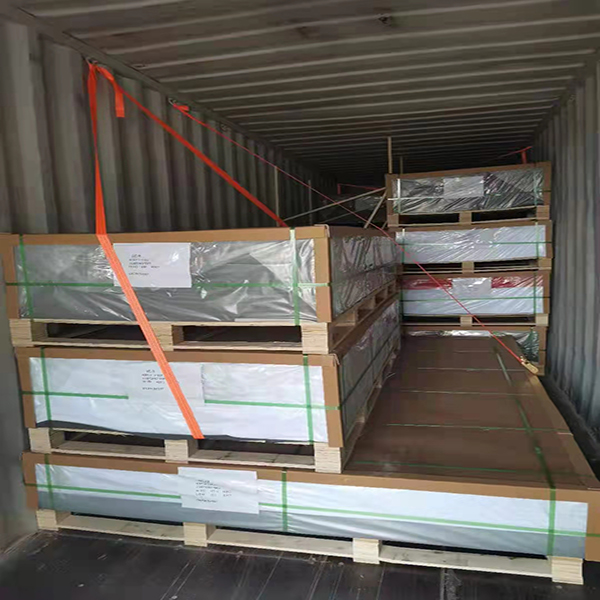
Container Load
Glow in the dark acrylic is a PMMA sheet containing photoluminescent material that absorbs light and gradually releases visible light after the charging source is removed.
No. Photoluminescent acrylic produces an afterglow after charging light is removed. Fluorescent acrylic is primarily characterized by its bright appearance while illuminated by a suitable light source.
The afterglow itself does not require continuous electrical power. However, the sheet must first be charged by a suitable natural or artificial light source.
Wallis currently lists approximately 20–30 minutes under suitable strong light conditions. Actual charging performance depends on the intensity, spectrum and distance of the light source.
Wallis lists approximately 2–8 hours depending on charging conditions. The glow does not remain at full brightness for the entire period; visible intensity gradually decreases after the charging source is removed.
The current product range lists 3mm–10mm, with 3mm positioned as the standard thickness. Specific availability should be confirmed according to size, quantity and application.
Wallis lists 1000×2000mm, 1220×1830mm and 1220×2440mm, with customized sizes also available.
Yes. Cut-to-size production can be discussed according to required dimensions, thickness, quantity and fabrication drawings.
Laser cutting is one of the listed processing methods. Machine parameters should be tested according to sheet thickness, required edge quality and finished-part geometry.
Yes. CNC routing can be used for custom profiles, openings and repeat components. Provide drawings when dimensional accuracy is important.
Yes. Engraving can be used for lettering, symbols, logos and directional graphics. The exact visual result should be confirmed with a sample before bulk production.
Photoluminescent acrylic can be fabricated into visibility and wayfinding signs, but regulated emergency exit and egress applications may require specific luminance, fire, building-code or third-party certification. Confirm the applicable standard before specifying the material for a life-safety application.
Outdoor suitability should be confirmed according to UV exposure, weather conditions, installation orientation and required service life. The exact photoluminescent formulation should be evaluated rather than assuming all glow acrylic grades have identical outdoor durability.
Suitable natural light can charge photoluminescent material. Actual afterglow depends on the amount and type of light reaching the sheet before the environment becomes dark.
Many LED sources can charge photoluminescent material, but charging efficiency varies with LED spectrum, output, distance and exposure time. Testing with the actual project lighting is recommended.
No. Photoluminescent afterglow is strongest shortly after charging ends and gradually becomes weaker. Therefore, buyers should define the required brightness at a specific time interval if performance is critical.
Use a soft cloth with mild soap and water or an acrylic-compatible cleaner. Avoid abrasive pads, hard brushes and aggressive solvents that could damage the PMMA surface.
Yes. Sample testing is particularly useful for glow products because charging light, exposure time and ambient darkness can significantly affect perceived performance.
Provide the required thickness, dimensions, quantity, application, charging environment, processing requirements and delivery destination. If the material is intended for regulated safety signage, also provide the required certification or standard.
Looking for green glow in the dark acrylic sheets for signage, displays, decorative panels or customized luminous products? Send Wallis your thickness, dimensions, quantity, application and fabrication requirements to discuss samples and factory supply.


