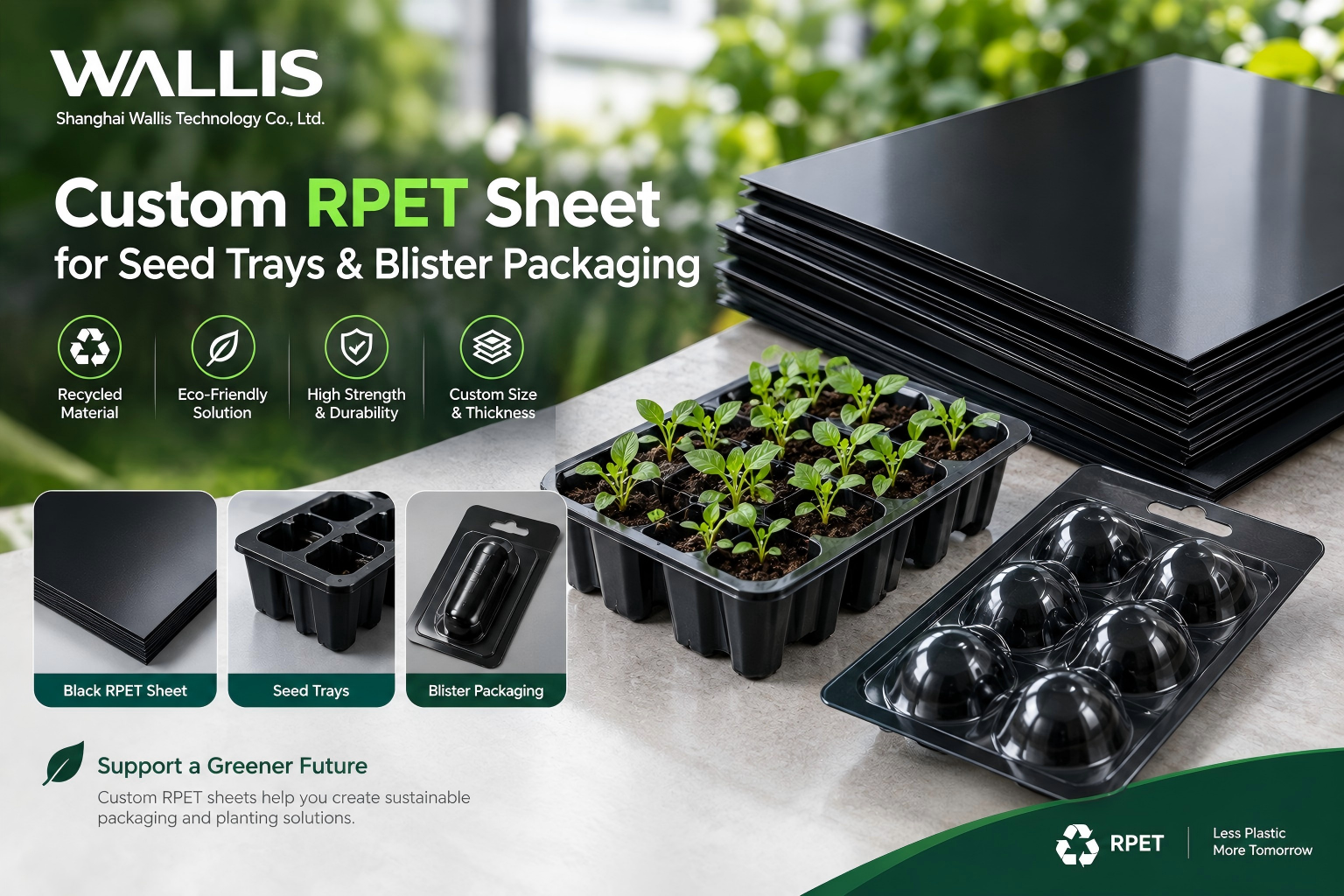
Custom RPET Sheet for Seed Trays and Blister Packaging
Wallis supplies custom-size RPET sheet for two distinct thermoforming projects: black or colored horticultural seedling trays, and clear retail blister packaging for seeds, starter kits and gardening products. Material color, recycled-content target, gauge, width and cut-sheet dimensions can be matched to the mold and end use.
The product page lists black RPET and custom dimensions, including 540 × 280 × 50 mm and 540 × 280 × 40 mm configurations. Because packaging blisters and growing trays have different performance requirements, Wallis recommends confirming the application, forming depth, cell geometry, drainage, rigidity, appearance and service conditions before production.
Request an RPET Sheet Quote
RPET Sheet Specifications and Custom Options
| Item | Available Option |
| Material | RPET (recycled-content polyethylene terephthalate) |
| Listed color | Black; ask about clear, natural or custom color availability |
| Listed dimensions | 540 × 280 × 50 mm and 540 × 280 × 40 mm; custom sizes available |
| Thickness and width | Customized after mold, draw ratio and rigidity review |
| Supply format | Sheet or roll format subject to production requirements |
| Primary process | Thermoforming, vacuum forming, trimming and die cutting after validation |
| Recycled content | Specify the required percentage and whether PCR or PIR evidence is needed |
| Applications | Seedling trays, plug trays, nursery inserts, seed blister packs and gardening-product packaging |
Note: final specifications depend on the approved sample, mold and intended service conditions. If regulatory compliance, food contact, UV resistance or a certified recycled-content claim is required, include the applicable market and test standard in the inquiry.

What Is Custom-Size RPET Thermoforming Sheet?
RPET is PET resin that contains recycled PET feedstock. It can be extruded into rigid sheet for downstream thermoforming. The exact recycled-content percentage, feedstock source, color and visual consistency can vary by grade, so these requirements should be agreed before sampling.
Custom sizing means the sheet or roll is prepared to suit the customer’s forming window, mold footprint and material-utilization plan. Correct width and gauge can reduce edge trim, improve heating consistency and help the finished tray meet stiffness and stacking targets.
Choose the Right RPET Solution for the Application
Clear Seed Blister Packaging
For retail seed packs, starter kits and small gardening accessories, clear RPET can provide product visibility and a rigid protective shell. The full pack—not the sheet alone—determines closure strength, moisture transmission and recyclability. Confirm the backing card, lidding material, adhesive, ink and sealing method together with the RPET grade.
Horticultural Seedling and Plug Trays
For propagation trays, black or opaque sheet may be selected according to the crop and growing system. The design should define tray length and width, cell count, cell depth, drainage opening, root-release geometry, nesting clearance and required reuse cycle. Gauge must support filling, irrigation, bench handling, automation and transport.
Material Selection by Service Conditions
RPET is one option, not a universal substitute for every tray resin. Long reuse cycles, high temperatures, steam sanitation, prolonged sunlight or aggressive chemicals may require a modified PET grade or a different material such as PP. Share the actual temperature, UV exposure, cleaning method and expected life so the sheet can be evaluated correctly.
Thermoforming Performance and Mold Compatibility
Gauge and Width Control
Consistent thickness and width help maintain even heating, predictable web tension and repeatable forming. State the nominal gauge, tolerance, usable width, roll or sheet length, core size and winding direction required by your equipment.
Draw Ratio and Corner Thickness
Deep cells and sharp geometry stretch the material and can thin corners or sidewalls. Supply a drawing, CAD file or formed sample so Wallis can review cavity depth, draft angle, radii, plug-assist needs and the minimum finished-wall target.
Drying and Forming Window
PET can absorb moisture, and inappropriate storage or processing may affect appearance and forming behavior. Use the technical data supplied for the approved grade and validate drying, heating, mold temperature and cycle settings on the actual thermoforming line.
Trimming, Nesting and De-Nesting
Finished trays should be checked for clean edges, dimensional fit, stack height and reliable separation. For automated lines, define de-nesting lugs, pickup points, conveyor contact areas and acceptable tray-to-tray variation during the mold-review stage.

Seedling Tray Design Checklist
| Design Factor | Information to Confirm |
| Tray footprint | Outside dimensions, bench or carrier compatibility and stack height |
| Cells | Cell count, top opening, depth, volume, taper and bottom profile |
| Water management | Drainage-hole size and location, irrigation method and airflow needs |
| Root handling | Root guidance, bottom opening and release method for transplanting |
| Mechanical load | Wet-media weight, lifting points, automation, shipping and reuse target |
| Environment | Indoor or outdoor use, UV exposure, temperature and sanitation method |
Benefits of Custom RPET Sheet
Recycled Content with Defined Evidence
RPET can reduce demand for virgin PET by incorporating recycled feedstock. For an auditable claim, specify the minimum recycled-content percentage, PCR or PIR status, calculation method and required certificate or chain-of-custody documentation before ordering.
Dimensions Matched to the Forming Line
Custom sheet and roll dimensions can improve material yield and reduce avoidable trim. The best format depends on heater width, clamp area, indexing length, mold layout and downstream cutting equipment.
Appearance Selected for Function
Clear sheet supports retail visibility, while black or opaque sheet may suit horticultural trays and can help mask normal recycled-feedstock color variation. Color, gloss, haze and allowable specks should be defined with an approved reference sample.
Rigidity for Handling and Distribution
Sheet gauge and formed geometry can be balanced to achieve the required stiffness without unnecessary material. Ribs, flanges and corner radii should be reviewed together with gauge because the structure of the tray contributes to performance.
RPET Compared with Other Tray Materials
| Material | Typical Strength | Consider Before Selection |
| RPET | Recycled-content option, rigid thermoforming and clear or colored formats | Confirm recycled percentage, appearance, process window and service life |
| Virgin APET | High clarity and predictable visual consistency | Does not provide a recycled-content claim |
| PP | Good flex-fatigue and potential for durable, reusable designs | Different forming behavior and usually lower transparency than clear PET |
| PS | Economical forming for lightweight horticultural trays | Impact, reuse and local recycling requirements need review |
| Molded fiber | Fiber-based appearance and selected compostable formats | Moisture durability, barrier coatings and forming detail differ from plastic |
Recyclability and Responsible Packaging Claims
RPET describes recycled content; it does not by itself guarantee that every finished tray or blister pack will be accepted by every recycling program. Resin color, labels, inks, adhesives, lids, backing cards, residues, local collection and sorting infrastructure can all affect the result.
For a recyclability claim, assess the complete package against the applicable market’s current design guidance. Prefer removable or compatible components, avoid unsupported environmental statements and keep supplier documentation for the recycled-content claim.
Applications
Commercial Propagation
Thermoformed sheets can be developed for nursery seedling trays, plug trays, propagation inserts, germination trays and selected microgreen systems. The crop, substrate, irrigation method and handling process should guide cell and material design.
Retail Seed and Garden Packaging
Clear RPET may be used for seed kits, plant labels, small garden tools and other products where visibility and rigid protection are required. Pack design should be validated for moisture control, tamper evidence, shelf display and distribution.
Custom Industrial Trays
The same custom-sheet approach can support non-food industrial trays and protective inserts when the material grade, cavity geometry and handling load are suitable. Provide the packed item’s weight, shape and cleanliness requirements for review.
Quality Control and Sample Approval
A practical approval plan may include incoming-material documentation, thickness and width checks, color or haze limits, surface inspection, roll winding, formed-part dimensions, corner thickness, drop or handling tests, nesting and de-nesting trials, and final packaging inspection. Test items should reflect the risks of the actual application.
For a new mold or recycled-content target, approve the sheet and the formed tray together. A material that looks acceptable as flat sheet may behave differently after deep drawing, trimming or exposure to the intended growing and logistics conditions.
How to Request a Custom RPET Quote
Send Wallis the application, sheet or roll size, target gauge and tolerance, color, recycled-content requirement, mold drawing, maximum forming depth, annual volume, sample quantity and destination. For seedling trays, also include cell count, drainage design, reuse target and growing conditions. For retail blisters, include the closure, backing or lidding system and required compliance market.
Send Your Drawing and Requirements
Frequently Asked Questions
What is RPET sheet?
RPET is PET sheet containing recycled PET feedstock. Depending on the grade, it can be supplied for rigid thermoforming applications such as trays, inserts, clamshells and blister packaging.
Is this RPET sheet for seed packaging or for growing seedlings?
It can be evaluated for either application, but the specifications are different. Clear retail blisters prioritize visibility, closure and pack protection; growing trays prioritize cell geometry, drainage, root release, rigidity and service life.
Which dimensions are available?
The page lists 540 × 280 × 50 mm and 540 × 280 × 40 mm configurations and also offers customized sizing. Confirm whether your dimensions describe the finished tray or the flat sheet when requesting a quote.
Can the thickness be customized?
Yes, subject to manufacturing review. The appropriate gauge depends on cavity depth, draw ratio, finished-wall target, tray load, handling method and required reuse cycle.
Can Wallis supply black and clear RPET?
Black is the color listed for this product. Ask Wallis to confirm clear, natural or custom-color availability for the required recycled-content percentage, appearance limits and order volume.
Is RPET suitable for deep-draw seedling cells?
Suitability depends on the selected grade, gauge and mold geometry. Deep cells can thin sidewalls and corners, so provide the cavity depth, draft angles and radii and complete a forming trial before volume production.
Is RPET sheet waterproof or a complete moisture barrier?
PET resists liquid-water exposure, but a finished package’s moisture protection depends on sheet thickness, closure, seams, lidding, backing and storage conditions. Test the complete pack against the seed’s shelf-life requirement.
Is the finished RPET tray recyclable?
It may be recyclable where PET thermoforms are collected and accepted, but acceptance is not universal. Color, labels, adhesives, other attached materials, contamination and local infrastructure affect recyclability.
Does RPET automatically meet food-contact or horticultural regulations?
No. Compliance depends on the exact resin, recycled-feedstock process, additives, manufacturing controls, intended contact and destination market. State the required regulation and request documentation for the proposed grade.
What should I provide for sampling?
Provide the mold or part drawing, flat-sheet or roll dimensions, gauge and tolerance, color, recycled-content target, annual volume and forming-machine details. A current sheet or tray sample is helpful when matching an existing production setup.
How should RPET sheet be stored before thermoforming?
Keep it clean, dry, covered and protected from heat, direct sunlight and physical damage. Reseal opened packaging where possible and follow the grade-specific handling and drying guidance before forming.
Contact Wallis for a Custom Sample