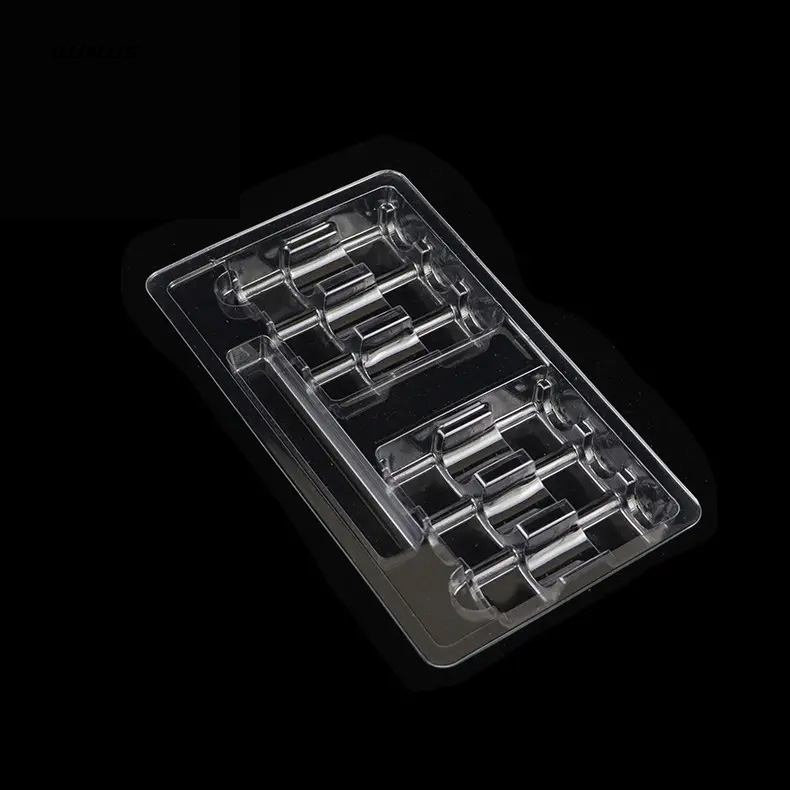
Thermoforming Rigid Anti-Scratch PET Sheet for Printing
Wallis supplies thermoforming rigid anti-scratch PET sheet for printing for packaging converters, printing companies, thermoforming factories, display manufacturers and industrial fabricators. The clear rigid PET sheet combines high transparency, good stiffness, printability, thermoforming performance and enhanced surface protection for applications where appearance and processing consistency are both important.
Available in thicknesses from 0.15mm to 3mm and widths from 0.3m to 1.4m, Wallis PET sheet can be supplied in rolls or sheets with transparent or customized colors. Functional and surface options can be discussed for anti-scratch, anti-fog, anti-UV, high-gloss, matte, frosted, conductive and other project-specific requirements.
Typical processing includes UV printing, screen printing, thermoforming, vacuum forming, blister forming, bending, folding, die cutting and fabrication. For B2B buyers, Wallis supports specification matching according to the printing method, forming equipment, mold depth, surface requirement and final application.
Clear rigid PET sheet for printing and thermoforming
0.15–3mm thickness and 0.3–1.4m width options
Roll or sheet supply for different processing equipment
Anti-scratch surface options for improved handling protection
Suitable for blister packaging, folding boxes, displays and protective parts
Custom color, finish and functional PET grades available
Sample testing support before volume production
Request PET Sheet Samples and Factory Quote
Rigid Anti-Scratch PET Sheet Specifications
The correct PET sheet specification should be selected according to the printing process, thermoforming equipment, mold geometry, finished-product appearance and required surface performance. The following specifications summarize the available options for project evaluation.
| Product Name | Thermoforming Rigid Anti-Scratch PET Sheet for Printing |
| Material | PET / rigid PET sheet for printing, thermoforming and fabrication |
| Form | Roll or sheet according to processing requirements |
| Color | Transparent or customized color |
| Thickness | 0.15–3mm or customized |
| Width | 0.3–1.4m or customized |
| Surface Options | Clear high-gloss, anti-scratch, matte, frosted and customized surface treatment |
| Functional Options | Anti-scratch, anti-fog, anti-UV, conductive, cold-resistant and other functional grades subject to project confirmation |
| Printing | UV printing, screen printing and other compatible printing processes after application testing |
| Processing | Thermoforming, vacuum forming, blister forming, bending, folding, die cutting and fabrication |
| Applications | Blister packaging, printed packaging, folding boxes, cards, displays, signage, protective covers and transparent formed parts |
| Sample Time | Normally 1–3 days depending on specification |
| Mass Production Lead Time | Normally 3–15 days depending on specification and order quantity |
| Available Documentation | RoHS, MSDS, TDS, SGS and ISO9001-related documentation according to product and project requirements |
| Packing | Protective roll or sheet packing with PE film, woven material, straps and pallet protection according to shipment requirements |
| Delivery | Ocean shipping, air transportation or international express |
Discuss Your PET Sheet Specification
What Is Thermoforming Anti-Scratch PET Sheet?
Rigid PET Sheet Designed for Printing and Forming
Thermoforming anti-scratch PET sheet is a rigid polyethylene terephthalate material designed for applications requiring transparency, stiffness, surface protection and secondary processing. It combines the visual clarity of transparent PET with the fabrication advantages required by packaging, printing and display manufacturers.
For thermoforming applications, rigid amorphous PET grades are commonly selected because the sheet can soften under controlled heating and form around a mold using vacuum or pressure. Material grade, sheet thickness, heating profile, mold depth and forming equipment should all be evaluated together.
What Does Anti-Scratch PET Sheet Mean?
Anti-scratch PET sheet is designed to provide better resistance to visible surface marking than an untreated standard surface under suitable conditions. This is valuable when transparent or printed products are stacked, handled, transported or displayed before reaching the end user.
Anti-scratch should not be interpreted as completely scratch-proof. Final performance depends on the surface treatment, coating system, contact material, pressure, abrasion conditions and product handling. Buyers with a defined scratch-resistance requirement should provide their testing method or finished-product standard.
Key Benefits of Rigid Anti-Scratch PET Sheet
High Transparency for Product Visibility
Clear PET sheet provides strong product visibility for transparent packaging, displays, folding boxes and protective covers. Good transparency is particularly important when the package itself forms part of the product presentation.
Enhanced Surface Protection
The anti-scratch surface helps reduce visible handling marks on transparent and printed parts. This can improve appearance during converting, assembly, packing, transport and retail display.
Good Stiffness and Impact Performance
Rigid PET offers a useful balance between stiffness and toughness, allowing it to maintain shape in packaging and display applications while remaining easier to fabricate than brittle transparent materials.
Suitable for Thermoforming
Properly selected PET sheet can be heated and formed into trays, blisters, covers and other three-dimensional parts. Consistent sheet thickness and controlled heating are important for obtaining uniform wall distribution and repeatable formed parts.
Printable Surface for Branded Products
PET sheet can support printing for packaging, signage, cards and display components when the ink system and surface treatment are correctly matched. Printing trials should be completed before bulk production, especially when anti-scratch coating or specialized surface treatments are involved.
Efficient Cutting and Fabrication
Rigid PET sheet can be converted through die cutting, cutting, bending, folding and other fabrication processes, supporting both packaging production and custom industrial components.
Recyclable PET Material
PET is widely collected and recyclable where suitable recycling infrastructure exists. Actual recyclability of a finished product can also depend on coatings, inks, adhesives, labels, multilayer structures and local recycling systems.
PET Sheet for Printing: What Buyers Should Confirm
Printing Method
Tell Wallis whether the PET sheet will be processed by UV printing, screen printing or another printing technology. Ink chemistry, curing conditions, surface energy, printing side and subsequent forming process can influence ink adhesion and finished-product quality.
Printing Side and Anti-Scratch Side
If the PET sheet has a specialized anti-scratch treatment, buyers should confirm whether printing will take place on the treated side, untreated side or reverse side. Some surface treatments that improve abrasion performance can change ink wetting or adhesion, so the complete construction should be tested before production.
Corona or Surface Treatment Requirements
Certain printing systems may benefit from controlled surface treatment to improve ink anchorage. If your production requires corona treatment or a specified surface-energy range, provide the target printing process and ink system when requesting the material.
Protective Film and Masking
Protective masking can help reduce handling marks during transportation, cutting and fabrication. Depending on the project, buyers may discuss one-side or two-side protection and should verify that the protective film can be removed cleanly before printing or final assembly.
Print Before Forming or Form Before Printing
The manufacturing sequence affects material selection. If the PET sheet is printed before thermoforming, the graphic may stretch during forming and the ink must tolerate the heating and deformation process. If printing takes place after forming, the shape of the finished part may limit printing access and registration.
| Printing Requirement | What to Confirm | Why It Matters |
| Printing Technology | UV, screen or other process | Determines ink and surface compatibility |
| Printing Side | Coated side, untreated side or reverse printing | Affects adhesion and scratch protection |
| Surface Treatment | Corona or other treatment if required | Can improve ink wetting and anchorage |
| Protective Masking | One side or two sides | Protects surfaces during converting and handling |
| Thermoforming After Printing | Ink elongation and heating compatibility | Reduces cracking, distortion or adhesion failure |
PET Sheet for Thermoforming and Vacuum Forming
Sheet Thickness and Draw Depth
The required starting thickness depends on the finished-part geometry, draw ratio, minimum wall thickness, mechanical requirements and mold design. Deep cavities and complex shapes require more careful evaluation of material distribution during forming.
Heating Uniformity
PET sheet should be heated uniformly before forming. Uneven heating can contribute to inconsistent stretching, webbing, local thinning, poor detail reproduction or visual distortion.
Mold Design and Forming Method
Buyers should identify whether the material will be vacuum formed, pressure formed or processed through another thermoforming system. Mold shape, draft angle, cavity depth, plug assistance and cooling conditions all affect the finished part.
Surface Coating After Forming
Specialized surface treatments should be evaluated for forming compatibility. A coating that provides excellent flat-sheet abrasion performance must also tolerate the required heating and stretching if it is expected to remain on the outer surface after thermoforming.
Production Trial Before Mass Order
For new molds or demanding parts, Wallis recommends testing the actual sheet specification using the customer’s production conditions before mass production. A trial helps confirm forming detail, wall distribution, transparency, coating behavior and dimensional stability.
Applications of Anti-Scratch PET Sheet
Blister Packaging and Vacuum-Formed Trays
Clear rigid PET sheet is widely used for transparent blisters, thermoformed trays, clamshell-style packaging and protective inserts. Transparency allows customers to view the packaged product while the formed PET structure provides support and protection.
Printed Folding Boxes and Clear Packaging
Printable PET sheet can be converted into transparent folding cartons and display packaging for cosmetics, electronics, gifts, toys and other consumer products where both printed branding and product visibility are important.
Signage and Point-of-Purchase Displays
PET sheet can be printed, cut and fabricated for advertising panels, retail graphics, menu inserts, product displays, shelf communication and other point-of-purchase applications requiring a clear or glossy plastic surface.
Protective Covers and Transparent Guards
Anti-scratch PET can be considered for transparent covers, protective guards, instrument covers and fabricated plastic parts where lower weight, visibility and resistance to routine handling marks are required.
Cards, Tags and Printed Plastic Components
Thin rigid PET sheet can also be processed for tags, cards, inserts, printed components and other flat plastic products. Buyers should match thickness and surface treatment to printing, cutting and bending requirements.
How to Choose PET Sheet Thickness
There is no single PET sheet thickness suitable for every application. Thickness should be selected according to the finished product dimensions, stiffness requirement, forming depth, printing process, cutting method and expected mechanical load.
| Application Type | Selection Priority | Buyer Should Provide |
| Folding Box | Printability, crease performance, clarity and stiffness | Box dimensions, printing method and folding design |
| Blister Packaging | Formability, wall thickness and transparency | Cavity size, forming depth, mold and equipment |
| Printed Display | Surface appearance, ink adhesion and flatness | Printing process, size and finishing method |
| Protective Cover | Stiffness, transparency and surface durability | Part dimensions, bending requirement and service environment |
| Vacuum-Formed Part | Draw ratio, formability and dimensional stability | 3D drawing, forming depth and processing parameters |
PET vs PETG vs PVC Sheet for Printing and Thermoforming
PET, PETG and PVC can all be used in transparent packaging and fabrication, but their forming behavior, folding characteristics and processing requirements differ. Buyers should select the material according to the actual converting process instead of choosing only by price.
| Factor | Rigid PET / APET | PETG | PVC |
| Transparency | High clarity available | High clarity available | Clear grades available |
| Thermoforming | Widely used for blister and vacuum forming | Good forming performance, including more demanding shapes | Commonly used in formed packaging and fabrication |
| Printing | Suitable with compatible ink and surface preparation | Suitable with compatible printing system | Widely used for printing |
| Folding Applications | Common for clear folding boxes with correct creasing | Good fabrication and bending flexibility | Common in clear packaging and cards |
| Recycling Consideration | PET recycling streams are available in many markets | Recycling availability depends on local stream | Requires appropriate PVC recycling stream |
| Best Selection Depends On | Clarity, stiffness, thermoforming and PET-material preference | Complex forming and fabrication requirements | Specific printing, card, packaging or cost requirements |
Custom PET Sheet Options for B2B Projects
Custom Thickness and Width
Wallis supplies PET sheet from 0.15mm to 3mm thickness and 0.3m to 1.4m width, with customized dimensions available according to processing equipment and order requirements.
Roll and Sheet Supply
Roll stock is suitable for continuous thermoforming and converting lines, while cut sheets can be selected for printing, fabrication, folding boxes, displays and other sheet-fed processes.
Custom Surface Finish
Depending on the project, customers can discuss clear high-gloss, anti-scratch, matte, frosted and other surface effects. The required finish should be evaluated together with printing and thermoforming requirements.
Functional PET Grades
Functional grades such as anti-fog, anti-UV, conductive and other customized PET sheets can be discussed when the application requires additional performance beyond standard clear sheet.
Quality Control for Printing and Thermoforming PET Sheet
Thickness Consistency
Consistent thickness is important for print handling, feeding, thermoforming and finished-part wall distribution. Buyers with tight tolerance requirements should specify the acceptable thickness tolerance during quotation.
Surface and Optical Inspection
For clear products, inspection should consider visible scratches, contamination, black spots, surface marks, haze, transparency, gloss and other appearance requirements relevant to the finished application.
Printing Compatibility Test
Ink adhesion and curing should be tested using the customer’s actual printing system. When the printed sheet will later be bent or thermoformed, the complete production sequence should also be validated.
Thermoforming Trial
A production trial can confirm heating behavior, form definition, webbing, wall thinning, surface appearance and coating integrity before the specification is approved for larger orders.
Batch Approval for Repeat Orders
For recurring production, buyers should retain the approved material specification and sample, including thickness, width, color, finish, treatment, printing side, protection-film requirement and packaging standard.
What Information Should You Send for a PET Sheet Quote?
Providing complete technical information helps Wallis recommend a more suitable PET sheet and prepare a more accurate quotation.
| Information | Example |
| Application | Blister, folding box, display, protective cover or printed component |
| Thickness | Required thickness or existing material specification |
| Width / Sheet Size | Machine width, roll width or finished sheet dimensions |
| Printing Process | UV, screen or other printing technology |
| Thermoforming Method | Vacuum forming, pressure forming or blister forming |
| Surface Requirement | Clear, high-gloss, anti-scratch, matte or frosted |
| Functional Requirement | Anti-fog, anti-UV, conductive or customized functionality |
| Quantity | Trial requirement and expected regular purchase volume |
| Destination | Country and preferred shipping method |
Send Your PET Sheet Requirements
Why Choose Wallis as Your PET Sheet Manufacturer?
Shanghai Wallis Technology Co., Ltd. supplies PET sheet rolls, PET films and customized plastic sheet materials for packaging, printing, card, display and industrial applications. Wallis supports both standard supply and specification development for professional B2B customers.
Our team can evaluate projects based on the required PET thickness, roll width, printing method, thermoforming machine, mold design, surface requirement and final application. Sample testing allows customers to validate compatibility before moving into volume production.
Customized PET thickness and width options
Roll and sheet supply for different production lines
Printing and thermoforming project support
Multiple surface and functional PET grades
Sample preparation before bulk production
Protective export packaging for international shipment
B2B support for manufacturers, converters and distributors

PET Sheet Packing and International Shipping
Protective Export Packing
PET sheet rolls are protected for storage and international transportation using suitable protective film, PE film, woven material, straps and pallet protection. Packaging can be adjusted according to roll size, sheet dimensions, shipment method and customer handling requirements.


Shipping Options
Orders can be arranged by ocean freight, air transportation or international express according to quantity, destination and delivery requirement. Final transit time depends on destination, logistics route, customs clearance and carrier schedule.
Frequently Asked Questions About Anti-Scratch PET Sheet
What is thermoforming rigid anti-scratch PET sheet used for?
It is used for blister packaging, vacuum-formed trays, folding boxes, printed packaging, signage, displays, cards, protective covers and customized clear plastic parts requiring transparency, rigidity and improved surface protection.
Can anti-scratch PET sheet be thermoformed?
Yes, selected PET grades can be thermoformed. When an anti-scratch coating is included, its compatibility with the required forming temperature, stretching and mold depth should also be tested before volume production.
Can this PET sheet be printed?
Yes. PET sheet can support UV printing, screen printing and other compatible processes. Ink adhesion should be tested against the exact surface treatment, ink system and curing conditions used by the customer.
Can the same side be anti-scratch and printable?
This depends on the coating system and ink. A surface optimized for abrasion resistance may behave differently during printing, so the required printing side and anti-scratch side should be confirmed during specification development and tested using the actual ink.
Is anti-scratch PET completely scratch-proof?
No. Anti-scratch treatment improves resistance to certain types of routine surface marking, but no plastic surface should be considered completely scratch-proof under all loads and abrasion conditions.
What thickness of PET sheet can Wallis supply?
Wallis supplies PET sheet from approximately 0.15mm to 3mm, with the final thickness selected according to the printing, thermoforming, folding, packaging or fabrication requirement.
What width is available?
Available width is approximately 0.3m to 1.4m, with customized dimensions discussed according to equipment width, cutting plan and order requirements.
Can PET sheet be supplied in both rolls and sheets?
Yes. Roll supply is suitable for continuous converting and thermoforming equipment, while cut sheets are useful for sheet-fed printing, folding boxes, displays and fabrication.
Is protective film available on the PET surface?
Protective masking requirements can be discussed according to the project. Buyers should specify whether one-side or two-side protection is needed and when the masking will be removed during the manufacturing process.
Can PET sheet be die cut, folded and bent?
Yes. Rigid PET sheet is commonly processed by die cutting, folding, bending and fabrication. The correct thickness, crease design, temperature and tooling should be selected to reduce stress whitening or cracking.
Is PET sheet suitable for blister packaging?
Yes. Thermoforming PET is widely used for blister packaging and transparent formed trays because it combines clarity, rigidity and suitable forming performance. The sheet specification should be matched to the blister depth and thermoforming equipment.
Is PET recyclable?
PET is recyclable where an appropriate collection and recycling stream exists. Coatings, inks, labels, adhesives and other components of the finished product may affect practical recyclability and should be considered during package design.
Can Wallis provide anti-fog or anti-UV PET sheet?
Functional PET grades including anti-fog, anti-UV, conductive and other customized options can be discussed according to the final application and required performance.
Can I test a sample before placing a bulk order?
Yes. Sample testing is recommended for printing, coating, thermoforming and specialized anti-scratch applications. Customers should test the material with their actual ink, equipment, mold and production parameters.
What information is needed for a quotation?
Please provide the application, thickness, width or sheet size, roll or sheet requirement, printing method, thermoforming process, surface finish, functional requirement, quantity, destination country and any required technical or compliance documentation.
Request Anti-Scratch PET Sheet Samples and Pricing
Looking for rigid PET sheet for printing, thermoforming, blister packaging or transparent display production? Send Wallis your thickness, width, printing method, forming process, surface requirement and estimated order quantity. Our team will help evaluate a suitable PET sheet specification for your production line.
Get Samples and Factory Quote