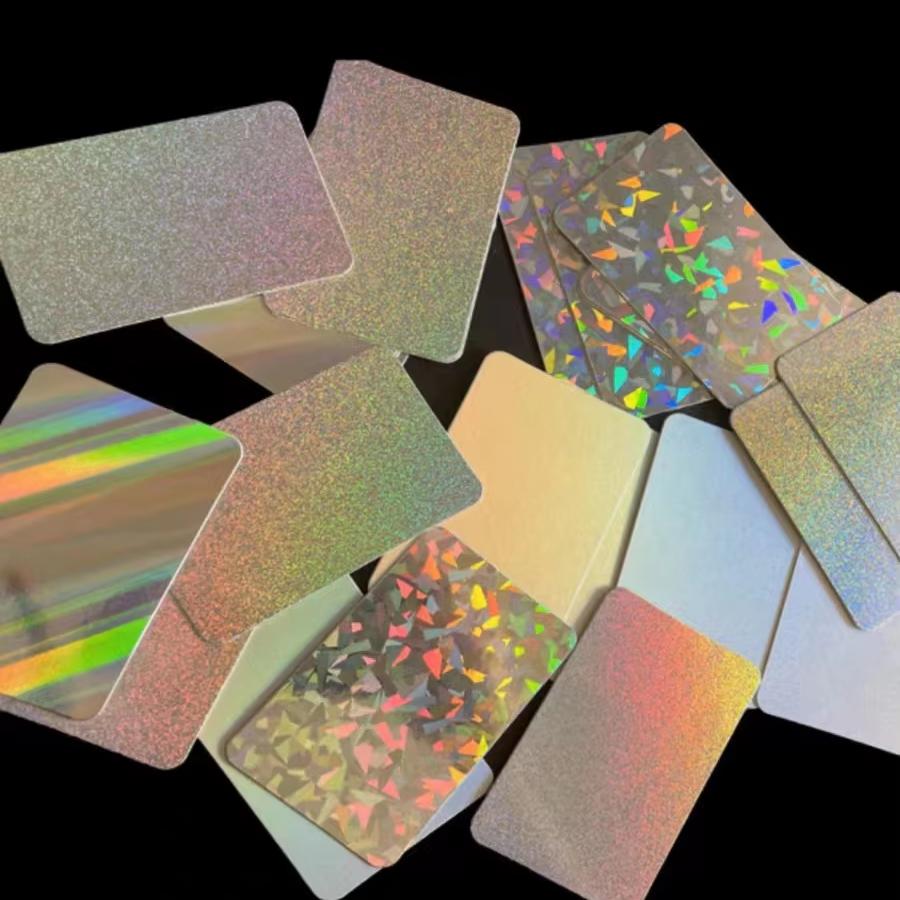
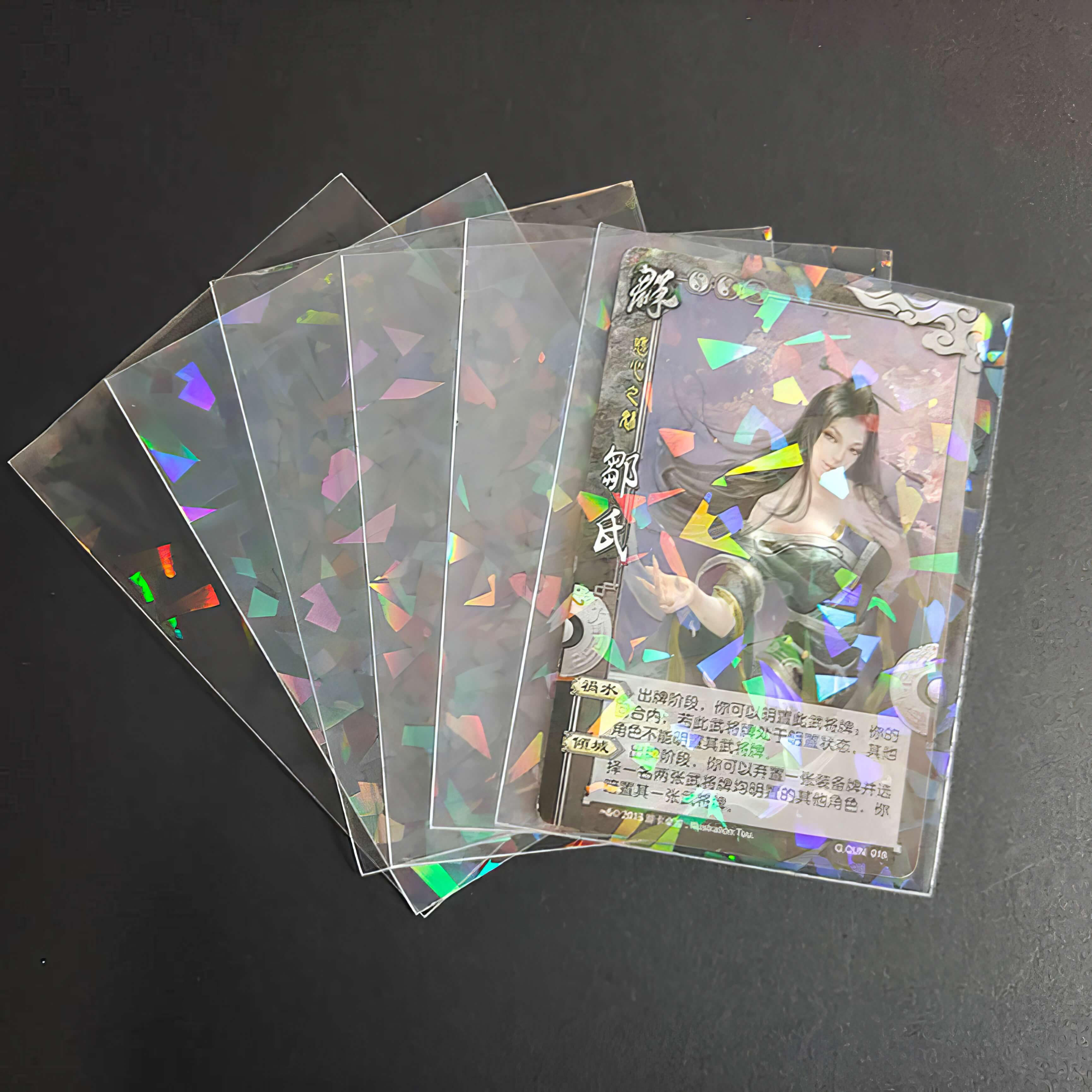
Holographic PVC Rainbow Overlay Film for Professional Card Manufacturing
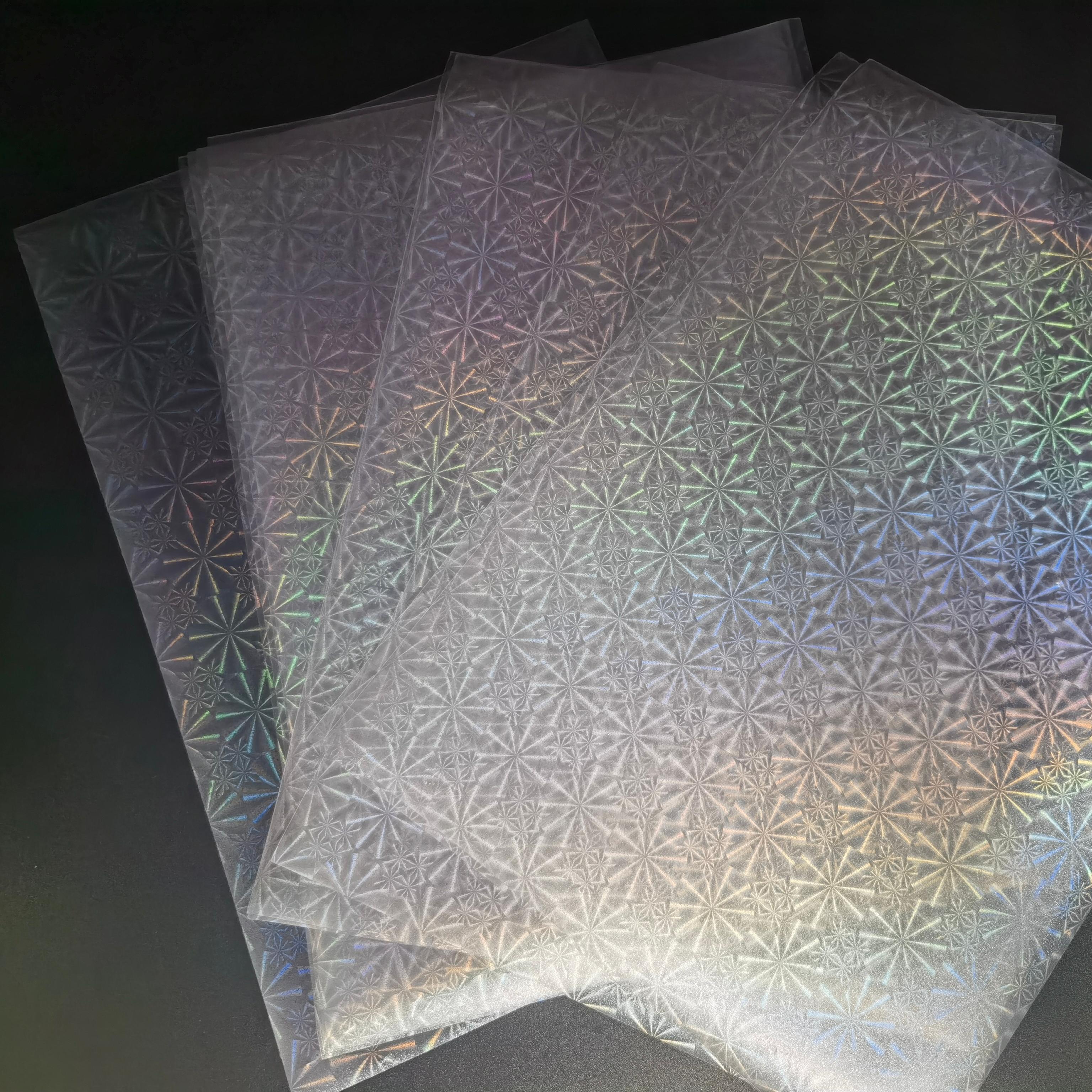
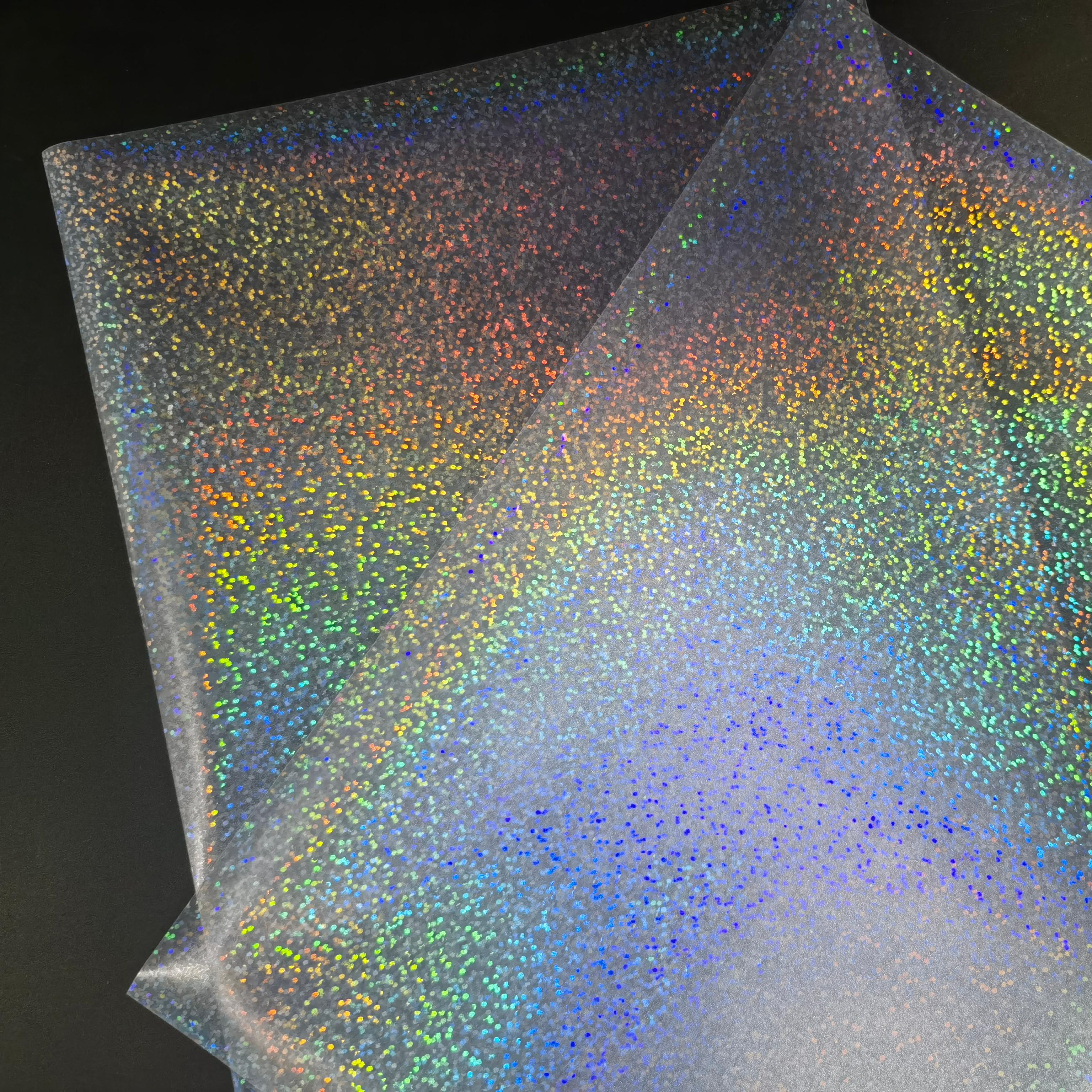
Holographic PVC rainbow overlay film is a transparent or semi-transparent card-lamination material that combines surface protection with an angle-dependent optical effect. When incorporated into a properly designed plastic card structure, the overlay can create rainbow diffraction, kinetic movement, geometric patterns, logos, stars, waves, or customized holographic images while allowing important printed card information to remain visible.
These films are used for ID cards, access cards, membership cards, loyalty cards, hotel key cards, gift cards, VIP cards, banking-related cards, student cards, RFID cards, NFC cards, and other laminated plastic cards where manufacturers require a combination of visual differentiation, printed-surface protection, and optional visual authentication.
For professional card factories, however, selecting holographic overlay involves much more than choosing an attractive rainbow pattern. Buyers should evaluate overlay thickness, sheet size, transparency, hologram density, continuous or registered pattern, coating side, card substrate, lamination temperature, pressure, finished-card thickness, artwork visibility, RFID compatibility, and required service life.
Request Holographic PVC Overlay Samples
What Is Holographic PVC Rainbow Film?
Holographic PVC rainbow film is a card-compatible PVC material containing a diffractive optical pattern. Fine structures within or on the film redirect incident light at different angles, producing changing colors and visual effects as the card is tilted.
Unlike a conventional printed rainbow graphic, a holographic or diffractive surface changes dynamically with viewing angle and illumination. Depending on the master design, the optical feature may create color shifts, moving lines, circles, stars, depth, switching images, logos, geometric elements, or repeating patterns.
In card manufacturing, holographic PVC overlay is normally positioned over the printed core during lamination so that the card artwork is viewed through the transparent film. The overlay then becomes part of the finished card surface.
Why Does the Film Show Rainbow Colors?
Microscopic diffractive structures separate reflected light into different wavelengths and directions. When the viewing angle changes, different wavelengths reach the observer, producing the recognizable rainbow or spectral effect.
Is Holographic PVC Always a Security Material?
No. Generic rainbow or stock holographic patterns can primarily serve a decorative purpose. Custom-controlled holographic designs containing proprietary logos, registered graphics, fine-detail features, kinetic effects, or additional security elements can provide greater value for visual authentication.
Holographic PVC Overlay vs Other Holographic Card Materials
One of the most common sourcing mistakes is treating every holographic card material as the same product. Sheet-form PVC overlay, card-printer laminate, varnish, hot-stamping foil, self-adhesive film, and holographic card core have different structures and production methods.
| Material | Typical Format | Application | Primary Role |
| Holographic PVC Overlay Sheet | Thin transparent PVC sheet | Industrial card lamination with printed core sheets | Finished-card surface, protection and rainbow/custom optical effect |
| Printer Overlaminate | Roll-format clear or holographic laminate | Applied after card personalization by a compatible lamination module | Protects printed data and adds optional visual security |
| Holographic Varnish / Topcoat | Very thin transferred protective layer | Applied by compatible card printer | Basic protection and visible holographic feature |
| Hot-Stamping Foil | Carrier film with transferable optical layers | Transferred locally using heat and pressure | Localized logo, patch, stripe or security feature |
| Holographic PVC Core Sheet | Thicker structural/decorative PVC | Printed and laminated inside the card body | Decorative card body rather than transparent outer protection |
Continuous vs Registered Holographic Overlay
Continuous Holographic Pattern
A continuous pattern repeats across the holographic film like wallpaper. Individual cards may therefore receive different portions of the repeating design unless the pattern repeat is deliberately synchronized with the cutting layout.
Continuous patterns are suitable for rainbow effects, stars, waves, dots, geometric structures and other decorative designs where exact feature placement on every card is not required.
Registered Holographic Pattern
A registered hologram is positioned at a controlled location on each finished card. For example, a custom logo can appear in the same upper-right position on every card, or the holographic pattern can be designed around a portrait, chip, signature panel, QR code, or card number.
Registered holographic overlays require tighter control of sheet dimensions, pattern repeat, X/Y registration, lamination alignment, printing registration and punching position.
Stock Hologram vs Custom Holographic Overlay
Standard Stock Patterns
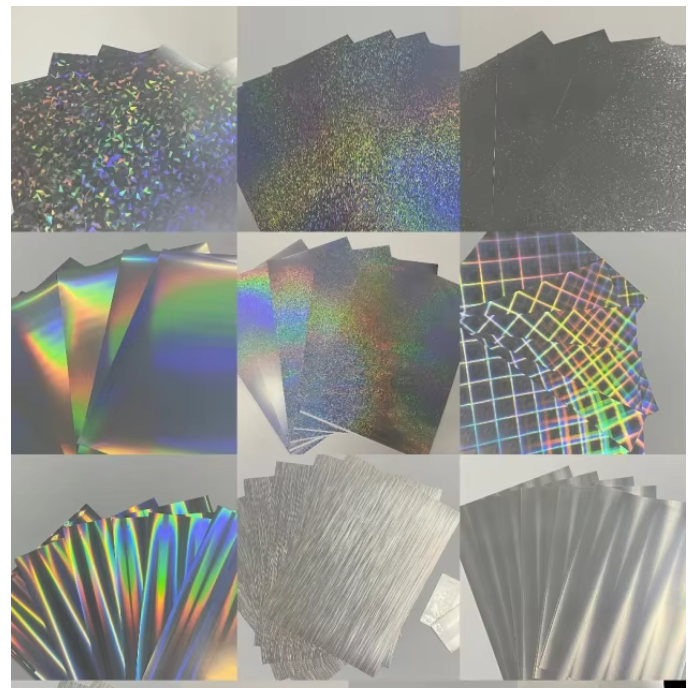
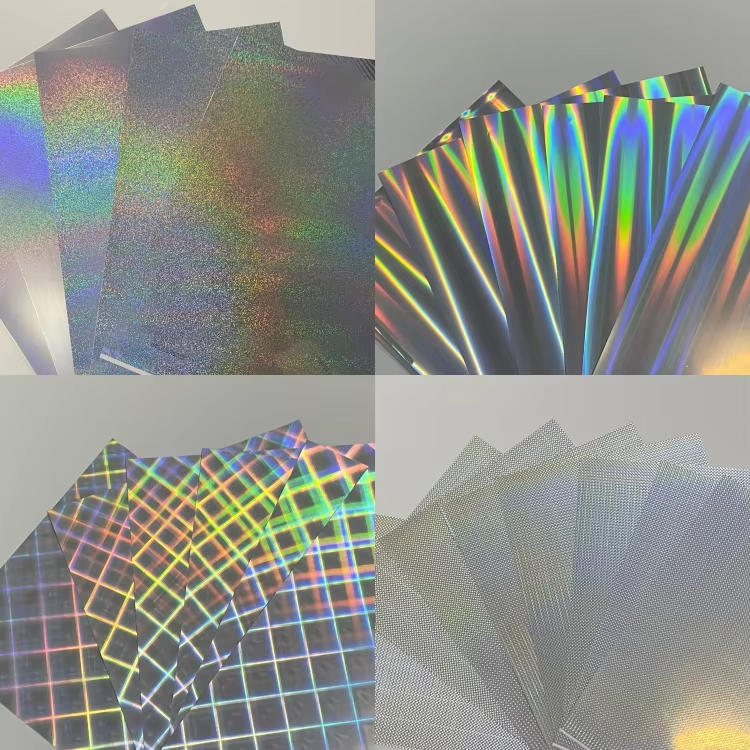
Stock holographic films use existing master designs such as rainbow grids, stars, dots, waves, circles, light beams, geometric elements, or other repeating effects. They are generally easier to source because no new holographic master needs to be created.
Because a generic pattern can be available to multiple buyers, it should primarily be treated as a decorative or basic visual-verification feature rather than a unique anti-counterfeit credential.
Custom Logo Holograms
Customized holographic overlays can incorporate a company logo, institution name, government emblem, project symbol, text, geometric graphics, switching images, movement effects, or proprietary visual elements.
A controlled custom hologram can improve brand differentiation and provide a stronger visual authenticity indicator than a generic stock design. Development normally requires approved vector artwork, technical review, hologram origination or mastering, sample approval, and agreed production controls.
Advantages of Holographic Rainbow PVC Overlay Film
Visible Authentication
Angle-dependent holographic effects provide a visible feature that can help cardholders, security personnel, or staff recognize an approved card design and distinguish it from a basic printed copy.
Premium Card Appearance
Rainbow, kinetic and custom holographic effects create a premium visual finish that is particularly suitable for VIP, gift, loyalty, membership, hospitality and promotional card programs.
Printed Surface Protection
When the holographic PVC overlay forms the outer layer of a laminated card, it separates the underlying printed graphics from direct contact with fingers, wallets and routine surface handling.
Custom Brand Integration
Custom logos, names and branded optical features allow the holographic overlay to become part of the card's visual identity instead of functioning only as a generic protective surface.
Compatible with Multilayer Card Production
Suitable sheet-form holographic PVC overlay can be integrated into professional card-lamination workflows alongside printed PVC core sheets and other compatible functional layers.
Holographic Overlay Is One Layer in a Complete Card Security System
A holographic overlay can increase the difficulty of simple visual copying, but it should not automatically be described as “tamper-proof” or “impossible to counterfeit.” High-security credentials normally combine multiple independent security layers.
| Security Layer | Function |
| Custom Hologram | Provides angle-dependent visual authentication using controlled optical artwork |
| Microtext / Fine Lines | Adds fine-detail features that are more difficult to reproduce accurately |
| UV Printing | Provides hidden or semi-hidden graphics visible under suitable UV illumination |
| Variable Data | Links each credential to a unique person, card number or issuance record |
| RFID / Contact Chip | Supports electronic authentication and application-specific credential functions |
| Backend Verification | Confirms credential validity against an authorized database or system |
How Holographic PVC Overlay Fits into the Card Structure
A professional laminated plastic card normally contains several functional layers rather than one solid sheet. Holographic overlay must therefore be selected as part of the complete card construction.
| Layer | Typical Function | Important Check |
| Front Holographic Overlay | Optical effect and front printed-surface protection | Pattern orientation, transparency, thickness and bonding side |
| Front Printed Core | Artwork, branding, cardholder data background and graphics | Ink adhesion, drying and hologram visibility |
| Middle Core / RFID Inlay | Builds thickness or carries chip and antenna | Thickness, registration and RF performance |
| Rear Printed Core | Rear artwork, numbers, instructions or branding | Print and lamination compatibility |
| Rear Overlay | Rear protection and structural balance | Thickness and card-stack balance |
Holographic Pattern Density and Clear Zones
More holographic coverage is not always better. Dense optical structures can compete visually with important printed or machine-readable information.
Portrait Areas
Strong rainbow effects directly over a portrait can reduce facial-detail visibility. Identity card designs should therefore test the actual hologram over representative personalized photographs.
QR Codes and Barcodes
Reflective or high-density holographic elements may interfere with optical scanning under some conditions. Registered holographic layouts can reserve a clear or lower-density zone around QR codes and barcodes.
Contact Chip Area
Card layouts containing contact-chip modules should define whether the holographic feature ends before the module area or whether the overlay is processed before chip milling and embedding.
Magnetic Stripe and Signature Panel
Rear-side holographic designs should be coordinated with magnetic stripes, signature panels and any post-lamination functional coatings.
RFID and NFC Compatibility
Standard non-metallic PVC overlay may be compatible with RFID and NFC card structures, but the finished card should always be tested as a complete RF system.
If the holographic construction includes metallized or electrically conductive layers, antenna performance can potentially change depending on the frequency, distance from the antenna, metallic coverage, pattern design and overall card stack.
For contactless card projects, evaluate the selected holographic overlay together with the actual chip, antenna, reader, inlay position, card materials, printing and finished-card thickness.
Applications in High-Quality Card Manufacturing
ID and Institutional Cards
Custom holographic overlays can provide a visible authenticity indicator and surface protection for controlled employee, institutional and identity-card programs. Higher-security credentials should combine the hologram with other independent security features.
Financial and Banking-Related Cards
Holographic elements can support visual differentiation or authentication in financial-card projects where permitted by the technical and program specifications. Final materials must be validated against the required card construction and applicable program requirements.
Loyalty, VIP and Gift Cards
Rainbow holographic surfaces can increase the visual impact and perceived value of premium loyalty cards, gift cards, entertainment cards, luxury membership programs and limited-edition promotional cards.
Corporate Access and Employee Cards
Corporate logos or customized holographic patterns can help security teams visually identify authorized employee credentials while supporting consistent corporate branding.
Hotel Key Cards
Hotels and resorts can use holographic overlay for premium key cards, VIP programs and branded RFID hotel cards after confirming reader and inlay compatibility.
Student and Campus Cards
Student credentials can combine holographic visual authentication with photographs, barcodes, QR codes, magnetic stripes or contactless functionality.
Technical Specifications of Holographic PVC Overlay Film
The following values are based on the original product information. For production orders, the final specification should be confirmed according to the exact overlay grade, card substrate, lamination machine and finished-card structure.
| Property | Original Specification | B2B Buyer Confirmation |
| Material | PVC | Confirm sheet-form PVC overlay rather than PET foil, printer laminate or holographic core sheet |
| Thickness | 0.04–0.08 mm, customizable | Calculate front and rear overlay thickness as part of target finished-card thickness |
| Standard Size | 310 × 480 mm or customized | Match printing layout, lamination plate and punching configuration |
| Holographic Pattern | Rainbow diffraction / custom patterns | Confirm stock or custom, continuous or registered, direction and repeat |
| Bonding Temperature | 130–150°C | Treat as a starting reference; validate with exact overlay, ink, core and lamination press |
| Lamination Time | 15–25 seconds | Actual heating/dwell/cooling cycle depends on machine and full card stack |
| Compatibility | PVC, PETG and ABS card structures listed in original specification | Bonding and finished-card tests required for each specific structure |
| Finish | Glossy / holographic | Define gloss, transparency, hologram density and surface quality requirements |
| MOQ | Original page lists 1,000 sheets | Custom hologram origination may require a different MOQ; confirm by quotation |
How to Laminate Holographic PVC Overlay onto Cards
Step 1: Confirm the Complete Card Stack
Calculate the front overlay, printed front core, internal core or RFID inlay, printed rear core and rear overlay so that the finished card reaches the required thickness.
Step 2: Identify the Bonding Side
Confirm whether the overlay has a designated coated or bonding side. Incorrect orientation can cause weak lamination or poor surface appearance.
Step 3: Check Hologram Direction
Mark sheet direction, card orientation and hologram direction before stacking. For registered or logo holograms, confirm the X/Y position against the printed artwork and punching layout.
Step 4: Fully Dry or Cure Printed Core Sheets
Residual solvent, uncured ink or excessive ink coverage can affect adhesion and create bubbles or visual defects after lamination.
Step 5: Align the Layers
Use registration holes, pins, marks or jigs to control the relationship between printed artwork, holographic pattern, antenna, chip and card-punching position.
Step 6: Laminate Under Validated Heat and Pressure
Use the supplier's recommended conditions as starting parameters and then optimize temperature, pressure, heating time, plate configuration and cooling according to the actual production equipment.
Step 7: Cool the Laminated Sheet
Controlled cooling helps stabilize bonding, card thickness and flatness before the laminated sheet is removed and punched.
Step 8: Punch and Inspect Finished Cards
Check hologram orientation, registration, bubbles, haze, scratches, bonding, card thickness, flatness, edge quality, barcode readability and electronic functionality where applicable.
Common Holographic Overlay Lamination Problems
| Problem | Possible Cause | What to Check |
| Bubbles | Residual solvent, dust, trapped air or poor layer contact | Ink cure, cleanliness, pressure and stack preparation |
| Delamination | Wrong coating side or unsuitable temperature/pressure | Overlay grade, bonding side and lamination parameters |
| Hologram Misregistration | Incorrect sheet alignment or pattern repeat | X/Y registration, card pitch and punching alignment |
| Card Warpage | Unbalanced layer thickness or cooling | Front/rear structure, thermal cycle and cooling method |
| Hologram Looks Weak | Lighting, artwork background or optical pattern selection | Evaluate under actual card artwork and multiple viewing angles |
| QR Code Difficult to Scan | Strong reflective hologram over code | Clear zone, pattern density and finished-card scanner testing |
Quality Control for Holographic PVC Card Overlay
Thickness Control
Overlay thickness should remain within the approved tolerance because both front and rear layers contribute to the final card gauge.
Optical Pattern Inspection
Check rainbow intensity, pattern continuity, missing features, defects, repeat distance and direction against the approved master sample.
Registration Inspection
Registered holograms should be checked against agreed X/Y tolerances and the final card punching position.
Lamination Bonding Test
Evaluate adhesion using the complete card stack and production-representative lamination conditions rather than testing the raw overlay alone.
Abrasion and Handling Evaluation
Cards expected to remain in service for extended periods should be tested for representative wallet wear, rubbing, cleaning chemicals, moisture and other application-specific conditions.
Functional Card Testing
Where applicable, test QR codes, barcodes, magnetic stripes, contact chips, RFID/NFC performance, personalization and any other functional features after final lamination.
How to Choose the Right Holographic PVC Overlay
1. Define Decorative or Security Purpose
A decorative VIP card does not require the same holographic design as a controlled employee credential. Define whether appearance, authentication, durability or a combination of objectives is most important.
2. Choose Stock or Custom Hologram
Stock patterns can reduce development work, while custom designs provide stronger brand identity and more controlled visual authentication.
3. Choose Continuous or Registered Pattern
Use continuous holographic patterns where exact placement is unnecessary. Select registered designs where a logo, seal or security feature must appear in a defined position on each card.
4. Determine Required Overlay Thickness
Calculate overlay thickness together with printed core sheets, internal layers and RFID inlays to achieve the required finished-card thickness.
5. Define Clear Zones
Identify portraits, QR codes, barcodes, chips, signatures, card numbers and other areas where excessive holographic density could affect readability or functionality.
6. Validate the Complete Finished Card
Final approval should be based on an actual laminated card rather than only the raw holographic sheet.
What B2B Buyers Should Provide When Requesting a Quote
Finished card application.
Card substrate: PVC, PETG, ABS or other approved structure.
Required overlay thickness.
Sheet dimensions.
Card layout, such as number of cards per sheet.
Stock or custom holographic pattern.
Continuous or registered hologram requirement.
Custom logo or artwork in vector format.
Pattern direction and repeat requirement.
Required clear zones for portrait, QR code, chip or barcode.
Printing process and ink type.
Lamination equipment and current process parameters.
Target finished-card thickness.
RFID/NFC or contact-chip configuration.
Required abrasion, moisture or other durability tests.
Sample quantity and estimated bulk order volume.
Packaging, labeling and OEM requirements.
Discuss Your Holographic Card Project
Why Physical Sample Approval Is Essential
Holographic films cannot be evaluated accurately from computer images alone because their appearance depends on viewing angle, light source, printed background, pattern density, card surface and lamination quality.
For new projects, the most reliable approval method is to produce a representative finished card using the actual artwork, holographic overlay, card core, lamination process and functional components.
Check rainbow and kinetic optical effects under several lighting conditions.
Verify logo and pattern orientation.
Confirm registered hologram position.
Check portrait, text, barcode and QR-code visibility.
Inspect lamination bonding and bubbles.
Measure finished-card thickness and flatness.
Test RFID, NFC, contact chip or magnetic stripe where applicable.
Approve a golden sample for bulk-production reference.
Conclusion: Select Holographic Overlay as Part of the Complete Card System
Holographic PVC rainbow film overlay can combine printed-surface protection with distinctive angle-dependent visual effects for ID, access, membership, gift, VIP, hotel, financial-related and smart-card applications.
Standard rainbow patterns are well suited to decorative and commercial cards, while customized and registered holograms provide greater control over brand identity and visual authentication.
For security-sensitive projects, holographic overlay should be combined with other physical, personalized or electronic security technologies rather than being treated as a standalone anti-counterfeit solution.
The most reliable B2B purchasing process is to define the complete card construction, select the appropriate holographic type, confirm thickness and registration, test lamination, evaluate card functionality and approve a finished-card sample before mass production.
Request Holographic PVC Overlay Pricing
FAQ About Holographic PVC Rainbow Film Overlays
What is holographic PVC rainbow overlay film?
It is a thin transparent or semi-transparent PVC card-lamination material containing a diffractive optical structure that produces rainbow or custom holographic effects when viewed from different angles.
What is holographic PVC overlay used for?
It is used as an outer layer in laminated plastic cards to create holographic visual effects, help protect underlying printed graphics and provide optional visual authentication.
Is holographic overlay the same as holographic PVC core sheet?
No. Holographic overlay is normally a thin transparent outer layer, while holographic PVC core sheet is a thicker structural or decorative layer inside the card body.
Is holographic PVC overlay the same as printer overlaminate?
Not necessarily. Sheet-form PVC overlay is incorporated during industrial card lamination. Printer overlaminate is normally supplied in roll format and applied to an already personalized card using a compatible card-printer lamination module.
What is the difference between continuous and registered holograms?
Continuous holograms repeat across the film without requiring a fixed location on every card. Registered holograms are positioned at defined coordinates so the same feature appears in the same location on each finished card.
Can I customize the holographic overlay with my logo?
Yes. Custom holographic designs can incorporate logos, text, company names, symbols, geometric structures, movement effects or other project-specific optical features, subject to artwork and manufacturing review.
Is a custom hologram more secure than a generic rainbow pattern?
A controlled custom hologram generally provides stronger visual authentication than a widely available generic pattern because it can incorporate proprietary artwork and project-specific optical elements. Complete credential security still depends on additional security layers and issuance controls.
Does holographic overlay make a card impossible to counterfeit?
No. Holographic features can increase visual authentication and make simple copying more difficult, but a high-security card should combine multiple independent security technologies.
What thickness is available for holographic PVC overlay?
The original product information lists 0.04–0.08 mm with customized options. The correct thickness should be calculated together with the front and rear card layers and target finished-card thickness.
What sheet size is available?
The original specification lists 310 × 480 mm and customized sizes. The required sheet format should match the printing layout, lamination plate and punching configuration.
What temperature is used to laminate holographic PVC overlay?
The original page lists approximately 130–150°C. This should be treated as a starting reference rather than a universal setting because the correct temperature depends on the exact overlay, core, ink, press, pressure, dwell time and cooling cycle.
Can holographic overlay cover a QR code?
It can physically cover the printed code, but strong reflective optical effects may reduce scan reliability under some lighting conditions. A clear or lower-density zone is recommended when reliable scanning is critical.
Can holographic overlay be used with RFID and NFC cards?
Yes, suitable overlay can be incorporated into RFID and NFC card structures. If the optical film contains metallic or conductive layers, finished-card RF testing is particularly important.
Does holographic PVC overlay improve card durability?
When it forms the outer card surface, the overlay can protect underlying printing from direct handling and rubbing. Actual card durability depends on overlay grade, bonding, thickness, complete card structure and use environment.
Is holographic PVC overlay scratch-proof?
No. Different overlay grades provide different levels of abrasion and scratch resistance. Buyers requiring specific performance should define a suitable test method and evaluate finished cards.
Can holographic overlay be laminated to PETG or ABS card structures?
The original product information lists PVC, PETG and ABS compatibility, but bonding performance depends on the exact material grades and card structure. Finished-card lamination testing is recommended before mass production.
What information should I provide for a custom holographic overlay quotation?
Provide the card application, substrate, overlay thickness, sheet size, card layout, stock or custom hologram requirement, continuous or registered pattern, artwork, clear zones, printing process, lamination conditions, RFID requirement, sample quantity and expected bulk volume.
Should I request samples before bulk ordering?
Yes. Sample cards should be evaluated for holographic appearance, pattern position, artwork visibility, bonding, bubbles, card thickness, flatness, abrasion and any required electronic or machine-readable functionality.
Get Holographic PVC Overlay Samples and Quote