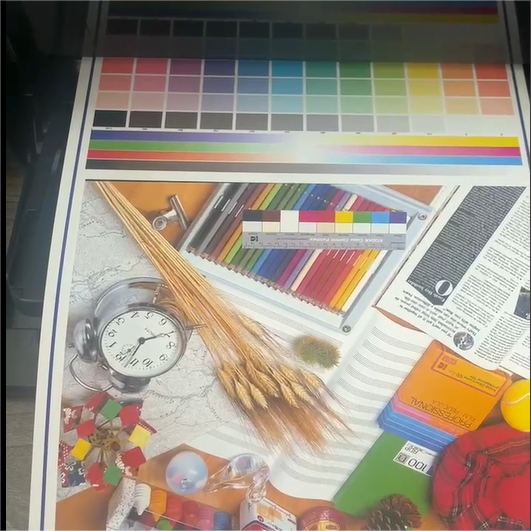
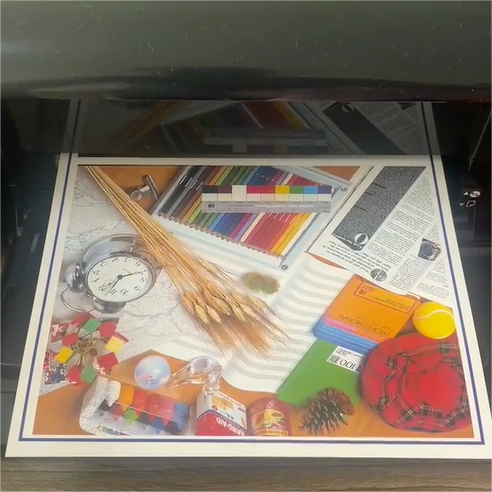
Non-Fluorescent White Polycarbonate Sheet for Inkjet Printing
Wallis non-fluorescent white polycarbonate sheet for inkjet printing is a printable PC substrate developed for applications requiring a stable white background, accurate graphic reproduction, high impact resistance and durable finished parts. It is suitable for professional printing, signage, display panels, graphic overlays, promotional materials and customized industrial printing projects.
Unlike white substrates that contain fluorescent whitening effects, the non-fluorescent white PC grade is designed to minimize fluorescence-related color shifts under different lighting conditions. This helps printers and converters achieve more predictable color evaluation, particularly for projects where consistent white appearance and controlled printed color are important.
Standard product information covers approximately 0.2 mm to 0.5 mm thickness. Customized thickness, sheet size, surface condition and packaging can be discussed according to the inkjet printer, ink chemistry, printing side, downstream fabrication and end-use requirements.
Non-Fluorescent White PC Sheet Specifications
| Specification | Details |
| Product | Non-Fluorescent White Polycarbonate Sheet for Inkjet Printing |
| Material | Polycarbonate (PC) |
| Color | Non-fluorescent white |
| Typical Thickness | Approximately 0.2–0.5 mm; customized specification subject to production confirmation |
| Printing Application | Inkjet printing; printer, ink and surface compatibility should be validated before bulk production |
| Surface | Smooth printable surface; customized surface requirements can be discussed |
| Mechanical Property | High impact resistance typical of polycarbonate; exact values depend on grade |
| Moisture Resistance | PC substrate provides good resistance to water exposure; printed-image durability depends on the selected ink and coating system |
| UV / Outdoor Option | Outdoor or UV-resistant performance should be specified by grade and validated with the complete printed construction |
| Chemical Resistance | Depends on chemical type, concentration, exposure time, PC grade and printed surface; application testing is recommended |
| Typical Applications | Signage, printed displays, graphic panels, promotional graphics, overlays and customized printed components |
| Customization | Thickness, dimensions, surface requirements, protective packaging and OEM specifications |
Printing note: Printable performance is influenced by the PC surface, ink-receptive treatment, printer technology, ink chemistry, curing conditions and downstream processing. Buyers should test representative samples using their actual printer and ink before commercial production.
Non-Fluorescent White PC Sheet for Inkjet Printing
What Does Non-Fluorescent White PC Sheet Mean?
Some white plastic substrates use fluorescent whitening effects to create a brighter visual white under certain lighting conditions. These effects can influence how the substrate appears under ultraviolet-rich illumination and may also affect visual color evaluation.
A non-fluorescent white PC sheet is intended for applications where buyers prefer a controlled white substrate without an intentionally strong fluorescent response. This can be valuable for printing projects that require repeatable visual appearance, stable background color and more predictable comparison of printed graphics under different lighting environments.
Why Does the White Background Matter for Printing?
In inkjet printing, the substrate is part of the final visual system. White shade, gloss, opacity, surface texture and fluorescence can influence perceived printed color. Using a consistent white PC substrate therefore helps printers control the visual starting point for graphics, text and branding.
Non-Fluorescent Does Not Mean Transparent
This product is a white polycarbonate substrate rather than a clear transparent sheet. Its purpose is to provide a stable white printing background. For projects requiring transparent graphics, reverse printing or backlit applications, buyers should specify a clear or translucent PC grade instead.
Why Use Polycarbonate for Printed Graphics?
High Impact Resistance
Polycarbonate is widely selected for demanding printed components because of its strong impact performance. Compared with paper-based graphics and many brittle substrates, thin PC sheet is better suited to applications that may experience frequent handling, installation stress or mechanical contact.
Stable White Printing Background
The non-fluorescent white surface provides a consistent base for printed colors, fine text, graphics, logos, QR codes and other visual information. This is especially useful where substrate color consistency is part of the approved production standard.
Good Dimensional Stability
PC provides dimensional stability suitable for precision converting and printed parts. This can help during registration, die cutting, punching, lamination and assembly when tighter dimensional control is required.
Suitable for Secondary Fabrication
Depending on the PC grade and thickness, polycarbonate can be cut, die cut, punched, bent, laminated or otherwise converted into finished graphics and industrial components. Any process involving heat, tight bending or aggressive adhesives should be tested on the actual printed construction first.
Moisture-Resistant Plastic Substrate
Unlike paper substrates, polycarbonate does not rely on paper fibers for structural integrity. This makes PC useful where the underlying substrate may encounter humidity or occasional water exposure. The durability of the printed image itself, however, depends on the ink, coating and finishing system.
Temperature Performance
Polycarbonate is commonly used in applications requiring greater temperature capability than many commodity printing plastics. Exact operating limits depend on grade, thickness, load, printing process and finished-part design and should be confirmed from the applicable technical data.

Durable Polycarbonate Substrate for Professional Printing
Inkjet Printing Compatibility and Testing
One of the most important differences between a general-purpose PC sheet and a printable polycarbonate sheet is surface compatibility with the intended ink system. A physically strong sheet does not automatically guarantee good ink wetting or adhesion.
Confirm the Printer and Ink System
When requesting samples, provide the printer model, ink type and curing process where possible. Different water-based, solvent-based, UV-curable or other digital ink systems can behave differently on polycarbonate surfaces.
Test Ink Adhesion
Evaluate ink adhesion after full drying or curing using the buyer's normal test method. If the printed PC will later be cut, bent, laminated or exposed to cleaning, test adhesion after those operations as well.
Evaluate Color Reproduction
Print the actual production color chart, brand colors or proof image on the PC sheet. Evaluate color under the lighting conditions used for quality approval. Non-fluorescent white material can help provide a more controlled background, but final color accuracy still depends on printer profiling, ink density and color management.
Check Drying and Curing Conditions
Excessive heat or UV exposure can affect polymer substrates or printed layers. Follow the ink and printer manufacturer's recommendations and confirm that the PC surface maintains acceptable appearance after curing.
Test the Complete Finished Construction
If the printed PC will be laminated, bonded, die cut or assembled into another product, testing only the unconverted printed sheet is not sufficient. Validate the complete production process to identify adhesion, cracking, color, chemical or dimensional issues before bulk production.
Applications of Non-Fluorescent White PC Sheet
Printed Signage
White printable PC sheet can be used for indoor signs, identification graphics, directional signage and other printed panels requiring greater durability than paper or lightweight display board. For long-term outdoor signage, specify an outdoor-suitable PC grade and UV-stable printing system and validate the completed sign construction.
Display and Point-of-Purchase Graphics
Retail displays, exhibition graphics, product information panels and point-of-purchase materials benefit from the combination of a white printing background, durable plastic construction and customized graphics.
Industrial Graphic Panels
Printed PC can be considered for equipment graphics, control labels, identification panels, instructional graphics and other industrial components. Exact suitability depends on required temperature, chemical exposure, abrasion, flame behavior and regulatory specifications.
Promotional Materials
Promotional panels, branded displays, exhibition graphics and custom printed pieces can use non-fluorescent white PC when accurate graphic presentation and a durable substrate are important.
Printed Packaging Components
For selected premium packaging, presentation boxes and durable printed packaging components, thin PC sheet can provide a rigid printable surface. Material selection should consider folding, die cutting, bonding, ink adhesion, package design and applicable regulatory requirements.
Graphic Overlays and Customized Components
Depending on the required construction, printable PC can be converted into graphic overlays, labels, equipment panels and customized printed components where impact resistance and dimensional stability are desirable.
Customized Printing on White Polycarbonate Sheets
Non-Fluorescent White PC Sheet vs Other Printing Substrates
| Factor | White PC Sheet | PVC Sheet | PET / PETG | Paper Board |
| Impact Performance | A major advantage of PC | Grade dependent | Good depending on structure | Generally lower |
| White Background | Non-fluorescent white option | Multiple white grades available | White grades available | Wide white-paper selection |
| Moisture Resistance | Good substrate resistance | Good | Good | Depends strongly on coating |
| Temperature Capability | Often selected for higher-temperature requirements | Grade dependent | Depends on PET/PETG structure | Limited compared with engineering plastics |
| Best Selection Basis | Printer type, ink compatibility, durability, thickness, downstream fabrication, environmental exposure, cost and final application |
Polycarbonate is not automatically the best substrate for every print project. PVC, PET, PETG, acrylic, paper and composite panels can each be more appropriate depending on cost, rigidity, forming requirements, printer compatibility, outdoor exposure and service conditions. White PC is especially useful when greater impact durability and engineering-plastic performance are required.
How to Choose White PC Sheet for Inkjet Printing
1. Specify Your Printer and Ink
Tell Wallis the printer manufacturer, printer model and ink system where possible. This is more useful than stating only “inkjet printing” because different digital-printing systems require different surface behavior.
2. Confirm the Required Thickness
The current standard range is approximately 0.2–0.5 mm. Select thickness based on required stiffness, bending behavior, cutting method, final component design and printer feeding capability.
3. Define the White Appearance
If white shade or fluorescence is critical, provide an approved physical reference or measurement requirement. Terms such as bright white, neutral white and non-fluorescent white may be interpreted differently unless objective acceptance criteria are defined.
4. Define the Surface Requirement
Specify whether you need a smooth printable surface or another surface finish. Surface gloss and texture can affect ink appearance, perceived color, print resolution and downstream lamination.
5. Describe Post-Printing Processing
Tell us if the printed sheet will be die cut, punched, bent, laminated, bonded or otherwise fabricated. This allows sample testing to reflect the complete production process.
6. Define Indoor or Outdoor Use
Outdoor durability involves the PC sheet, ink, surface treatment, printed colors and protective coating or laminate. If outdoor use is required, specify the target service environment and test the complete printed construction.
7. Approve Samples Before Bulk Production
Run representative print samples and evaluate white shade, color reproduction, ink adhesion, drying, scratching, bending and final appearance before approving bulk material.
Quality Control for Printable Polycarbonate Sheet
For B2B printing applications, consistency between batches is often as important as the basic material properties. Depending on the agreed product specification, quality-control requirements can include:
Material and batch identification
Thickness and thickness tolerance
Sheet dimensions and dimensional tolerance
White shade and visual color consistency
Surface appearance and cleanliness
Inspection for scratches, dents, contamination and foreign particles
Printability or ink-adhesion evaluation where agreed
Impact or mechanical-property verification where specified
Protective packaging and label verification
Application-specific testing according to the customer's purchase specification
If non-fluorescence, specific color coordinates, gloss, surface energy, printing adhesion or other values are critical to your project, include the required test method and acceptance limit in the purchase specification.
Customized White PC Sheet for OEM Printing Projects
Wallis supports printers, signage manufacturers, graphic converters, card and overlay producers, distributors and OEM buyers requiring customized white polycarbonate printing materials.
Non-fluorescent white polycarbonate material
Approximately 0.2–0.5 mm standard thickness range
Customized dimensions subject to production feasibility
Printable surface requirements
Customized white appearance requirements
Protective film or protective packaging where required
Sheet packaging for export transportation
OEM labels and shipping marks
Sample evaluation before bulk production
Why Choose Wallis as Your Printable PC Sheet Supplier?
B2B Polycarbonate Material Supply
Wallis supplies polycarbonate sheet and film materials for printing, cards, graphics, industrial components and customized plastic applications, helping B2B customers source materials based on their production requirements.
Customized Specifications
Thickness, dimensions, printable surface requirements, white appearance and packaging can be discussed according to the buyer's project and production feasibility.
Sample Testing for Printing Compatibility
Sample testing enables customers to verify actual ink adhesion, color reproduction, drying and downstream converting performance using their own printer and production process.
Export-Oriented Supply
Customized packaging, labels and shipping requirements can be discussed for international B2B orders to help protect printable PC surfaces during storage and transportation.
Wallis Polycarbonate Sheet Workshop
Production and quality-control capabilities support customized polycarbonate material projects for professional printing and industrial applications.


Wallis Factory Show
Customer Feedback

FAQ About Non-Fluorescent White PC Sheet
What is non-fluorescent white polycarbonate sheet?
It is a white polycarbonate substrate intended to provide a controlled white appearance without an intentionally strong fluorescent whitening response. It is useful for printing applications where stable substrate appearance and color evaluation are important.
Why use non-fluorescent white PC for printing?
A controlled non-fluorescent white background can help reduce substrate-related variation when evaluating printed colors under different lighting. Polycarbonate also provides high impact resistance and useful dimensional stability for durable printed components.
Is this polycarbonate sheet compatible with every inkjet printer?
No single substrate should be assumed compatible with every printer and ink chemistry. Provide your printer model and ink type and test a representative sample before commercial production.
Can UV inkjet printing be used on polycarbonate?
Selected printable polycarbonate materials can be used with UV digital printing when the surface, ink and curing system are compatible. The specific Wallis grade should be tested because UV exposure, ink adhesion and curing conditions can affect final performance.
What thickness is available?
The current standard product information lists approximately 0.2–0.5 mm. Customized specifications can be discussed according to the application and production feasibility.
Can the size of the white PC sheet be customized?
Yes. Customized sheet dimensions can be discussed based on required thickness, production capability, printing equipment and order quantity.
Is non-fluorescent white PC sheet transparent?
No. This product is a white printing substrate. If your project requires transparent or translucent PC for reverse printing, overlays or backlit graphics, specify that requirement separately.
Is the printed PC sheet waterproof?
The polycarbonate substrate itself has good resistance to water exposure, but the durability of the printed image depends on the ink, surface treatment and protective coating or laminate. Test the complete printed construction for wet-environment applications.
Can the printed sheet be used outdoors?
Outdoor use requires an appropriate PC grade together with UV-stable inks and, where necessary, protective coatings. Do not assume that every white PC grade or inkjet ink provides long-term outdoor weatherability without testing.
Is polycarbonate resistant to chemicals?
Polycarbonate resists many common substances but is not universally resistant to all solvents, acids, alkalis or cleaners. Chemical resistance depends on chemical type, concentration, temperature, stress and exposure time. Test any expected chemicals on the finished printed part.
Can white PC sheet be die cut or punched after printing?
Suitable polycarbonate sheet can be die cut and punched. When processing after printing, evaluate whether cutting, bending or punching affects ink adhesion or causes visible cracking near the converted edge.
Can PC sheet be laminated after inkjet printing?
Lamination may be possible when the ink, adhesive, PC surface and lamination conditions are compatible. Test adhesion and appearance because some adhesives or solvents can interact with polycarbonate or the printed layer.
What is the difference between printable PC sheet and ordinary PC sheet?
A printable PC sheet is selected or surface-prepared for a defined printing process. General-purpose polycarbonate may have excellent mechanical properties but may not provide the required ink wetting or adhesion without treatment.
Is white PC better than PVC or PET for printing?
Not for every application. PC is particularly attractive where impact resistance, durability or temperature performance is important. PVC or PET may be more appropriate for projects prioritizing cost, flexibility, specific printing technologies or other converting requirements.
Can Wallis provide samples for printer testing?
Yes. Sample testing is recommended so customers can verify white appearance, print quality, ink adhesion, curing, cutting and final-product performance using their actual equipment.
What information should I provide for a quotation?
Provide the required thickness, sheet dimensions, printing method, printer model if available, ink type, surface requirement, downstream processing, end-use application, order quantity and delivery destination.
Request White Polycarbonate Sheet Samples and Pricing
Looking for a reliable non-fluorescent white polycarbonate sheet supplier for inkjet printing? Send Wallis your required thickness, sheet size, printer and ink information, surface requirements, application and order quantity. Our team can review your specification and prepare suitable PC sheet samples for printing evaluation.