Excimer Super Matte Soft-Touch Edge Banding for Furniture Panels
Wallis supplies excimer super matte edge banding for premium furniture manufacturers, cabinet factories, panel processors, interior contractors, distributors and OEM projects. The ultra-low-gloss surface is designed to coordinate with excimer-finished and other premium super-matte furniture panels, creating a consistent appearance from the panel face to the exposed edge.
Available in PVC and ABS, Wallis soft-touch edge banding combines an elegant matte appearance with anti-fingerprint, easy-clean and scratch-resistant surface options. Color, gloss, touch, width, thickness, roll length, primer, labels and export packaging can be customized according to the approved furniture board and processing requirements.
For critical projects, the term “excimer edge banding” should be confirmed against the required surface construction. It may refer to edging produced with an excimer-cured coating or to an ultra-matte edging developed to match an excimer-finished panel. Wallis recommends approving a physical sample and technical specification before mass production.
Request a Super Matte Matching Sample

Excimer Super Matte Edge Banding Specifications
The following specifications reflect the product range shown on this page. Final tolerances, target gloss, surface performance, primer, roll length and packing should be confirmed according to the selected material, board sample, edge bander and order quantity.
| Item | Available Specification |
| Product | Excimer super matte / soft-touch furniture edge banding |
| Material | PVC or ABS |
| Surface Finish | Ultra-matte, super matte, soft touch, skin-feel or customer-approved low-gloss finish |
| Width | 12 mm–80 mm; customized widths available |
| Thickness | 0.4 mm–3.0 mm; subject to material and surface construction |
| Roll Length | 100 m–300 m per roll; customized packing subject to specification |
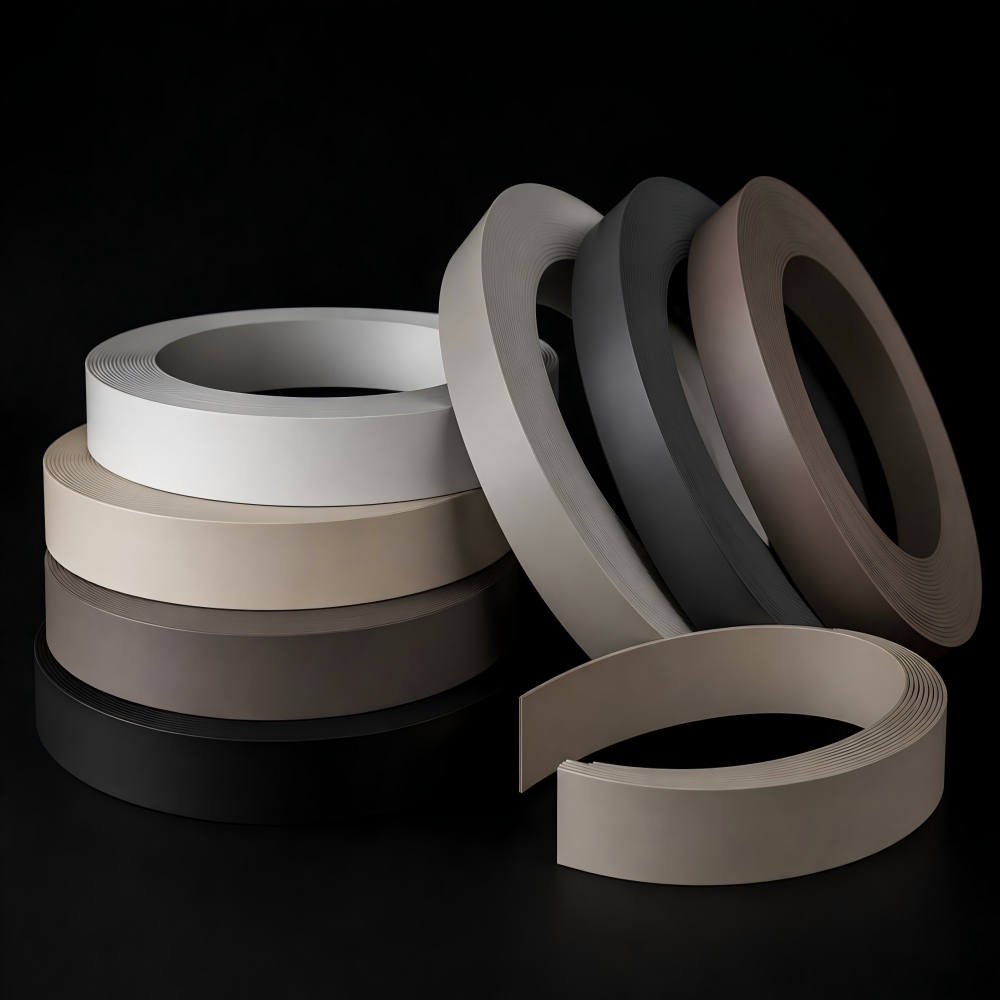
| Standard Colors | White, black, grey, beige, taupe, graphite and customized colors |
| Surface Functions | Anti-fingerprint, soft-touch, anti-sheen, easy-clean and scratch-resistant options |
| Panel Matching | Color, gloss and tactile matching to approved excimer or super-matte furniture panels |
| Processing | Automatic and semi-automatic edge banding with a compatible primer and adhesive system |
| OEM Service | Custom colors, dimensions, rolls, labels, cartons and export packaging |
| MOQ | Depends on material, color, dimensions, coating and customization requirements |
What Is Excimer Super Matte Edge Banding?
Excimer curing is a surface-finishing process used to create very low-gloss lacquered surfaces with a smooth or micro-textured appearance. In furniture systems, the term “excimer” is widely associated with ultra-matte panels, anti-fingerprint performance and a warm, velvety touch.
The matching edge banding must reproduce the panel’s visible color and gloss while also maintaining a similar tactile character. Because panel and edge products may use different substrates or coating processes, an exact match should be judged from the finished component rather than from a color code alone.
Excimer-Cured Edge vs. Excimer-Matching Edge
An excimer-cured edge has a coating that is actually processed using excimer technology. An excimer-matching edge is developed to visually and tactually match an excimer panel but may use another approved surface process. Buyers should specify whether the manufacturing technology itself is mandatory or whether the required result is a matching super-matte, anti-fingerprint surface.
Confirm the Target Gloss Measurement
“Super matte” is not a complete technical specification. State the target gloss unit, measurement angle, permitted tolerance and reference sample. A value such as 3–6 gloss units may be used for some premium matte systems, but the final target must be agreed for the selected board and edge construction.
Ultra-Matte, Anti-Fingerprint and Soft-Touch Performance
Ultra-Low-Gloss Appearance
The low-reflection finish creates a calm, premium visual effect for minimalist furniture. It is especially effective in black, graphite, taupe, beige and other solid-color decors where inconsistent gloss between the board and edge would otherwise be highly visible.
Anti-Fingerprint Surface
Anti-fingerprint surfaces reduce the visibility of normal touch marks, skin oils and smudges. Performance should be evaluated on dark colors, where fingerprints are usually most noticeable, and should include both initial appearance and cleanability after repeated handling.
Velvety Soft-Touch Feel
A soft-touch finish gives the furniture edge a smooth, warm and skin-like tactile quality. The tactile match should be compared directly with the panel because two surfaces with similar gloss values can still feel noticeably different.
Anti-Sheen and Resistance to Polishing
Repeated rubbing, scraping or buffing can create shiny spots on ordinary matte edging. Premium super-matte edging should be evaluated for resistance to polishing and visible sheen, particularly after machine processing and in high-contact furniture applications.
Scratch, Wear and Stain Resistance
Scratch-resistant and easy-clean options are available, but actual performance depends on the surface coating, material, color and test method. Dark, smooth matte surfaces may show fine scratches more readily than lighter or textured surfaces, so approval testing should reflect the intended furniture use.
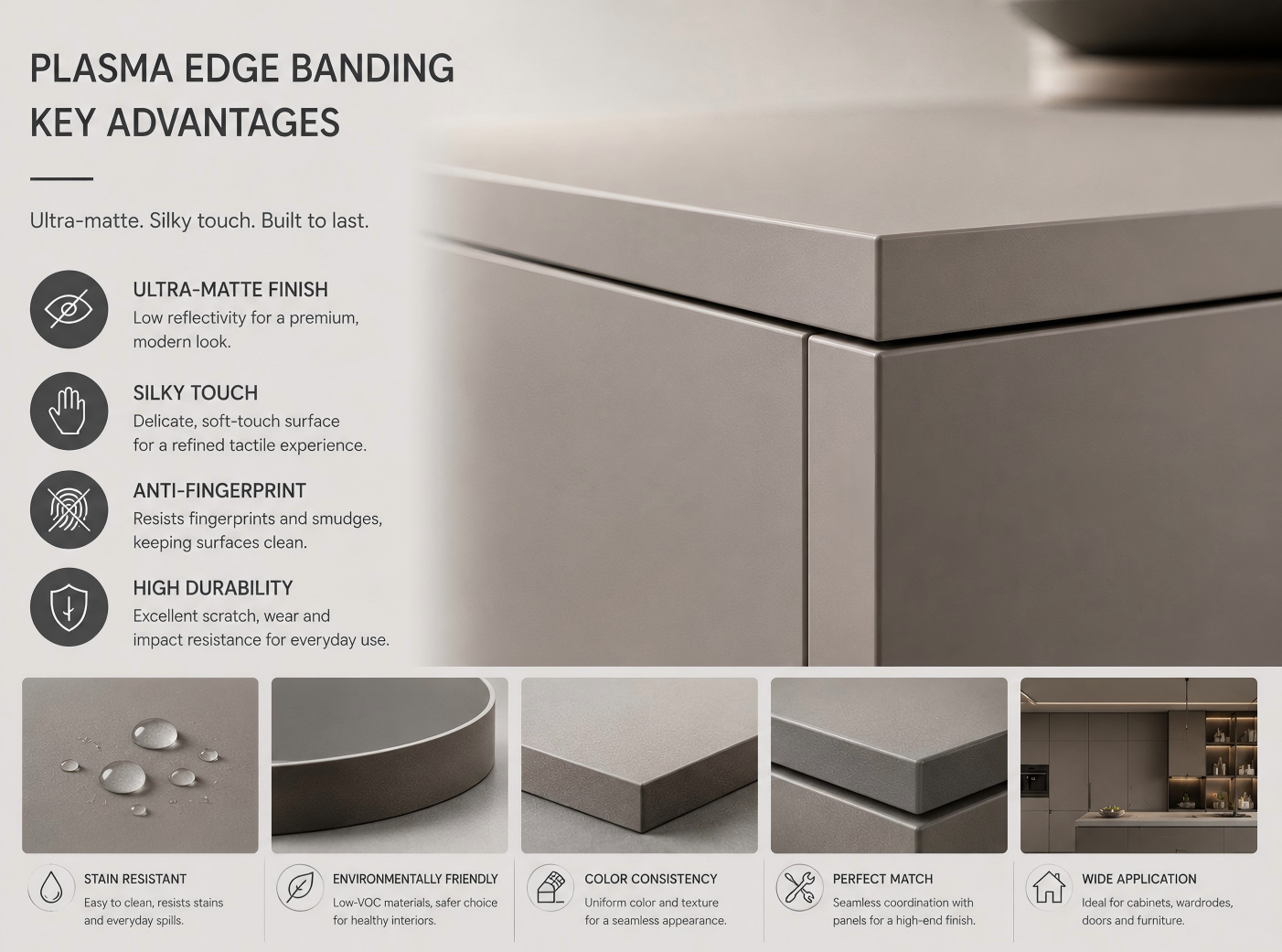
Ultra-matte appearance, soft touch and reduced fingerprint visibility
Surface-to-Edge Matching for Excimer Furniture Panels
Match Color, Gloss and Touch Together
A high-quality component requires more than a similar color. The edge should coordinate with the panel in base shade, undertone, gloss, surface smoothness and tactile feel. A minor gloss difference can become obvious under side lighting even when the color appears correct from the front.
Use an Original Board or Laminate Sample
Digital images, monitor displays, RAL references and Pantone codes can support initial color selection but cannot show the exact gloss or touch of an excimer panel. Send an original panel, laminate or approved edging sample for accurate development.
Inspect Under Several Lighting Conditions
Compare the finished board and edge under diffuse daylight, warm indoor light and directional side light. Dark super-matte colors can reveal gloss differences, edge whitening, adhesive lines and surface marks more strongly under low-angle illumination.
Approve the Finished Component
The most reliable approval is a panel component processed with the intended board, edge, adhesive and machine settings. Evaluate the face-to-edge transition, bond line, trimming, corner rounding, buffing and fingerprint behavior before mass production.

PVC vs. ABS Super Matte Edge Banding
| Selection Factor | PVC Super Matte Edge | ABS Super Matte Edge |
| Primary Benefit | Flexible, cost-efficient and available in broad dimensions and colors. | Chlorine-free material with good toughness, dimensional stability and machining performance. |
| Typical Projects | Residential cabinets, wardrobes, wall panels and volume furniture production. | Premium furniture, commercial interiors and projects specifying ABS. |
| Surface Options | Ultra-matte, soft-touch, anti-fingerprint and custom color finishes. | Ultra-matte, soft-touch, anti-fingerprint and matching panel finishes. |
| Selection Method | Choose according to price, flexibility, size and target-market requirements. | Choose according to material policy, impact performance and processing requirements. |
The surface coating can influence performance as much as the base polymer. Approve the actual coated PVC or ABS sample rather than assuming that all products made from the same material will have identical scratch, touch or fingerprint performance.
Edge Banding Machine and Adhesive Compatibility
Premium matte edging requires controlled processing because excessive heat, pressure, scraping or buffing can change the surface gloss. Provide the edge bander model, feed speed, adhesive system, panel material and required finished edge before ordering.
EVA Hot-Melt Adhesive
EVA is commonly used for standard indoor furniture production. Adhesive temperature, open time, pressure and feed speed should follow the adhesive supplier’s instructions and be tested with the selected backing primer.
PUR Hot-Melt Adhesive
PUR can provide improved resistance to heat and moisture and is often selected for premium kitchens, bathrooms and demanding furniture components. Compatibility with the edge primer and machine must be confirmed before bulk production.
Protect the Matte Surface During Machining
Confirm whether protective film is required and compatible with the production line.
Use sharp trimming tools and controlled scraper pressure.
Avoid excessive buffing that could create local gloss or polishing marks.
Check corner rounding for whitening, coating damage and gloss change.
Inspect dark colors under side lighting after all machine operations.
Zero-Joint Processing
Laser, hot-air, NIR and other zero-joint technologies require a compatible functional layer. Standard primed edging should not be treated as zero-joint material unless the product construction and processing technology are specifically confirmed.
Furniture and Interior Applications
Kitchen Cabinets
Super-matte edging creates a coordinated finish for cabinet doors, drawer fronts, carcasses, kitchen islands and pantry systems. Anti-fingerprint surfaces are especially useful on dark and frequently touched furniture fronts.
Wardrobes and Closets
Ultra-matte edges support minimalist wardrobe doors, shelving, drawer units and fitted storage systems where consistent color and low reflection are essential to the design.
Office and Commercial Furniture
Applications include executive desks, office storage, reception counters, meeting tables, retail fixtures and hotel furniture requiring a premium tactile surface and professional appearance.
Living Room Furniture
TV units, sideboards, shelves, display cabinets and modular storage can use super-matte edging to coordinate with modern solid-color and soft-touch furniture panels.
Interior Wall Panels and Doors
Matching edging can finish decorative wall panels, interior doors, partitions and fitted casework in residential, hospitality, retail and commercial projects.

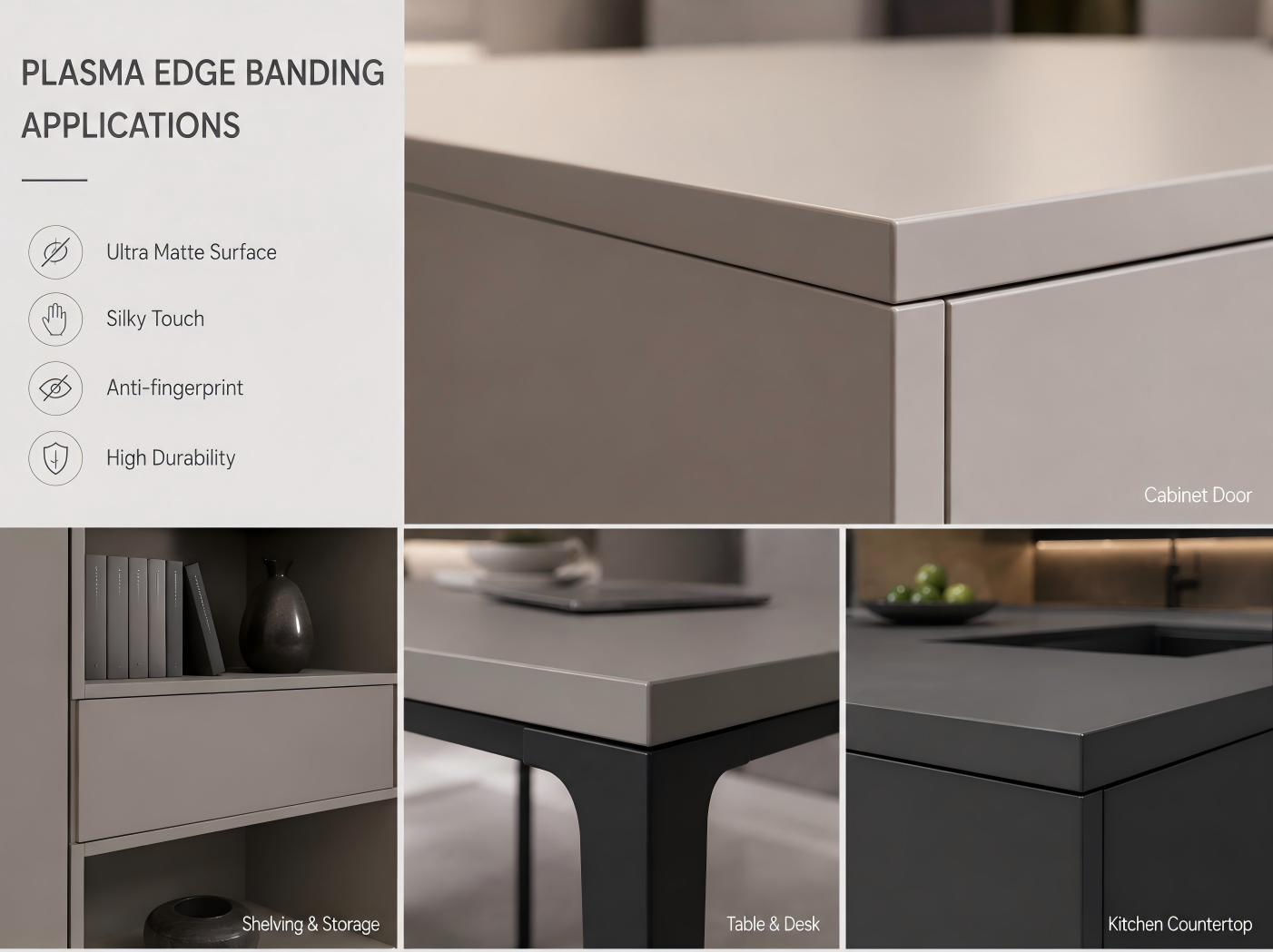
Premium ultra-matte edging for residential and commercial furniture systems
Available Super Matte Colors
Wallis offers fashionable neutral and dark colors commonly used for excimer and premium matte furniture:
Dark matte colors require particularly careful inspection because fingerprints, fine scratches, edge whitening and gloss variation are more visible than on light colors. Sample approval should include both untouched material and a finished machine-banded component.
Customization for OEM and Wholesale Orders
Custom Color and Gloss
Wallis can develop the base shade and low-gloss surface according to a physical excimer panel, lacquered board, furniture film, laminate or approved reference edge.
Custom Width, Thickness and Roll Length
Dimensions can be selected according to panel thickness, visible-edge design, trimming allowance, machine speed and roll-handling requirements. Provide the target size and annual or project demand for feasibility review.
OEM Labels and Export Packaging
OEM options can include roll labels, customer product codes, carton marks, protective wrapping, pallets and export shipping marks. Packing should protect the soft-touch surface from pressure, dust, abrasion and contamination.
Quality Control for Super Matte Edge Banding
Super-matte edging requires both dimensional inspection and surface inspection. Production should be compared with an approved master sample and agreed measurement methods.
Color: shade, undertone and batch consistency under approved lighting.
Gloss: measurement angle, target value, tolerance and uniformity along the roll.
Touch: tactile comparison with the approved panel and sample.
Surface: fingerprints, scratches, polishing, stains, contamination and coating defects.
Dimensions: width, thickness, roll length and edge straightness.
Processing: adhesion, trimming, scraping, buffing and corner-rounding appearance.
Packing: roll protection, labels, cartons, pallet condition and traceability.
How to Order Excimer Super Matte Edge Banding
1. Send the Panel and Technical Requirements
Provide the original excimer or super-matte panel, material preference, target gloss, width, thickness, roll length, quantity, machine model, adhesive type, packaging requirements and destination country.
2. Confirm Surface Construction and Feasibility
State whether actual excimer curing is mandatory or whether the requirement is a matching super-matte, soft-touch and anti-fingerprint result. Wallis will review the material, coating, dimensions and project volume.
3. Approve the Material Sample
Compare color, gloss, touch, fingerprint visibility, cleanability and scratch behavior with the panel under the intended lighting.
4. Run a Production-Line Test
Apply the sample using the actual panel, adhesive and edge bander. Confirm adhesion, glue line, trimming, scraping, corner rounding, buffing and any change in the matte surface.
5. Confirm the Master Sample and Bulk Order
Retain the approved panel, edge and finished component as references. Confirm the final specification, quantity, labels, packing, inspection criteria and shipment details before production.
Send Your Panel Sample and Requirements
Why Choose Wallis as Your Super Matte Edge Banding Supplier?
Panel-to-Edge Matching Support
Wallis reviews color, gloss, touch and processing requirements together, helping furniture manufacturers avoid an edge that matches the color but not the surface character of the board.
PVC and ABS Material Options
Buyers can compare PVC and ABS according to cost, dimensional requirements, material policy, machining and end-use performance within one sourcing project.
Sample, OEM and Export Support
Wallis supports sample preparation, custom dimensions, roll labels, protective packaging, inspection and export-order coordination for furniture factories, distributors and project customers.

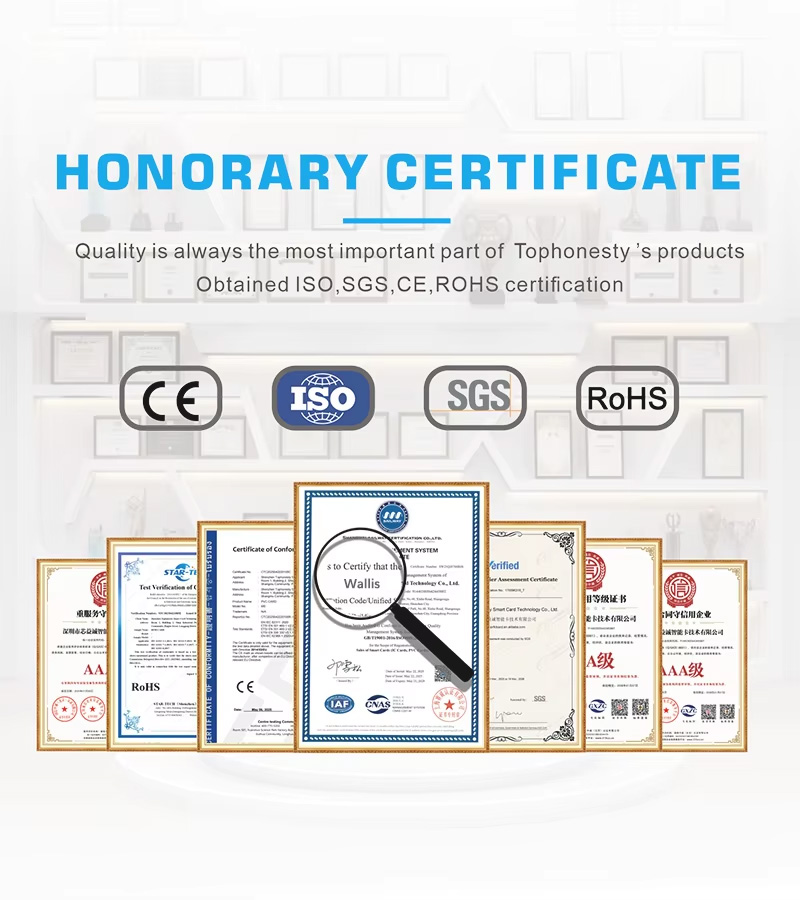
Wallis certificates and quality documentation
Global Supply for Premium Furniture Projects
Wallis supports furniture factories, cabinet manufacturers, panel processors, wholesalers and interior project buyers in international markets. Clear specifications, approved samples and production-line testing help reduce color, gloss and processing differences in repeat orders.

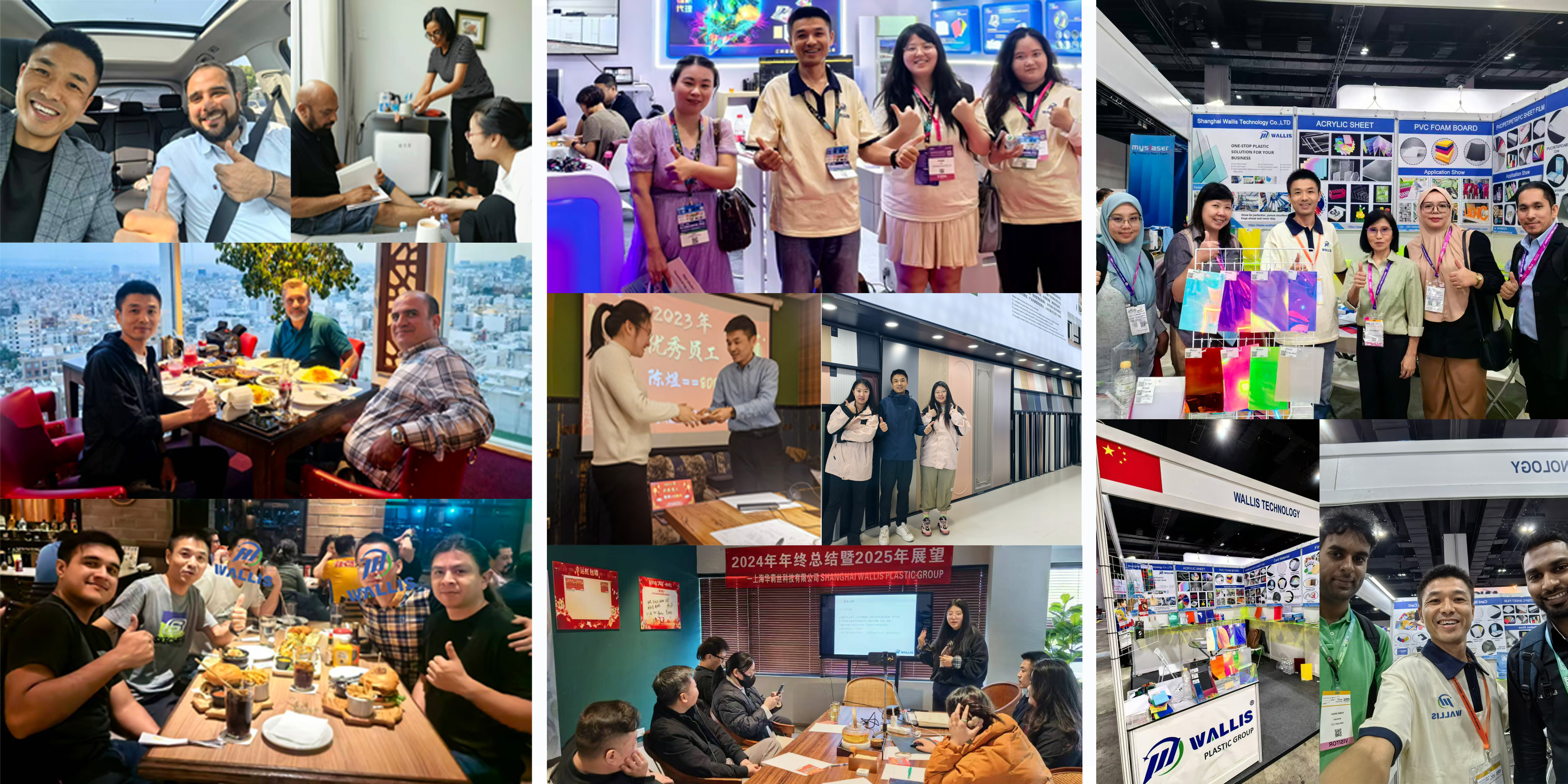
Production coordination and international B2B support
Customer Communication and Repeat-Order Control
Premium matte projects may require several rounds of color, gloss, touch and machining approval. Wallis focuses on clear communication, master-sample control, protective packaging and stable repeat production for long-term furniture programs.

Frequently Asked Questions
What is excimer super matte edge banding?
It is premium furniture edging with an ultra-low-gloss surface developed for excimer-finished or other super-matte panels. Depending on the specification, the edge may use an excimer-cured coating or another surface treatment designed to provide a similar visual and tactile result.
Is every super matte edge banding produced with excimer curing?
No. “Super matte” describes the appearance, while “excimer” describes a specific curing technology or a panel category in some markets. Confirm the coating construction when excimer processing itself is a mandatory requirement.
Can the edge match our excimer furniture panel?
Yes. Wallis can develop color, gloss and tactile matching from an original panel or laminate sample. The finished component should be approved because board and edge may use different substrates and coating processes.
What gloss level is available?
Ultra-low-gloss options are available, but the target should be specified using a measurement angle, gloss-unit value, tolerance and physical reference. The achievable result depends on the material, coating and color.
Is the surface completely fingerprint-proof?
Anti-fingerprint treatment reduces the visibility of fingerprints and smudges; it does not prevent all marks under every condition. Dark colors, oily hands, lighting and cleaning methods affect the visible result.
Is soft-touch edge banding scratch resistant?
Scratch-resistant options are available. Actual resistance depends on the coating, base material, color and test method. Samples should be tested when the edge will be exposed to demanding production or service conditions.
Can it be used with automatic edge banding machines?
Yes. It can be prepared for standard automatic and semi-automatic edge banders. Machine settings must protect the matte coating from excessive heat, pressure, scraping and buffing.
Is it compatible with EVA and PUR adhesives?
Compatible backing primers can be specified for suitable EVA or PUR hot-melt systems. The edge, primer, adhesive, panel and machine should be tested as one production system.
Can I order zero-joint super matte edging?
Zero-joint edging requires a functional layer compatible with laser, hot air, NIR or another specified technology. Request this construction separately from standard primed edge banding.
Can the width, thickness, color and roll length be customized?
Yes. Wallis supports customized dimensions, colors, gloss levels, roll lengths, labels and packaging according to technical feasibility and order quantity.
Do you provide samples before bulk production?
Yes. Samples can be arranged for color, gloss, touch, fingerprint, scratch and machine-processing evaluation. Custom sample requirements depend on the requested specification.
What information is required for a quotation?
Send the panel sample, material, target gloss, width, thickness, roll length, quantity, machine model, adhesive type, packaging requirements, destination country and required test or compliance documents.
Contact Wallis for Samples and Pricing