Holographic Laser Rainbow Film for Secure ID Card Manufacturing
Wallis holographic laser rainbow film is a customizable security material developed for B2B manufacturers of ID cards, smart cards, access cards, bank cards and other high-security credentials. The film creates a dynamic iridescent effect that is easy to recognize visually while helping protect printed and personalized card data from alteration and counterfeiting.
What is holographic laser rainbow film? It is a transparent or semi-transparent PET/PVC film with an embossed optical pattern that changes color and appearance under different viewing angles. It can be supplied in roll or sheet form and integrated as a laminated card overlay or decorative security layer.
For card factories, printing bureaus and security-document contractors, the material offers three practical benefits: visible authentication, enhanced surface protection and flexible customization. Standard and custom holographic patterns can be matched to card structure, lamination equipment, visual design and order volume.
Target applications: government ID cards, employee badges, access cards, smart cards, bank cards, driving licenses and membership cards
Available materials: PET and PVC film options
Available thickness: 20–100 μm, subject to project requirements
Supply formats: custom rolls or sheets
Customization: holographic pattern, logo, microtext, guilloche design, transparency, dimensions and packaging
Send Wallis your card material, finished-card structure, required thickness, dimensions, annual quantity and security-design requirements. Our team will recommend a suitable film construction and sampling plan.
Request a Custom Film Sample
Technical Specifications
The following values describe the available product range. Final specifications should be confirmed through sample testing because bonding performance depends on the card substrate, ink system, lamination temperature, pressure and production cycle.
| Parameter | Specification |
| Material | PET / PVC |
| Product Type | Holographic laser rainbow film / security card overlay film |
| Surface | Smooth holographic surface |
| Optical Effect | Rainbow / laser / iridescent effect |
| Thickness | 20–100 μm |
| Width and Size | Customized according to roll, sheet or card-production requirements |
| Transparency | Transparent / semi-transparent |
| Primary Application | Card lamination, overlay and visual security integration |
| Compatible Card Materials | PVC, PET, ABS and compatible composite card structures after testing |
| Lamination Method | Hot lamination / cold lamination, depending on selected grade |
| Performance Options | High bonding, UV-resistant, scratch-resistant and wear-resistant options |
| Customization | Pattern, logo, microtext, guilloche, size, transparency and packaging |
| MOQ | Depends on film structure, dimensions and custom pattern requirements |
Key Security and Production Advantages
Visible Authentication with a Dynamic Rainbow Effect
The embossed holographic structure produces a color-shifting optical effect under changing light and viewing angles. This overt feature allows card issuers, inspectors and end users to perform a fast visual authenticity check without specialist equipment.
Protection Against Copying and Unauthorized Alteration
Holographic imagery is difficult to reproduce with conventional printing, scanning or photocopying. When integrated over printed or personalized information, the film adds another barrier against card duplication, data replacement and surface tampering. Tamper-evident constructions can be evaluated for projects requiring visible evidence of removal.
Transparent Security Without Hiding Card Data
Transparent and semi-transparent options preserve the readability of photographs, names, numbers, barcodes and printed graphics beneath the film. Pattern density and placement can be customized so the security effect supports, rather than obstructs, card inspection.
Surface Durability for Frequently Handled Cards
Selected grades provide scratch, wear and UV resistance to help protect card graphics during daily handling. The appropriate construction should be selected according to the expected service life, climate, abrasion level and card-issuance standard.
Compatibility with Card Lamination Workflows
The film can be supplied for hot or cold lamination and evaluated with PVC, PET, ABS and composite card structures. Wallis recommends pre-production testing with the actual core sheet, overlay, ink, adhesive, chip or antenna inlay and lamination cycle used by the customer.
Custom Holographic Patterns for Brand and Program Control
Custom options can include logos, repeating brand marks, microtext, guilloche lines, geometric elements and controlled pattern placement. These features help card issuers create a recognizable visual identity and reduce reliance on generic stock designs.

Customization Options for B2B Card Projects
A successful security-film project requires more than selecting a rainbow appearance. The film structure must match the card design, production equipment, inspection method and procurement plan. Wallis can discuss the following variables during sampling and quotation.
| Customization Item | Available Project Choices |
| Security Design | Generic pattern or custom logo, microtext, guilloche and repeating graphics |
| Optical Appearance | Rainbow, iridescent, laser and project-specific visual effects |
| Transparency | Transparent or semi-transparent, adjusted for data visibility |
| Dimensions | Custom thickness, width, roll length and sheet size |
| Lamination Construction | Grade selected for the customer’s substrate, process and bonding requirement |
| Packaging | Export packaging, roll protection, sheet separation and custom labeling |
Discuss Your Security Film Specification
Applications of Holographic Laser Rainbow Film
This film is intended for professional card and secure-document production where visible authentication, surface protection and product differentiation are required.
Government ID Cards and Driving Licenses
A transparent holographic layer can protect portraits and biographical data while adding an overt feature that inspectors can recognize under normal light. Custom patterns can be aligned with the visual identity of the issuing authority.
Employee Badges and Access Control Cards
Corporate, campus and facility-access cards can use the rainbow effect to support quick credential recognition and discourage unauthorized reproduction. The film can be assessed with magnetic stripe, contact chip, contactless and RFID card structures.
Bank, Payment and Membership Cards
Customized holographic designs add a premium appearance and a visible authenticity feature to financial, loyalty and membership cards. Pattern placement should be coordinated with signature panels, magnetic stripes, chips, personalization zones and required machine-readable areas.
Smart Cards and RFID Cards
The film can be incorporated into multilayer smart-card production after compatibility testing. Card manufacturers should validate lamination behavior, flatness, chip-module installation and antenna performance using the final production structure.
Passports, Certificates and Secure Tickets
Project-specific film constructions may also be used for laminated document pages, certificates, high-value tickets and brand-protection applications. Suitability must be confirmed according to the document material, security level and conversion process.
How to Integrate the Film into Card Production
1. Confirm the Finished-Card Structure
Provide the core material, overlay material, total card thickness, printing method, chip or antenna structure and required service conditions. This information determines which film grade should be sampled.
2. Define the Security and Visual Requirements
Choose a stock pattern or submit artwork for a custom hologram. Identify critical data areas, portrait zones, machine-readable elements and any locations where the pattern must be reduced or excluded.
3. Test Lamination and Bonding
Run a pilot test using the intended temperature, pressure, dwell time and cooling method. Inspect adhesion, flatness, transparency, optical consistency, print readability and resistance to delamination.
4. Validate Finished-Card Performance
Evaluate the completed card for bending, abrasion, heat, humidity, UV exposure and compatibility with personalization or encoding equipment according to the customer’s internal standard or project specification.
5. Approve the Production Sample
Bulk production should begin only after the film appearance, dimensions, winding, packaging, bonding and finished-card test results have been approved. Retaining an approved reference sample helps maintain consistency across repeat orders.
Information Required for an Accurate Quotation
To shorten the evaluation and quotation process, include as much of the following information as possible in your inquiry:
Film material: PET or PVC
Required thickness, width, roll length or sheet size
Transparent or semi-transparent appearance
Stock holographic pattern or custom design
Card substrate and complete layer structure
Hot or cold lamination process
Printing and personalization method
Sample quantity, trial quantity and estimated annual demand
Required packaging, labeling and destination market
Get a Factory Quotation
Why Choose Wallis Holographic Film?
Factory-Direct B2B Supply
Wallis supports card manufacturers, converters, printing companies and project contractors with specification discussion, sampling, customized dimensions and bulk production. Direct technical communication helps reduce mismatches between the film and the customer’s card process.
Card-Material Integration Support
In addition to holographic film, Wallis supplies card-production materials such as PVC core sheets, PET/PETG materials, overlay films and related card components. This makes it easier to evaluate the holographic layer as part of a complete laminated card structure.
Custom Development and Sampling
Customers can request project-specific thickness, dimensions, transparency and optical patterns. Sampling allows the buyer to confirm visual performance, bonding and production compatibility before committing to a larger order.
Export Packaging and Repeat-Order Control
Roll and sheet packaging can be arranged to protect the film surface, edges and winding during international transport. Approved specifications and reference samples can be retained to support repeat-order consistency.
Serving Card Manufacturers Worldwide
Wallis works with international buyers on sample evaluation, specification confirmation, bulk production and export delivery. Clear technical requirements and an approved sample are the foundation for stable cooperation on customized security-card materials.

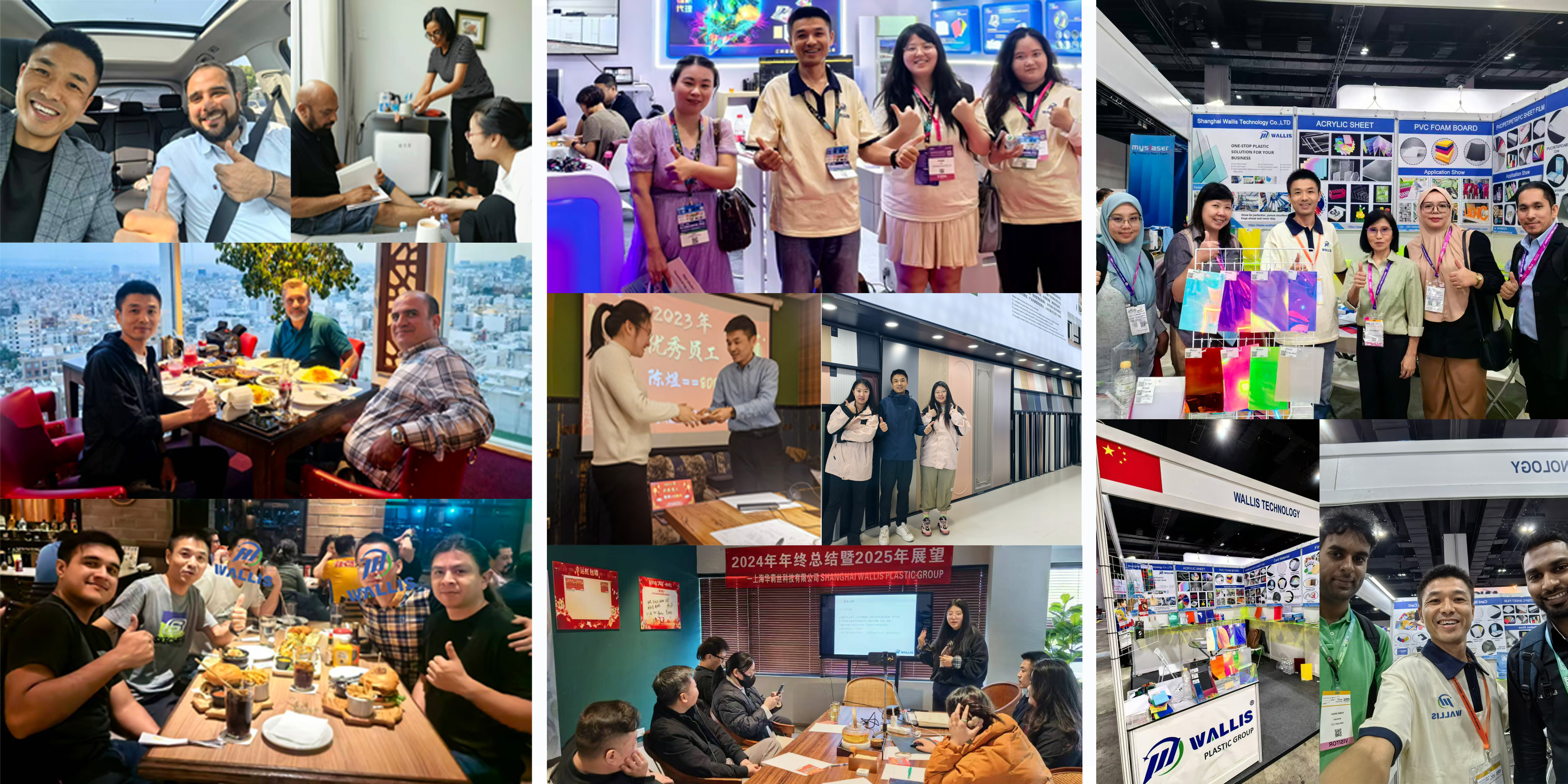
Company daily operations
Customer Communication and Project Support
B2B security-film projects often require several rounds of specification checking and sample feedback. Wallis supports buyers through artwork confirmation, trial production, performance review and repeat-order planning.

Frequently Asked Questions
What is holographic laser rainbow film used for?
It is used as a visible security and protective layer in ID cards, access cards, smart cards, bank cards, driving licenses and other credentials. The optical pattern changes with the viewing angle, helping users recognize an authentic card while protecting information beneath the film.
Is the film available in PET and PVC?
Yes. PET and PVC options are available. The correct material should be selected according to the card substrate, lamination process, required durability and finished-card structure.
What thicknesses can Wallis supply?
The available range is generally 20–100 μm. Final thickness depends on the security effect, card construction, bonding method and total finished-card thickness required by the customer.
Can the holographic pattern include our logo or microtext?
Yes. Custom designs may include logos, microtext, guilloche lines, repeating brand elements and project-specific graphics. Artwork feasibility, origination requirements, MOQ and development cost must be confirmed before production.
Will the film cover printed card information?
Transparent and semi-transparent grades are designed to maintain visibility of portraits, names, numbers and printed graphics. Pattern density and placement can be adjusted to keep important data areas readable.
Is it compatible with PVC, PET and ABS cards?
The film can be evaluated with PVC, PET, ABS and compatible composite structures. Because inks, adhesives and lamination conditions vary, Wallis recommends testing the actual customer materials before bulk production.
Can it be used for hot and cold lamination?
Hot-lamination and cold-lamination options are available depending on the selected film construction. Share your equipment and process conditions so the appropriate grade can be recommended.
Does the film provide tamper evidence?
A holographic layer can make copying and alteration more difficult, and tamper-evident constructions can show visible damage after removal attempts. The required tamper behavior should be specified and tested for the intended card structure.
Can we request samples before placing a bulk order?
Yes. Sampling is recommended to confirm optical appearance, transparency, adhesion, lamination behavior and finished-card performance. Provide your target specification and card structure when requesting samples.
What is the MOQ for custom holographic film?
MOQ depends on whether the project uses a standard or custom pattern, as well as the film material, thickness, dimensions, winding and packaging. Contact Wallis with your estimated order quantity for a project-specific quotation.
What information should we send for a quotation?
Please provide the material, thickness, width or sheet size, transparency, holographic pattern, card substrate, lamination method, sample quantity, estimated annual demand, packaging requirements and destination country.
Need a holographic film matched to your card line? Send us your technical requirements for material selection, sample evaluation and factory pricing.
Contact Wallis for Your Project