Anti-Scratch Clear PETG / GAG Film for Furniture Surface Lamination
Wallis anti-scratch clear PETG / GAG film for furniture surfaces is developed for decorative panel lamination, cabinet doors, wardrobes, TV cabinets, wall panels, retail fixtures, office furniture, hotel casework, and other interior applications that require transparency, surface protection, and a premium visual finish.
The clear furniture film is available in PET, GAG, and PETG-based material structures with high-gloss, matte, super-clear, clear, or tinted surface options. An optional hard-coat treatment helps reduce visible scratches, abrasion marks, fingerprints, stains, and damage caused by routine handling and cleaning.
Thicknesses from 0.20 mm to 1.0 mm and widths up to 1250 mm are available in roll or sheet format. The material is intended for furniture factories, decorative board manufacturers, panel laminators, interior contractors, OEM brands, importers, and distributors requiring custom specifications and export-ready supply.
Request Samples and Factory Pricing
What Is Anti-Scratch Clear PETG / GAG Furniture Film?
Clear Decorative and Protective Surface Material
Anti-scratch clear PETG / GAG film is a thermoplastic surface material used to protect and enhance furniture panels. Its transparency allows the color, print, pattern, wood grain, metallic effect, or decorative layer below the film to remain visible while adding gloss, depth, and surface protection.
PET, GAG, and PETG Material Options
Wallis can provide PET, GAG, PETG, or project-specific multilayer structures according to the required clarity, stiffness, forming behavior, thickness, lamination process, and cost target. Because layer composition can vary by product grade, the final construction should be confirmed in the technical specification rather than assumed from the general product name.
Optional Hard-Coat Surface
A hard-coat treatment can improve resistance to light scratches, repeated cleaning, fingerprints, common stains, and routine furniture handling. No transparent plastic surface is completely scratch-proof, so required hardness, abrasion resistance, chemical resistance, and test methods should be agreed before bulk production.
Key Product Properties
Clear, super-clear, high-gloss, matte, and tinted appearance options
Scratch-resistant and abrasion-resistant hard-coat options
Smooth surface with visual depth and consistent transparency
Easy-clean and stain-resistant surface options
Roll and sheet formats for different furniture production lines
Suitable for flat lamination and selected forming processes after validation
PET-family material options without chlorine in the polymer structure
Custom thickness, width, tint, surface treatment, protective film, and packaging

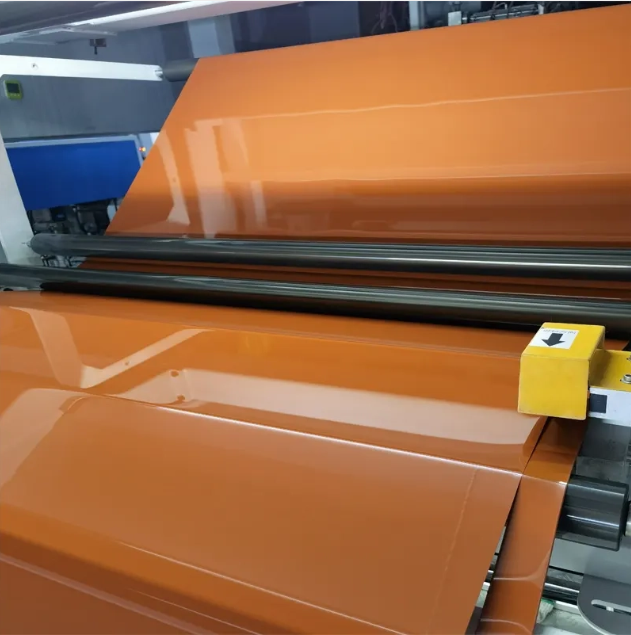
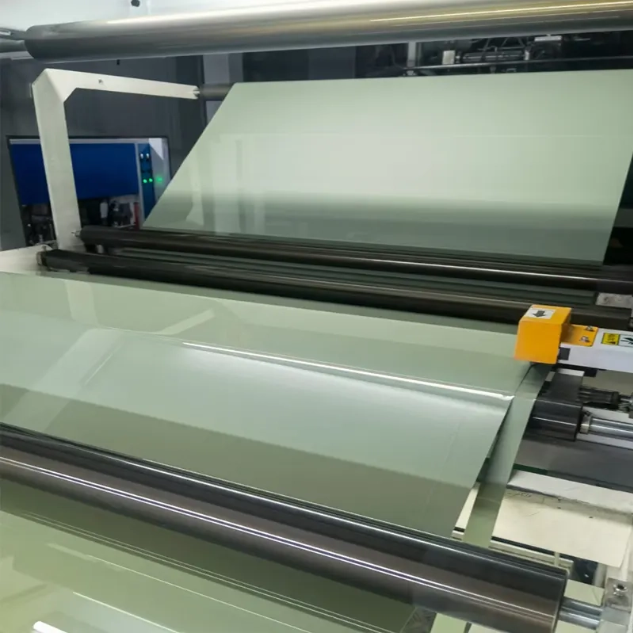
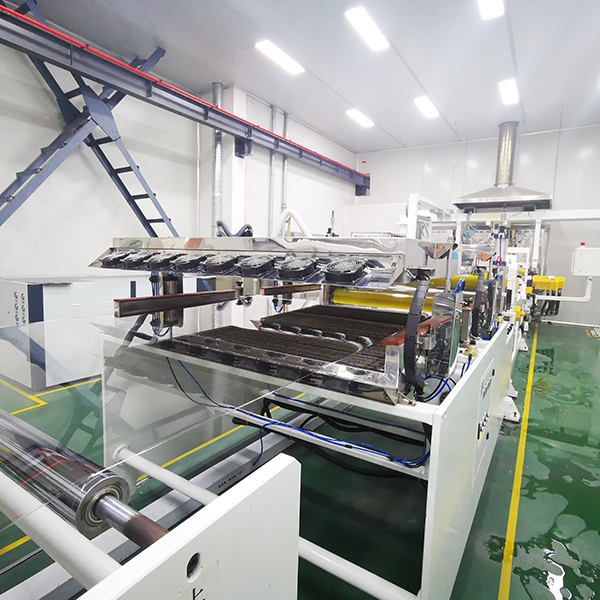
PETG Film Production Line

High-Gloss PETG Material Production
Technical Specifications
The table below summarizes the standard product range provided in the original product information. Final values should be confirmed against the approved sample, purchase specification, selected material structure, and intended processing method.
| Item | Available Specification |
| Product Name | Anti-Scratch Clear PETG / GAG Film for Furniture Surface Lamination |
| Material Options | PET / GAG / PETG and project-specific multilayer structures |
| Density | Approximately 1.37 g/cm³ for the stated standard grade; confirm by material structure |
| Thickness | 0.20 mm–1.0 mm; commonly requested options include 0.5 mm and 0.8 mm |
| Maximum Width | Up to 1250 mm; customized width subject to production review |
| Supply Format | Roll or sheet |
| Surface Finish | High gloss / Matte / Clear hard-coat finish |
| Appearance | Crystal clear / Super clear / Tinted clear options |
| Surface Functions | Scratch-resistant, abrasion-resistant, stain-resistant, fingerprint-resistant, and easy-clean options |
| Compatible Substrates | MDF, particle board, plywood, decorative board, PVC board, and other suitable panels after process validation |
| Processing Methods | Flat lamination, hot pressing, bonding, cutting, CNC processing, vacuum forming, and selected thermoforming |
| Applications | Cabinet doors, wardrobes, TV cabinets, wall panels, furniture boards, retail fixtures, and commercial interiors |
| Customization | Thickness, width, length, tint, gloss, matte finish, coating, protective film, labels, and export packaging |

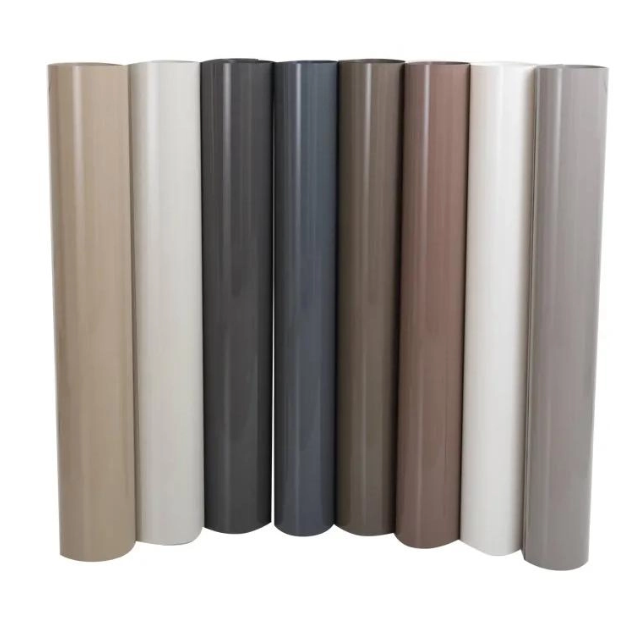
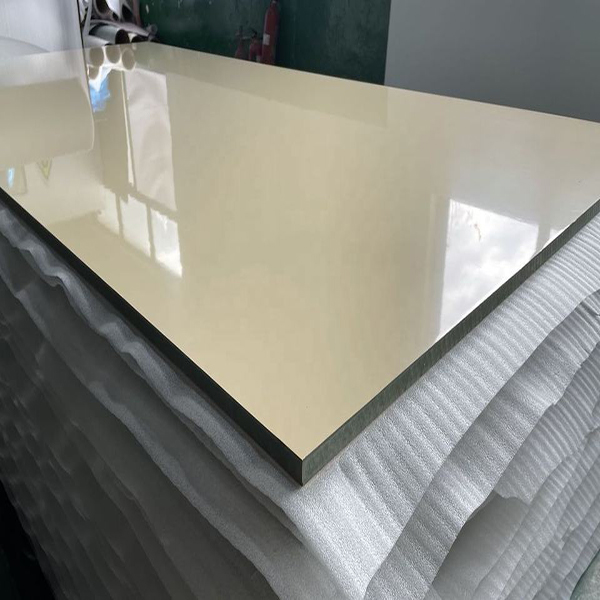
High-Gloss PETG Samples

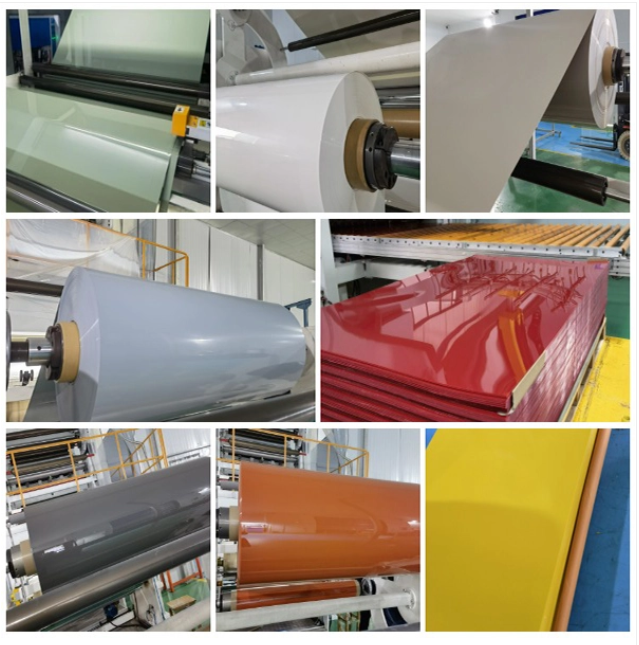
PETG Film Factory
Core Advantages of Clear Anti-Scratch PETG Film
Transparent Protection Without Hiding the Decorative Layer
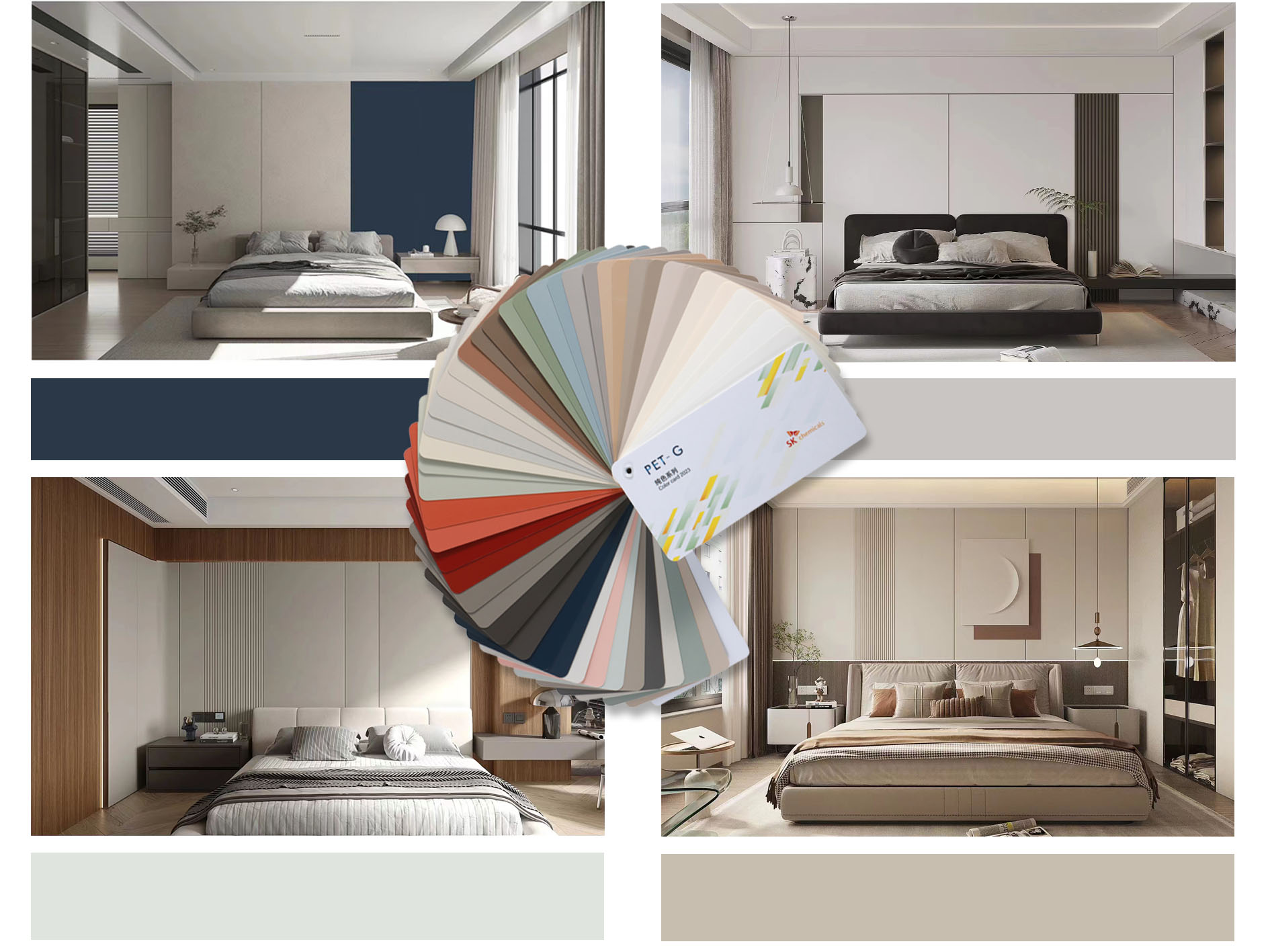
Clear film protects the visible panel surface while allowing printed colors, patterns, wood grains, metallic layers, solid colors, and decorative effects below it to remain visible. High-gloss options can add visual depth, while matte clear options reduce reflection and create a softer appearance.
Hard-Coat Options for Better Scratch Resistance
The optional hard coating helps reduce marks caused by cleaning, panel handling, assembly, transport, and ordinary indoor furniture use. Buyers should specify the required pencil hardness, abrasion method, number of cycles, visual acceptance criteria, and whether testing applies to the loose film or finished laminated panel.
High-Gloss and Matte Visual Options
High-gloss clear film delivers strong reflection, brightness, and a glass-like depth effect. Matte clear film reduces glare and produces a more understated finish. Surface selection should consider lighting, fingerprint visibility, cleaning frequency, scratch visibility, and the design below the clear layer.
Toughness for Furniture Processing and Handling
PETG-based materials provide useful toughness and processing flexibility for furniture conversion. The correct structure can help reduce cracking and chipping risk during cutting, lamination, forming, transportation, installation, and normal indoor use.
Stain and Chemical Resistance Options
Coated PETG surfaces can be formulated for improved resistance to common indoor stains and cleaning products. Chemical performance varies by coating and exposure, so representative cleaners, food stains, oils, alcohol-based products, and contact time should be included in the sample test plan.
Sheet and Roll Supply for Different Production Models
Roll supply supports continuous flat lamination and higher-volume panel production. Sheet format supports smaller batches, standard panel conversion, and flexible inventory. The best format depends on equipment width, line speed, sheet thickness, cut size, storage, and handling method.
Clear PETG Film Selection Guide
| Selection Factor | High-Gloss Clear Film | Matte Clear Film | Tinted Clear Film |
| Visual Effect | Strong reflection, high clarity, brightness, and visual depth | Lower glare, softer appearance, and reduced reflection | Adds a transparent color tone while retaining the design below |
| Typical Uses | Luxury cabinet fronts, display furniture, TV cabinets, and feature panels | Modern wardrobes, wall panels, office furniture, and low-glare interiors | Decorative overlays, branded fixtures, translucent panels, and layered effects |
| Key Sample Checks | Reflection quality, haze, flatness, dust visibility, scratch resistance, and bonding | Haze, gloss uniformity, fingerprint visibility, cleaning, and coating consistency | Tint consistency, light transmission, color shift, batch matching, and substrate effect |
Request Clear Film Samples
Applications of Anti-Scratch Clear Furniture Film
Kitchen Cabinets and Wardrobes
Clear PETG film can protect printed or colored cabinet doors, wardrobe fronts, drawer faces, storage panels, and visible furniture sides. The finished panel structure should be evaluated for handling, cleaning, humidity, edge sealing, and heat exposure.
TV Cabinets and Decorative Wall Panels
Transparent high-gloss film creates visual depth over decorative layers used on TV cabinets, media walls, background panels, and feature walls. Matte clear film can be selected where reduced glare is preferred.
Office and Hotel Furniture
Reception counters, desks, hotel casework, storage furniture, partitions, and room furniture can use clear protective film to combine branded decorative surfaces with easier cleaning and improved resistance to routine wear.
Retail Display and Shopfitting
Retail fixtures, counters, shelving, display cabinets, branded panels, and exhibition furniture benefit from a clear surface that protects printed graphics or decorative layers while maintaining visual impact.
Selected Horizontal Surfaces
Some hard-coat grades may be evaluated for desks, counters, tabletops, and other horizontal surfaces. The finished panel must be tested for abrasion, heat, impact, chemicals, point loading, edge exposure, and the intended cleaning schedule before specification.
Lamination and Processing Recommendations
1. Define the Decorative Layer and Required Transparency
Share the color, print, wood grain, metallic layer, solid board, or decorative substrate that will remain visible below the clear film. Define acceptable haze, gloss, color shift, optical distortion, and surface depth using a physical reference sample.
2. Confirm Substrate and Adhesive Compatibility
MDF, particle board, plywood, PVC board, and decorative panels differ in moisture, porosity, surface energy, flatness, and thermal behavior. The adhesive must be compatible with both the substrate and the reverse side of the film.
3. Match the Film Grade to the Process
Flat lamination, hot pressing, vacuum forming, thermoforming, CNC conversion, and bonding require different stiffness, heat response, coating flexibility, protective film, and thickness. Provide the equipment type, line speed, pressure, temperature, and forming geometry before sample selection.
4. Complete a Pilot Lamination Trial
Evaluate bubbles, silvering, adhesive lines, haze, gloss, surface flatness, edge quality, trimming, protective-film removal, scratch resistance, stain removal, and finished-panel appearance before locking mass-production settings.
5. Protect the Clear Surface During Production
Transparent high-gloss surfaces reveal dust, scratches, adhesive contamination, and roller marks easily. Use clean working areas, filtered air where appropriate, clean rollers, gloves, separators, protective film, and packaging designed for optical surfaces.
How to Evaluate Scratch Resistance and Clear Surface Quality
Agree on a Test Method Before Ordering
“Anti-scratch” can refer to pencil hardness, abrasion cycles, steel-wool testing, instrumented scratch testing, or an internal visual method. The test instrument, load, material, number of cycles, viewing conditions, and acceptance limit should be included in the specification.
Test Both Loose Film and Finished Panels
Lamination temperature, adhesive, substrate flatness, pressure, and surface contamination can affect the apparent scratch and optical performance. Final approval should include a representative laminated panel produced under the intended factory conditions.
Check Haze, Clarity, Gloss, and Distortion
Review the clear film over the actual decorative layer under daylight, factory lighting, and showroom lighting. Check haze, reflected-image quality, color shift, surface waviness, inclusions, coating lines, dust, and visual distortion from several angles.
Include Cleaning and Chemical Exposure
Test the intended household or commercial cleaners, oils, food stains, alcohol-containing products, and contact times. Confirm that cleaning does not create haze, gloss change, whitening, cracking, coating damage, or adhesive failure.
PETG Film Compared with Other Clear Furniture Surfaces
Each surface material has different optical, processing, durability, and cost characteristics. The comparison below is a general sourcing guide; actual samples and finished-panel testing should determine the final selection.
| Selection Factor | Clear PETG / GAG Film | Clear Acrylic Sheet | Clear PVC Film | Clear Coating / Lacquer |
| Visual Effect | Clear overlay with gloss, matte, tint, and depth options | Rigid surface with high clarity and polished appearance | Flexible clear film with varied gloss and embossing options | Seamless coating with customizable gloss and formulation |
| Processing | Flat lamination, cutting, bonding, and selected forming | Sheet lamination, cutting, machining, polishing, and selected forming | Lamination, wrapping, membrane pressing, and forming | Application, flash-off, drying or curing, sanding, and finishing |
| Production Format | Roll and sheet options | Primarily rigid sheet | Primarily roll format | Liquid or powder coating process |
| Surface Resistance | Depends on hard coat, structure, thickness, and test method | Depends on acrylic grade and hard-coat system | Depends on formulation, thickness, and surface treatment | Depends on coating chemistry, thickness, curing, and substrate |
Customization Options for Furniture Manufacturers
PET, GAG, PETG, and project-specific multilayer material structures
Crystal-clear, super-clear, high-gloss, matte, and tinted clear appearance
Thickness from 0.20 mm to 1.0 mm within production feasibility
Widths up to 1250 mm and customized slit widths
Roll or sheet supply formats
Hard-coat, scratch-resistant, fingerprint-resistant, stain-resistant, and easy-clean options
Protective film for lamination, processing, storage, and installation
OEM labels, neutral packaging, export pallets, and buyer-specific shipping marks
Sample development, pilot lamination support, and repeat-order quality control
Discuss Your Film Specification
Factory Production and Quality Control
Clear hard-coated furniture film requires strict control because surface contamination and optical defects remain visible after lamination. Depending on the agreed specification, quality inspection can include:
Raw-material and production-batch identification
Thickness, width, length, winding, and sheet-flatness checks
Transparency, haze, gloss, tint, and visual distortion review
Surface inspection for scratches, coating lines, dents, bubbles, inclusions, and contamination
Scratch, abrasion, stain, chemical, and adhesion tests when included in the purchase specification
Protective-film adhesion and removal evaluation
Pilot lamination or finished-panel inspection when agreed
Packaging, pallet, quantity, label, and shipping-mark confirmation

Clean Workshop

Advanced Equipment

Warehouse
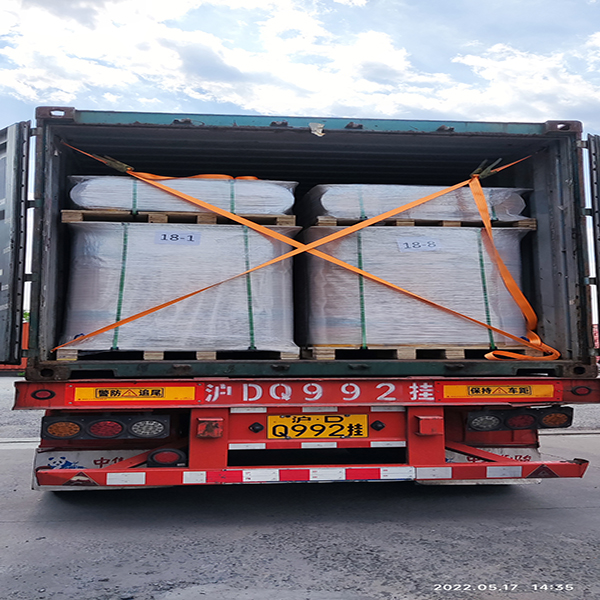
Protective Packaging and Export Loading
Clear PETG furniture film can be supplied in roll or sheet format with protective film and export packaging selected according to thickness, surface finish, roll diameter, sheet dimensions, transport method, and destination.

Protective Roll Packaging

Safe Export Loading
Why Choose Wallis Clear PETG Furniture Film?
Factory-direct B2B supply for furniture manufacturers, laminators, panel factories, brands, contractors, importers, and distributors
Clear surface specialization covering high gloss, matte, super clear, tinted clear, and hard-coat options
Flexible specifications including material structure, thickness, width, sheet or roll format, and protective film
Sample and pilot support for optical evaluation, scratch testing, chemical testing, and lamination trials
Specification-based inspection for dimensions, transparency, coating, surface quality, and packaging
Bulk and repeat-order capability for furniture panel programs and commercial interior projects
Export packaging and technical communication for international wholesale and OEM orders
FAQ About Anti-Scratch Clear PETG Furniture Film
What is clear PETG furniture film used for?
It is used as a transparent decorative and protective layer over printed, colored, wood-grain, metallic, or other furniture surfaces. Common applications include cabinet doors, wardrobes, TV cabinets, wall panels, retail fixtures, and commercial furniture.
Is anti-scratch PETG film completely scratch-proof?
No. A hard coat can improve resistance to light scratches and abrasion, but sharp objects, abrasive particles, excessive loads, and improper cleaning can still damage the surface. Required testing should be agreed before ordering.
What is the difference between PET, GAG, and PETG film?
They are related polyester-based material options with different structures and processing characteristics. The exact layer construction, stiffness, clarity, heat response, and forming behavior depend on the selected grade, so buyers should request a technical specification and sample for comparison.
Can clear PETG film be laminated to MDF or particle board?
Yes. It can be evaluated for lamination to MDF, particle board, plywood, PVC board, and other suitable panels. The decorative layer, adhesive, substrate preparation, temperature, pressure, and line speed must be validated before bulk production.
Which thickness is suitable for cabinet doors?
The original product range identifies 0.5 mm and 0.8 mm as commonly requested options, but the correct thickness depends on whether the material is supplied as film or sheet, the panel construction, processing method, required stiffness, optical effect, and cost target.
Is matte clear anti-scratch PETG film available?
Yes. High-gloss and matte clear surface options can be discussed. Matte clear film reduces reflection, while high-gloss film provides stronger clarity, reflected-image quality, and visual depth.
Can clear PETG film be vacuum formed or thermoformed?
Selected grades can support vacuum forming or thermoforming. The coating, thickness, heating uniformity, draw depth, radius, mold design, protective film, and cooling process must be tested because forming can affect clarity and hard-coat performance.
How should clear PETG furniture surfaces be cleaned?
Use a clean microfiber cloth with water or a mild neutral cleaner. Avoid abrasive pads, dirty cloths, sharp tools, and aggressive solvents. Test unfamiliar cleaners on an inconspicuous area before regular use.
Is PETG film better than PVC film for furniture?
Neither material is universally better. PETG may be preferred for optical clarity, toughness, PET-family material selection, and selected hard-coat surfaces. PVC may be preferred for certain wrapping, texture, cost, or processing requirements. Compare actual samples and finished panels.
What should be included in a scratch-resistance specification?
Include the test method, instrument or abrasive material, load, number of cycles, test direction, conditioning, lighting, viewing angle, allowable marks, and whether the test applies to loose film or the final laminated panel.
Can Wallis customize the tint, thickness, width, and finish?
Yes. Custom options can include material structure, transparency, tint, high-gloss or matte finish, hard coating, thickness, width, roll or sheet format, protective film, labels, and packaging within production feasibility.
Are samples available before bulk production?
Samples can be requested for transparency, haze, gloss, tint, scratch resistance, stain resistance, cleaning, lamination, forming, and finished-panel evaluation. Sample terms and shipping arrangements should be confirmed with Wallis.
What is the MOQ and production lead time?
MOQ and lead time depend on material structure, thickness, width, surface finish, tint, coating, roll or sheet format, production schedule, and order quantity. Contact Wallis with the complete specification for an accurate quotation and delivery plan.
Request Clear PETG Film Samples and Wholesale Pricing
Send Wallis your required transparency, high-gloss or matte finish, material structure, thickness, width, roll or sheet format, decorative layer, substrate, lamination method, test requirements, estimated quantity, and delivery destination. Our team will review the sample plan, technical specification, packaging, and factory quotation.
Contact Wallis for Samples and Pricing