Colored PVC/PE Rolls for Pharmaceutical Blister Packaging
Wallis supplies colored PVC/PE rolls for pharmaceutical blister and healthcare packaging, combining a thermoformable PVC base with a PE sealing layer. The multilayer construction is designed for packaging converters and pharmaceutical manufacturers requiring controlled forming performance, customizable colors, heat-seal functionality and roll dimensions matched to production equipment.
Available colors include white, blue, green, amber, red, black and customized shades. Color can support product identification, brand differentiation and visual coding between product families. For light-sensitive products, however, the required light or UV protection should be defined by measurable transmission requirements rather than color appearance alone.
PVC/PE should be selected according to the finished blister structure, packaged formulation, target moisture and oxygen barrier, forming depth, lidding material and heat-sealing conditions. For highly moisture-sensitive or oxygen-sensitive products, a higher-barrier PVC/PVDC, PVC/PE/PVDC, PCTFE or other specialized structure may be more appropriate.
What Is Colored PVC/PE Pharmaceutical Packaging Film?
Colored PVC/PE film is a laminated or composite pharmaceutical packaging material in which PVC provides the primary rigid thermoforming structure and PE provides a functional sealing layer. The exact layer ratio, adhesive or lamination system and surface configuration depend on the final packaging requirement.
PVC Layer – Rigidity & Thermoforming
PVC contributes stiffness, dimensional stability and thermoforming behavior. It allows the forming web to be heated and shaped into cavities for suitable pharmaceutical, diagnostic and healthcare packaging applications.
PE Layer – Heat-Seal Functionality
The PE layer provides sealing functionality and contributes to the overall moisture resistance of the multilayer structure. Actual seal strength depends on the PE grade, mating lidding material, sealing temperature, pressure and dwell time.
Colored Layer – Identification & Light Management
Custom colors can support dosage differentiation, product-family identification and branded packaging. Amber, dark or opaque constructions may also reduce certain wavelengths of transmitted light, but protection for a light-sensitive pharmaceutical product should be verified through actual spectral or light-transmission testing.
Technical Specifications of Colored PVC/PE Rolls
The following represents the typical product range currently offered for this Wallis PVC/PE product. Final structure, tolerance and functional performance should be confirmed according to the specific pharmaceutical packaging project.
| Parameter | Typical Specification |
| Product | Colored PVC/PE Pharmaceutical Packaging Roll |
| Material Structure | PVC base / PE sealing layer |
| Total Thickness | Approximately 0.15–0.80 mm; custom structure subject to confirmation |
| Maximum Width | Up to approximately 680 mm; custom slitting available |
| Colors | White, blue, green, amber, red, black and customized colors |
| Color Appearance | Transparent, translucent, tinted or opaque options subject to formulation |
| Surface Finish | Glossy / matte |
| Supply Format | Rolls; other converted formats subject to project confirmation |
| Forming Process | Thermoforming and project-specific blister / tray forming |
| Heat-Seal Layer | PE; sealing conditions and lidding compatibility require validation |
| Barrier Performance | Structure-dependent; specify required WVTR / OTR and test conditions |
| Light Protection | Tinted / opaque colors available; actual spectral transmission should be specified when light protection is critical |
| Applications | Selected blister packs, pharmaceutical liquid packaging, diagnostic products, medical trays and healthcare packaging |
| Customization | Color, opacity, thickness, layer ratio, width, surface and roll specification |
![Colored PVC PE rolls for pharmaceutical blister packaging]()
Colored PVC/PE Pharmaceutical Rolls
![PVC PE composite roll for pharmaceutical packaging]()
PVC/PE Composite Packaging Material
PVC/PE Barrier Performance: What Buyers Should Specify
Pharmaceutical packaging materials should be selected using measurable barrier requirements rather than broad terms such as “high barrier.” PVC/PE provides a useful combination of forming and sealing functions, but barrier performance depends on the complete structure and thickness.
Water Vapor Transmission Rate – WVTR
For moisture-sensitive products, specify the required WVTR together with temperature, relative humidity and test method. Values from different suppliers should not be compared without matching test conditions.
Oxygen Transmission Rate – OTR
If oxygen sensitivity is important, define a target OTR. Standard PVC/PE should not automatically be treated as an ultra-high oxygen-barrier structure.
Formed Blister Barrier vs Flat Film Barrier
Thermoforming stretches the material at the cavity walls and corners. For critical products, barrier performance should be considered in the finished formed pack rather than relying only on measurements from an unformed flat roll.
When to Use PVC/PE vs Higher-Barrier Blister Structures
| Structure | Main Selection Focus | Typical Consideration |
| PVC | Cost-effective thermoforming and standard blister applications | Suitable where standard PVC barrier is sufficient |
| PVC/PE | Thermoforming plus PE sealing functionality and customized colors | Select according to seal system, formulation and required barrier |
| PVC/PVDC | Increased moisture and oxygen barrier | Commonly considered for more moisture-sensitive solid dosage products |
| PVC/PE/PVDC | PE process / sealing functionality combined with enhanced PVDC barrier | Evaluate for deeper forming and higher-barrier requirements |
| PCTFE / Other High-Barrier Structures | More demanding moisture-barrier applications | Select according to stability studies, barrier target and package design |
The packaging structure should be selected from product stability data rather than assuming a more complex laminate is always required. Conversely, a standard PVC/PE structure should not be substituted for a validated high-barrier material without appropriate testing.
Heat-Sealing Performance of PVC/PE Rolls
Reliable heat sealing requires compatibility between the PE sealing layer and the selected lidding material. A statement that a PVC/PE web “seals with aluminum foil” is not sufficient by itself because aluminum blister foil can use different heat-seal lacquer systems.
Lidding Material Compatibility
Provide the exact aluminum foil, laminated lidding film or other sealing web currently used on your line. The seal interface should be validated as a complete material combination.
Seal Temperature
The required sealing temperature depends on the PE formulation, lidding material, line speed and sealing equipment. Buyers should provide their existing operating window where possible.
Dwell Time & Pressure
Seal strength is influenced not only by temperature but also by contact pressure and dwell time. High-speed lines may require a wider and more stable sealing window than slower laboratory equipment.
Finished-Pack Integrity
Final packaging qualification should evaluate seal strength, channels, leakage and package integrity under representative storage and transportation conditions.
Thermoforming & Deep-Draw Performance
PVC provides the structural base for thermoforming. Successful cavity formation depends on material thickness, layer construction, heating profile, tooling, cavity geometry, forming pressure or vacuum and line speed.
Cavity Depth
Deeper cavities place greater strain on the film and laminate interface. Customers requiring deep-draw packages should provide cavity dimensions and draw depth during material evaluation.
Thickness Distribution
Material becomes thinner in stretched areas of a formed cavity. Uniform heating and correct forming parameters help control excessive thinning at corners and sidewalls.
Delamination Evaluation
Multilayer material should be evaluated after thermoforming to confirm that the PVC/PE interface remains stable under the intended forming conditions.
Custom Colors for Pharmaceutical Packaging
Color customization can provide both functional identification and packaging differentiation. Wallis currently offers white, blue, green, amber, red, black and customized color options.
Product & Dosage Identification
Different colors can be used within a product portfolio to visually distinguish dosage strengths, markets, product categories or brand families, subject to the pharmaceutical company's packaging-control system.
Pantone or Reference Color Matching
For brand-specific colors, provide a Pantone reference or physical standard together with the required transparency or opacity. Final approval should be based on a production sample because polymer thickness and lighting can affect perceived color.
Amber & Tinted Films
Amber and darker colors can reduce light transmission, but color alone does not demonstrate pharmaceutical light-protection performance. Buyers with photosensitive products should provide the required wavelength range and transmission limit.
Transparent vs Opaque Colors
Transparent tinted structures maintain some product visibility, while higher-opacity colors provide greater visual concealment. Color formulation should be selected according to inspection, branding and protection requirements.
Key Advantages of Colored PVC/PE Packaging Rolls
Stable Thermoforming Base
The PVC layer provides the rigidity and thermoforming characteristics required for compatible cavity-forming processes.
Integrated PE Sealing Layer
Incorporating a PE layer allows the package structure to be designed around a defined sealing interface rather than relying only on a mono-material PVC web.
Multiple Color Options
Custom colors support packaging differentiation while allowing buyers to control transparency and opacity according to the finished product.
Custom Roll Width
Customized slitting can help match blister-machine web width and reduce unnecessary edge trimming during pharmaceutical packaging production.
Custom Thickness
Thickness can be discussed according to cavity depth, required stiffness, product size and packaging-line conditions within the available production range.
![Advantages and structure of colored PVC PE pharmaceutical packaging material]()
Applications of Colored PVC/PE Rolls
PVC/PE structures can be evaluated for multiple pharmaceutical and healthcare packaging applications. Final suitability depends on the formulation, barrier requirement, sealing system and package geometry.
Tablet Blister Packaging
Selected tablet packaging projects can use colored PVC/PE where the required thermoforming, sealing and barrier specifications are satisfied. Moisture-sensitive tablets should be evaluated against higher-barrier alternatives when required by stability data.
Capsule Packaging
PVC/PE can be considered for selected capsule packaging designs, with cavity dimensions, package barrier and lidding compatibility validated before production.
![Colored PVC PE roll for tablet blister packaging]()
Tablet Blister Packaging
![Colored PVC PE film for capsule blister packaging]()
Capsule Blister Packaging
Diagnostic & Reagent Packaging
Diagnostic and reagent products can use formed polymer packaging where chemical compatibility, seal integrity and barrier performance meet the product's requirements.
Pharmaceutical Liquid & Unit-Dose Packaging
PVC/PE structures can also be evaluated for selected liquid, semi-solid or unit-dose packaging applications. Product-contact compatibility and seal integrity should be tested using the actual pharmaceutical formulation.
![PVC PE film for diagnostic reagent pharmaceutical packaging]()
Diagnostic & Reagent Packaging
![PVC PE composite film for pharmaceutical liquid packaging]()
Pharmaceutical Liquid Packaging
Pharmaceutical Product Compatibility
PVC/PE should not be assumed to be chemically compatible with every drug, liquid, reagent, oil or solvent. The product-contact layer and complete package should be evaluated against the actual formulation.
Solid Dosage Forms
For tablets and capsules, buyers should evaluate moisture sensitivity, oxygen sensitivity, light sensitivity and expected shelf life before selecting the blister bottom web.
Liquid & Semi-Solid Products
Direct-contact applications require compatibility testing for the specific liquid or semi-solid formulation, including its solvents, oils, surfactants, pH and expected storage temperature.
Stability Validation
Packaging can support product protection, but final pharmaceutical shelf life should be established through the drug manufacturer's stability and packaging qualification program.
Compatibility with Pharmaceutical Blister Machines
Machine compatibility depends on more than the manufacturer name. Buyers should provide the exact blister-machine model and operating conditions so roll width, core size, forming temperature, feeding behavior and sealing window can be evaluated.
If your production line uses equipment from Uhlmann, IMA, Klöckner, CAM or another blister-machine supplier, provide the exact equipment model rather than assuming one PVC/PE grade will run under the same settings on every machine.
Rotary vs Flat-Bed Forming
Different forming systems may use different heating profiles, contact times and cavity-forming mechanisms. Material qualification should use the intended commercial line.
High-Speed Lines
High-speed production places greater emphasis on web flatness, winding quality, thickness consistency, forming window and seal-window stability.
Roll Configuration
Core diameter, roll outside diameter, winding direction, splice requirements and roll width should be specified to match the packaging machine and unwinding system.
Quality & Regulatory Documentation
Pharmaceutical packaging qualification should be based on the documentation for the exact material grade being purchased. Buyers should specify their destination market, dosage form, product-contact requirement and applicable internal or regulatory standards during supplier qualification.
COA – Certificate of Analysis
Request a batch-specific COA for the actual PVC/PE material supplied. Typical items may include dimensions, appearance, physical properties or other agreed quality parameters depending on the product specification.
TDS – Technical Data Sheet
A technical data sheet should define the relevant structure, thickness, tolerance, dimensions and performance information for the qualified grade.
Regulatory & Product-Contact Requirements
Do not rely on a general “pharmaceutical grade” statement alone. Provide the exact market and required pharmaceutical packaging or product-contact standard so applicable declarations and test reports can be reviewed.
Related Reference Documents Currently Available
The current Wallis page also links the following PVC and PVDC reference documents. These should not be treated as a substitute for the batch-specific PVC/PE COA for the material being ordered.
COA-PVC.pdf: Download →
COA-PVDC.pdf: Download →
Sample Testing Before Bulk Production
Sample qualification is recommended before changing an existing blister forming web or introducing a customized color. Testing should reproduce the actual production process as closely as possible.
Thermoforming Test
Evaluate cavity definition, wall thickness, whitening, cracking and material behavior using the intended forming mold and heating conditions.
Heat-Seal Test
Test the PVC/PE material together with the exact lidding material to determine an appropriate temperature, pressure and dwell-time window.
Color Approval
Evaluate color under agreed lighting conditions and confirm both shade and transparency or opacity before approving mass production.
Barrier Test
Where barrier is critical, verify WVTR and OTR using the required test method and environmental conditions. Formed-pack testing may also be required.
Product Compatibility Test
For direct-contact liquid, semi-solid, diagnostic or chemically sensitive applications, evaluate the actual product against the PE contact layer and complete packaging system.
Custom PVC/PE Rolls for OEM Pharmaceutical Packaging
Custom Color
Provide a Pantone number, color chip or physical packaging sample together with the required transparency level.
Custom Thickness
Thickness can be discussed within the available production range according to cavity dimensions, stiffness and forming conditions.
Custom PVC/PE Layer Ratio
Where a project requires a specific PE thickness or total laminate structure, provide the existing technical specification or performance target for evaluation.
Custom Roll Width
Slitting can be matched to the customer's blister web width up to the available manufacturing limit.
Custom Roll Configuration
Buyers should specify core diameter, maximum roll diameter, roll weight, winding direction and any splice requirements used by their packaging line.
What Information Should Buyers Provide for a Quotation?
Material Structure
Confirm PVC/PE or provide the existing film specification if replacing another supplier.
Total Thickness
Specify the required total thickness and layer structure where already defined.
Roll Width & Core
Provide roll width, core diameter, maximum roll diameter and winding requirements.
Color & Opacity
Provide the required color reference and indicate whether the film should be transparent, translucent or opaque.
Packaged Product
Identify whether the package contains tablets, capsules, diagnostic reagents, liquids, semi-solids or another healthcare product.
Target WVTR / OTR
Where barrier is critical, provide target values together with test method, temperature and relative humidity.
Forming Conditions
Provide blister-machine model, cavity size, cavity depth, forming system and current temperature range where available.
Lidding & Heat-Seal Conditions
Identify the aluminum foil or lidding film, heat-seal coating and current sealing temperature, pressure and dwell time.
Regulatory Requirements
Provide the destination market and required pharmaceutical packaging, product-contact or customer-specific documentation.
Estimated Order Quantity
Current product information indicates a typical MOQ around 500 kg, while smaller trial quantities may depend on color, thickness and production scheduling. Confirm final MOQ during quotation.
Why Choose Wallis for Colored PVC/PE Rolls?
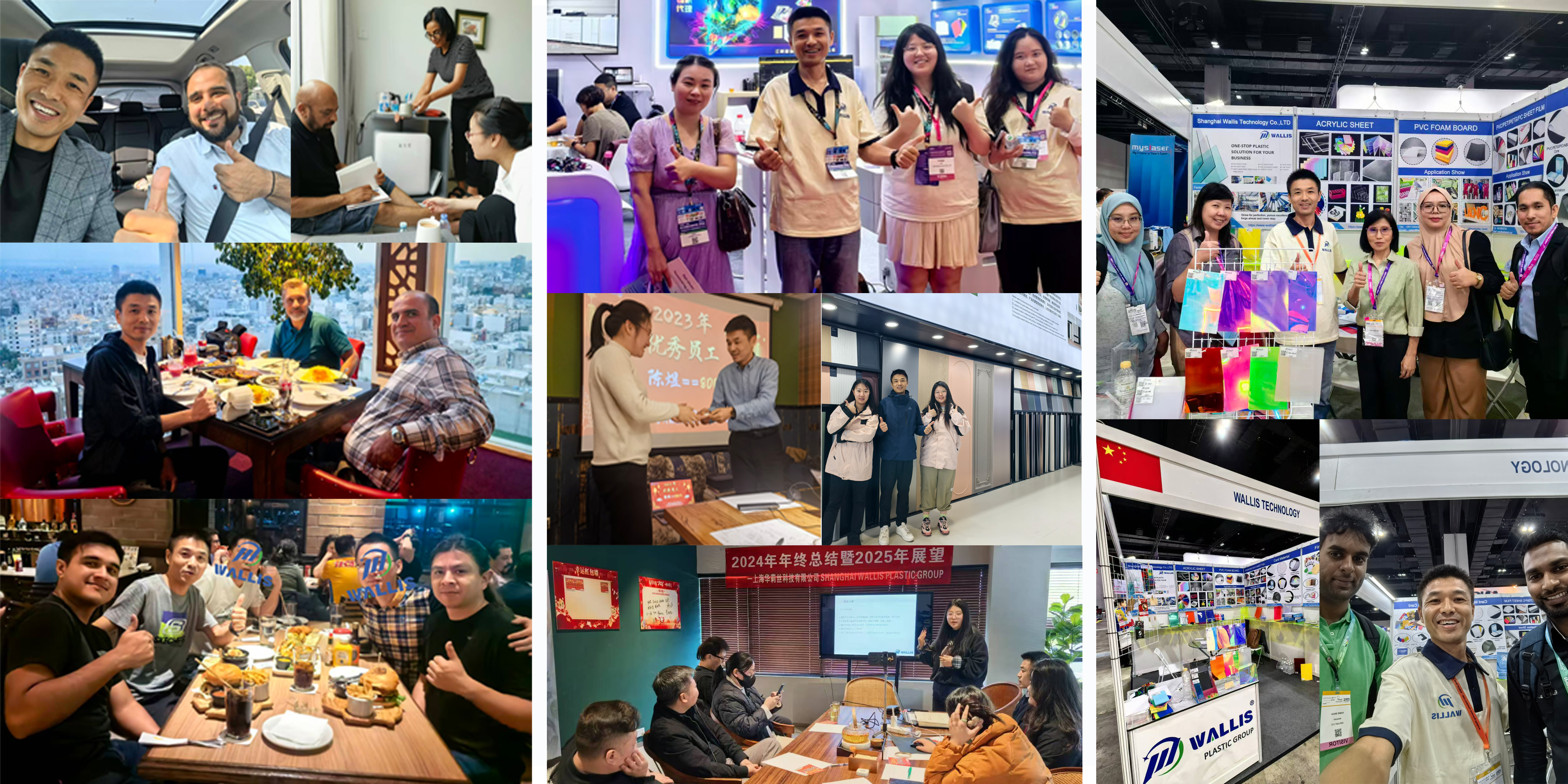
Wallis supports pharmaceutical packaging converters and industrial B2B buyers with customized PVC/PE roll specifications, color development, sample evaluation and export supply.
Colored PVC/PE pharmaceutical packaging rolls
0.15–0.80 mm typical thickness range
Widths up to approximately 680 mm
Custom transparent, tinted and opaque colors
Sample support for forming and heat-seal evaluation
Custom roll slitting and export packaging
B2B and OEM pharmaceutical packaging supply
![Wallis pharmaceutical packaging film production line]()
![Wallis pharmaceutical packaging team]()
![Wallis pharmaceutical packaging customer reviews]()
![Wallis customer interaction and pharmaceutical packaging service]()
FAQ About Colored PVC/PE Pharmaceutical Packaging Rolls
What is PVC/PE pharmaceutical packaging film?
PVC/PE is a multilayer packaging material combining a rigid PVC forming layer with a PE functional sealing layer. It can be customized according to forming, sealing, color and pharmaceutical packaging requirements.
What thicknesses are available?
The current Wallis product range lists approximately 0.15–0.80 mm total thickness. Final availability and layer ratio should be confirmed according to the intended package and order.
What roll widths are available?
Widths up to approximately 680 mm are currently listed, with customized slitting available according to production requirements.
What colors can be customized?
Wallis currently offers white, blue, green, amber, red, black and custom colors. Transparent, tinted, semi-transparent and opaque effects can be discussed depending on the formulation.
Does amber PVC/PE protect light-sensitive medicines?
Amber or darker colors can reduce some transmitted light, but pharmaceutical light protection should not be assumed from appearance alone. Provide the required wavelength range and light-transmission specification for validation.
Is PVC/PE a high-barrier blister material?
Barrier performance depends on the complete structure and thickness. PVC/PE should not automatically be classified as an ultra-high-barrier material. Moisture- or oxygen-sensitive products may require PVC/PVDC, PVC/PE/PVDC, PCTFE or another specialized structure.
What is the difference between PVC/PE and PVC/PE/PVDC?
PVC/PE combines PVC forming characteristics with PE sealing functionality. Adding PVDC creates a structure intended to provide significantly stronger moisture and oxygen barrier performance. The correct material should be selected from the packaged product's stability requirements.
Can PVC/PE be used for tablet blister packaging?
It can be evaluated for selected tablet blister structures when the required forming, sealing and barrier performance is achieved. Highly moisture-sensitive tablets may require a higher-barrier structure.
Can PVC/PE be used for capsule blister packaging?
Selected capsule packages can use PVC/PE when the material meets the required cavity geometry, lidding compatibility and stability requirements. Sample and finished-pack validation are recommended.
Can PVC/PE package pharmaceutical liquids?
PVC/PE structures can be evaluated for selected liquid or unit-dose pharmaceutical packages. Direct-contact chemical compatibility and seal integrity must be tested using the actual formulation.
Does PVC/PE seal directly to aluminum blister foil?
Compatibility depends on the aluminum foil's heat-seal lacquer and the PE sealing layer. The exact PVC/PE web and lidding foil should be tested together rather than assuming universal compatibility.
Can it be used for deep-draw thermoforming?
The material can be evaluated for deep or complex forming, but suitability depends on total thickness, cavity depth, heating profile and laminate construction. A production trial is recommended for demanding cavities.
Can PVC/PE run on Uhlmann, IMA, Klöckner or CAM machines?
Material can be evaluated for these and other pharmaceutical blister systems, but compatibility should be confirmed using the exact machine model, web dimensions, forming conditions and sealing parameters. One setup should not be assumed to work across every machine.
Can Wallis provide a COA for PVC/PE material?
Buyers should request the COA and technical documents applicable to the exact ordered PVC/PE grade. Reference PVC or PVDC documents from another material should not replace the batch-specific documentation required for pharmaceutical qualification.
What is the MOQ?
Current product information lists a typical MOQ around 500 kg. Smaller trial orders may depend on color, thickness, customized structure and production scheduling, so final MOQ should be confirmed with Wallis.
Can I request samples before bulk production?
Yes. Sample testing is recommended for checking color, thickness, thermoforming, seal compatibility and machine processing before approving commercial production.
What information should I provide for a quotation?
Please provide the material structure, thickness, roll width, core diameter, color, transparency, packaged product, target WVTR or OTR where applicable, cavity dimensions, blister-machine model, lidding material, sealing conditions, regulatory requirements and estimated quantity.
Looking for a Colored PVC/PE Pharmaceutical Packaging Supplier?
Send Wallis your required thickness, roll width, color, blister-machine model, cavity dimensions, lidding material, sealing conditions and purchasing quantity. We can discuss customized PVC/PE roll specifications for pharmaceutical, diagnostic and healthcare packaging projects.
If you are replacing an existing blister material, provide the current TDS, finished package or reference roll so the structure, color, forming performance and sealing requirements can be evaluated before commercial production.