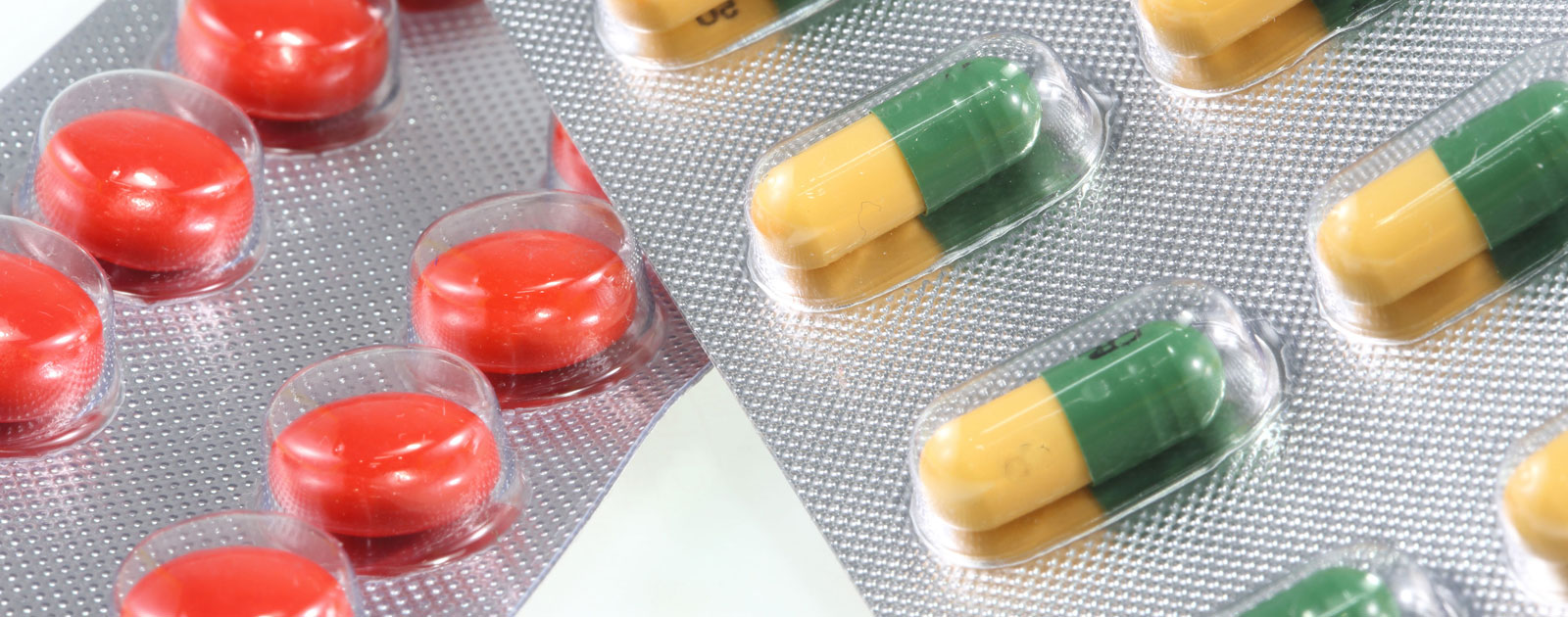
High-Barrier PVC/PVDC Film for Pharmaceutical Blister Packaging
Wallis supplies high-barrier PVC/PVDC pharmaceutical blister film and rigid sheet for tablets, capsules, soft gels, nutraceuticals and other moisture- or oxygen-sensitive solid-dose packaging. The structure combines a thermoformable rigid PVC base with a PVDC barrier coating to improve protection against water vapor, oxygen and other gases compared with standard uncoated PVC.
PVC base thickness, PVDC coating weight, roll width, color, transparency and packaging format can be customized according to the required blister cavity, pharmaceutical stability target and packaging-line conditions. Available specifications include PVC thicknesses of approximately 150–400 μm, PVDC coating weights of approximately 40–120 g/m², and common widths of approximately 250–350 mm, subject to final specification confirmation.
Barrier grade should be selected from measurable performance requirements rather than coating weight alone. Pharmaceutical buyers should define the required WVTR, OTR, storage conditions, forming depth, lidding foil, sealing window and applicable regulatory requirements before commercial approval.
What Is PVC/PVDC Pharmaceutical Blister Film?
PVC/PVDC pharmaceutical blister film is a coated rigid packaging material consisting of a thermoformable PVC substrate with a polyvinylidene chloride (PVDC) barrier coating. Standard rigid PVC provides good forming and dimensional stability but has relatively limited moisture and gas barrier performance. Applying PVDC significantly improves protection against water vapor and oxygen.
PVC Base – Thermoforming & Structural Support
The PVC base provides the stiffness, clarity and thermoforming behavior needed to create blister cavities. The selected PVC thickness affects cavity strength, forming temperature, material consumption and finished blister rigidity.
PVDC Coating – Moisture & Oxygen Barrier
PVDC is applied as a functional barrier coating to reduce transmission of water vapor, oxygen and other gases. Increasing coating weight can generally increase barrier performance, but the actual result also depends on coating formulation, uniformity, substrate, forming conditions and test environment.
Why Use PVDC Instead of Plain PVC?
Plain PVC can be sufficient for products with relatively low moisture sensitivity. PVDC-coated PVC is selected when the pharmaceutical stability program requires a stronger moisture and oxygen barrier while retaining transparent thermoforming capability.
PVC/PVDC Technical Specifications
The following values represent typical available specifications. Final thickness tolerance, PVDC coating weight, width, barrier performance and roll configuration should be confirmed for each project.
| Parameter | Typical Specification / Notes |
| Product | High-Barrier PVC/PVDC Pharmaceutical Blister Film / Sheet |
| Base Material | Rigid PVC for pharmaceutical blister packaging |
| Barrier Coating | PVDC coating |
| PVC Thickness | Approximately 150–400 μm |
| PVDC Coating Weight | Approximately 40–120 g/m²; customized according to barrier target |
| Common Width | Approximately 250–350 mm; customized widths subject to production confirmation |
| Supply Format | Roll or sheet |
| Color | Transparent, yellow, red, blue and customized colors subject to specification |
| Barrier Performance | Medium-to-high barrier depending on PVDC formulation, coating weight, forming and test conditions |
| WVTR | Project-specific; define target value together with temperature, RH and test method |
| OTR | Project-specific; define target value together with temperature, RH and test method |
| Processing | Thermoforming, slitting, blister conversion and project-specific processing |
| Applications | Tablets, capsules, soft gels, nutraceuticals and selected pharmaceutical blister packs |
| Customization | PVC thickness, PVDC coating weight, width, color, opacity, roll configuration and packaging |

PVC/PVDC Pharmaceutical Blister Material

High-Barrier PVDC-Coated PVC Film
How PVDC Coating Weight Affects Barrier Performance
PVDC coating weight is an important specification because a higher quantity of barrier coating can generally reduce moisture and gas transmission. However, coating weight is not the only factor determining finished blister performance.
Lower PVDC Coating Weight
Lower coating weights may be sufficient for products requiring a moderate improvement over plain PVC. This can provide a practical cost-performance balance where the pharmaceutical formulation is not extremely moisture sensitive.
Higher PVDC Coating Weight
Increasing PVDC coating weight can provide stronger moisture and oxygen protection, subject to coating formulation, uniformity and finished-package geometry.
Do Not Define Barrier Grade by GSM Alone
Two materials with similar coating weights can show different barrier results because of differences in PVDC chemistry, coating quality, PVC substrate, forming depth and test conditions. Buyers should therefore specify target WVTR and OTR rather than relying only on a 40, 60, 90 or 120 g/m² designation.
WVTR & OTR for Pharmaceutical Blister Packaging
High-barrier packaging should be defined using measurable transmission values. For pharmaceutical blister films, Water Vapor Transmission Rate (WVTR) and Oxygen Transmission Rate (OTR) are two important specifications.
Water Vapor Transmission Rate – WVTR
WVTR indicates how much water vapor passes through the packaging material over a defined area and time. Hygroscopic or moisture-sensitive pharmaceutical formulations generally require a lower WVTR than products with low moisture sensitivity.
Oxygen Transmission Rate – OTR
OTR measures oxygen permeation through the packaging structure. Products susceptible to oxidation may require a lower OTR to support their validated stability requirements.
Always Include Test Conditions
Barrier values should only be compared when temperature, relative humidity, test method, material thickness and sample condition are known. A barrier value without test conditions is not sufficient for technical comparison.
Flat Film vs Formed Blister Barrier
Thermoforming stretches the PVC/PVDC material and can reduce local layer thickness at the cavity walls and corners. For sensitive pharmaceutical products, barrier performance should be evaluated on the finished formed blister rather than relying only on flat-film laboratory data.
Key Advantages of PVC/PVDC Pharmaceutical Film
Improved Moisture Barrier vs Plain PVC
PVDC coating substantially improves water-vapor resistance compared with uncoated rigid PVC, making PVC/PVDC a common option for pharmaceutical products requiring additional moisture protection.
Improved Oxygen & Gas Barrier
The PVDC layer also reduces oxygen and gas transmission, allowing the material to be evaluated for products sensitive to oxidative degradation.
Transparent Blister Packaging
Transparent PVC/PVDC allows tablets or capsules to remain visible for inspection while adding barrier protection beyond standard PVC. Clear, tinted and opaque versions can be discussed according to project requirements.
Thermoformable Rigid PVC Base
The PVC substrate provides established thermoforming characteristics for pharmaceutical blister production. Final forming performance depends on PVC thickness, coating construction, cavity design and machine settings.
Multiple Barrier Specifications
Different PVDC coating weights can be produced according to the customer's protection target. Material selection should be based on required barrier values and pharmaceutical stability data rather than simply choosing the highest coating weight.
Thermoforming Performance & Blister Cavity Design
Rotary Blister Machines
PVC/PVDC can be evaluated for rotary blister lines where the film is heated and continuously formed. Stable web flatness, thickness consistency and controlled coating performance are important for reliable running.
Flat-Bed Blister Machines
Flat-bed forming systems use a different heating and forming sequence. Buyers should provide the exact machine model and current PVC/PVDC specification when replacing an existing material.
Deep-Draw Cavities
Greater cavity depth increases material stretching and can reduce local PVDC coating thickness. Deep-draw projects should be tested for cavity definition, whitening, cracking, coating integrity and final barrier performance.
Do Not Assume Universal Machine Compatibility
One PVC/PVDC grade cannot automatically be assumed to run under identical settings on every blister machine. Web width, heating temperature, feed tension, forming cycle, cavity geometry and production speed all affect processing.
Heat Sealing with Pharmaceutical Lidding Foil
A pharmaceutical blister is a complete packaging system consisting of the formed bottom web, drug product and lidding material. PVC/PVDC forming film should therefore be qualified together with the selected aluminum blister foil or other lidding structure.
Lidding Foil Heat-Seal Lacquer
Aluminum blister foils can use different heat-seal lacquer systems. Sealability depends on the compatibility between the lidding lacquer and the PVC/PVDC forming web.
Seal Temperature, Pressure & Dwell Time
These parameters should be established on the actual blister line. A stable production window is more useful than a single laboratory sealing temperature.
Finished-Pack Integrity
Seal strength, leakage, channels and package integrity should be evaluated under expected manufacturing, transportation and storage conditions.
PVC/PVDC vs Other Pharmaceutical Blister Structures
| Structure | Main Function | Selection Logic |
| Plain PVC | Standard thermoforming | For products where standard PVC barrier is sufficient |
| PVC/PVDC | Improved moisture and oxygen barrier | Common choice for moisture- or oxygen-sensitive solid dosage products |
| PVC/PE/PVDC | Barrier plus additional multilayer processing functionality | Evaluate where deeper forming, specific sealing or higher barrier is required |
| PVC/EVOH/Polyolefin | High oxygen barrier | Evaluate when oxygen protection is a primary requirement |
| PVC/PCTFE or ACLAR-Type Structure | Very high moisture barrier | Consider for highly hygroscopic products based on stability data |
| Cold-Form Aluminum | Very high light, moisture and gas protection | Evaluate where transparency is not required and very high barrier is needed |
The most complex or highest-cost structure is not automatically the best choice. Pharmaceutical packaging should be selected from stability data, required shelf life, climate zone, package size, machine productivity and total packaging cost.
Pharmaceutical Applications of PVC/PVDC Blister Film
Tablet Blister Packaging
PVC/PVDC is widely evaluated for tablets that require greater moisture and oxygen protection than standard PVC can provide. Required barrier level should be determined from the specific tablet formulation and stability program.
Capsule & Soft-Gel Packaging
Capsules and soft gels can have moisture-sensitivity requirements that make enhanced blister barrier important. Cavity size, shell formulation and storage climate should be considered during material selection.
Nutraceuticals & Supplements
Vitamins, probiotics and nutraceutical formulations can be evaluated with PVC/PVDC where moisture or oxygen protection is required. Highly hygroscopic products may need a stronger barrier structure after stability evaluation.
Moisture-Sensitive Medicines
PVDC-coated PVC is particularly relevant when the formulation is sensitive to environmental humidity but still requires a transparent thermoformed blister.
Oxygen-Sensitive Solid-Dose Products
Formulations susceptible to oxidation can benefit from the reduced oxygen transmission provided by PVDC, subject to the required OTR and complete package design.

PVC/PVDC Pharmaceutical Packaging

PVC/PVDC Pharmaceutical Blister Packs
Light Protection, Colors & Transparency
Transparent PVC/PVDC supports visual inspection of the packaged dosage form. Colored or opaque versions can also be evaluated for branding, product differentiation or additional light management.
Transparent Film
Clear material allows tablets and capsules to remain visible through the formed cavity and can support visual quality inspection during production and use.
Colored Film
Yellow, red, blue and customized colors can be discussed according to the required product presentation or packaging-identification system.
Light-Sensitive Pharmaceuticals
Color appearance alone should not be used as proof of pharmaceutical light protection. Where a product is photosensitive, buyers should specify the required wavelength range and maximum light transmission and validate the finished pack accordingly.
Quality Control for PVC/PVDC Pharmaceutical Film
Consistent pharmaceutical blister production requires more than nominal PVC thickness and PVDC coating weight. Material qualification should include the agreed physical, barrier and converting characteristics for the exact grade.
PVC Thickness & Gauge Uniformity
Stable thickness supports predictable heating, cavity formation and web feeding. Excessive gauge variation can affect forming and finished cavity strength.
PVDC Coating Weight & Uniformity
Coating weight and uniformity affect barrier consistency. The actual inspection and acceptance criteria should be established in the product specification.
Coating Adhesion
PVDC adhesion to the PVC base should remain stable during winding, slitting, thermoforming and downstream packaging conversion.
WVTR & OTR Testing
Barrier testing should be conducted using agreed methods and conditions appropriate to the customer's packaging qualification program.
Appearance & Clarity
Transparent film should be inspected for visible contamination, coating defects, scratches, blocking and other defects that could affect product presentation or processing.
Packaging & Storage of PVC/PVDC Rolls
PVC/PVDC rolls and sheets should be protected from moisture, contamination, excessive temperature and mechanical damage during transportation and storage. Packaging configuration can be customized according to roll dimensions, destination and customer handling requirements.
Pharmaceutical converters should also follow the storage and conditioning requirements defined for the qualified material before running it on the blister line.

Pharmaceutical Documentation & Qualification
Terms such as “pharmaceutical grade” or “medical grade” should not replace qualification of the exact material. Regulatory requirements vary according to dosage form, product contact, destination market and pharmaceutical manufacturer's internal quality system.
Technical Data Sheet – TDS
The material specification should define PVC thickness, PVDC coating weight, dimensional tolerance, color, roll configuration and relevant barrier or processing requirements.
Certificate of Analysis – COA
For commercial pharmaceutical supply, customers should request documentation applicable to the exact grade and production batch rather than relying only on general marketing specifications.
PVC & PVDC Reference Documents
The following reference documents are available for review. Buyers should confirm which documents apply to the exact PVC/PVDC grade and batch being qualified.
![PDF icon for PVC certificate]() COA-PVC.pdf
COA-PVC.pdf
![PDF icon for PVDC certificate]() COA-PVDC.pdf
COA-PVDC.pdf
Sample Testing Before Bulk Production
Qualification trials are particularly important when replacing an existing PVC/PVDC supplier, increasing PVDC coating weight or transferring the material to another blister packaging line.
Thermoforming Trial
Evaluate cavity definition, wall-thickness distribution, whitening, cracking and coating integrity under production-equivalent heating and forming conditions.
Barrier Testing
Measure WVTR and OTR using the required test conditions. Where pharmaceutical stability is sensitive to cavity geometry, formed-blister testing should also be considered.
Lidding-Foil Seal Test
Test the actual lidding foil and heat-seal lacquer to determine seal strength and establish a practical commercial production window.
Machine Running Test
Evaluate feeding, web tracking, roll unwinding, forming consistency, sealing and cutting performance on the intended blister machine.
Stability & Finished-Pack Qualification
Packaging material can support pharmaceutical stability, but it does not independently guarantee a specific product shelf life. Final suitability and expiry dating should be established through the pharmaceutical manufacturer's validated stability program.
Custom PVC/PVDC Film for OEM Pharmaceutical Packaging
Custom PVC Thickness
PVC base thickness can be selected within the available range according to cavity dimensions, rigidity, forming behavior and package weight.
Custom PVDC Coating Weight
PVDC coating can be customized within the available product range according to the required moisture and oxygen barrier. Provide target WVTR and OTR where possible.
Custom Roll Width
Slitting can be matched to the customer's blister machine and web layout. Provide the exact required width and tolerance during quotation.
Custom Roll Configuration
Buyers should specify core diameter, maximum roll diameter, roll weight, winding direction and splice requirements where applicable.
Custom Color
Transparent and colored film can be discussed according to product differentiation, visual inspection and light-management requirements.
What Information Should Buyers Provide for a Quotation?
Packaged Pharmaceutical Product
Identify whether the product is a tablet, capsule, soft gel, probiotic, nutraceutical or another dosage form and indicate whether moisture, oxygen or light sensitivity is the main concern.
PVC Base Thickness
Provide the existing PVC thickness or desired range, especially when replacing another qualified blister material.
PVDC Coating Weight
Provide the current coating weight if known. If not, provide the required barrier performance so an appropriate specification can be evaluated.
Target WVTR & OTR
Specify target barrier values together with test temperature, relative humidity and test method wherever available.
Roll Width & Core Size
Provide required roll width, width tolerance, core diameter, maximum roll diameter and winding direction.
Blister Machine
Provide the exact machine manufacturer and model, forming type, line speed and current temperature range.
Cavity Dimensions
Include cavity length, width, depth and any demanding corner geometry for deep-draw applications.
Lidding Foil
Identify the aluminum foil or other lidding structure and heat-seal lacquer currently used on the packaging line.
Regulatory & Documentation Requirements
Provide the destination country, pharmacopoeial requirements and customer-specific documentation needed for supplier qualification.
Estimated Order Quantity
Typical order quantities may range from approximately 500 kg to several thousand kilograms depending on specification and customization. Confirm trial and commercial MOQ during quotation.
Wallis Production & Inspection

Pharmaceutical Packaging Material Production Line

PVC Pharmaceutical Material Production Line
Customer Cooperation

International Customer Cooperation

B2B Pharmaceutical Packaging Cooperation
Clients' Recognition

FAQ About High-Barrier PVC/PVDC Pharmaceutical Film
What is PVC/PVDC pharmaceutical blister film?
PVC/PVDC is a rigid PVC thermoforming film coated with PVDC to improve moisture and oxygen barrier performance. It is commonly evaluated for pharmaceutical blister packs that require more protection than plain PVC.
What thicknesses are available?
Available PVC thicknesses are approximately 150–400 μm. Final thickness should be selected according to blister cavity size, rigidity and forming conditions.
What PVDC coating weights are available?
Available PVDC coating weights are approximately 40–120 g/m². The appropriate coating weight should be selected according to the required WVTR and OTR rather than coating weight alone.
Does more PVDC coating always mean better pharmaceutical packaging?
A higher coating weight can generally increase barrier, but the best specification depends on the drug stability requirement, package size, forming depth, production cost and target shelf life. Excess barrier may add unnecessary cost if the formulation does not require it.
Is 40 g/m² PVDC considered medium barrier?
Industry suppliers commonly offer PVC/PVDC in multiple coating weights, but barrier terminology varies by supplier and PVDC formulation. For technical procurement, specify the required WVTR and OTR rather than relying only on labels such as medium, high or ultra-high barrier.
What is the difference between PVC and PVC/PVDC blister film?
Plain PVC mainly provides thermoforming and structural support. Adding a PVDC coating significantly improves moisture and oxygen barrier, making PVC/PVDC more suitable for sensitive pharmaceutical formulations.
What is the difference between PVC/PVDC and PVC/PE/PVDC?
PVC/PVDC is a coated PVC barrier structure, while PVC/PE/PVDC adds an additional polyolefin layer and can be designed for different processing, sealing or barrier requirements. The correct structure depends on the package design and pharmaceutical stability target.
Is PVC/PVDC suitable for highly moisture-sensitive medicines?
It can provide substantially stronger moisture protection than plain PVC, but highly hygroscopic products may require a higher-barrier PVDC formulation, PCTFE/ACLAR-type laminate or cold-form aluminum. Material selection should follow stability testing.
Can PVC/PVDC be thermoformed on rotary blister machines?
Suitable PVC/PVDC grades can be evaluated on rotary thermoforming systems. The exact machine model, forming temperature, line speed and cavity dimensions should be confirmed during qualification.
Can PVC/PVDC run on flat-bed blister machines?
PVC/PVDC is also used on compatible flat-bed thermoforming systems. Machine settings should be optimized for the specific film thickness, PVDC coating, cavity geometry and production speed.
Is PVC/PVDC suitable for deep-draw blister cavities?
Deep-draw applications can be evaluated, but increasing draw depth increases film stretching and can reduce barrier thickness at the cavity walls and corners. Formed-pack barrier and coating integrity should be tested.
Does PVC/PVDC seal directly to aluminum blister foil?
The blister forming web is normally sealed using a compatible heat-seal lacquer on the lidding foil. Compatibility depends on the exact lidding material and sealing conditions, so the complete combination should be tested.
What WVTR should I specify?
The correct WVTR depends on the moisture sensitivity of the formulation, package geometry, storage climate and required shelf life. Provide the target value together with temperature, humidity and test method.
What OTR should I specify?
OTR should be selected according to the product's sensitivity to oxidation. The pharmaceutical stability program should determine the appropriate oxygen-barrier requirement.
Does PVC/PVDC automatically extend pharmaceutical shelf life?
PVC/PVDC can reduce moisture and oxygen exposure, but it cannot independently guarantee a specific shelf life. Final expiry dating must be established through the pharmaceutical manufacturer's validated stability program using the complete package.
Is Wallis PVC/PVDC automatically compliant for every pharmaceutical market?
No generic material description guarantees universal compliance. Buyers should provide the destination market and required pharmacopoeial, regulatory or customer-specific standards so the documentation for the exact grade can be reviewed.
Can I request samples before ordering?
Yes. Sample or trial material should be evaluated for forming, machine running, lidding-foil sealing, barrier performance and appearance before approving a bulk order.
What is the MOQ?
Typical quantities can vary from approximately 500 kg to several thousand kilograms depending on PVC thickness, PVDC coating weight, width, color and customized requirements. Confirm the exact MOQ during quotation.
What information should I provide for a quotation?
Please provide the pharmaceutical product type, PVC thickness, PVDC coating weight or target WVTR/OTR, roll width, core diameter, color, blister-machine model, cavity dimensions, lidding foil, sealing conditions, regulatory requirements and estimated purchasing quantity.
Looking for a PVC/PVDC Pharmaceutical Blister Film Supplier?
Send Wallis your PVC thickness, target PVDC coating weight or WVTR/OTR, roll width, blister-machine model, cavity dimensions, lidding foil and expected purchasing quantity. We can discuss customized PVC/PVDC high-barrier film for pharmaceutical blister packaging.
If you are replacing an existing blister-film supplier, provide the current TDS, COA or reference roll so thickness, barrier, thermoforming and machine-running requirements can be evaluated before commercial production.