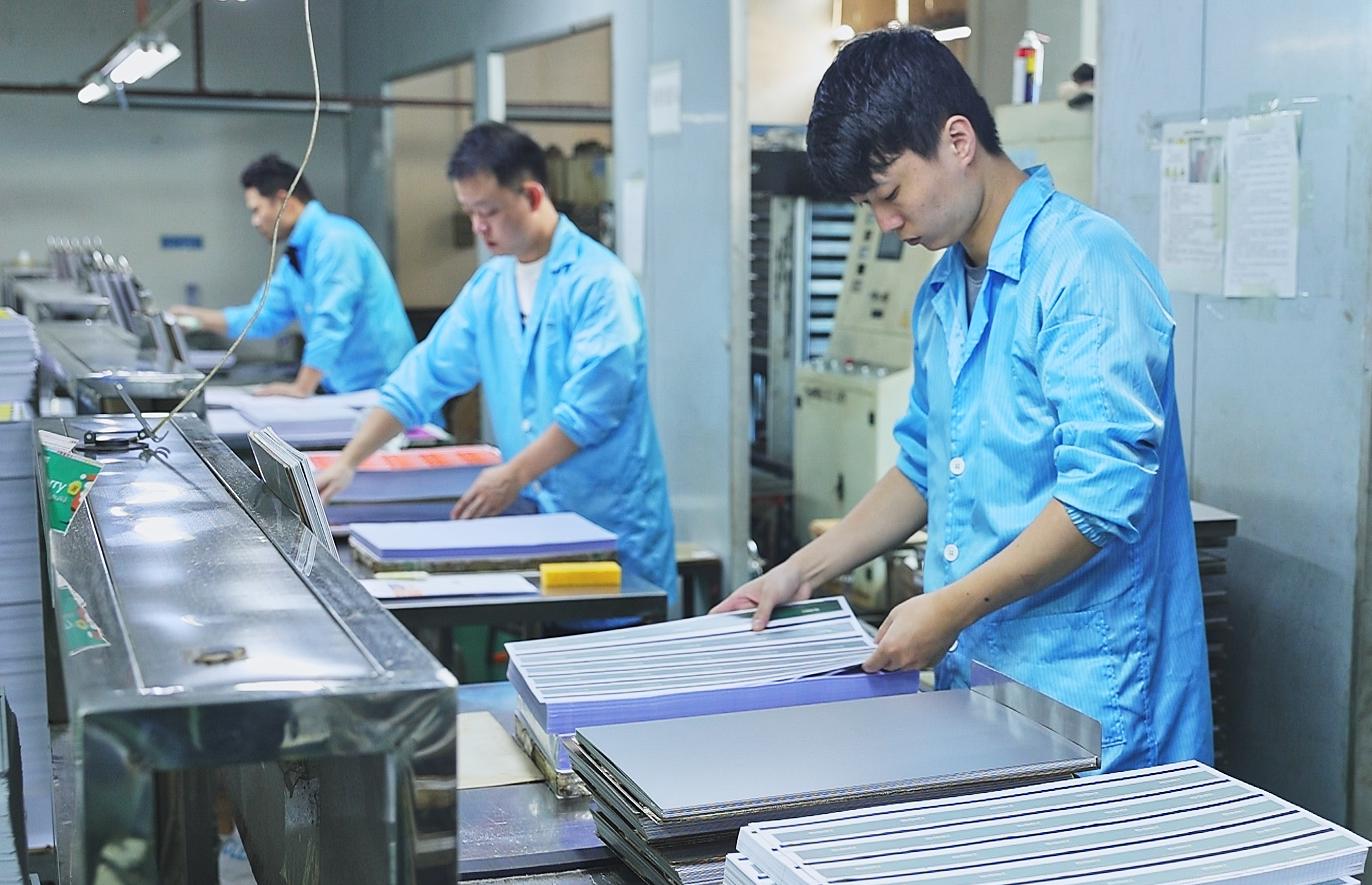
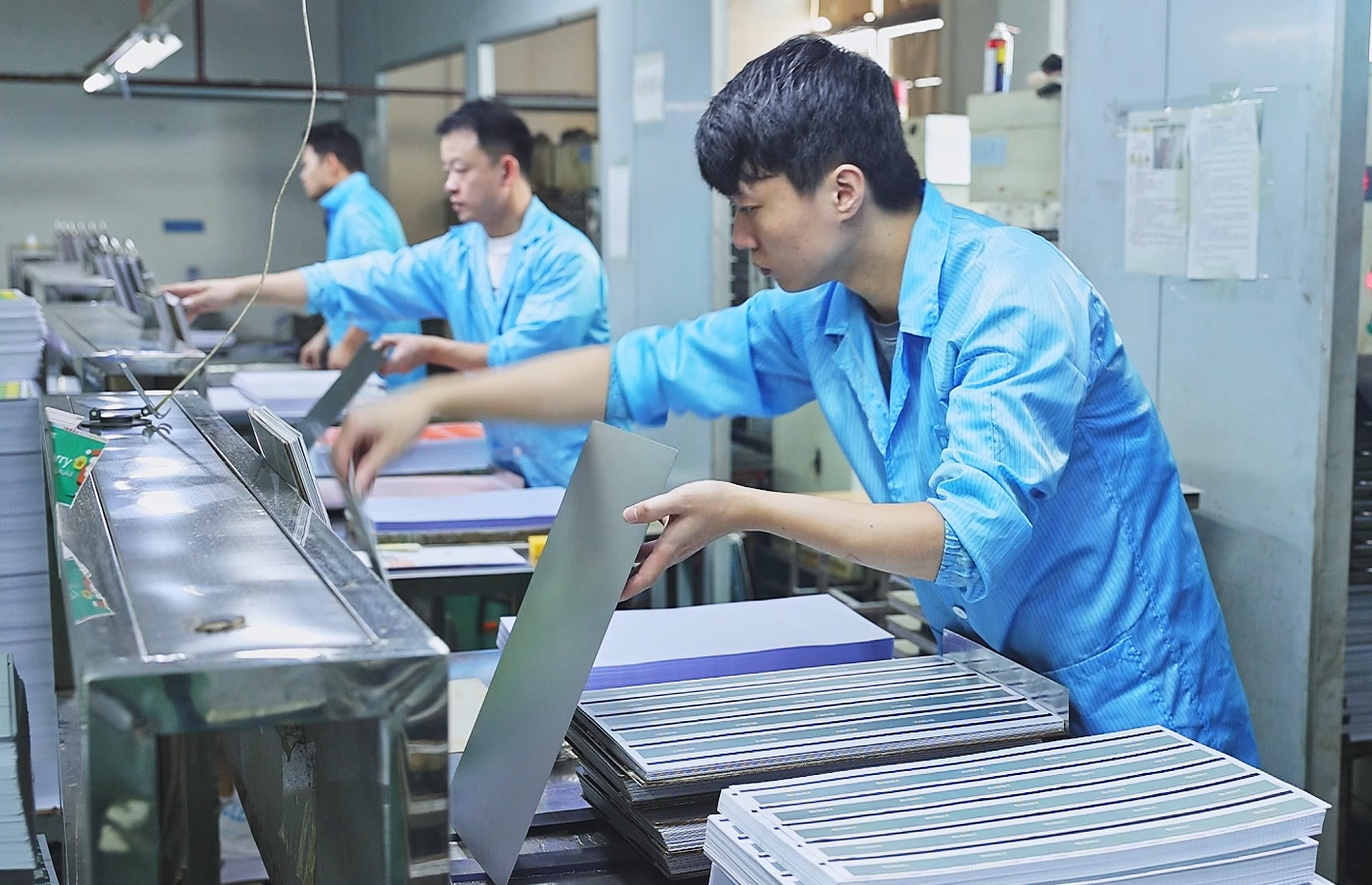
Custom Patterned Card Lamination Steel Plate for PVC, PETG & PC Cards
Wallis custom patterned card lamination steel plate is a precision stainless steel press plate designed to transfer decorative, textured or specialty surface patterns onto PVC, PETG, PC, ABS, RFID and other compatible laminated card sheets during hot-press production.
Unlike ordinary decorative stainless steel sheet used for architectural cladding, this product is specifically engineered as a card laminator accessory. The patterned steel surface contacts the outer card layer during lamination so the selected texture can be reproduced on the finished card sheet before punching, personalization or downstream processing.
Wallis supports customized patterns, A3, A4 and machine-specific plate dimensions, multiple plate thicknesses and different surface finishes for card factories, RFID inlay manufacturers, smart-card producers and card-material distributors. Current Wallis lamination plate specifications primarily include 0.6 mm, 0.8 mm and 1.0 mm, with other specifications subject to technical confirmation.
Patterned Card Lamination Steel Plate Specifications
| Specification | Wallis Option | Buyer Confirmation |
| Product | Custom Patterned Card Lamination Stainless Steel Plate | Provide required card finish or reference sample |
| Material | Stainless steel | Steel grade or hardness should be specified if controlled by the purchasing standard |
| Surface | Embossed / textured / special pattern | Approve pattern geometry, depth and visual effect |
| Pattern Options | Grid, wave, diamond, tree, linen, silk, grain and customized textures subject to feasibility | Provide pattern sample, artwork or finished-card reference |
| Current Thickness Options | 0.6 mm / 0.8 mm / 1.0 mm; other specifications subject to confirmation | Match existing laminator and press-stack design |
| Plate Size | A4 / A3 / customized machine-specific size | Exact length and width are recommended instead of only A3/A4 terminology |
| Patterned Sides | Single-sided or double-sided pattern construction can be evaluated | Confirm whether both sides require the same or different finish |
| Edge Treatment | Smooth, trimmed and deburred edges; customized corner treatment available | Provide corner radius or drawing where required |
| Protective Film | Surface protective film can be specified for shipment | Confirm film type and removal requirements |
| Compatible Card Materials | PVC, PETG, PC, ABS and compatible composite card structures | Validate temperature, pressure and release behavior with the actual card stack |
| Applications | Personalized cards, membership cards, gift cards, ID cards, RFID cards, specialty cards and card prelam sheets | Final texture should be approved on the finished laminated card |
| OEM Customization | Pattern, size, thickness, edge treatment, protective film, packaging and labeling | Tooling or setup may apply to new custom textures |
| Lead Time | Quoted according to pattern, dimensions, quantity and customization | Confirm after technical specification approval |
Specification clarification: The previous version of this page listed architectural stainless steel dimensions such as 1000 × 2000 mm and 1220 × 2440 mm together with 0.3–2.0 mm thicknesses. Those specifications correspond more closely to general decorative stainless steel sheet products. For this card-lamination product, buyers should use the actual lamination-machine plate size and the applicable Wallis card-plate specification.
What Is a Patterned Card Lamination Steel Plate?
A patterned card lamination steel plate is a reusable stainless steel press plate with a controlled embossed or textured contact surface. It is installed within the hot-press stack of a professional card laminator to create a specified decorative texture on the outer surface of a plastic card sheet.
Pattern Is Transferred During Lamination
When card core sheets, overlays and other layers are heated and pressed, the outside card material contacts the patterned steel plate. Under suitable process conditions, the surface follows the plate texture and retains that visual or tactile character after cooling.
Different from Printed Patterns
A steel-plate pattern is a physical surface texture rather than printed artwork. Graphics and colors come from the printing layer, while the steel plate influences surface relief, reflection and tactile appearance.
Different from Architectural Embossed Stainless Steel
Architectural embossed stainless steel is normally the finished decorative building material itself. A card lamination steel plate is instead a production tool that is repeatedly used to manufacture plastic card sheets.
Custom Pattern Options for Personalized Card Surfaces
Fine Grain Patterns
Fine-grain textures can create a subtle tactile and low-reflection card surface without dominating printed artwork. These patterns are suitable for membership cards, branded cards and other products requiring understated texture.
Silk and Linen Patterns
Silk- or linen-style surfaces create directional or woven visual texture. Similar plate types are also used in selected RFID inlay and prelam applications where a controlled rough surface is required.
Tree and Natural Grain Textures
Tree, wood-grain and organic textures can add a stronger decorative identity to customized membership, gift, promotional and collectible cards.
Grid and Geometric Patterns
Grid, diamond, wave and other repeated geometric structures can be evaluated for branded or specialty cards where the surface pattern forms part of the visual design.
Customer-Specific Pattern Development
New patterns can be discussed using a reference plate, finished card, physical texture sample or design concept. Tooling feasibility, pattern repeat, depth, size and MOQ should be confirmed before custom development.
Patterned vs Matte, Mirror and Silk Lamination Plates
| Steel Plate Type | Surface Character | Typical Application |
| Mirror / Ultra Glossy | Highly polished smooth surface | High-gloss plastic cards |
| Fine Matte | Low-reflection fine texture | ID, membership and commercial cards requiring a muted surface |
| Coarse Matte | More visible rough texture | Specialty tactile card surfaces |
| Silk | Fine directional or woven texture | RFID prelam, inlays and personalized card applications |
| Special Pattern | Defined decorative texture such as grain, tree, grid, diamond or custom pattern | Personalized and branded plastic cards |
Why Patterned Steel Plate Quality Matters
Pattern Uniformity
Texture should remain visually consistent across the usable plate area. Variations in pattern depth or definition can produce visible differences between cards punched from different positions of the same laminated sheet.
Surface Cleanliness
Dust, particles, residue, dents and unwanted scratches can transfer onto the plastic surface during lamination. Plate inspection and cleaning are therefore important quality-control procedures.
Plate Flatness
Stable flatness helps maintain consistent contact within the lamination stack. A warped plate can contribute to uneven pressure, surface variation and unstable card-sheet results.
Smooth Deburred Edges
Properly finished edges reduce the risk of sharp burrs damaging card sheets, cushion pads, operators or adjacent production materials.
Repeated Lamination Performance
Card lamination plates are reusable production tools. Actual service life depends on plate material, surface texture, heat, pressure, cleaning method, handling and the acceptable wear limit for the finished card.
Compatible Card Materials
PVC Cards
PVC is one of the most common materials used with patterned lamination steel plates. Applications include membership cards, loyalty cards, gift cards, access cards, promotional cards and specialty plastic cards.
PETG Cards
Patterned plates can also be evaluated with PETG card sheets. The lamination recipe should be matched to the selected PETG core, overlay and printing structure.
Polycarbonate Cards
PC cards can require different lamination temperatures and pressure conditions from conventional PVC. Plate compatibility should therefore be confirmed against the actual PC production cycle.
RFID and NFC Smart Cards
Pattern and silk lamination plates can be used in selected RFID card and prelam applications where inlays, antennas and outer card materials are laminated together under controlled heat and pressure.
ABS and Composite Cards
Compatible ABS and multi-material card structures can also be tested. Buyers should validate the entire material stack rather than assuming identical performance across PVC, PETG, PC and ABS.
How Patterned Steel Plates Are Used in Card Lamination
1. Prepare the Card Material Stack
Align printed card sheets, core materials, overlays, RFID inlays and other layers according to the approved card construction.
2. Clean and Inspect the Pattern Plates
Check the steel surfaces for particles, contamination, scratches, dents and other unwanted marks before every production batch.
3. Assemble Steel Plates and Cushion Pads
Place card sheets between the lamination plates together with the required wool, silicone or other cushion materials according to the laminator configuration.
4. Apply Heat and Pressure
Run the approved lamination cycle. Temperature, pressure and dwell time should follow the card material specification and validated production recipe.
5. Cool the Laminated Stack
Controlled cooling helps stabilize the plastic card sheet and preserve the transferred surface pattern before unloading.
6. Inspect Pattern Transfer
Inspect texture consistency, flatness, bubbles, surface defects, release behavior and print appearance before the laminated sheet moves to punching or personalization.
Custom Pattern Development for Card Manufacturers
Start with a Physical Reference
If you need to reproduce an existing card texture, send an approved card or steel plate sample where practical. A physical reference gives clearer information about depth, gloss and tactile character than a photograph alone.
Pattern Artwork or Drawing
For newly designed patterns, provide the repeating motif, dimensions, pattern orientation and desired visual effect. Technical review determines whether the design can be manufactured as a lamination plate.
Confirm Pattern Direction
Directional patterns such as silk, linen, wave or wood grain should be aligned to the intended card orientation. This should be confirmed before custom plate manufacturing.
Sample Plate Approval
The most reliable approval method is to laminate the customer's real PVC, PETG, PC or other card structure using the sample plate and compare the finished texture with the target standard.
How to Choose the Correct Pattern Lamination Plate
1. Specify the Finished Card Texture
Decide whether the requirement is a subtle grain, silk texture, linen effect, geometric pattern, wood texture or custom decorative surface.
2. Provide Exact Plate Length and Width
Provide the existing plate dimensions or laminator working area. Exact millimeter dimensions are preferable to generic descriptions such as A3 or A4.
3. Confirm Plate Thickness
Wallis currently lists 0.6 mm, 0.8 mm and 1.0 mm for its card-lamination steel plate range. Use the same plate specification as the validated laminator stack unless a change is technically approved.
4. Identify the Card Material
State whether the card uses PVC, PETG, PC, ABS, RFID prelam or another construction so suitable production testing can be planned.
5. Specify Single- or Double-Sided Texture
If both sides of the steel plate will be used, state whether they require identical patterns, different patterns or one patterned and one alternative finish.
6. Provide Your Lamination Conditions
Temperature, pressure, heating time, cooling cycle, cushion pad and stack configuration help evaluate the working environment.
7. Test Before Bulk Ordering
Use a sample plate in the actual laminator to verify pattern transfer, card release, surface appearance and dimensional stability before approving mass production.
Common Pattern Lamination Problems and Checks
| Issue | Steel Plate Check | Other Factors |
| Uneven Pattern Transfer | Check texture uniformity and plate flatness | Pressure uniformity, cushion pads and sheet thickness |
| Unexpected Surface Marks | Inspect scratches, dents and particles | Contamination inside card stack |
| Card Sticking | Check plate cleanliness and surface condition | Overlay formulation, temperature and cooling |
| Sheet Warpage | Verify plate flatness | Heating, cooling, pressure and material shrinkage |
| Pattern Too Weak | Check pattern depth and plate wear | Temperature, pressure, overlay formulation and cooling |
| Pattern Too Strong | Confirm selected plate texture | Lamination recipe and plastic surface response |
Quality Control for Patterned Card Lamination Steel Plates
Patterned steel plates require tighter visual control than ordinary flat metal sheets because any surface defect may be reproduced on the finished card. Depending on the approved order specification, inspection can include:
Plate thickness and thickness tolerance
Length and width
Plate flatness
Pattern type and pattern orientation
Texture consistency across the usable area
Surface scratches, dents and contamination
Single- or double-sided finish
Edge deburring and corner condition
Protective film condition where specified
Sample lamination result where required
Packaging and plate identification
Use a Finished-Card Reference Standard
A patterned steel surface may look different before and after it is transferred onto PVC or PETG. For appearance-critical programs, maintain both an approved steel plate and a finished-card sample as production references.
Protect the Pattern During Shipment
Pattern surfaces should be protected from metal-to-metal rubbing, impact and contamination during transport. Protective film, separators and rigid export packaging can be specified according to order requirements.
Cleaning and Maintenance of Pattern Lamination Plates
Clean Surface Residue Carefully
Remove dust and production residue using a method compatible with the stainless steel and patterned surface. Contamination left inside fine texture can later transfer to the card sheet.
Avoid Aggressive Polishing
Abrasive polishing can permanently change fine grain, silk or matte patterns. Cleaning should remove contamination without modifying the approved texture.
Store Plates Flat
Store plates on clean, flat supports to reduce the risk of bending and pattern damage. Avoid uncontrolled stacking where patterned faces rub directly against other metal surfaces.
Remove Damaged Plates from Production
When a scratch, dent or worn section repeatedly appears on laminated cards, the affected plate should be inspected and repaired where feasible or replaced.
Applications of Custom Pattern Card Lamination Plates
Membership Cards
Clubs, hotels, gyms and membership programs can use tactile or decorative textures to differentiate premium card products.
Gift Cards
Retail and branded gift cards can combine printed artwork with a physical surface pattern to create a more distinctive card appearance.
Promotional and Brand Cards
Custom card textures can reinforce visual branding for promotional, event and customer-engagement programs.
RFID and Access Cards
RFID access, hotel and campus cards can use selected textured finishes when the final card construction and personalization process are compatible.
Collectible and Specialty Plastic Cards
Decorative patterns are particularly useful for limited-edition, collectible and specialty cards where tactile appearance forms part of the product value.
RFID Prelam and Inlay Sheet Production
Silk or textured steel plates can also be evaluated for selected RFID inlay and prelam sheet applications requiring a particular surface after lamination.
Why Choose Wallis for Custom Pattern Lamination Steel Plates?
Specialized Card Material Supply
Wallis supplies PVC, PETG and PC card sheets, overlays, RFID inlays, lamination steel plates, wool pads, silicone pads and related materials for professional card manufacturing.
Multiple Lamination Plate Finishes
Mirror glossy, matte, silk and customized patterned surfaces allow card manufacturers to develop different finished-card textures using plate specifications suited to each product.
Custom Plate Dimensions
Machine-specific dimensions can be reviewed according to existing lamination equipment instead of forcing the buyer to adopt one standard plate format.
Custom Pattern Development
Buyers can submit physical samples, existing cards or pattern concepts for technical evaluation when a standard matte or silk finish does not meet the project requirement.
Sample Testing Before Bulk Production
Sample lamination allows buyers to verify pattern transfer, card release, surface quality and compatibility with existing production settings.
B2B OEM and Repeat-Order Supply
Wallis supports card factories, RFID manufacturers, card-material distributors and other B2B customers requiring repeatable pattern, dimension and packaging specifications.
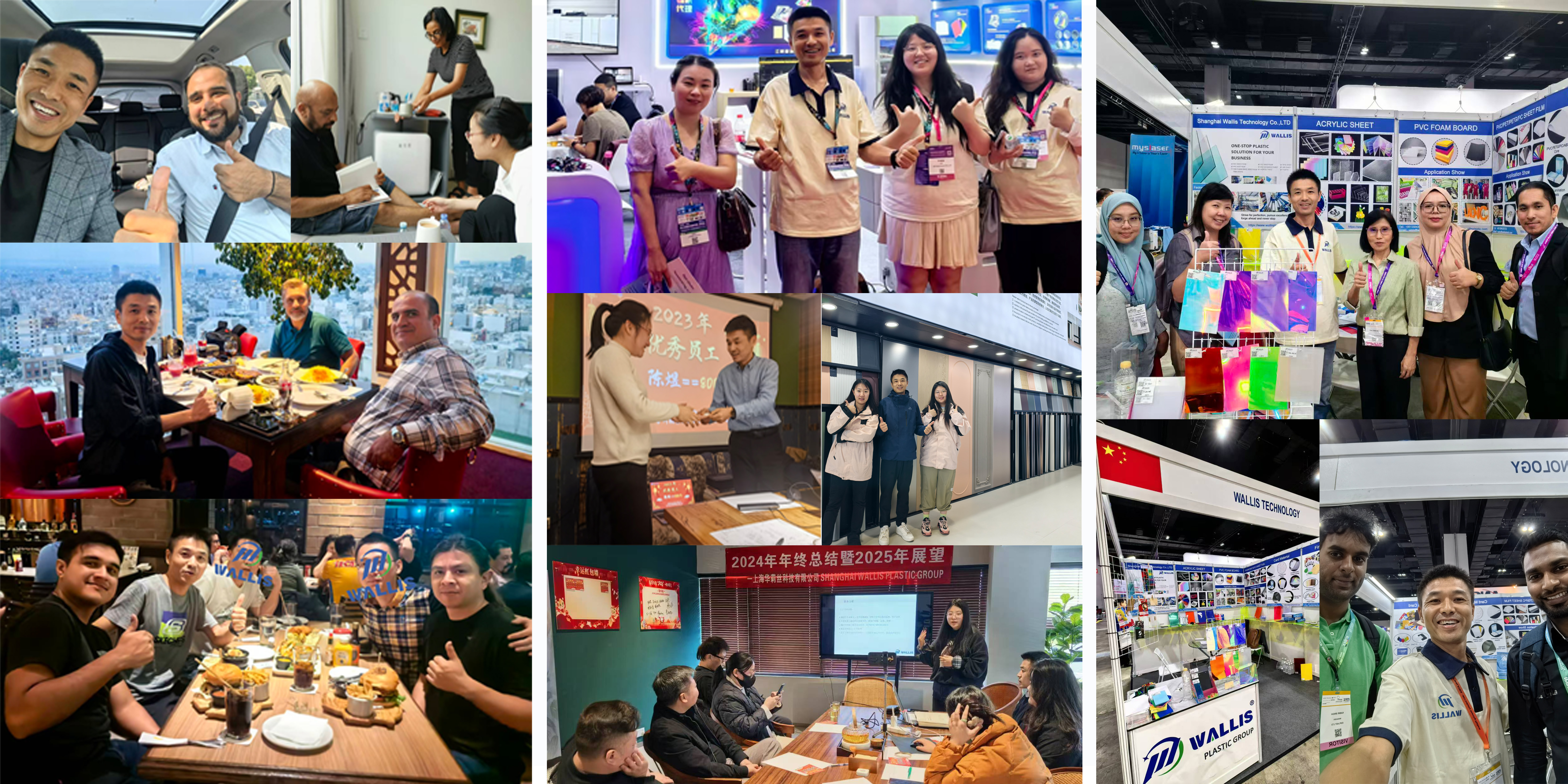
Wallis Card Material Team & Global Customers
Wallis works with international card manufacturers, material distributors and smart-card production companies supplying card materials and lamination accessories for different production requirements.

Customer Feedback
Customer feedback provides additional information about service and purchasing experience. For technical approval, buyers should still qualify patterned lamination plates using dimensional inspection, surface comparison and actual card-lamination tests.

FAQ About Custom Patterned Card Lamination Steel Plates
What is a patterned card lamination steel plate?
It is a stainless steel laminator plate with a controlled textured surface that transfers a physical pattern onto PVC, PETG, PC or another compatible plastic card surface during hot-press lamination.
Is this the same as decorative embossed stainless steel sheet?
No. Architectural embossed stainless steel is normally used as the finished decorative panel. This product is a reusable manufacturing tool used inside a card laminator to create texture on plastic cards.
What thicknesses are available?
Wallis' current card-lamination steel plate range primarily lists 0.6 mm, 0.8 mm and 1.0 mm. Other requirements should be submitted for technical confirmation.
Is the original 0.3–2.0 mm range correct?
That range appeared in the previous page together with architectural sheet dimensions and applications. It should not be used as the primary card-lamination plate specification unless Wallis separately confirms those thicknesses for this exact product.
Can you supply A3 and A4 pattern steel plates?
Yes. A3, A4 and customized card-lamination plate formats can be reviewed. Exact millimeter dimensions are recommended because machine formats can vary between laminator manufacturers.
Can the steel plate size be customized?
Yes. Provide the exact length, width and thickness of your existing plate or the laminator model and working dimensions.
Can Wallis produce a custom card texture?
Custom textures can be evaluated according to pattern complexity, repeat dimensions, depth and tooling feasibility. A physical reference or design file is recommended.
What patterns are available?
Options can include matte, silk, linen, grain, tree, grid, wave, diamond and other customized textures, subject to current production capability and sample approval.
Can both sides of the plate have patterns?
Double-sided patterned plates can be evaluated. Confirm whether both sides require the same pattern, two different patterns or a combination of patterned and other finishes.
Can patterned plates be used for PVC cards?
Yes. PVC card production is one of the main applications for special-pattern lamination plates. Test the plate with the intended overlay, printing and lamination settings before bulk production.
Can patterned steel plates be used with PETG cards?
Suitable plates can be evaluated with PETG card structures. Because PETG processing conditions can differ from PVC, the final surface should be tested using the actual PETG materials.
Can they be used for polycarbonate cards?
Wallis lists PC among the compatible card materials for its lamination plate range. The plate specification should be validated against the temperature, pressure and cooling conditions used for the intended PC construction.
Can patterned plates be used for RFID inlay sheets?
Selected silk and textured plate constructions can be used for RFID inlay or prelam sheet applications. Pressure and cushion configuration should be matched to the inlay and antenna design.
Will the steel pattern damage printed artwork?
The pattern normally contacts the card overlay or outside layer rather than directly engraving the printed ink. Final results depend on the complete card structure, overlay thickness, pattern depth and lamination recipe.
Does a deeper pattern always give a better card finish?
No. Pattern depth should match the intended visual effect and plastic material. Excessively strong texture can alter printed appearance or create a surface that is unsuitable for downstream personalization.
Can personalized cards still be printed after pattern lamination?
Compatibility with inkjet, thermal transfer, dye sublimation, laser engraving or other personalization methods depends on the surface texture and card construction. Test the intended personalization process on the finished laminated card.
How long does a pattern steel plate last?
Service life depends on temperature, pressure, cleaning, surface wear, storage and handling. A fixed cycle life should only be stated when supported by the applicable product specification and acceptance criteria.
How should patterned plates be cleaned?
Use a cleaning method compatible with the stainless steel and texture. Avoid abrasive polishing that could change the controlled pattern, and remove particles from fine grooves before reuse.
Can Wallis provide protective film?
Protective film can be specified to reduce surface scratching and contamination during transport. Confirm the required protective-film structure when requesting a quotation.
Can I get a sample before mass production?
Sample testing is recommended, especially for customized textures. Use the sample plate with the actual card materials and laminator to approve pattern transfer and surface quality.
What is the MOQ?
MOQ depends on plate size, pattern, thickness, whether new tooling is required and total customization. Standard and sample requirements should be confirmed with Wallis before ordering.
What is the production lead time?
Lead time depends on whether the pattern is existing or newly developed, plate dimensions, quantity and production schedule. Final timing is quoted after the specification is approved.
What information should I provide for a quotation?
Provide plate length, width, thickness, required pattern or reference sample, single- or double-sided finish, laminator model, card material, operating conditions, quantity, edge requirements, packaging and delivery destination.
Request Custom Pattern Card Lamination Steel Plate Samples & Pricing
Looking for a reliable custom patterned card lamination steel plate manufacturer for PVC, PETG, PC, RFID or personalized card production? Send Wallis your plate dimensions, thickness, texture sample, laminator model, card material and order quantity for technical evaluation, sampling and factory-direct pricing.