Clear Solid Polycarbonate Sheets for Outdoor Glazing & Roofing
Wallis clear solid polycarbonate sheets are transparent rigid PC panels designed for roofing, skylights, glazing, safety barriers, machine guards, architectural structures, signage and other applications requiring a combination of optical clarity and high impact resistance.
Manufactured from 100% virgin polycarbonate material, the sheets are available in thicknesses from 1 mm to 20 mm, widths up to 2100 mm and lengths up to 5800 mm, 6000 mm or customized dimensions according to project requirements.
For long-term outdoor use, Wallis offers UV-protected solid polycarbonate sheet with a co-extruded UV protective layer. Buyers should confirm whether UV protection is required on one side or both sides according to installation orientation and exposure conditions.
Clear Solid Polycarbonate Sheet Specifications
The following specifications summarize the current Wallis solid PC sheet range. Exact optical, mechanical and weathering performance should be confirmed according to the selected thickness, color and UV-protection grade.
| Item | Specification |
| Material | 100% Virgin Polycarbonate |
| Sheet Type | Flat Solid Polycarbonate Sheet |
| Thickness Range | 1–20 mm |
| Maximum Width | Up to 2100 mm |
| Length | 5800 mm / 6000 mm / Customized |
| Color Options | Clear / Blue / Green / Bronze / Opal |
| Clear Light Transmission | Up to Approximately 89%; Varies by Thickness, Color and Grade |
| UV Protection | Co-Extruded UV Protective Layer for UV-Protected Grade |
| UV Surface | Confirm One-Side or Two-Side UV Protection for Project |
| Impact Performance | High Impact Resistance; Exact Performance Depends on Thickness, Grade and Test Method |
| Reference Service Temperature | -40°C to +120°C |
| Customization | Custom Size / Color / Cutting / UV Protection Options |
Reference Physical Properties of Solid Polycarbonate
The values below are reference data from the current product information. They should not be treated as certified engineering design values without confirming the actual production grade, thickness and applicable test standard.
| Characteristic | Unit | Reference Data / Note |
| Impact Strength | J/m | 88–92; Confirm Test Method for Final Grade |
| Light Transmission | % | Clear Grade Up to Approximately 89%; Tinted and Opal Grades Lower |
| Specific Gravity | — | Approximately 1.2 |
| Elongation at Break | % | ≥130 Reference Value |
| Coefficient of Linear Thermal Expansion | mm/m·°C | Approximately 0.065 |
| Reference Service Temperature | °C | -40 to +120 |
| Flexural Strength | N/mm² | Approximately 100 Reference Value |
| Modulus of Elasticity | MPa | Approximately 2400 Reference Value |
| Tensile Strength | N/mm² | ≥60 Reference Value |
| Thermal Conductivity | W/m·K | Confirm by Product Grade and Test Data; Do Not Confuse with System U-Value |
| Acoustic Performance | dB | Depends on Sheet Thickness, Framing and Complete Barrier System |

Clear Solid Polycarbonate Sheets

Clear Polycarbonate Panels
Why Choose Solid Polycarbonate Instead of Glass?
High Impact Resistance
Solid polycarbonate is widely selected for applications where transparent glazing must withstand significantly greater impact than conventional glass. Actual impact performance depends on sheet thickness, grade, test method, support structure and installation design.
Lower Weight than Glass
With a specific gravity of approximately 1.2, solid polycarbonate is substantially lighter than glass of equivalent dimensions. Reduced panel weight can simplify handling, fabrication and installation.
High Optical Clarity
Clear solid PC sheet can provide high visible-light transmission, making it suitable for transparent roofing, skylights, protective glazing, machine viewing panels and architectural structures where daylight or visibility is important.
Easier Fabrication
Polycarbonate sheets can be cut, drilled and fabricated using suitable tools and processing parameters. Cold bending may also be possible when the required bending radius is compatible with sheet thickness and grade.
Key Features of UV-Protected Solid Polycarbonate Sheets
UV Protection for Outdoor Applications
For roofing, canopies, skylights and other exterior applications, a UV-protected grade should be selected to reduce long-term degradation caused by sunlight exposure. Confirm whether the installation requires UV protection on one side or both sides.
Weather-Resistant PC Panel
UV-protected polycarbonate is suitable for outdoor projects exposed to changing temperatures, sunlight, rain and general weather conditions. Final service performance depends on material grade, coating, installation and local environment.
High Transparency
Clear grades can provide light transmission up to approximately 89%, while blue, green, bronze and opal versions provide different combinations of visible light, privacy and solar shading.
Wide Temperature Capability
The current Wallis product data lists a reference service-temperature range from -40°C to +120°C. Engineering projects should confirm the actual grade specification and loading conditions before design approval.
Custom Sizes & Colors
Wallis offers clear, blue, green, bronze and opal options together with customized sheet dimensions for architectural, industrial and commercial projects.

Clear Polycarbonate Sheet

Customized Thickness PC Sheet

Transparent Polycarbonate Sheet
Clear, Tinted & Opal Polycarbonate Sheet Options
Clear Polycarbonate Sheet
Clear sheet is suitable when maximum visibility and daylight transmission are priorities, including skylights, protective glazing, guards and transparent architectural structures.
Bronze & Tinted PC Sheet
Bronze, blue and green tints can be selected when the project requires a different visual appearance or reduced visible-light transmission compared with clear material.
Opal Polycarbonate Sheet
Opal material provides a translucent rather than transparent appearance and can be considered for privacy, light diffusion and selected architectural or signage applications.
UV-Protected vs General-Purpose Polycarbonate Sheet
Not every clear polycarbonate sheet should automatically be treated as an exterior glazing grade. Material selection should reflect where and how the sheet will be installed.
UV-Protected Grade
UV-protected PC sheet should be specified for applications exposed to prolonged outdoor sunlight, such as canopies, roofing, skylights and outdoor protective glazing.
General-Purpose Grade
General-purpose solid PC can be appropriate for many indoor fabrication, machinery, partition and protective applications where long-term direct UV exposure is not a primary requirement.
Hard-Coated Grade for Abrasion Resistance
Standard polycarbonate has excellent impact performance but its surface can scratch more easily than glass. If the project requires enhanced abrasion or chemical resistance, request a suitable hard-coated grade rather than assuming standard PC provides glass-like surface hardness.
Applications of Clear Solid Polycarbonate Sheets
Roofing & Skylights
Clear UV-protected solid PC panels can allow natural daylight into covered areas while providing a high-impact transparent roofing material. Structural support spacing and sheet thickness should be calculated according to wind, snow and other design loads.
Canopies & Awnings
Solid polycarbonate can be used for entrance canopies, walkways, awnings and other transparent covers where visibility, weather exposure and impact resistance must be considered together.
Safety & Security Glazing
High-impact solid PC is used in protective barriers, machine guards, shields and safety glazing applications. Required thickness should be selected according to the actual impact level and applicable safety requirements.
Highway & Railway Noise Barriers
Transparent solid polycarbonate can be incorporated into acoustic-barrier systems where impact resistance, weatherability and visibility are required. Acoustic performance must be assessed using the complete panel and framing system.
Machine Guards & Industrial Shields
Transparent machine guards allow operators to view equipment while maintaining a physical barrier. Thickness, fastening and required safety standards should be confirmed for the actual machinery.
Interior Partitions
Clear or tinted PC can be used for commercial partitions, office screens, workshop dividers and protective panels where a lightweight transparent material is preferred.
Greenhouse & Agricultural Glazing
Solid transparent PC can be considered for selected greenhouse and agricultural glazing projects. Required light transmission, UV characteristics, thermal requirements and support structure should be evaluated for the crop and climate.
Swimming Pool Covers & Enclosures
Polycarbonate panels can also be used in selected pool-cover and enclosure structures where weatherability, daylight and impact resistance are required.

Highway Barrier

Protective Shield

Transparent Tunnel

Awning

Partition Wall

Swimming Pool Cover
How to Choose Solid Polycarbonate Sheet Thickness
Selecting thickness only by price can result in an unsuitable installation. The correct thickness depends on panel dimensions, support spacing, impact requirements, wind pressure, snow load, bending radius and relevant building or safety requirements.
For Roofing & Skylights
Provide the sheet span, supporting-frame spacing, installation angle and expected wind or snow load so an appropriate thickness can be evaluated.
For Machine Guards
Provide the panel dimensions, expected impact level, mounting method and required safety specification. A thicker panel may be required for large unsupported areas or higher impact loads.
For Sound Barriers
Acoustic performance depends on panel thickness and the complete barrier construction. Specify the required acoustic standard rather than selecting sheet thickness solely from a generic dB value.
For Curved Applications
If the sheet will be cold bent, provide the required radius together with the selected thickness. Minimum allowable bending radius should be confirmed before fabrication or installation.
Installation & Fabrication Considerations
Allow for Thermal Expansion
Polycarbonate expands and contracts as temperature changes. Framing, holes and fixing systems must allow sufficient movement rather than clamping the sheet so tightly that thermal expansion creates stress.
Install the UV-Protected Surface Correctly
When using a one-side UV-protected sheet outdoors, the protected surface must face the primary sunlight exposure. Confirm the protective-film marking before removing the masking film.
Use Suitable Fasteners & Seals
Fasteners, profiles, washers, sealants and gaskets should be compatible with polycarbonate. Chemical compatibility should be checked before applying adhesives or sealants directly to the sheet.
Keep Protective Film During Fabrication
Protective masking should generally remain on the sheet during storage, cutting and installation to reduce scratching, then be removed according to installation requirements.
Confirm Surface Requirements Before Ordering
Standard PC sheet should not automatically be specified for applications requiring high abrasion resistance, aggressive chemical cleaning or special optical quality. These requirements should be declared before quotation.
Quality Inspection for Solid Polycarbonate Sheets
Quality evaluation can include dimensional inspection, thickness checks, optical testing and other tests according to the product specification and project requirements.

Transmittance & Haze

Taber Abrasion Tester

Salt Spray Tester

UV Weathering Tester
Production, Protective Film & Packaging
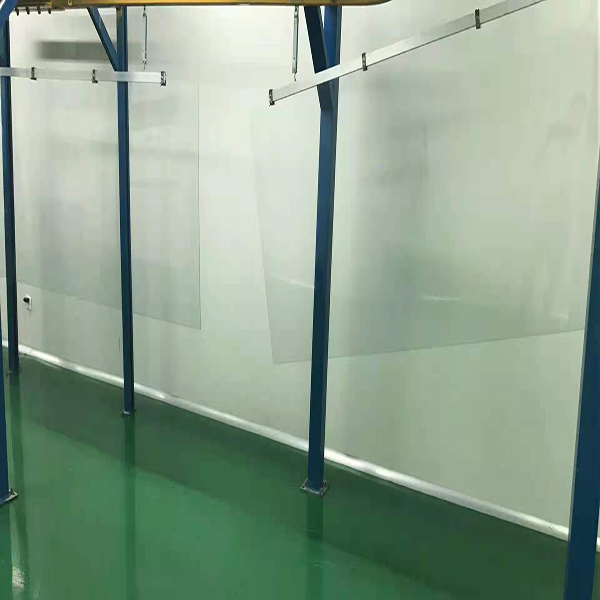
Solid polycarbonate sheets require careful surface protection during production, handling and transportation. Protective masking helps reduce scratches, while suitable packing helps protect sheet edges and surfaces during international shipping.

Coating Line

Protective Masking Film

Export Packaging
Why Choose Wallis for Solid Polycarbonate Sheets?
Virgin Polycarbonate Material
The current product specification identifies 100% virgin polycarbonate material for this clear solid PC sheet range.
1–20 mm Thickness Range
Multiple thickness options support different glazing, roofing, protective, industrial and fabrication applications.
Large Sheet Sizes
Widths up to 2100 mm and lengths up to 5800 mm, 6000 mm or customized formats can support larger architectural and industrial projects.
UV-Protected Outdoor Options
UV-protected grades can be specified for outdoor applications where long-term sunlight exposure is expected.
Custom Cutting & Colors
Buyers can discuss custom dimensions together with clear, blue, green, bronze and opal color requirements.
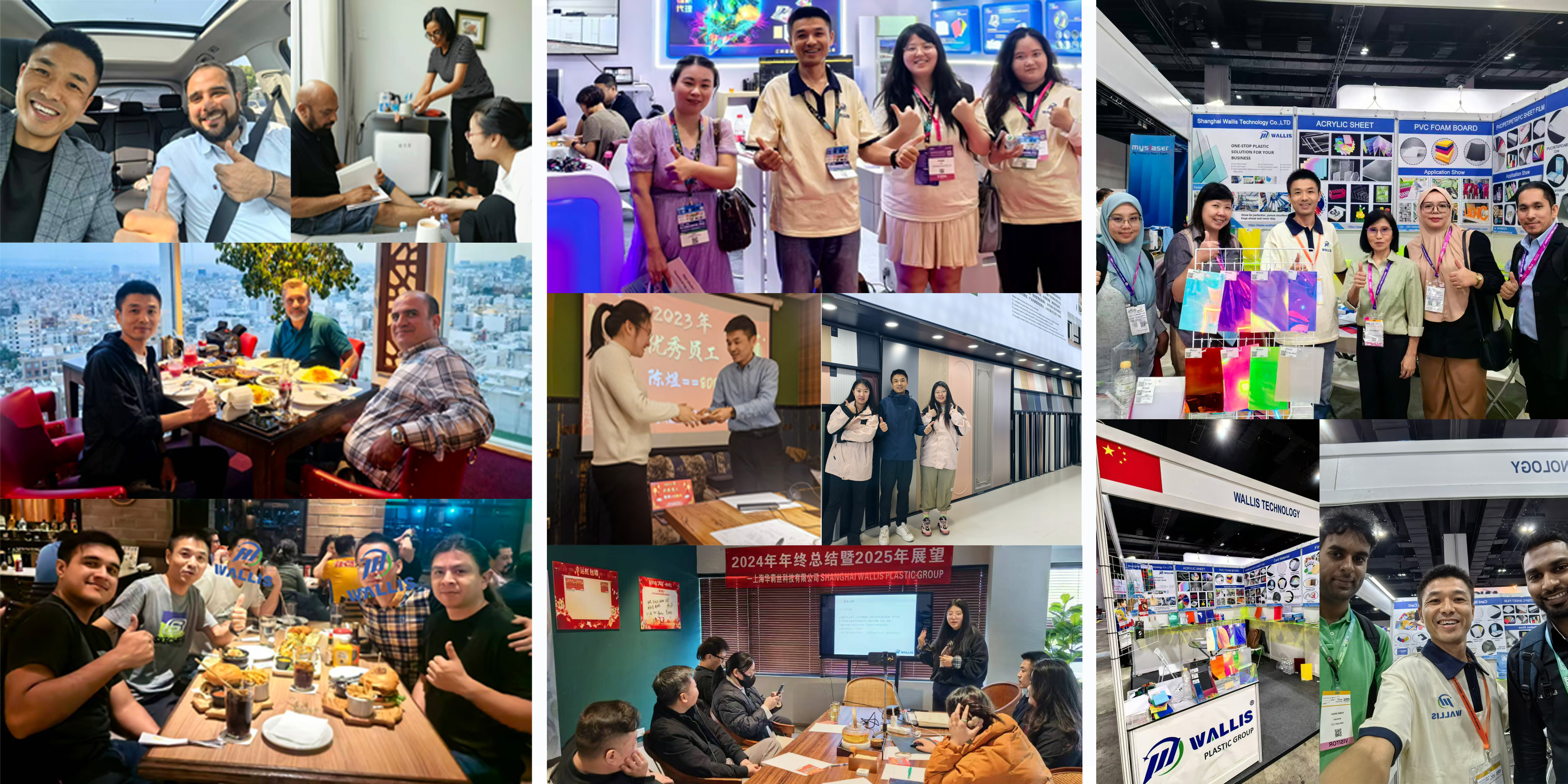
Wallis Global Project Cooperation
Customer Feedback
What to Provide for an Accurate Polycarbonate Sheet Quote
Providing complete project information allows material grade, dimensions, UV protection and packing requirements to be evaluated more accurately.
Required quantity
Sheet thickness
Finished width and length
Clear, bronze, blue, green or opal color
Indoor or outdoor application
One-side or two-side UV protection requirement
Required light transmission or tint
Standard or enhanced abrasion-resistant surface
Flat or curved installation
Required bending radius, if applicable
Custom cutting or fabrication requirements
Applicable building, safety or fire standard, if required
Project drawing for roofing, glazing or guard applications
Destination and packaging requirements
Frequently Asked Questions About Solid Polycarbonate Sheets
What is a clear solid polycarbonate sheet?
It is a flat, rigid transparent sheet manufactured from polycarbonate thermoplastic. Solid PC combines high impact resistance, optical clarity and relatively low weight for glazing, roofing, guards and other applications.
What thicknesses are available?
Wallis lists thicknesses from 1 mm to 20 mm for this product. The correct thickness depends on finished dimensions, load, impact requirement and installation structure.
What is the maximum sheet width?
The current specification lists widths up to 2100 mm. Standard lengths include 5800 mm and 6000 mm, while customized dimensions can also be discussed.
How much light does clear polycarbonate transmit?
The current Wallis product information lists up to approximately 89% light transmission for clear material. Actual transmission varies by thickness, color, surface treatment and selected grade.
Is clear polycarbonate suitable for outdoor use?
Yes, when an appropriate UV-protected grade is specified. General-purpose indoor PC should not automatically be substituted for a dedicated outdoor UV-protected sheet.
Is the UV coating on one side or both sides?
UV configuration should be confirmed for the selected product grade. If both surfaces will receive substantial sunlight exposure, state that requirement when requesting a quotation.
Is polycarbonate really 250 times stronger than glass?
Impact-strength comparisons with glass vary by material grade, thickness and test method, so a universal multiplier should not be used as an engineering design value. For critical applications, specify the required impact test or safety standard instead.
Is solid polycarbonate lighter than glass?
Yes. Polycarbonate has a specific gravity of approximately 1.2 and is substantially lighter than comparable glass panels, which can make large sheets easier to handle and install.
Can solid PC sheet be cold bent?
Many solid polycarbonate sheets can be cold bent within an allowable minimum radius. Provide the sheet thickness and required radius so the bending requirement can be evaluated before installation.
Can polycarbonate sheets be cut and drilled?
Yes. Solid PC can be cut, drilled and fabricated with suitable tools and processing methods. Thermal expansion and stress concentration around holes should be considered during installation.
Is standard polycarbonate scratch resistant?
Standard polycarbonate provides high impact strength but should not be assumed to have glass-like abrasion resistance. For frequently cleaned glazing or demanding surfaces, ask about a suitable hard-coated grade.
Can polycarbonate be used for skylights and roofing?
Yes. UV-protected solid polycarbonate can be used in roofing, skylights and canopy systems. Sheet thickness, structural spans, fixing details and thermal expansion must be designed for the specific project.
Can solid polycarbonate be used for sound barriers?
Yes. Transparent solid PC can be incorporated into highway and railway noise-barrier systems. Required acoustic performance depends on panel thickness, framing and the complete installed construction.
What colors are available?
Current options include clear, blue, green, bronze and opal. Color choice affects transparency and visible-light transmission, so the required optical performance should be specified with the color.
What is the MOQ?
The current product information lists a standard MOQ of 500 kg per specification, while trial orders or mixed sizes may be discussed according to the project.
Can I request customized sizes?
Yes. Custom dimensions and cutting requirements can be discussed according to sheet thickness, required quantity and production feasibility.
Can I request a sample?
The current product information states that small samples can be discussed for evaluation, with freight arrangements confirmed according to the inquiry.
How are polycarbonate sheets packed?
Sheets can be supplied with protective masking film and suitable export packing. Final pallet, protective-film and packaging requirements should be confirmed according to sheet dimensions, quantity and shipping method.
What information is needed for a quotation?
Please provide quantity, thickness, sheet size, color, indoor or outdoor application, UV-protection requirement, surface-coating requirement, fabrication requirements and any applicable engineering or safety standards.
Start Your Solid Polycarbonate Sheet Project
Looking for clear solid polycarbonate sheets, UV-protected PC panels or weather-resistant polycarbonate glazing? Send Wallis your thickness, dimensions, quantity, application and UV requirements for product evaluation and quotation.