UV-Protected Twin Wall Polycarbonate Sheets for Roofing & Greenhouses
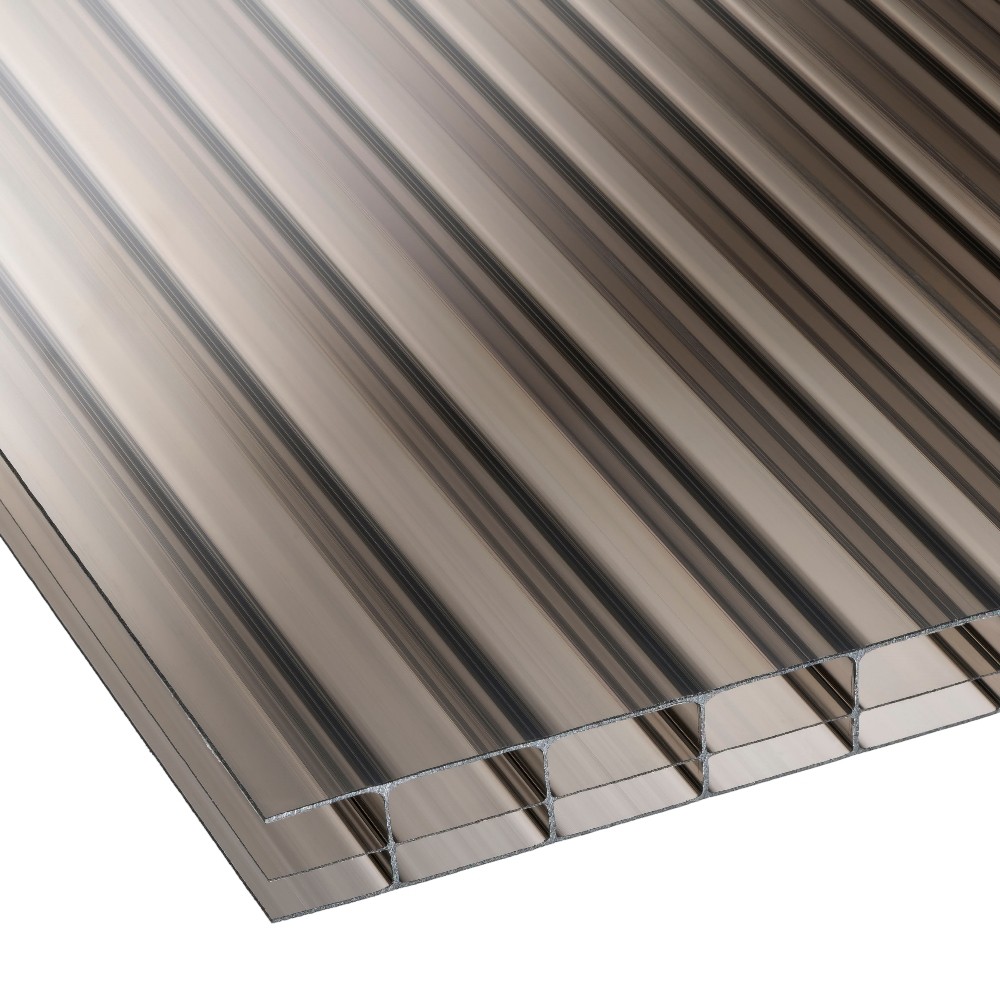
Wallis twin wall polycarbonate sheets are lightweight hollow glazing panels manufactured from 100% virgin polycarbonate material for roofing, greenhouse, skylight, canopy, partition and architectural glazing projects. The double-wall structure combines two polycarbonate skins with internal ribs to create enclosed air channels that improve thermal insulation while maintaining high natural-light transmission.
Available specifications include 3–12mm twin wall thickness options, a standard width of 2100mm, common export lengths of 5800mm, 6000mm, 11800mm and 12000mm, and custom lengths for project requirements. Clear sheets can provide light transmission of up to approximately 80%, depending on thickness, structure and surface treatment.
Single-side or double-side UV co-extrusion can be specified for outdoor applications. Clear, opal, blue, green, bronze and additional customized colors are available, with optional cut-to-size processing, surface treatment and functional coatings subject to project confirmation.
For professional B2B purchasing, buyers should confirm not only sheet thickness and dimensions but also sheet weight, light transmission, U-value, UV-protected side, rib direction, support spacing, wind/snow design load, thermal expansion allowance, minimum bending radius, accessories and warranty requirements before finalizing a project specification.
Twin Wall Polycarbonate Sheet Technical Specifications
| Item | Specification |
| Product Name | Twin Wall Polycarbonate Sheet |
| Material | 100% Virgin Polycarbonate (PC) |
| Structure | Double Wall / Hollow |
| Thickness Range | 3mm – 12mm; custom availability subject to confirmation |
| Standard Width | 2100mm and customized |
| Length Options | 5800mm / 6000mm / 11800mm / 12000mm / Custom |
| Light Transmission | Up to approximately 80% for clear configurations |
| UV Protection | Single-side or double-side UV co-extrusion |
| Colors Available | Clear, Opal, Blue, Green, Bronze and customized colors |
| Operating Temperature | Approximately −40°C to +120°C |
| Surface Treatment | Standard or UV-protected surfaces; anti-fog and other functional options can be reviewed on request |
| Processing | Cut-to-size and customized production available |
| OEM / ODM | Custom thickness, size, color, surface treatment, packaging and protective film can be discussed |
Thickness clarification: twin wall sheets are available in approximately 3–12mm, while some structure configurations may begin at 4mm. Buyers should confirm the exact minimum available thickness for the required width, color and UV configuration before issuing a purchase order.
Engineering data: U-value, area weight in kg/m², rib spacing, minimum cold-bending radius, load/span data, thermal expansion coefficient, fire classification and project-specific warranty information should be requested where they are required for architectural or greenhouse design.

Custom Twin Wall Polycarbonate Sheets

Twin Wall Hollow Structure
What Is a Twin Wall Polycarbonate Sheet?
A twin wall polycarbonate sheet is a hollow extruded panel consisting of two outer polycarbonate layers connected by internal vertical ribs. These ribs create enclosed channels that reduce material weight and trap air between the outer skins.
Double-Wall Hollow Structure
The hollow profile provides a different balance of weight, insulation and stiffness from a solid polycarbonate sheet. This makes twin wall panels useful for large-area glazing where lower weight and thermal performance are important.
Air Chambers for Thermal Insulation
Air trapped between the two polycarbonate walls reduces heat transfer compared with a single thin sheet. Actual insulation performance depends on thickness, rib geometry and complete installation system, so project-specific U-values should be confirmed before specification.
Lightweight Glazing Panel
The hollow internal structure reduces material weight compared with an equivalent solid panel. Lower panel weight can simplify handling and reduce structural dead load, although framing and load calculations still need to follow the project design.
UV Protection for Outdoor Polycarbonate Glazing
Wallis can manufacture twin wall polycarbonate sheets with single-side or double-side UV co-extrusion. The UV-protected layer is intended to reduce weathering effects associated with long-term solar exposure.
Single-Side UV Co-Extrusion
A single UV-protected side can be used when the sheet has a clearly defined exterior surface. During installation, the UV-protected side must face the intended exposure direction according to the supplied protective-film markings and installation instructions.
Double-Side UV Protection
Double-side UV co-extrusion can be discussed for applications where both faces may receive sunlight or where installation orientation requires additional flexibility.
Confirm UV Layer & Warranty Before Ordering
UV layer specification, warranty conditions and permitted loss of light transmission or color change should be documented in the project quotation when long-term outdoor performance is a purchasing requirement.
Custom Twin Wall Polycarbonate Sheet Options
Custom Thickness
Twin wall sheet thickness is available in approximately the 3–12mm range, with some structure configurations beginning at 4mm. Confirm the exact thickness available for the required project before ordering.
Custom Width & Length
The standard width is 2100mm, with customized widths subject to production feasibility. Common lengths include 5800mm, 6000mm, 11800mm and 12000mm, with custom lengths available for project requirements.
Multiple Colors
Clear, opal, blue, green, bronze and other colors can be produced. Color changes light transmission, solar appearance and visual privacy, so project samples should be approved when optical performance is critical.
Functional Surface Options
UV-protected surfaces and optional anti-fog or other functional treatments can be reviewed according to the application. Exact coating specification and performance data should be confirmed for the selected order.
Cut-to-Size Processing
Factory cutting can reduce on-site waste and simplify installation logistics. Buyers should provide finished dimensions, cutting tolerance, rib direction and packaging requirements when requesting cut-to-size sheets.
OEM & Private Labeling
OEM and private-label services can include customized specifications, protective films with customer branding and customized packaging for wholesale buyers.
Key Performance Advantages of Twin Wall Polycarbonate
Impact-Resistant Polycarbonate Construction
Polycarbonate is selected for glazing applications where impact resistance is important. Twin wall sheets can provide a safer and lighter glazing option than brittle glass in many applications. For hail, wind or structural-impact requirements, request the appropriate test data and project-specific load/span information.
Thermal Insulation from Hollow Air Channels
The twin wall profile contains enclosed air channels that reduce heat transfer compared with a single thin glazing layer. This can support greenhouse, skylight and enclosed-roof applications where insulation is an important design factor.
Up to 80% Light Transmission for Clear Sheets
Clear twin wall sheet can provide light transmission of up to approximately 80%. Actual transmission depends on thickness, structure, color, surface treatment and measurement method.
Lightweight for Large Glazing Areas
Hollow construction reduces sheet weight compared with solid glazing of similar overall thickness. This can make handling, transportation and installation easier while reducing dead load on supporting structures.
Wide Service Temperature Range
The operating-temperature range is approximately −40°C to +120°C. Structural loading, thermal expansion and fastening design still need to be considered across the expected project temperature range.
Polycarbonate Sheet Structures Available from Wallis
| Product Type | Thickness | Width |
| Twin Wall Polycarbonate Sheet | 4–12mm for this structure range | 2100mm |
| Triple Wall Polycarbonate Sheet | 8–16mm | 2100mm |
| Four Wall Polycarbonate Sheet | 8–20mm | 2100mm |
| Honeycomb Polycarbonate Sheet | 6–11mm | 2100mm |
| 5-Layer Honeycomb Polycarbonate Sheet | 14–25mm | 2100mm |
| X-Structure Polycarbonate Sheet | 14–30mm | 2100mm |
| Solid Polycarbonate Sheet | 0.9–8mm | 1220 / 1560 / 1820 / 2100mm; common formats include 1220×2440mm and 2050×3000mm |
| Corrugated Polycarbonate Sheet | 0.8–2.5mm | Customized |
| Locking-Design Polycarbonate Sheet | 3–10mm | 1040mm |
| Length: Common export lengths include 5800mm, 6000mm, 11800mm and 12000mm to suit typical container-loading arrangements. Custom lengths can also be discussed according to project and production requirements. |
| Colors: Clear / Transparent, Lake Blue, Green, Blue, Opal, White, Brown / Bronze, Silvery Gray, Red, Yellow and customized colors. |
The wider Wallis hollow-polycarbonate range includes twin wall, triple wall, four wall, honeycomb and X-structure panels. These structures should not be treated as interchangeable: wall count and internal geometry affect area weight, rigidity, insulation, allowable span and bending behavior.
Twin Wall Polycarbonate Colors
Color selection changes the visual appearance and transmitted daylight of the glazing system. Request a color sample and measured light-transmission value for the exact thickness where project daylight levels are important.

Yellow Twin Wall

Smoke Twin Wall

Red Twin Wall

Clear Twin Wall
Twin Wall, Triple Wall, Honeycomb & X-Structure Panels
Twin wall panels are often selected where lower weight and straightforward hollow construction are priorities. Projects requiring greater insulation or structural stiffness may evaluate multiwall, honeycomb or X-structure alternatives after comparing U-value, weight, allowable span and cost.

Triple Wall

Four Wall

Honeycomb

X-Structure
How to Select Twin Wall Polycarbonate Thickness
Start with Structural Loads
Thickness selection should begin with the project span, support spacing, wind load, snow load and installation orientation rather than selecting a panel only by price.
Consider Thermal Performance
Increasing thickness changes the size of the air cavity and can improve insulation, but the exact U-value depends on panel structure. Request tested U-value data for the selected Wallis thickness when energy calculations are required.
Consider Light Transmission
Thickness and color affect daylight. Greenhouse projects should confirm measured light transmission for the exact clear, diffused or colored sheet instead of assuming that all twin wall panels provide the same transmission.
Confirm Area Weight
Two sheets with the same nominal thickness can have different wall thicknesses and kg/m² values. Area weight is therefore an important procurement parameter for comparing quotations and structural performance.
Applications of Twin Wall Polycarbonate Sheets
Greenhouse Glazing
Twin wall polycarbonate is widely used for greenhouse walls and roofs because the hollow structure combines natural-light transmission with better thermal insulation than a thin single-wall sheet. Greenhouse buyers should confirm light transmission, anti-condensation requirements, UV protection and panel thickness for the local climate.
Skylights & Rooflights
Clear or translucent twin wall sheets can introduce daylight into warehouses, workshops, commercial buildings and residential structures while reducing glazing weight.
Canopies & Covered Walkways
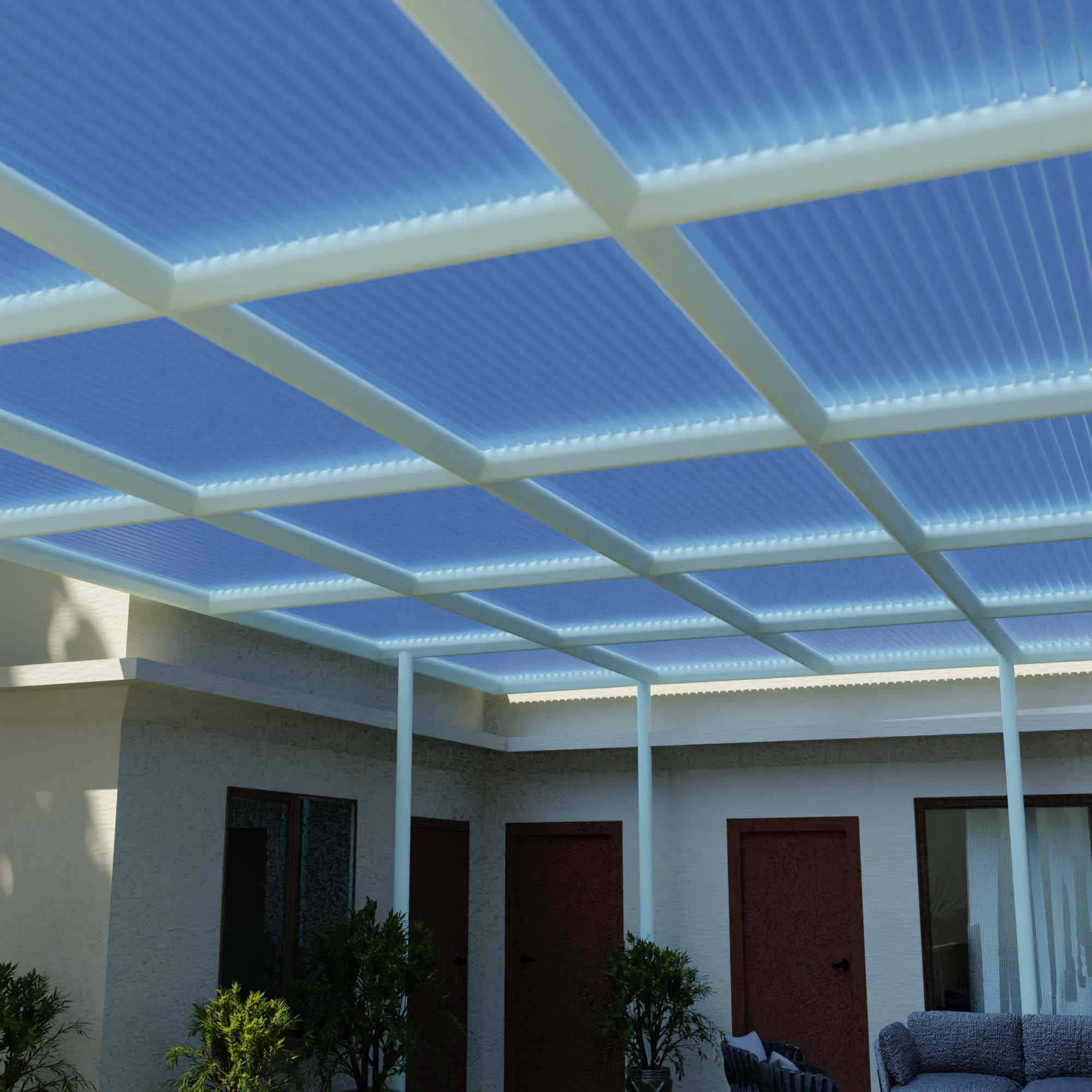
UV-protected hollow polycarbonate sheets can be used for entrance canopies, covered walkways, patios and similar weather-protection structures when the framing and panel thickness are designed for the expected loads.
Architectural Partitions & Enclosures
Opal, translucent or colored panels can be used for partitions, screens and enclosures where lightweight construction and diffused daylight are useful.
Industrial Roofing & Daylighting
Twin wall glazing can form part of industrial rooflighting systems. Installation profiles, support spacing, expansion allowance and weather sealing should be engineered for the complete system.


Skylight Application

Rooflight Application
Installation Considerations for Twin Wall Polycarbonate
Install the UV-Protected Side Correctly
For sheets with single-side UV protection, identify the exterior UV-protected face before removing the protective film. Incorrect orientation can reduce the intended weathering protection.
Allow for Thermal Expansion
Polycarbonate expands and contracts with temperature changes. Profiles, holes, fasteners and edge clearances should allow the sheet to move without excessive restraint.
Orient Hollow Channels for Drainage
In sloped roofing and similar applications, internal channels are generally oriented in the direction of drainage so condensation or incidental moisture can move toward the lower edge according to the installation system.
Seal Open Channels Correctly
Open hollow channels need appropriate edge treatment to reduce entry of dust, insects and uncontrolled moisture while still supporting the drainage strategy of the panel system.
Use Compatible Profiles & Sealants
Connecting profiles, washers, tapes and sealants should be compatible with polycarbonate and suitable for the installation environment. Avoid assuming that every construction sealant is chemically compatible with PC sheet.
Do Not Walk Directly on Unsupported Sheets
Roof installation should follow local safety requirements and use appropriate access equipment or load-spreading boards rather than placing concentrated body weight directly onto unsupported polycarbonate glazing.
Engineering Data Buyers Should Confirm Before Ordering
Area Weight — kg/m²
Area weight allows buyers to compare the actual amount of polycarbonate in panels of the same nominal thickness. Request kg/m² values for the required twin wall thickness when weight or structural comparison is important.
U-Value
Architectural and greenhouse projects frequently need thermal-transmittance data. Request tested U-values for the required sheet thickness and structure where available.
Light Transmission by Thickness & Color
“Up to 80% clear” is useful as a headline value, but professional buyers benefit more from a matrix showing light transmission for every thickness and standard color.
Solar Heat Gain / Solar Transmission
Greenhouse, canopy and architectural glazing projects may also need solar-energy data to balance daylight with heat gain.
Load / Span Table
Request recommended support spacing against defined wind or snow loads after engineering verification. This provides contractors with more useful design data than generic strength descriptions.
Minimum Bending Radius
Curved canopy and barrel-vault projects require a validated minimum cold-bending radius for each thickness and structure.
Fire Classification
Where building codes require a fire classification, request the applicable test report for the exact Wallis sheet rather than applying a competitor's fire rating to this product.
Quality Control for Twin Wall Polycarbonate Sheets
Raw polycarbonate material verification
Finished sheet thickness
Width and length
Sheet weight per square meter where specified
Wall and rib consistency
Flatness and visible deformation
Clear-sheet optical appearance
Color consistency
Light transmission where specified
UV-protected side and UV-layer requirement
Surface scratches and contamination
Internal channel cleanliness
Cut-edge quality
Protective film application
Custom logo or protective-film printing
Packing quantity and export protection
Check Thickness & Weight Together
Nominal thickness alone does not describe how much polymer is present in a hollow sheet. Adding kg/m² to the QC specification gives buyers a more useful indicator of product consistency.
Verify the UV-Protected Face
Single-side UV-protected products should be clearly identified through protective-film printing or another agreed marking method so installers know which surface faces outward.
Approve Color & Optical Samples
For bronze, opal, blue, green and custom colors, approve samples before mass production where appearance or light transmission is project-critical.
Outdoor Weathering & Temperature Performance
UV co-extrusion is designed to improve resistance to outdoor weathering, and the service-temperature range is approximately −40°C to +120°C. Actual outdoor service life depends on UV-layer specification, climate, installation, cleaning, chemical exposure and project conditions.
Some product materials reference 10–15 years of outdoor use. Buyers requiring a specific service-life guarantee should request the applicable written warranty terms for the exact UV-protected sheet configuration.

UV-Protected Outdoor Application

Cold & Heat Resistance
Wholesale, OEM & Project Supply
Flexible Wholesale MOQ
MOQ depends on thickness, dimensions, color and customization. Standard configurations may support a lower MOQ than special colors, non-standard lengths or customized UV constructions.
Standard & Custom Production Lead Time
Typical lead time is approximately 7–15 working days for standard wholesale orders and approximately 15–25 working days for customized colors, UV layers or non-standard dimensions. Final timing should be confirmed against quantity and production schedule.
Container-Friendly Lengths
Common 5800mm, 6000mm, 11800mm and 12000mm lengths can support efficient export planning for typical container shipments. Final loading quantity depends on thickness, pallet design and packing arrangement.
Private-Label Protective Film
Wholesale buyers can discuss customized protective film, branding and packaging. Protective-film printing can also help identify the UV-protected side and provide installation instructions.
Why Choose Wallis for Twin Wall Polycarbonate Sheets?
Virgin Polycarbonate Raw Material
The sheets are manufactured from 100% virgin polycarbonate raw material.
Multiple Hollow Sheet Structures
Buyers can source twin wall, triple wall, four wall, honeycomb and X-structure polycarbonate sheets for different glazing and insulation requirements.
Custom Dimensions & Colors
Custom thickness, size, length, color and surface requirements can be reviewed for wholesale and project orders.
Single or Double-Side UV Co-Extrusion
UV protection can be specified according to project exposure and installation orientation.
Export & OEM Support
Custom packaging, protective films, project dimensions and long-length export requirements can be discussed for distributors, contractors and glazing projects.
Global B2B Polycarbonate Projects
For international projects, provide the destination country, application, structural requirements, sheet thickness, color, UV configuration, dimensions, annual volume and required standards so the appropriate product specification can be reviewed before quotation.
Customer Feedback
For technical polycarbonate projects, the most useful customer feedback includes sheet thickness, structure, UV configuration, color, installation type, climate, project area and service period. These details help buyers compare performance under similar application conditions.
FAQ About Twin Wall Polycarbonate Sheets
What is a twin wall polycarbonate sheet?
It is a hollow polycarbonate panel consisting of two outer skins connected by internal ribs. The hollow channels reduce weight and provide thermal insulation while allowing daylight through the panel.
Is twin wall polycarbonate the same as hollow polycarbonate sheet?
Twin wall sheet is one type of hollow polycarbonate sheet. Hollow polycarbonate can also include triple wall, four wall, honeycomb and other multiwall structures.
What thicknesses does Wallis offer?
Twin wall sheet is available in approximately 3–12mm thicknesses, with some structure configurations beginning at 4mm. Confirm the exact available thickness before ordering.
What is the standard width?
The standard width is 2100mm. Customized widths can be discussed subject to production feasibility.
What lengths are available?
Common Wallis lengths include 5800mm, 6000mm, 11800mm and 12000mm. Custom lengths can also be reviewed.
What colors are available?
Available colors include clear, opal, blue, green and bronze, with additional options such as lake blue, white, silvery gray, red and yellow.
How much light does clear twin wall polycarbonate transmit?
Clear twin wall sheet can provide light transmission of up to approximately 80%. Exact transmission should be confirmed for the selected thickness and surface treatment.
Does Wallis provide U-values?
Architectural and greenhouse buyers should request tested U-value or thermal-transmittance data for the required thickness where energy performance is important.
Is twin wall polycarbonate suitable for greenhouses?
Yes. Greenhouse glazing is one of the primary applications of twin wall polycarbonate. Confirm light transmission, insulation, UV protection, anti-condensation requirements and structural loads for the specific greenhouse.
Can it be used for roofing and skylights?
Yes. Roofing, skylights, canopies and rooflights are listed applications. Thickness, framing and support spacing must be selected for the applicable wind and snow loads.
Does Wallis provide UV-protected twin wall sheets?
Yes. Single-side and double-side UV co-extrusion options are available.
Which side should face the sun?
For single-side UV-protected sheets, the UV-protected face should be oriented toward exterior solar exposure. Follow the identification printed on the supplied protective film or Wallis installation instructions.
Can both sides have UV protection?
Yes. Double-side UV co-extrusion is available for suitable projects.
What temperature range can the sheet handle?
The operating range is approximately −40°C to +120°C.
How long will twin wall polycarbonate last outdoors?
Outdoor life depends on UV-layer specification, climate, installation, cleaning and chemical exposure. Some product materials reference 10–15 years of outdoor use, but buyers requiring a guaranteed period should request the written warranty terms for the exact product.
Does polycarbonate expand and contract?
Yes. Thermal movement must be considered in frame dimensions, fastening holes and connecting profiles. Do not clamp the panel so tightly that normal expansion is prevented.
Can twin wall polycarbonate be curved?
Polycarbonate multiwall sheets can be used in certain curved applications, but the allowable cold-bending radius depends on thickness and internal structure. Request the validated minimum radius before designing a curved canopy.
Can the sheets be cut to size?
Yes. Cut-to-size factory processing and custom dimensions are available.
Is anti-fog treatment available?
Anti-fog or other functional coatings are listed as available on request. Confirm the exact coating system and performance data for the required project.
What is the MOQ for wholesale orders?
MOQ is flexible and depends on thickness, dimensions, color and customization. Confirm the applicable quantity requirement with your quotation.
What is the production lead time?
Typical lead time is approximately 7–15 working days for standard wholesale orders and approximately 15–25 working days for customized specifications such as special colors, UV configurations or non-standard dimensions.
Does Wallis provide OEM or private-label service?
Yes. Customized specifications, packaging and protective film with customer branding are available subject to order requirements.
How should I compare two twin wall sheet quotations?
Compare material source, nominal thickness, actual kg/m², wall and rib structure, width, length, UV layer, light transmission, U-value, color, warranty, dimensional tolerance, protective film and packaging rather than comparing price per sheet alone.
What information should I send for a quotation?
Provide application, thickness, width, length, color, quantity, UV requirement, light-transmission requirement, anti-fog requirement if applicable, cut-to-size dimensions, project location, required standards, packaging and delivery destination.
Request Twin Wall Polycarbonate Samples & Factory Pricing
Looking for a reliable twin wall polycarbonate sheet manufacturer for greenhouses, roofing, skylights, canopies or architectural projects? Send Wallis your required thickness, dimensions, color, UV configuration, quantity and project requirements for technical review, samples and B2B factory pricing.