Virgin White Sanitary Acrylic Sheet for Bathtubs and Showers
Wallis virgin white sanitary acrylic sheet is a high-gloss PMMA material developed for thermoformed bathtubs, shower trays, washbasins, tub liners and sanitary panels. It is supplied to bathroom-fixture manufacturers, vacuum-forming factories, sanitary ware brands, project contractors, importers and material distributors requiring consistent color, clean surfaces and repeatable forming performance.
The sheet can be produced in white and customized sanitary colors, with thicknesses and dimensions selected around the mold depth, draw ratio, final wall thickness and reinforcement process. Virgin PMMA provides a smooth, non-porous decorative surface that can be polished and repaired when minor surface damage occurs.
Bathtub and shower products are complete engineered structures. Depending on the design, the thermoformed acrylic shell may require fiberglass reinforcement, PU backing, ABS co-lamination, frames, bases, adhesives and sealants. Raw PMMA sheet properties should therefore be validated together with the complete production and installation system.
| Material | Virgin PMMA sanitary acrylic sheet; composite structures subject to project requirements |
| Primary Applications | Bathtubs, shower trays, tub liners, washbasins, sanitary panels and bathroom fixtures |
| Thickness Range | 3–10mm listed range; availability depends on sheet process, dimensions and MOQ |
| Surface | High-gloss, smooth, non-porous sanitary surface with protective masking |
| Processing | Vacuum forming, pressure forming, trimming, drilling, bonding and reinforcement after validation |
| B2B Services | Samples, custom color matching, OEM dimensions, forming trials, inspection and export packaging |
Request Sanitary Acrylic Samples and Quote
Technical Specifications
The following values are based on the existing product information and should be treated as typical or target values until the exact grade, sheet process and test method are confirmed. A batch-specific technical data sheet should form part of the approved purchase specification.
| Property | Test Reference | Unit | Listed Value | Procurement Note |
| Specific Gravity | Confirm with grade TDS | — | 1.19 | Typical PMMA density |
| Tensile Strength | GB/T 1040.1 | MPa | ≥70 | Flat-sheet result; formed-part performance varies |
| Flexural Strength | GB/T 9341 | MPa | ≥98 | Reinforcement and product geometry affect stiffness |
| Vicat Softening Temperature | GB/T 1633 | °C | ≥110 | Test condition and load must be specified |
| Recommended Long-Term Temperature | Project-specific | °C | Up to 70 listed | Depends on load, duration and complete fixture design |
| Thickness | Order specification | mm | 3–10 | Select by draw ratio and minimum formed wall |
| Standard Panel Sizes | Order specification | mm | 1230 × 2450 / 1250 × 1850 / 1400 × 2200 | Custom sizes subject to production and yield |
| Color | Approved physical sample | — | White and custom sanitary colors | Specify gloss, opacity, whiteness and ΔE tolerance |
| Surface Performance | Customer-agreed methods | — | High-gloss sanitary surface | Define scratch, stain and cleaner-resistance tests |
The original specification listed 92% light transmission, which is relevant to clear acrylic rather than an opaque white sanitary sheet. For white PMMA, buyers should specify whiteness, opacity, color coordinates, gloss and color difference instead.

High-Gloss White PMMA Sheet

Thermoformable Sanitary Surface
Why Sanitary-Grade Virgin PMMA?
Consistent White Color and Gloss
Controlled virgin resin, pigments and processing help deliver uniform color and a smooth high-gloss surface. For repeat production, whiteness, gloss and allowable color difference should be measured against an approved physical reference rather than described only as “pure white.”
Deep-Draw Thermoforming Potential
Sanitary acrylic grades are selected for heating, stretching and reproducing the curved geometry of tubs and shower trays. Deep draws require controlled sheet temperature, mold design, clamping, plug assistance and adequate starting gauge to reduce thinning, tearing and punctures.
Non-Porous and Easy-Clean Surface
The smooth PMMA surface does not contain grout lines and is easy to wipe with compatible household bathroom cleaners. Hygiene performance also depends on product geometry, joints, water drainage and cleaning practices; the raw sheet should not be marketed as self-sterilizing.
Repairable Decorative Face
Minor surface marks may be sanded and polished by trained personnel when the material thickness and finish allow it. Deep cracks, stress damage and structural defects require professional evaluation rather than cosmetic polishing.
Custom Sanitary Colors
White, cream, black, solid colors and project-specific shades can be discussed. Color should be evaluated after thermoforming because stretching, thickness reduction and lighting can change the perceived shade.
Material Recovery Opportunities
Clean PMMA production offcuts may be recyclable through suitable specialist channels. Actual recovery depends on contamination, protective film, reinforcement materials, local infrastructure and applicable waste regulations.

Gloss and Color Consistency

Sanitary-Grade Thermoforming
Monolithic PMMA vs. PMMA/ABS and Reinforced Structures
| Structure | Typical Advantage | Selection Consideration |
| Monolithic Virgin PMMA | Uniform acrylic composition, high-gloss face and repairability through the sheet thickness | Often requires separate reinforcement in large fixtures |
| PMMA/ABS Co-Extruded Sheet | Acrylic decorative face combined with a tougher or more economical backing layer | Cap-layer thickness, adhesion and forming behavior must be specified |
| Acrylic Shell + FRP Reinforcement | Adds stiffness and support to a formed tub or tray shell | Resin, glass content, curing, odor and interface adhesion require process control |
| Engineered Composite Backing | Can improve rigidity, production efficiency or reduce fiberglass use | Complete composite should be qualified as one product system |
Main Applications
Thermoformed Bathtub Shells
Sanitary PMMA sheets can be formed into freestanding, alcove, corner, whirlpool and massage bathtub shells. The sheet thickness should be chosen from the mold size, depth, radii, expected wall thinning and reinforcement system—not from one universal bathtub gauge.
Shower Trays and Bases
White acrylic is suitable for molded shower trays with integrated slopes and drain areas. Slip resistance is a finished-product requirement and may require a molded texture, coating or separate test; a smooth gloss sheet should not automatically be described as anti-slip.
Washbasins and Sanitary Accessories
PMMA can be used for washbasin shells, vanity components, sanitary covers and decorative bathroom parts where high gloss, color matching and easy cleaning are required.
Tub Liners and Renovation Systems
Thermoformed liners can be designed for renovation systems. Accurate measurement, compatible adhesives, trapped-moisture control, perimeter sealing and substrate condition are essential to long-term performance.
Shower and Bathroom Wall Panels
Flat or formed PMMA panels can provide a seamless decorative surface. The complete wall system must include suitable backing, movement allowance, joint design and sealant. A panel alone does not guarantee a waterproof installation.

Sanitary Ware Applications

Shower and Bathroom Panels

Bathtub and Tub Liner Production

Thermoformed Acrylic Bathtub

High-Gloss Sanitary Finish
Sanitary Acrylic Compared with Other Bathroom Materials
| Factor | Sanitary Acrylic | Gel-Coated FRP | Enamel / Ceramic | Solid Surface |
| Surface Appearance | High-gloss, smooth and color-matched | Depends on gel-coat quality | Hard glazed surface | Matte to satin; some gloss options |
| Forming and Design | Suitable for vacuum and pressure forming | Molded composite process | Limited by ceramic or metal process | Fabricated or cast; grade-dependent forming |
| Weight | Relatively lightweight | Relatively lightweight | Often heavier | Often heavier |
| Repairability | Minor marks may be polished | Gel-coat repair possible | Chips can be difficult to match | Often sandable and repairable |
| System Requirement | Usually requires reinforcement and support | Composite lay-up is structural system | Requires suitable base and installation | Requires engineered support and joints |
Recommended Thermoforming Workflow
Define the finished fixture: Supply the mold drawing, overall size, cavity depth, radii, draw ratio and minimum wall-thickness target.
Select the sheet structure: Choose monolithic PMMA, PMMA/ABS or another approved sanitary composite.
Approve color and surface: Confirm white shade, gloss, opacity, protective film and visible-face orientation.
Condition and dry if required: Follow the exact grade's storage and pre-drying guidance to reduce bubbles and surface defects.
Develop the heating profile: Heat uniformly and measure actual sheet temperature rather than relying only on heater settings.
Form and cool: Optimize vacuum, pressure, plug assistance, mold temperature and controlled cooling.
Trim and reinforce: Validate cutting, drilling, backing, frame bonding and support-base installation.
Test the finished product: Inspect wall distribution, color, gloss, cracks, drainage, load, hot-water cycling, cleaners, leaks and applicable sanitary standards.
Forming Temperature and Process Limits
The original page referenced approximately 160–185°C. This can be a useful trial range for certain PMMA grades, but it is not a universal setting. The correct sheet-temperature window varies with cast or extruded process, cross-link level, thickness, pigment, heater configuration, mold geometry and cycle time.
Underheating can cause incomplete forming, high residual stress and poor detail reproduction. Overheating can cause excessive sag, bubbles, surface damage, sticking or degradation. Production parameters should be established from the approved grade's data and forming trials.
Fabrication, Reinforcement and Installation Guidelines
Cutting and Trimming
Use sharp, suitable saw or router tools with stable support. Control heat and vibration to reduce chipping, melting and stress. Keep protective film in place where practical during fabrication.
Bonding and Backing
Adhesives, reinforcing resins, foam and backing materials must be compatible with PMMA and the production process. Solvent attack, exothermic heat, shrinkage and poor interface adhesion can cause crazing or delamination.
Support and Load Distribution
Finished tubs and trays require engineered rims, frames, feet or bases to distribute user and water loads. The decorative acrylic shell should not be treated as the only structural component unless the complete design has been qualified accordingly.
Joint Sealing and Waterproofing
Use sealants approved for PMMA and the adjoining construction materials. Waterproof performance comes from the complete assembly, including substrate preparation, joints, drain connections, movement allowance and maintenance.
Quality Control for Sanitary Acrylic Sheets
Thickness profile: Average gauge and cross-sheet thickness distribution.
Sheet dimensions: Length, width, squareness and edge quality.
Surface appearance: Scratches, black spots, gels, bubbles, flow lines and protective-film condition.
Color and gloss: Whiteness, opacity, gloss and color difference versus the approved sample.
Thermoforming test: Sag behavior, mold reproduction, thinning, tearing, bubbles and post-form color.
Mechanical properties: Tensile, flexural, impact or other project-specific tests.
Chemical and stain testing: Approved bathroom cleaners, dyes, oils and personal-care products.
Finished-fixture validation: Load, thermal cycling, drainage, leak, slip and applicable sanitary-product requirements.
B2B Customization Options
| Sheet Structure | Monolithic PMMA or project-specific composite structure subject to availability |
| Thickness | 3–10mm listed range with project-specific tolerance |
| Dimensions | Standard formats or custom sheet size based on mold and production yield |
| Color and Gloss | Sanitary white, cream, black and custom colors with physical sample approval |
| Protective Masking | Thermoforming-compatible film or paper masking subject to process |
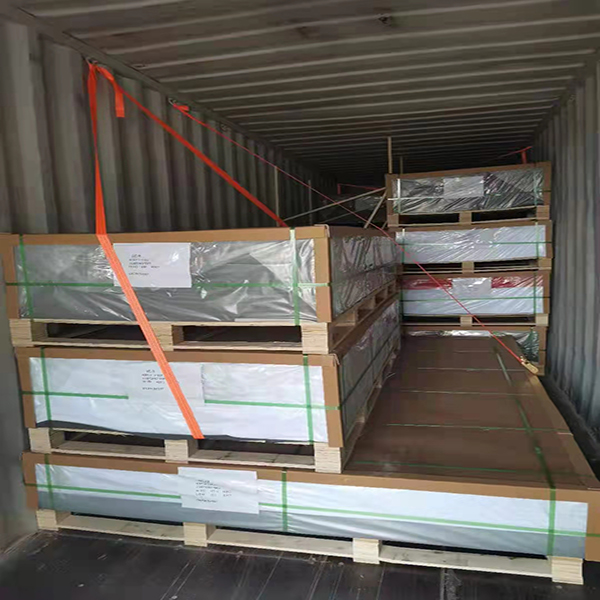
| Packaging | PE protection, kraft paper, reinforced pallets, corner protection and custom labels |
Workshop and Export Packaging
High-gloss sanitary acrylic sheets require clean handling and surface protection throughout storage, conversion and shipment. Sheets should be supported flat, protected from scratches and secured against movement during international transportation.

Protected Export Pallet

Container Loading for Bulk Orders
Why Choose Wallis as Your Sanitary Acrylic Supplier?
Application-based selection: Sheet structure, thickness and dimensions are reviewed against the mold and finished fixture.
Sample-first process: Buyers can evaluate color, gloss, forming and reinforcement before volume orders.
OEM customization: Sanitary colors, dimensions, masking and packaging can be discussed.
Batch specification control: Key requirements can be recorded against approved samples and data sheets.
Export-ready packaging: Protective pallet solutions support international supply.
B2B project support: Suitable for bathtub factories, thermoformers, sanitary brands, importers and distributors.

Global B2B Project Coordination
Customer Cooperation and Repeat Supply
For repeat sanitary projects, Wallis can coordinate approved color references, technical specifications, packaging and delivery schedules. Buyers should retain signed samples from both flat sheet and thermoformed parts because color and gloss may change after processing.

Information Needed for a Fast B2B Quotation
Finished product: bathtub, shower tray, basin, liner or wall panel.
Monolithic PMMA, PMMA/ABS or other required sheet structure.
Required thickness, dimensions, quantity and annual forecast.
White shade, gloss, opacity, color reference and tolerance.
Mold dimensions, cavity depth, draw ratio and minimum formed wall.
Forming machine, heater type, clamping and plug-assist process.
Reinforcement, backing, adhesive, frame and support-base system.
Required sanitary standards, chemical tests and destination market.
Protective film, pallet, labels and delivery schedule.
Sample dimensions, destination port and trade terms.
Discuss Your Bathtub or Shower Project
Frequently Asked Questions
What is sanitary-grade acrylic sheet?
It is a PMMA sheet formulated and produced for thermoformed bathroom fixtures such as bathtubs, shower trays and basins. Important properties include forming response, color, gloss, chemical resistance and surface quality.
Is virgin PMMA always better than PMMA/ABS?
They serve different design and cost targets. Monolithic virgin PMMA offers acrylic properties throughout the thickness, while PMMA/ABS combines an acrylic face with a backing layer. The correct choice depends on forming, reinforcement, repairability and budget.
What thickness is recommended for bathtub shells?
Many projects begin with approximately 3–6mm sheet, but no single gauge fits every tub. Mold depth, draw ratio, wall-thickness target, reinforcement and finished load requirements determine the correct starting thickness.
What thermoforming temperature should be used?
The correct temperature is grade- and process-specific. The existing page references approximately 160–185°C, but production should follow the approved material data, measured sheet temperature and controlled trials.
Does the acrylic shell need reinforcement?
Most large tubs and trays require reinforcement, frames, bases or engineered composite backing. The required system depends on shell geometry, wall thickness, load and applicable product standards.
Is the acrylic sheet waterproof?
PMMA does not absorb water like porous building materials, but a bathtub, shower wall or tray is waterproof only when joints, drain connections, seals, backing and installation are correctly designed.
Will white PMMA yellow over time?
Color stability depends on resin, pigment, stabilizers, heat history, cleaner exposure and UV conditions. Specify the expected environment and approve a grade with suitable aging or color-stability data.
Which cleaners can be used on sanitary acrylic?
Use mild, non-abrasive cleaners approved for acrylic. Avoid abrasive pads and unverified solvents. The finished fixture manufacturer should publish a validated care guide for end users.
Can scratches be repaired?
Minor surface scratches may be sanded and polished by trained personnel. Deep damage, cracks or areas with insufficient remaining thickness require a professional repair assessment.
Can Wallis match a ceramic or brand-specific white?
Custom color matching can be discussed. Buyers should provide a physical master sample and define lighting, gloss, opacity and acceptable color difference before production.
Can the material be used for shower wall panels?
Yes, suitable sheets can be used as decorative wall surfaces. The complete wall assembly requires compatible backing, adhesives, movement allowance and sealed joints.
Are samples available before bulk production?
Yes. Flat-sheet and thermoforming trials are recommended for evaluating color, gloss, thickness, sag, wall distribution, reinforcement adhesion and finished-part appearance.
What determines the minimum order quantity?
MOQ depends on sheet process, structure, thickness, size, color, masking, packaging and whether the specification is standard or customized.
What information should be included in an inquiry?
Provide the finished fixture, sheet structure, gauge, dimensions, color, quantity, mold, forming process, reinforcement, standards, packaging and destination.
Request Virgin White Sanitary Acrylic Samples
Contact Wallis Plastic for virgin white PMMA sheets for bathtub shells, shower trays, tub liners, basins and sanitary panels. Our team supports material selection, custom colors, forming trials, OEM specifications, protective packaging and factory-direct B2B supply.
Request Samples and Factory Quote