Custom Backlit LED Curtain for SEG Fabric and Slim Light Boxes
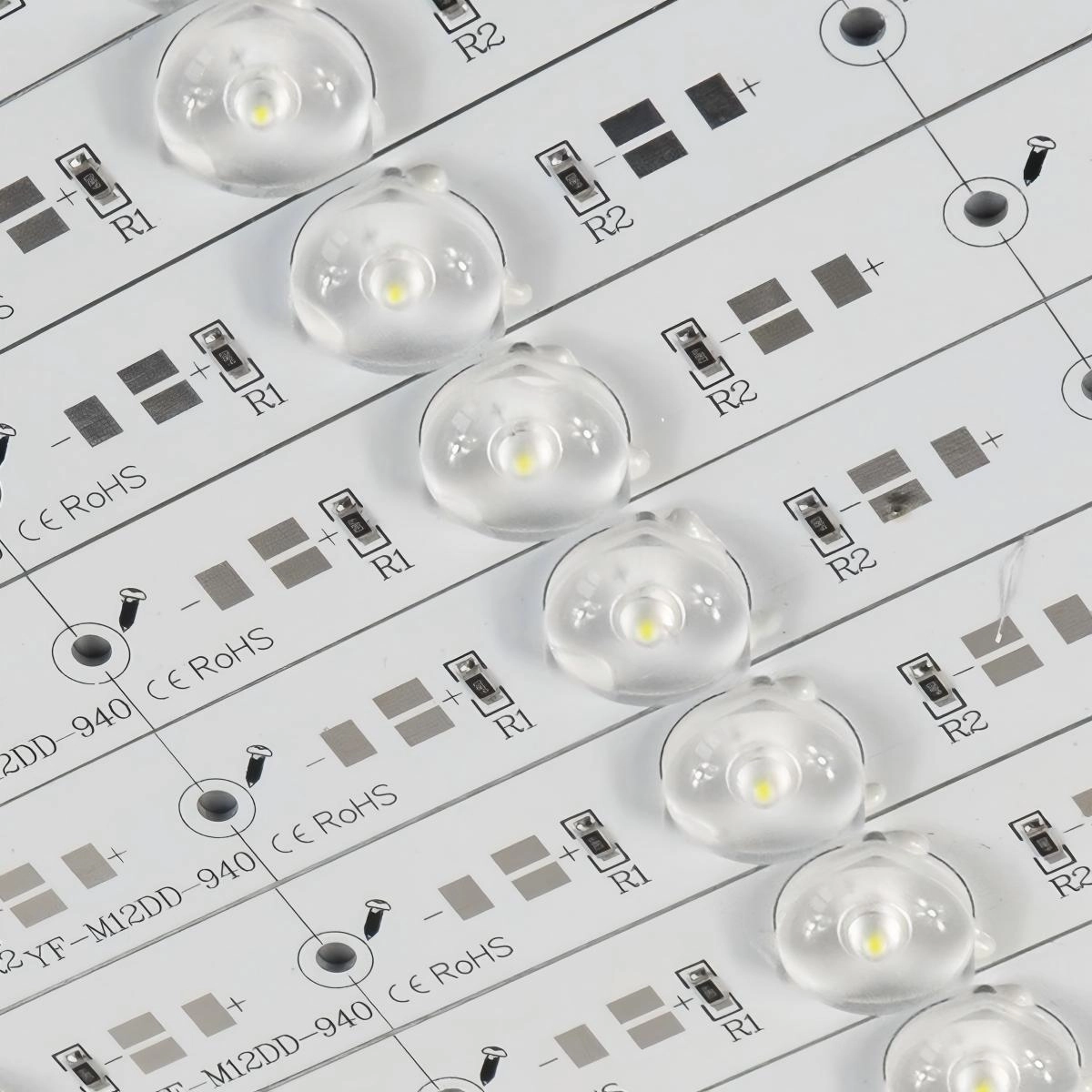
Wallis Backlit LED Curtain is a modular LED backlighting solution designed for SEG fabric light boxes, ultra-thin advertising light boxes, retail displays, exhibition graphics, menu boards and other commercial backlit signage. Using 2835 SMD LED chips with wide-angle PMMA optical lenses, the system distributes light across the display surface to help reduce visible hotspots, shadows and dark areas.
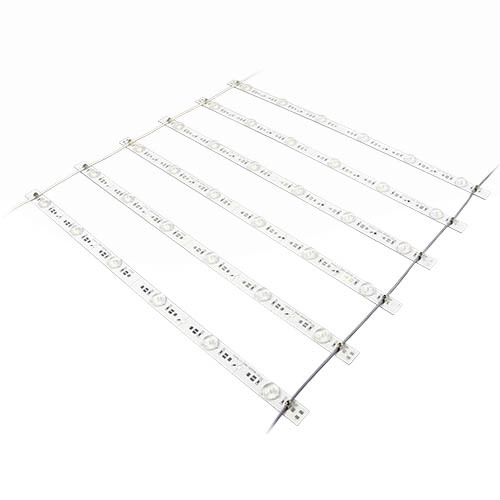
Model A-M12DD-940 uses a 940mm LED bar with 12W power, DC12V input, 6500K color temperature and a 170° beam angle. The modular curtain layout can be adjusted according to light box width, height, profile depth, graphic material and target brightness.
For light box manufacturers, sign makers, exhibition contractors, retail display companies and distributors, Wallis supports customized LED spacing, curtain dimensions, wiring positions, cable or screw connections, magnetic or screw fixing, PCB branding and project-based packaging.
2835 SMD LED chips with PMMA optical lenses
170° wide-angle light distribution
Designed for shallow light boxes from approximately 40mm profile depth
940mm / 12W / DC12V reference model
6500K cool-white standard configuration
Flexible LED curtain layout for different light box sizes
Magnetic or screw installation
OEM PCB logo, wiring and packaging options
Request LED Layout and Project Quote
Backlit LED Curtain Specifications
The following specifications refer to Wallis model A-M12DD-940. For custom light boxes, the final LED quantity, spacing, wiring arrangement and power supply should be selected according to the actual project dimensions and brightness target.
| Item | Specification |
| Product Name | Backlit LED Curtain |
| Model | A-M12DD-940 |
| LED Type | 2835 SMD LED |
| Optical Lens | PMMA wide-angle optical lens |
| Length | 940mm |
| Power | 12W |
| Input Voltage | DC12V |
| Luminous Flux | 500 lm for reference model |
| Color Temperature | 6500K |
| Beam Angle | 170° |
| Recommended Frame Depth | Approximately ≥40mm, subject to graphic material and brightness requirement |
| Reference LED Strip Distance | 80mm; customized according to light box design |
| Connection Method | Cable or screw connection |
| Installation | Magnetic fixing or screw fixing |
| Customization | LED spacing, curtain size, cable position, PCB design, logo and packaging |
| Certification | CE and RoHS |
| Warranty | 2 years |
| Typical Applications | SEG fabric light boxes, advertising light boxes, retail signage, exhibitions and translucent decorative displays |

Designed for shallow and ultra-thin light box structures
```

Modular LED curtain lighting system
What Is a Backlit LED Curtain?
Modular Backlighting for Light Boxes
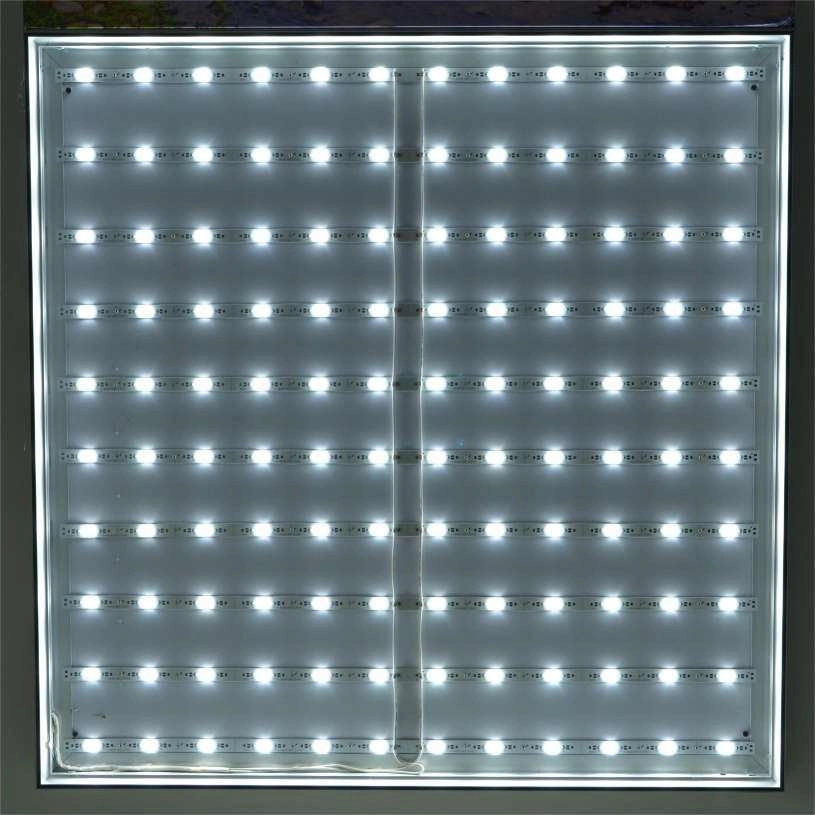
A backlit LED curtain is an array of connected LED bars or strips installed behind a translucent graphic surface. Instead of placing individual LED modules one by one, the bars are arranged as a pre-planned lighting grid or curtain to simplify layout and produce consistent backlighting across a larger surface.
Wallis uses wide-angle optical lenses over the LEDs to spread light laterally as well as forward. This allows the light from adjacent LEDs and strips to overlap, helping produce a more uniform illuminated graphic at relatively shallow box depths.
LED Curtain Is a Backlight, Not an LED Video Screen
In this application, the term LED curtain refers to a lighting system installed behind printed fabric, acrylic or another translucent display face. It is not a pixel-addressable transparent LED display or video curtain. The printed or translucent face provides the visual content, while the LED curtain supplies uniform illumination from behind.
Why It Works Well with SEG Fabric
SEG stands for Silicone Edge Graphics. Printed fabric has a silicone strip sewn around its perimeter and is inserted into channels in an aluminum light box frame. Because the graphic stretches across the complete face of the frame, a uniform full-area backlight is important for maintaining consistent color and brightness.
Key Benefits of Wallis Backlit LED Curtain
Wide 170° Light Distribution
The PMMA optical lens spreads LED output across a wide angle. Overlapping light distribution between adjacent LEDs helps reduce obvious bright points and dark zones behind translucent graphics.
Suitable for Shallow Light Boxes
The reference system can be designed for light box profiles from approximately 40mm deep. Actual minimum depth depends on LED spacing, fabric transmission, diffuser construction, required brightness and acceptable uniformity. A deeper box generally provides more distance for adjacent light beams to blend.
Flexible Modular Layout
LED strips can be arranged according to light box width and height instead of forcing the customer to use one fixed panel size. This is useful for customized retail graphics, exhibitions and architectural display projects with many frame dimensions.
Simplified Installation
Magnetic or screw mounting options allow installers to secure the LED bars to a suitable backing structure. Cable or screw electrical connections can be selected according to frame construction, production workflow and future servicing requirements.
Project-Specific Customization
Wallis can discuss custom LED spacing, bar arrangement, cable location, connector configuration, PCB branding and packaging. This is useful for light box manufacturers that need the same lighting architecture across repeated retail or exhibition programs.

How to Design the LED Curtain Layout
1. Confirm the Light Box Width and Height
Start with the internal illuminated dimensions rather than only the external aluminum-frame dimensions. Wallis uses the usable backlighting area to determine bar length, strip quantity and edge clearance.
2. Confirm the Frame Depth
Frame depth is one of the most important variables for light uniformity. The reference product is suitable for approximately 40mm or deeper profiles, but very shallow boxes may require tighter LED spacing to avoid visible striping or hotspots.
3. Select the LED Strip Spacing
The current reference layout uses approximately 80mm between LED strips. This should not be treated as a universal spacing for every project. Shallower boxes, dense graphics or higher brightness targets may require tighter spacing, while other constructions may permit wider spacing after testing.
4. Evaluate the Graphic and Diffuser Material
SEG backlit fabric, acrylic sheets and diffuser materials have different transmission and diffusion characteristics. The same LED layout can therefore appear different behind two different graphic materials. A sample light box or representative material test is recommended for repeat commercial programs.
5. Determine the Total Electrical Load
For reference model A-M12DD-940, each 940mm bar is rated at 12W. The approximate connected LED load can therefore be calculated as:
Total LED Load = Number of 12W LED Bars × 12W
For example, eight 12W bars represent a nominal LED load of approximately 96W. The power supply should be properly matched to the DC12V system and selected according to the power-supply manufacturer's rated loading, derating, thermal and safety requirements rather than being operated beyond its specification.
6. Confirm Cable Routing and Service Access
Before production, confirm power supply location, cable exit direction, connector access and how individual LED bars will be replaced if service is required. Good wiring planning is especially important for large retail rollouts where installers need a repeatable assembly method.
Send Your Light Box Size for Layout Recommendation
Recommended Applications
SEG Fabric Light Boxes
Backlit SEG frames are widely used in retail environments, exhibitions and branded interiors because the fabric graphic can be changed without replacing the complete frame. A full-area LED curtain provides direct backlighting behind the fabric and can be customized to different frame dimensions.
Retail Advertising Displays
Fashion stores, cosmetic counters, shopping malls, supermarkets and branded showrooms use illuminated graphics to improve visual impact. Modular LED curtain layouts are particularly useful when one retail program contains several display sizes.
Exhibition and Trade Show Displays
Exhibition contractors can integrate LED curtain backlighting into reusable aluminum frames for booth walls, illuminated towers, reception counters and freestanding graphic displays.
Menu Boards and Promotional Light Boxes
Restaurants, cafés, cinemas and service environments can use evenly backlit graphics for menus, promotions and information displays where clear illumination is needed across the full graphic surface.
Architectural and Decorative Backlighting
The modular lighting system can also be evaluated for translucent decorative panels, feature walls and indoor architectural displays where designers need an illuminated surface rather than visible point-source LEDs.

Backlit LED Curtain vs Traditional LED Modules and Ribbon Strips
| Factor | Backlit LED Curtain | Individual LED Modules | LED Ribbon / Tape |
| Layout | Connected bar or curtain arrangement | Individual modules positioned separately | Continuous flexible strip |
| Optics | 170° PMMA lens on reference product | Depends on selected module lens | Often relies primarily on LED package beam angle |
| Installation Planning | Repeated row spacing simplifies large-area layout | Module pitch must be individually planned | Strip spacing and routing must be planned |
| Custom Light Box Size | Flexible bar quantity and layout | Flexible module quantity | Flexible strip length |
| Shallow Light Boxes | Wide lens designed for shallow backlighting applications | Depends strongly on module optics and spacing | May require closer spacing or additional diffusion |
| Best Fit | SEG, retail and repeated custom light box programs | Sign cabinets and flexible point-module layouts | Small custom lighting and linear applications |
The best system depends on light box depth, graphic material, required luminance, installation labor, service access and project cost. A sample test is recommended when replacing an existing lighting system or reducing frame depth.
Single-Sided vs Double-Sided Light Box Backlighting
Single-Sided Light Boxes
In a single-sided light box, the LED curtain can normally be mounted on the rear backing panel and directed toward the front graphic. This configuration is well suited to wall-mounted SEG frames and many retail advertising displays.
Double-Sided Light Boxes
A double-sided freestanding light box requires illumination toward both graphic faces. The internal lighting architecture, frame depth and mounting method therefore differ from a standard rear-mounted single-face system. Buyers should identify double-sided applications during quotation so Wallis can evaluate the required lighting layout.
Installation Guide for Backlit LED Curtain
Step 1: Mark the LED Positions
Mark the planned LED row positions on the rear panel according to the approved spacing drawing. Keep rows parallel so the illuminated field remains consistent across the light box.
Step 2: Fix the LED Bars
Use the specified magnetic or screw fixing method. Ensure the backing structure is suitable for the selected mounting system and that bars are firmly secured before wiring.
Step 3: Complete Electrical Connections
Connect the bars using the specified cable or screw connection method and observe the correct voltage and polarity. Electrical installation should follow applicable local requirements and the specifications of the LED and power supply.
Step 4: Test Before Installing the Graphic
Power the complete system before fitting the fabric or diffuser and confirm that all rows illuminate correctly. Inspect connections and check for abnormal brightness differences.
Step 5: Install the Graphic and Check Uniformity
Install the actual SEG fabric, acrylic or diffuser face and inspect the box from the normal viewing distance. Check for hotspots, dark bands, edge shadows and unexpected brightness variation before approving the final layout.
Quality Control Points for LED Light Box Projects
| Inspection Item | What to Check |
| LED Operation | All LEDs illuminate correctly without failed points |
| Color Appearance | Consistent white appearance across the illuminated field |
| Light Uniformity | No unacceptable bright strips, dark zones or edge shadows behind the final graphic |
| Electrical Connections | Secure cable, connector, polarity and power-supply connections |
| Mechanical Fixing | LED bars remain secure during handling and installation |
| Project Layout | Strip count and spacing match the approved drawing |
| Packaging | LED bars, lenses, cables and connectors are protected against transport damage |
Custom LED Curtain Options for B2B Projects
Customized LED Layout
Wallis can arrange LED strips according to the internal width, height and depth of the light box. Providing a frame drawing helps determine the appropriate layout more accurately.
Customized Cable and Connection Position
Cable direction and connector location can be discussed to match power supply position, assembly sequence and access requirements.
PCB Logo and OEM Branding
OEM buyers can discuss logo or brand identification on the PCB according to production quantity and artwork requirements.
Project Packaging
Packaging can be arranged according to LED bar length, project quantity, shipping method and installation sequence to help simplify receiving and assembly for repeated commercial projects.
Why Choose Wallis for Backlit LED Curtain Projects?
Wallis supports B2B lighting projects for light box manufacturers, sign companies, exhibition builders, retail display contractors and distributors. Instead of supplying only individual LED components, the project can be evaluated according to the complete light box structure.
2835 SMD LED curtain for commercial backlighting
170° PMMA optical lens
Project-specific LED spacing recommendation
Support for SEG fabric and advertising light boxes
Magnetic and screw mounting options
Custom cables, PCB logo and packaging
Sample and project evaluation before volume production
What Information Is Needed for a Custom LED Curtain Quote?
```
| Project Information | What to Provide |
| Light Box Size | Internal illuminated width × height |
| Frame Depth | Distance from LEDs to graphic surface |
| Light Box Type | Single-sided or double-sided |
| Graphic Material | SEG fabric, acrylic, diffuser sheet or other translucent material |
| Brightness Requirement | Target brightness or existing light box reference |
| Installation | Magnetic or screw fixing preference |
| Wiring | Power supply position and cable exit direction |
| Application Environment | Indoor retail, exhibition, permanent installation or other environment |
| Quantity | Sample quantity and expected commercial volume |
| Customization | PCB logo, packaging, connectors or other project requirements |
```

Get a Custom LED Backlighting Solution
Frequently Asked Questions About Backlit LED Curtain
What is a backlit LED curtain used for?
It is used to illuminate SEG fabric graphics, advertising light boxes, retail signage, exhibition displays, menu boards and translucent decorative panels from behind.
Is this an LED video curtain or transparent LED screen?
No. This product is a white-light backlighting system for printed or translucent graphics. It does not display video or individual RGB pixels like a transparent LED display screen.
Is the LED curtain suitable for SEG fabric light boxes?
Yes. SEG fabric light boxes are one of the main applications because the wide-angle LED lenses can provide full-area illumination behind translucent fabric graphics.
What is the minimum light box depth?
The reference product is designed for approximately 40mm or deeper profiles. Actual minimum depth depends on LED spacing, fabric transmission, diffuser construction and the required uniformity, so very shallow projects should be tested before production.
What spacing should be used between LED strips?
The reference spacing is approximately 80mm. However, the optimum distance depends on frame depth, graphic material and brightness target. Smaller spacing can increase LED density and may improve uniformity in shallow boxes.
Can the LED curtain be cut?
The current product design allows cutting at specified positions every three LEDs. Cutting should only be carried out at the designated cutting points so the circuit remains correctly connected.
What voltage does model A-M12DD-940 use?
Model A-M12DD-940 is specified for DC12V input. The power supply must match the total connected load and follow the electrical specifications for the final project.
How do I calculate the required power supply?
First calculate the nominal LED load by multiplying the number of A-M12DD-940 bars by 12W. Then select a suitable DC12V power supply in accordance with the power-supply manufacturer's rated loading, derating and installation requirements.
Can Wallis design the LED layout for my light box?
Yes. Provide the internal light box width and height, frame depth, graphic material, single- or double-sided construction and brightness requirement. Wallis can discuss a suitable LED arrangement for the project.
Can you customize the LED curtain size?
Yes. The number of LED bars, spacing, overall layout, cable positions and connection method can be customized according to the final light box structure.
Can you print our logo on the PCB?
Yes. PCB logo or brand printing can be discussed for OEM orders. Provide the logo artwork and expected production quantity when requesting a quotation.
Can the LED bars be installed with magnets?
Yes. Magnetic fixing and screw fixing are available for the reference product. The correct installation method depends on the light box backing material and mechanical design.
What color temperature is available?
The reference A-M12DD-940 specification uses 6500K cool white. If a project requires another visual appearance, send the required color temperature for feasibility confirmation.
Is this LED curtain suitable for outdoor light boxes?
The current reference product is primarily presented for indoor commercial light box applications. Outdoor projects should not assume weather resistance without confirming the required IP protection, enclosure, connectors, power supply and environmental specifications.
Is it suitable for double-sided light boxes?
A double-sided light box requires a different lighting arrangement from a conventional rear-mounted single-sided box. Send the frame cross-section and dimensions so the lighting structure can be evaluated before ordering.
What certifications and warranty are available?
The current Wallis product specification lists CE and RoHS certification and a two-year warranty. Buyers should confirm the exact certificate scope and warranty conditions for the ordered model and destination market.
Can I test a sample before a bulk order?
Contact Wallis to discuss sample availability. For new light box designs, testing with the actual frame depth, graphic fabric, diffuser and power supply is recommended before volume production.
What information should I send for a quotation?
Send the light box width, height, profile depth, single- or double-sided structure, graphic material, brightness requirement, installation method, power supply location, quantity and any OEM branding or packaging requirements.
Request a Custom Backlit LED Curtain Solution
Send Wallis your light box drawing, internal dimensions, frame depth, SEG fabric or diffuser information and expected quantity. Our team can discuss the LED spacing, number of bars, connection method and suitable backlighting layout for your retail, exhibition or advertising light box project.
Get LED Layout, Sample and Factory Quote