Custom Frameless Edge-Lit LED Light Panel
Wallis frameless edge-lit LED light panel is a slim illuminated panel designed for retail displays, signage, shop interiors, wall lighting, ceiling features, exhibition displays, decorative lighting and customized OEM backlighting projects.
The panel uses edge-mounted LEDs together with a processed acrylic light guide panel to redirect light across a larger illuminated surface. The current Wallis design has an approximately 14mm finished thickness, operates on DC12V or DC24V, supports white or RGB lighting, and can be manufactured in rectangular or customized shapes.
Precision laser-dot processing in the PMMA light guide plate helps control light extraction across the illuminated area. Combined with the reflector, diffuser, LEDs and panel structure, this supports more uniform visible illumination while maintaining a shallow installation profile.
For B2B projects, buyers should specify the finished dimensions, illuminated area, panel shape, required brightness, uniformity target, light color, CRI, voltage, power, cable position, installation method, indoor or outdoor environment, quantity and electrical certification requirements before quotation.

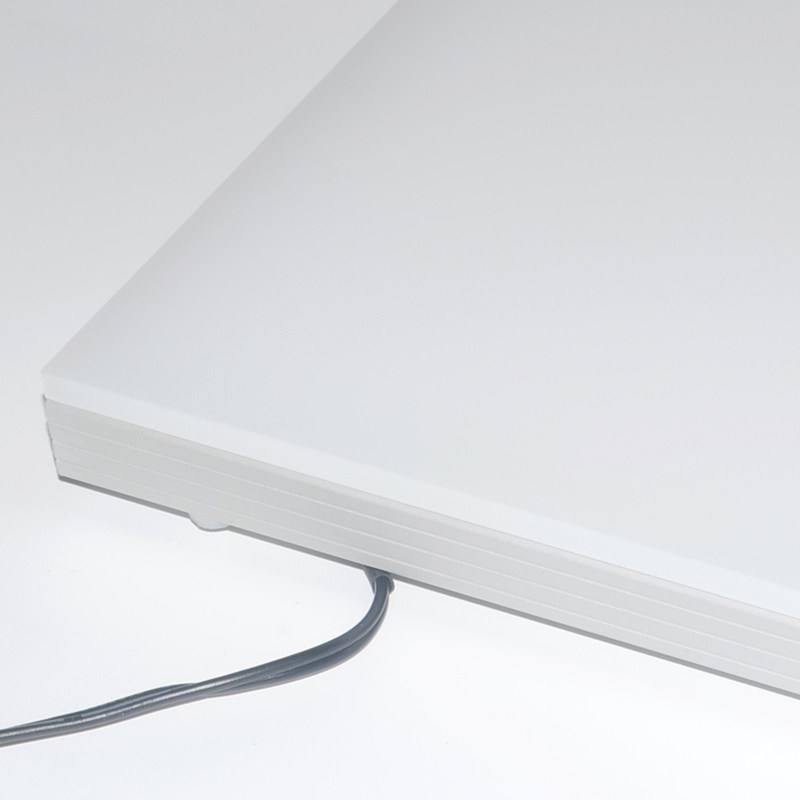
Panel Edge Detail

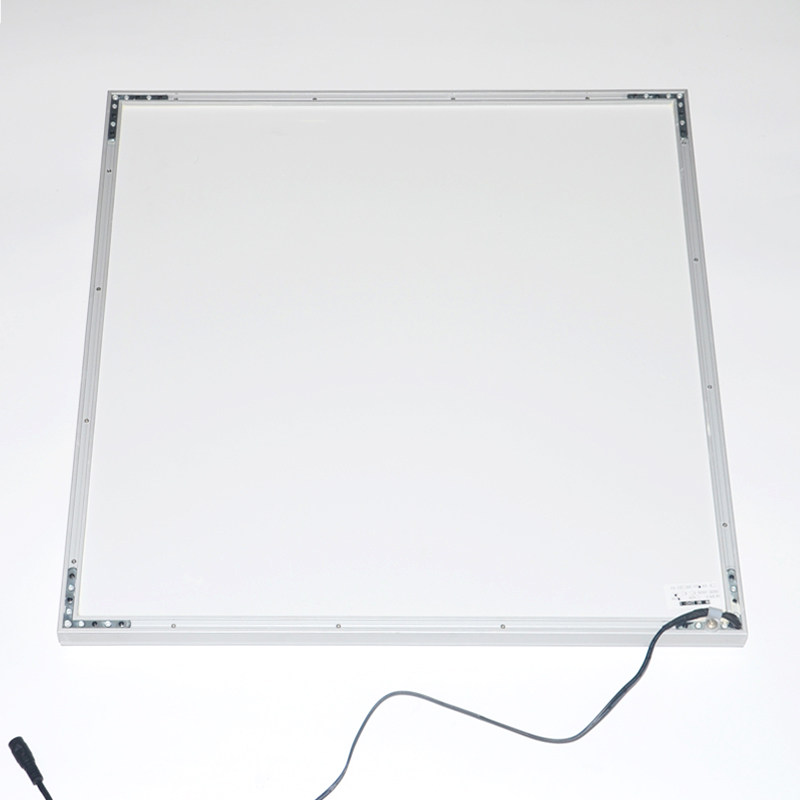
Backside Structure

Illuminated Panel Overview
Frameless LED Light Panel Specifications
| Light Source | LEDs | Installation | Wall Mounted or Table Display |
| Shape | Rectangle or Special Shape | Model | WLS-AF3 |
| Voltage | DC12V / DC24V | Brand | Wallis |
| Finished Thickness | 14mm | Visual Surface | Single Side |
| Frame Color | Silver / Customized | Light Color | White or RGB |
Current FAQ information: the existing Wallis page additionally describes pure white 6500K as a commonly supplied white-light option and states that silver or black frame colors can be discussed. Because these details are not included in the main specification table, confirm the selected CCT and frame finish on the final quotation.
Engineering-data recommendation: the current page does not publish measured luminance, illuminance, luminous efficacy, CRI, lighting uniformity, power consumption, LED chip model, LED pitch, IP rating, dimming protocol, driver specification, maximum panel dimensions or electrical certification for this exact product. These values should be added after factory verification.
How a Frameless Edge-Lit LED Panel Works
LED Light Enters from the Panel Edge
LEDs are positioned along one or more edges of the optical panel. Light enters the acrylic through the processed edge and travels internally across the PMMA light guide plate.
PMMA Light Guide Plate Carries the Light
The PMMA light guide plate, also called an LGP, uses internal reflection to carry LED light away from the input edge. Panel dimensions, acrylic thickness, LED position and edge finish all influence the optical result.
Laser Dots Extract Light Across the Surface
A precision dot pattern interrupts the internally guided light and redirects controlled portions toward the illuminated face. Dot spacing and density can be adjusted according to distance from the LED source to help reduce obvious bright edges and dark areas.
Reflector Redirects Backward Light
A reflective layer behind the light guide redirects light that would otherwise escape from the rear of the panel toward the intended illuminated surface.
Diffuser Blends the Visible Output
A diffuser can help blend extracted light and reduce the visibility of individual optical dots, LED hot spots or bright bands. Final uniformity should be evaluated as a complete LED-LGP-reflector-diffuser assembly.

Why Laser Dot Design Matters for Uniform Illumination
Dot Density Changes Across the Panel
Light intensity naturally changes as it travels farther from the LED input edge. A customized optical pattern can use different extraction density across the PMMA surface to compensate for this change.
LED Pitch Affects Bright Bands
LED spacing and package dimensions can influence visible brightness variation near the input edge. The optical design should therefore be developed together with the actual LED strip or module specification.
Larger Panels Need Different Optical Design
A large-format panel requires light to travel farther than a small panel. Simply enlarging the dimensions without redesigning the optical extraction pattern can reduce uniformity.
Optical Performance Must Be Measured
Terms such as “high brightness” and “uniform lighting” are useful descriptions, but engineering buyers should request measured luminance or illuminance and a defined uniformity calculation when those values are important to the project.
14mm Slim Frameless Construction
The current Wallis frameless LED panel is listed with a 14mm finished thickness. The shallow profile is useful where the buyer wants an illuminated surface without the depth of a conventional fluorescent or deep LED light box.
Minimal Visible Front Border
The frameless concept reduces or removes the visible front border so the illuminated area integrates more cleanly into retail fixtures, walls, cabinets, decorative structures and custom displays.
Single-Sided Visual Surface
The current product specification identifies the visible illuminated surface as single-sided. Buyers requiring double-sided light output should request a separate optical and mechanical evaluation.
Custom Shapes
Rectangular and special-shape panels can be discussed. For custom geometry, supply CAD dimensions showing the illuminated outline, holes, notches, cable exits, fixing locations and visible edges.
White & RGB LED Lighting Options
White LED Light
White light is suitable for retail displays, signage, ceiling features, product presentation and architectural applications where clean general illumination is required.
6500K White Reference
The current Wallis FAQ refers to pure white 6500K as a commonly supplied option. If a project requires another color temperature, such as warm or neutral white, confirm availability before production rather than assuming it is a standard option.
RGB Lighting
RGB lighting is listed as an available option for decorative, retail and atmospheric lighting. Control method, controller type, wiring and power requirements should be confirmed as part of the complete system.
CRI Should Be Specified for Retail Projects
Color Rendering Index affects how accurately illuminated merchandise, graphics and interior finishes appear. The current product page does not publish a CRI value, so projects requiring CRI 80, CRI 90 or another target should request a verified configuration.
DC12V & DC24V LED Panel Power Options
Wallis currently lists DC12V and DC24V as operating-voltage options. The appropriate voltage should be selected together with panel dimensions, LED strip specification, total power and cable length.
Power Consumption
Total wattage is not currently published. Buyers should request watts per panel or watts per meter together with the final LED specification so the power supply can be sized correctly.
Power Supply Selection
The power supply should match the selected voltage, LED load, control method and installation environment. Clarify whether Wallis supplies the driver or whether the buyer integrates its own approved power supply.
Dimming & Control
The current page does not publish PWM, 0–10V, DALI, TRIAC or other dimming compatibility. If dimming or RGB control is required, include the protocol and controller specification in the inquiry.
Applications of Frameless LED Light Panels
Backlighting
Thin edge-lit panels can be integrated behind translucent acrylic, decorative graphics, signage faces and illuminated surfaces where a shallow backlight structure is required.
Ceiling Lighting Features
Customized panels can be integrated into decorative ceiling lighting and architectural features. Mounting, ventilation, driver access and applicable building requirements should be considered during design.

Backlighting

Ceiling Lighting
Frameless LED Panels for Retail Displays
Retail Shelves & Counters
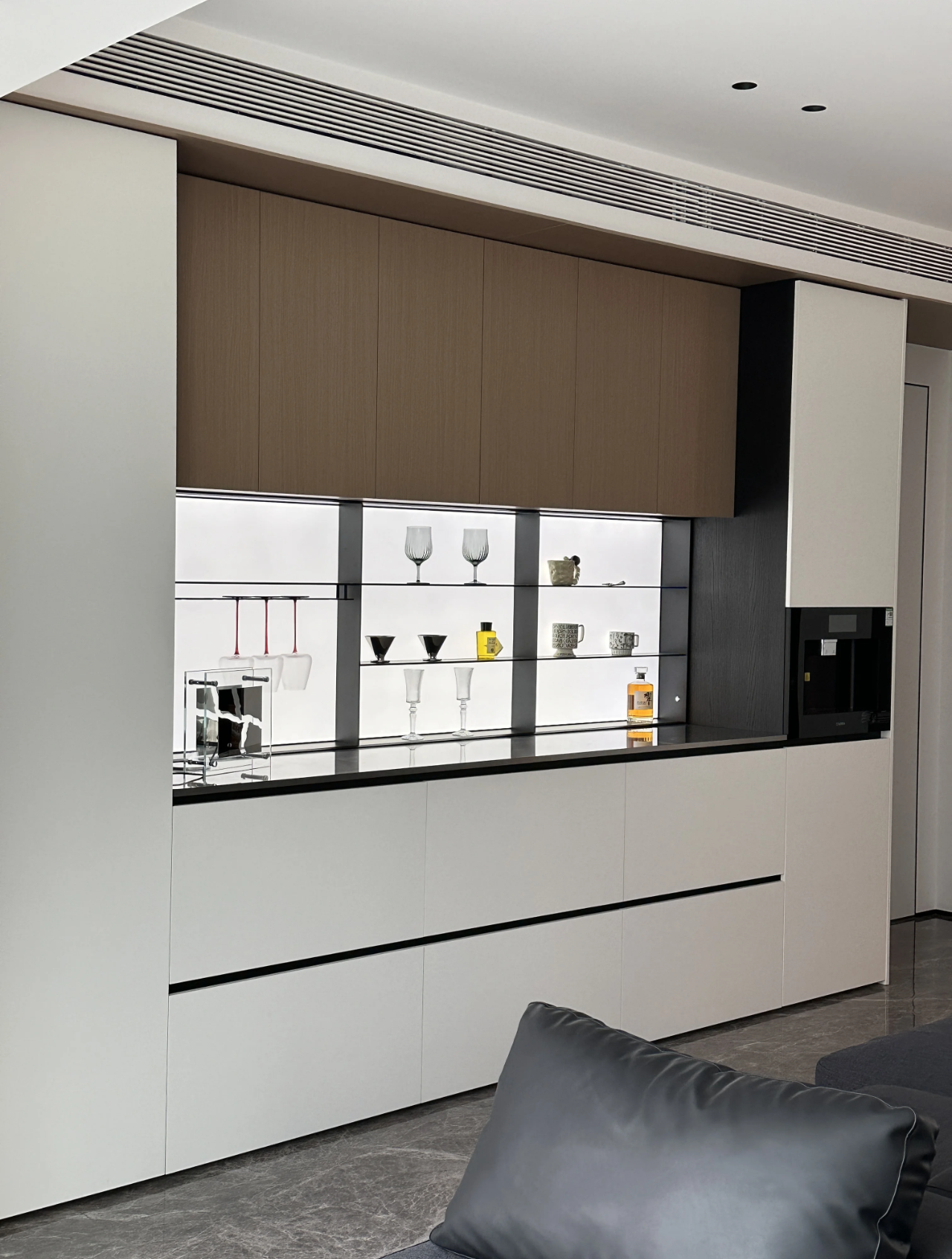
A thin illuminated surface can be integrated into counters, shelves and product-display fixtures where a deep conventional light box would occupy too much space.
Brand Displays
Frameless light panels can be positioned behind logos, translucent graphics or branded surfaces to create illuminated merchandising elements.
Cosmetic & Luxury Retail
Uniformity and CRI are especially important where products such as cosmetics, jewelry, fashion accessories or premium packaging are displayed. Buyers should specify measurable lighting requirements for these projects.
Kiosks & Exhibition Fixtures
Customized shallow-profile panels can be integrated into temporary or permanent displays where space, wiring position and fixture geometry are predetermined.

Retail Backlighting

Shop Display Lighting
Frameless vs Framed LED Light Panels
Frameless Panel
A frameless panel minimizes the visible front border and works well when the surrounding fixture, furniture or installation structure already supports and protects the illuminated panel.
Framed Panel
A conventional framed LED panel may be preferable when the illuminated product requires greater edge protection, an integrated finished border or simpler stand-alone mounting.
Select by Fixture Design
The choice should be based on visible-edge requirements, mounting depth, handling risk, installation method, illuminated area and the surrounding enclosure rather than appearance alone.
Wall-Mounted & Table Display Installation
Wall-Mounted Installation
The current Wallis specification supports wall mounting. Buyers should provide the installation orientation, fixing position, cable exit, wall structure and required service access.
Table or Fixture Integration
Panels can also be used in table displays or custom fixtures. The supporting surface should avoid excessive pressure or twisting that could affect the light guide plate and optical assembly.
Cable Exit Position
Confirm whether the cable exits from the side, rear or another customized position so the panel can be integrated cleanly into the final fixture.
Indoor vs Outdoor Installation
The current page does not publish an IP rating or waterproof assembly specification. Outdoor, humid or wet-location projects therefore require separate confirmation of LED sealing, cable entry, connectors, power supply enclosure and complete-system protection.
Optical & Electrical Data B2B Buyers Should Request
Luminance or Illuminance
Request a measured brightness value for the actual panel dimensions and LED configuration rather than relying only on the phrase “high brightness.”
Uniformity
Define the required uniformity percentage and measurement method. Uniformity is especially important for graphics, luxury displays and large illuminated surfaces.
CRI
High-CRI LEDs may be required for color-sensitive merchandise and architectural applications. The exact CRI should be documented rather than assumed from the white-light color temperature.
CCT
Specify the required correlated color temperature in Kelvin. The current FAQ references 6500K, while other CCT options require confirmation.
Power Consumption
Request total watts per finished panel together with the operating voltage and power-supply rating.
IP Rating
If the installation involves dust, humidity or moisture, define the required ingress-protection rating for the complete assembled system.
Electrical Certification
Projects requiring CE, UL, RoHS or another electrical or market-specific standard should request documentation for the exact LED, power supply and assembled product configuration.
Warranty
The current product page does not publish formal warranty terms for this exact panel. Warranty period, LED failure criteria, brightness depreciation and replacement conditions should be documented when required.
Sustainability & Material Considerations
Energy-efficient LED systems can reduce operating electricity compared with older lighting technologies, but the actual energy benefit depends on power consumption, lighting output, operating hours and control strategy.
PMMA Light Guide Material
PMMA is used as the optical light guide material in Wallis edge-lit products. Recycling potential depends on material grade, contamination, bonded layers and local processing infrastructure.
Avoid Unsupported Carbon Claims
The original page refers to reduced carbon emissions. Without a lifecycle calculation or verified comparison baseline, it is safer to state that lower operating power can support energy-reduction goals rather than claiming a specific carbon reduction.
Design for Replaceable Components
For long-term projects, buyers can ask whether LED strips, drivers, controllers or cables can be serviced or replaced separately from the optical panel.
OEM & Custom Frameless LED Panel Manufacturing
Wallis supports customized LED light panel projects involving acrylic processing, laser-dot design, cutting, panel assembly, wiring, inspection and export packaging.
Custom Panel Dimensions
Finished size can be produced according to project requirements and manufacturing feasibility. Supply the outside dimensions and illuminated-area dimensions separately.
Special Shapes
Customized contours can be evaluated from drawings. Optical uniformity and LED positioning should be reviewed together with unusual panel geometry.
Custom LED Layout
LED placement should be matched to panel size, brightness target, uniformity requirement and light-guide design rather than selected independently.
Cable & Connector Customization
Cable length, connector type and exit position can be included in the project specification to simplify final assembly.
Custom Packaging
Packaging should protect the acrylic surface, panel edges, electrical components and connectors from scratching, impact and compression during international transportation.
Workshop & Export Packaging
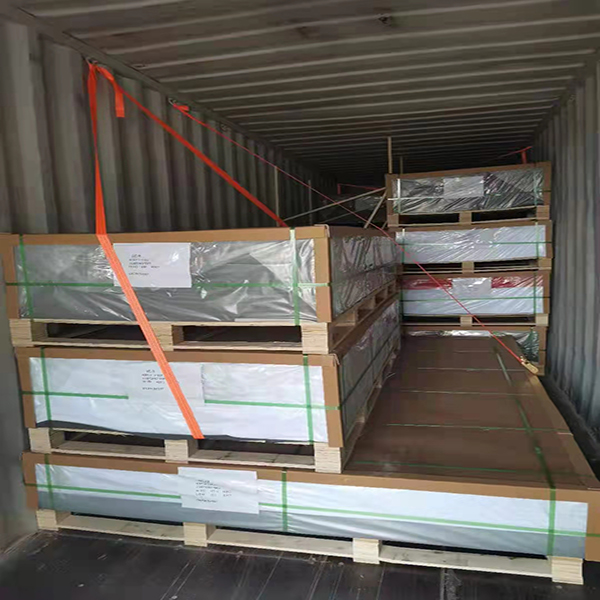
Frameless LED panels require careful export protection because both the optical surface and electrical assembly can be damaged by scratching, impact or excessive pallet pressure.

Export Pallet Packaging

Container Loading
Quality Control for Frameless LED Light Panels
Finished length and width
14mm finished thickness
Custom shape and drawing conformity
PMMA LGP surface condition
Laser-dot pattern consistency
LED alignment
Visible bright-edge inspection
Dark-area inspection
Lighting uniformity where specified
White-light CCT where specified
CRI where specified
RGB function where specified
DC12V / DC24V electrical check
Power consumption where specified
Cable length and exit position
Connector type
Frame / edge finish
Mounting-point dimensions
Surface cleaning
Protective packaging
Uniformity Inspection
Inspect the complete illuminated surface rather than checking only the center brightness. For specification-driven projects, use an agreed measurement grid and uniformity formula.
Color Consistency
Multiple panels installed side by side should be checked for visible CCT or color differences where appearance consistency is important.
Burn-In Test
Buyers requiring a defined burn-in period should specify the test duration and acceptance criteria. The current product page does not publish a standard burn-in protocol.
Golden Sample
For repeat OEM projects, retain an approved sample together with drawings, LED specification, optical requirements, cable position and packaging standard.
How to Choose a Frameless LED Light Panel
Confirm Finished Size & Illuminated Area
Outside dimensions and visible illuminated dimensions may not be identical. Supply both values when the panel must fit an existing fixture.
Define the Brightness Target
State the required luminance or illuminance and measurement distance rather than simply requesting a “bright” panel.
Define Uniformity
Retail graphics and large-area illumination generally benefit from a clearly defined uniformity target.
Choose White or RGB
Specify white-light CCT and CRI, or define RGB controller and operating mode when colored lighting is required.
Select DC12V or DC24V
Confirm the voltage together with total power, cable length and power-supply location.
Confirm Mounting & Cable Position
Provide wall-mount, table-display or fixture drawings and show the desired cable exit and connector location.
Define the Installation Environment
State whether the panel is used indoors, in humid conditions or outdoors so the electrical enclosure and protection requirements can be reviewed.
MOQ, Samples & Lead Time
MOQ: 1 Piece
The current Wallis FAQ lists a minimum order quantity of 1 piece, allowing buyers to evaluate a prototype or customized sample before a larger project.
Sample Lead Time: Approximately 3–7 Working Days
The current page states approximately 3–7 working days for samples after payment. Final timing depends on dimensions, shape, LED configuration and customization complexity.
Mass Production: Approximately 2–5 Weeks
The current Wallis FAQ lists approximately 2–5 weeks for mass production. Confirm the actual schedule against order quantity, optical design, components, assembly and packaging.
Global B2B LED Lighting Projects
For international projects, provide destination market, quantity, dimensions, lighting requirements, voltage, certification requirements, installation environment and packaging standard so the complete panel configuration can be reviewed before production.

FAQ About Frameless Edge-Lit LED Light Panels
What is a frameless LED light panel?
It is a slim illuminated panel designed with minimal visible front framing. LEDs inject light into a light guide plate from the edges, and the optical structure distributes the light across the visible surface.
Is a frameless LED light panel the same as a rimless LED panel?
In this product category, frameless and rimless are commonly used to describe panels with little or no visible front border.
What is the Wallis model number?
The current specification lists model WLS-AF3.
What is the finished thickness?
The current Wallis specification lists a 14mm finished panel thickness.
What voltage does the panel use?
DC12V and DC24V are currently listed.
Is the panel single-sided or double-sided?
The current specification lists a single-sided visual surface.
What light colors are available?
The current specification lists white and RGB. The existing FAQ also references 6500K pure white as a commonly supplied white-light option.
Can warm white or neutral white be supplied?
Other white-light CCT options are not clearly published on this exact product page. Provide the required Kelvin value for confirmation.
Does Wallis publish a CRI value?
No CRI value is currently published for this exact product. Buyers requiring color-sensitive lighting should specify the target CRI.
What is the brightness of the panel?
The current product page describes high brightness but does not provide a measured luminance or illuminance value. Request data for the selected dimensions and LED configuration.
What is the lighting uniformity?
A numerical uniformity specification is not currently published. Define the required percentage and measurement method for technical projects.
How does the light guide plate create even illumination?
Light enters the PMMA from the LED edges and travels through the acrylic. Laser dots redirect portions of that light toward the visible surface, with the extraction pattern adjusted across the panel.
Can Wallis customize the panel size?
Yes. The current product is listed with customized dimensions.
Can Wallis make special shapes?
Yes. Rectangle and special-shape panels can be reviewed according to the project drawing.
Can the frame color be customized?
The main table lists silver and customized frame colors, while the current FAQ also references black. Confirm the exact finish on the quotation.
Can RGB lighting be controlled?
RGB is currently listed, but the controller, protocol and dimming method are not published. Specify the required control system during inquiry.
Is the panel dimmable?
Dimming compatibility is not published for this exact SKU. Confirm PWM, 0–10V, DALI or another required system before ordering.
Is the panel waterproof?
No IP rating is published on the current product page. Indoor use is the safer default unless Wallis confirms a sealed assembly for the required environment.
Can it be wall mounted?
Yes. Wall mounting is currently listed as an installation option.
Can it be used as a table display?
Yes. Table-display installation is also listed in the current specification.
Is it suitable for retail displays?
Yes. Retail backlighting and shop displays are current Wallis applications. Specify brightness and CRI when merchandise color appearance is important.
Can it be used for signage?
Yes. Edge-lit panels can be integrated into illuminated graphics, logos and custom sign assemblies according to the required structure.
How long does the LED panel last?
The current Wallis FAQ states that strong optical performance can be maintained for more than five years under normal indoor conditions. Actual service life depends on LED quality, operating hours, thermal management, driver quality and environment; a formal rated LED lifetime is not currently published.
What is the MOQ?
The current Wallis FAQ lists an MOQ of one piece.
What is the sample lead time?
The current Wallis page states approximately 3–7 working days after payment for samples.
What is the bulk production lead time?
The current FAQ states approximately 2–5 weeks depending on quantity and customization requirements.
What drawing files should I provide?
Provide a dimensioned drawing showing outside size, illuminated area, holes, notches, fixing points and cable exit. CAD formats such as DXF or DWG are useful for customized mechanical processing when available.
What information should I provide for a quotation?
Provide finished dimensions, illuminated area, shape, quantity, DC12V or DC24V, white-light CCT or RGB requirement, brightness target, uniformity target, CRI, cable position, installation method, indoor or outdoor environment, dimming requirement, certifications, packaging and delivery destination.
Request Custom Frameless LED Light Panel Samples & Factory Pricing
Looking for a reliable frameless edge-lit LED light panel manufacturer for retail displays, signage, ceiling lighting or OEM backlighting? Send Wallis your drawing, dimensions, voltage, lighting requirements, installation method and quantity for technical review, prototype production and B2B factory pricing.