PVC Core Sheet for Card Making and RFID Inlay Production
Wallis PVC core sheet is a rigid card substrate developed for professional plastic card manufacturing, printed card bodies, PVC inlay production, and contactless RFID card structures. Used as a central structural layer, it supports card flatness, mechanical strength, controlled flexibility, printing performance, and stable heat lamination.
The material is intended for B2B card manufacturers producing ID cards, bank cards, SIM cards, access cards, hotel key cards, membership cards, gift cards, transport cards, and RFID smart cards. Thickness, sheet dimensions, color, Vicat grade, surface dyne, and surface roughness can be matched to the card construction and downstream equipment.
For project evaluation, buyers should specify the finished card type, total card thickness, printing process, overlay or inlay structure, lamination conditions, and required sheet format. Wallis can then prepare a suitable sample for printing, lamination, punching, and finished-card testing before bulk production.
PVC Core Sheet Technical Specifications
The following values are based on the current product specification supplied for this page. Final requirements should be confirmed by product grade, approved sample, quotation, and batch documentation before mass production.
| Test Item | Unit | Specified Result | Relevance to Card Production |
| Thickness | mm | 0.10–0.50 | Selected according to the printed core, inlay, overlay layers, and target finished-card thickness. |
| Density | g/cm³ | 1.42 ± 0.05 | Supports consistent sheet weight, rigidity, punching behavior, and laminated card structure. |
| Tensile Strength | Horizontal | MPa | ≥44 | Helps the core resist stretching and mechanical stress during converting and card use. |
| Vertical | ≥46 |
| Vicat Softening Point | Ordinary Card Grade | °C | 78 ± 2 | General printed and laminated PVC card structures. |
| Bank Card Grade | 74 ± 2 | Grade selection should be matched to the approved bank-card construction and lamination cycle. |
| SIM Card Grade | 90 ± 2 | Higher thermal grade for SIM card body processing, subject to project validation. |
| Surface Dyne | dynes/cm | ≥34 | Supports wetting and ink adhesion; printing tests remain necessary for the selected ink system. |
| Surface Roughness | Ra | μm | 0.7–1.8 | Influences sheet feeding, ink transfer, lamination contact, and final surface uniformity. |
| Rz | 4.0–12 |
What Is a PVC Core Sheet?
A PVC core sheet is the structural substrate positioned between the protective overlays of a laminated plastic card. Depending on the design, the core may be printed directly, used as a non-printed middle layer, or converted into a plain or electronic inlay that accommodates an antenna, chip module, or other functional component.
Unlike an overlay film, which primarily protects the card surface, the core sheet contributes most of the card body’s opacity, stiffness, flatness, and dimensional stability. Consistent material properties are therefore important for registration, lamination, punching, personalization, and automated card handling.

PVC Core Sheet Material

Card-Grade PVC Substrate
PVC Core Sheet Grades by Card Application
Card projects should not select PVC core material by thickness alone. The suitable grade also depends on thermal response, printing method, embedded electronics, embossing or personalization process, card life, and the complete lamination stack.
| Card Application | Typical Core Requirement | Selection Focus | Recommended Validation |
| Standard ID, Membership and Gift Cards | Printable or non-printed white PVC core with balanced rigidity and lamination response. | Thickness, whiteness, flatness, print adhesion, die-cutting, and finished-card flexibility. | Print, laminate, punch, and bend-test representative cards. |
| Bank and Financial Cards | Controlled card-grade PVC matched to the approved overlay, magnetic stripe, chip, and personalization process. | Batch uniformity, lamination window, embossing or module embedding, and long-term card handling. | Approve the complete card construction, not the core sheet in isolation. |
| RFID and Contactless Prelam Inlays | Core or base sheet compatible with antenna and chip placement plus graded lamination. | Vicat behavior, sheet flatness, chip protection, antenna position, and bond integrity. | RF performance, cross-section, peel, lamination, and punching tests. |
| SIM and Telecom Cards | Higher-temperature grade where required by the approved SIM card body process. | Thermal stability, punching accuracy, module cavity processing, and card-body strength. | Thermal cycle, punch, module assembly, and dimensional checks. |
Ordinary Card Core Sheet
General-purpose grades are suitable for ID cards, membership cards, hotel key cards, loyalty cards, and promotional cards when the selected sheet is compatible with the printer, overlay, laminator, and target card construction.
Bank Card Core Sheet
Financial card production requires a tightly controlled combination of core sheets, overlays, magnetic stripe materials, chip modules, printing, lamination, and personalization. Buyers should provide the full layer structure and approval criteria when requesting a bank-card grade.
RFID Prelam and Inlay Core Sheet
Contactless card inlays place electronic components inside the card body. A suitable PVC base sheet must laminate without shifting the antenna or applying excessive thermal and mechanical stress to the chip area. Trial production should confirm both card mechanics and RF performance.
SIM Card Body Sheet
SIM card materials may require a different thermal grade and converting behavior from ordinary PVC cards. Sheet thickness, Vicat value, surface properties, punching layout, module cavity, and downstream assembly should be specified before sample preparation.

How PVC Core Sheet Works in a Laminated Card Structure
| Layer | Primary Function | Key Compatibility Check |
| Top Overlay | Protects printing and may carry a magnetic stripe, hologram, or specialty coating. | Bonding, surface finish, magnetic stripe position, and personalization requirements. |
| Printed PVC Core | Carries graphics, text, security artwork, logos, and variable design elements. | Ink system, surface dyne, roughness, color consistency, and registration. |
| Middle Core or RFID Inlay | Builds card thickness and may contain an antenna and chip. | Vicat grade, electronics protection, flatness, and layer thickness calculation. |
| Reverse Printed Core | Provides reverse-side design and additional structural thickness. | Print-to-print alignment, color, and lamination balance. |
| Bottom Overlay | Seals and protects the reverse surface. | Bond strength, surface texture, and finished-card flatness. |
Key Performance Benefits for Card Manufacturers
Controlled Thickness, Density and Flatness
Stable sheet geometry helps maintain the intended card stack and supports consistent feeding, printing, lamination, punching, and finished-card thickness. For high-volume production, buyers should agree on tolerances and sampling methods in the approved specification.
Surface Dyne and Printing Performance
Surface dyne influences how printing inks wet the PVC surface, while roughness affects transfer and contact. The listed dyne value provides a selection reference, but the final ink, curing method, press settings, storage history, and surface treatment should be verified on production equipment.
Grade-Specific Vicat Performance
Vicat softening behavior influences how the sheet responds during heat and pressure lamination. Different card structures may require different grades, particularly when antennas, chips, magnetic stripes, SIM modules, or specialty overlays are involved.
Reliable Punching and Die-Cutting
Balanced strength and flexibility help reduce cracking, excessive burrs, deformation, and inconsistent card edges. Tool condition, cutting direction, sheet conditioning, and actual production speed also affect converting performance.

Printed PVC Card Applications

Smart Card and Inlay Applications
Printing, Lamination and Converting Compatibility
Printing Compatibility
PVC core sheets can be specified for offset printing, silk-screen printing, UV printing, or use as a non-printed middle layer. Compatibility depends on the exact sheet surface and ink system. Buyers should provide the printing process and conduct adhesion, color, curing, and over-lamination tests.
Lamination Compatibility
The core sheet may be combined with PVC printing sheets, uncoated overlays, coated overlays, magnetic stripe overlays, or prelam inlays. Temperature, pressure, dwell time, cooling, stack symmetry, and release materials should be optimized for the complete construction.
RFID and Chip Card Converting
For contactless cards, the material should be evaluated with the actual antenna geometry, chip position, cavity design, prelam thickness, and card layout. RF reading distance, resonance, chip survival, lamination flatness, and punching registration should be confirmed before volume production.
Punching, Milling and Module Embedding
Card punching, module cavity milling, hot-melt embedding, embossing, and other finishing operations should be tested on the approved laminated card. Core-sheet results alone cannot predict every finished-card process.
Quality Control and B2B Acceptance Criteria
A clear acceptance plan reduces disputes and repeat testing. The exact limits should be agreed in the purchase specification because they may vary by grade, thickness, sheet format, printing method, and card program.
| Inspection Area | Recommended Check | Buyer Decision |
| Dimensions | Thickness, sheet length and width, squareness, edge quality, and stack alignment. | Confirm tolerances and measuring method on the approved specification. |
| Surface | Color, contamination, scratches, pinholes, roughness, dyne level, and print-side identification. | Approve visual limits and sample reference before mass production. |
| Mechanical Properties | Density, tensile strength, rigidity, flexibility, punching behavior, and finished-card bend performance. | Use agreed test methods and conditioned samples. |
| Thermal and Lamination Response | Vicat grade, shrinkage, warpage, bubbles, delamination, cooling flatness, and layer registration. | Validate with the complete production stack and actual laminator. |
| Printing and Personalization | Ink adhesion, color reproduction, curing, overlay bond, embossing, magnetic stripe, chip, and personalization. | Approve a finished-card golden sample. |
| Packaging and Traceability | Quantity, labels, lot number, moisture protection, pallet condition, and shipment documentation. | Define label format and required documents in the purchase order. |
Sample Approval Process for PVC Core Sheet
Submit the project specification: card type, finished thickness, layer structure, sheet thickness, sheet size, color, printing process, lamination conditions, and annual demand.
Select a candidate grade: ordinary card, bank-card structure, RFID prelam, SIM card, printable core, or non-printed middle core.
Test the sheet: printability, ink adhesion, lamination, flatness, cutting, punching, and dimensional stability.
Test the finished card: bend, peel, chip or antenna function, magnetic stripe, personalization, and card-reader compatibility as applicable.
Approve the golden sample: record the material grade, construction, settings, appearance, and acceptance criteria.
Release the bulk order: use the approved sample and specification as the purchasing and quality reference.
PVC Core Sheet Production and Factory Capability
Production consistency depends on formulation control, calendaring or extrusion stability, surface treatment, thickness control, cutting accuracy, inspection, and protected packaging. The factory images below are retained from the original product page.
Packaging, Storage and Global Shipping
PVC core sheets should be packed and stored to preserve flatness, surface energy, cleanliness, and printability. Packaging configuration can be discussed according to sheet size, quantity, transport route, and buyer handling requirements.
Use protective film or bags to reduce dust, moisture, and surface contamination.
Use cartons, rigid boards, pallets, edge protection, and secure strapping as appropriate for the order.
Store sheets flat in a clean, dry environment and protect them from direct sunlight, heat sources, and heavy uneven pressure.
Allow material to condition in the production environment before printing or lamination where temperature differences are significant.
Use lot labels and first-in, first-out stock control to support traceability and consistent processing.

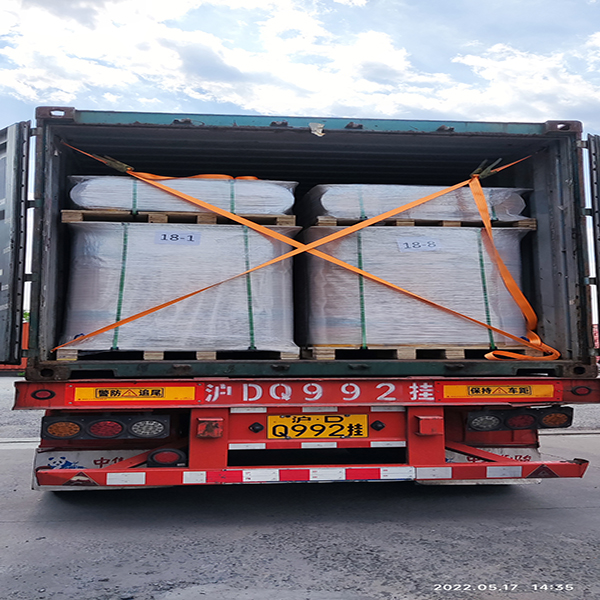
Export Loading Protection

Palletized Sheet Packaging
Why B2B Card Manufacturers Choose Wallis
Card-focused material support: PVC core sheets can be discussed together with printable sheets, overlays, magnetic stripe materials, and RFID inlay structures.
Grade matching: selection can consider ordinary cards, bank-card structures, SIM card production, and contactless prelam requirements.
Custom conversion: thickness, size, color, surface characteristics, cutting, labeling, and packaging can be reviewed for the project.
Sample-first process: buyers can test printing, lamination, punching, and finished-card performance before approving bulk supply.
Export order support: specification confirmation, packing coordination, lot identification, and international shipment preparation are available for wholesale orders.
Information Required for a Fast PVC Core Sheet Quotation
| Information | Example | Why It Matters |
| Card Type | ID card, bank card, SIM card, RFID card, hotel key card | Determines the suitable material grade and validation plan. |
| Core Sheet Thickness | 0.10–0.50mm or project requirement | Controls card stack, rigidity, and material consumption. |
| Sheet Size and Quantity | A4, A3, production layout, custom sheet, kilograms or sheets | Needed for cutting plan, packaging, pricing, and logistics. |
| Color and Opacity | White, black, colored, or custom reference | Affects formulation, printing background, and order matching. |
| Printing Process | Offset, silk screen, UV, or non-printed core | Determines surface preparation and sample test requirements. |
| Card Layer Structure | Overlay + printed core + RFID inlay + printed core + overlay | Required to evaluate thickness balance and lamination compatibility. |
| Lamination Conditions | Temperature, pressure, dwell time, cooling method | Supports appropriate Vicat grade selection and troubleshooting. |
| Required Documents | TDS, COA, test report, packaging label, compliance request | Allows document availability to be confirmed before ordering. |
Frequently Asked Questions
What is the available thickness range for Wallis PVC core sheets?
The physical specification on this page lists 0.10–0.50mm. The suitable thickness depends on the complete card construction and finished-card target. Other requirements should be submitted for technical and production confirmation.
What is the difference between a PVC core sheet and a PVC overlay?
The core sheet forms the structural body of the card and may carry printing or electronic components. An overlay is usually a thinner outer layer that protects printing and may include coatings, magnetic stripes, holograms, or other surface functions.
Can PVC core sheets be used for RFID prelam inlay production?
Yes. A suitable PVC grade can be used as the base or structural layer of contactless prelam inlays. The material must be validated with the actual antenna, chip, lamination cycle, inlay thickness, punching layout, and RF performance requirements.
Which PVC core sheet grade should be used for SIM cards?
The supplied specification lists a 90 ± 2°C Vicat grade for SIM card applications. Final suitability must be confirmed against the SIM card body structure, punching process, module cavity, assembly conditions, and customer test requirements.
Can PVC core sheets be printed by offset or silk-screen printing?
PVC card sheets can be prepared for offset or silk-screen printing, but the exact grade must match the intended process. Buyers should test ink wetting, adhesion, curing, color, lamination, and finished-card performance before bulk production.
Why are surface dyne and roughness important?
Surface dyne affects ink wetting and adhesion, while roughness influences printing contact, sheet feeding, and lamination. Both should be considered together with ink chemistry, press conditions, storage, and the selected overlay.
Can Wallis customize sheet size, color, and surface properties?
Custom requirements can be reviewed for thickness, dimensions, color, surface dyne, roughness, cutting, labeling, and packaging. Feasibility, MOQ, lead time, and tolerances depend on the requested specification.
How should a new PVC core sheet be approved?
Test the sheet through the complete workflow: printing, curing, lamination, cooling, punching, personalization, chip or antenna processing, and finished-card testing. A golden sample and written specification should be approved before the first bulk order.
Can PVC core sheet be used with magnetic stripe overlays?
Yes, provided the PVC core, magnetic stripe overlay, printing, lamination, and finished-card thickness are compatible. Stripe position, coercivity, bond strength, encoding, and personalization should be verified on finished cards.
What packaging is recommended for international shipments?
Packaging commonly uses protective bags or film, cartons or rigid boards, pallets, edge protection, strapping, labels, and moisture protection according to sheet format and shipment method. The final packing plan should be confirmed in the quotation.
Are samples available before a wholesale order?
Sample availability can be discussed after the card application, thickness, size, color, surface requirement, and testing plan are provided. Sample approval is recommended before customized or high-volume production.
What information should be included in an inquiry?
Include card type, target finished thickness, layer structure, core thickness, sheet size, color, printing method, lamination settings, annual quantity, packaging, and required documentation. These details allow faster grade selection and quotation.
Request PVC Core Sheet Samples and Factory Quotation
Contact Wallis Plastic for PVC core sheets used in card making, printed card bodies, RFID prelam inlays, bank cards, SIM cards, and smart card production. Send your technical requirements to receive a grade recommendation, sample plan, and B2B quotation.