Custom Large-Format SEG Fabric LED Light Box
Wallis large-format SEG fabric LED light box is a customized illuminated display system for retail feature walls, exhibitions, trade shows, shopping malls, showrooms, airports, hotels, museums, corporate lobbies and large brand-promotion spaces.
A silicone strip is sewn around the perimeter of the printed backlit fabric and inserted into the channel of the aluminum extrusion. This creates a tensioned, nearly frameless graphic surface with clean edges and allows the fabric image to be removed and replaced when campaigns change.
The AF5 series supports customized frame dimensions, silver or black finishes, modular aluminum sections, replaceable SEG graphics and project-specific LED backlighting. Wall-mounted and free-standing configurations can be evaluated according to frame size, display location, transport limits and structural requirements.
For super-size projects, Wallis can recommend an edge-lit, direct-lit ladder, LED module or another lighting architecture according to the profile depth, graphic dimensions, required brightness, desired uniformity and service-access requirements.

Large-Format SEG Fabric Light Box

Aluminum Frame Side View
AF5 SEG Fabric LED Light Box Specifications
| Product Type | Custom Large-Format SEG Fabric LED Light Box |
| Model | AF5 |
| Frame Material | Aluminum extrusion |
| Frame Material | Aluminum is the primary frame material for the AF5 SEG light box. If an acrylic optical panel or other component is required, confirm it separately in the project specification. |
| Graphic System | Silicone Edge Graphic / SEG Backlit Fabric |
| Size | Customized according to project drawing and structural feasibility |
| Profile Depth | Project-specific; confirm according to frame size, LED system and installation type |
| Frame Color | Silver / Black / Customized Finish |
| Display Sides | Single-Sided or Custom Double-Sided, subject to selected profile |
| Installation Options | Wall Mounted / Free Standing / Custom Hanging System |
| Lighting Architecture | Edge-Lit, Direct-Lit Ladder, LED Module or Custom System Based on Project Requirements |
| Standard Listed Light Color | Pure White, approximately 6500K |
| Custom Lighting | Custom CCT, Brightness, LED Layout and Dimming Can Be Evaluated |
| Assembly | Modular / Knock-Down Aluminum Frame for Shipping and On-Site Assembly |
| Graphic Replacement | Front-Access, Tool-Free Fabric Change |
| Minimum Order Quantity | 1 piece |
| Sample Lead Time | Approximately 3–5 working days after payment for standard samples; confirm for the final size and configuration |
| Recommended Environment | Indoor unless a verified outdoor and waterproof system is specified |
| OEM / ODM | Frame Size, Profile, Color, LED System, Graphic, Installation Hardware, Packaging and Branding |
Important: Profile depth, total wattage, input voltage, luminance, lighting uniformity, IP rating and structural load limit vary by configuration. Confirm these values for each custom AF5 project before production.
What Is an SEG Fabric LED Light Box?
SEG means Silicone Edge Graphic. A narrow silicone strip is sewn around the edge of a printed textile graphic. The strip is pressed into a perimeter channel in the aluminum frame, stretching the fabric flat across the display face.
Frameless Visual Appearance
Because the silicone strip is hidden inside the extrusion channel, the viewer primarily sees the printed fabric rather than a wide visible border. This creates a clean, edge-to-edge display surface.
Replaceable Fabric Graphics
The graphic can be removed by pulling one corner from the channel. A new fabric print can then be inserted without replacing the complete aluminum frame or LED system.
Integrated LED Backlighting
LEDs illuminate the printed textile from behind, increasing color saturation and visibility. The final lighting design may be edge-lit or direct-lit depending on frame depth and graphic dimensions.
Key Advantages of Large-Format SEG Light Boxes
Seamless Brand Presentation
The tensioned fabric creates a continuous illuminated graphic surface suitable for feature walls, campaign backdrops and high-impact brand environments.
Fast Campaign Changes
Retailers and exhibition users can retain the aluminum and LED structure while replacing only the printed fabric for seasonal campaigns, new products or updated branding.
Modular Large-Format Construction
Long frames can be manufactured as numbered aluminum sections connected on site. Internal crossbars, corner connectors and stabilizers can reinforce the assembly and help keep it square.
Lower Shipping Volume Than a Fully Assembled Box
Knock-down profiles, folded fabric and separately packed hardware can reduce transport volume compared with shipping a very large fully assembled rigid display.
Multiple Installation Formats
Depending on the selected profile and support system, SEG displays can be configured as wall-mounted graphics, free-standing exhibition walls or custom suspended displays.
Choosing the Correct Aluminum Profile Depth
Profile depth affects appearance, lighting uniformity, structural stiffness, electrical space and installation method. A profile should not be selected only because it is described as “thin.”
| Profile Category | Typical Design Consideration |
| Slim Profile | Suitable for smaller or engineered wall-mounted systems; may require edge lighting, LED panels or closely controlled optics. |
| Medium-Depth Profile | Provides more mixing distance for direct-lit LED strips or modules and more internal space for wiring and drivers. |
| Deep Large-Format Profile | Better suited to very large direct-lit graphics, modular support bars, internal power supplies and double-sided systems. |
| Double-Sided Profile | Requires enough internal depth to illuminate two fabric faces while controlling center shadows and driver visibility. |
AF5 profile depth and cross-section should be confirmed for each project. These values are important for evaluating wall projection, lighting architecture, internal support and shipping section lengths.
Edge-Lit vs Direct-Lit SEG Light Boxes
| Comparison | Edge-Lit System | Direct-Lit System |
| LED Position | LEDs are installed around selected frame edges or coupled to a light guide structure. | LED strips, modules or ladder bars face the fabric from behind. |
| Profile Depth | Can support a slimmer design when the optical system is correctly engineered. | Requires sufficient distance for individual LED beams to overlap. |
| Large-Format Use | Must account for long light-travel distances and possible edge-to-center brightness loss. | Easily expanded by increasing the number of LED rows or modules. |
| Service Access | Edge LED strips may be accessed from the frame perimeter. | Rear or front access may be needed to replace internal modules and wiring. |
| Best Selection Method | Confirm with an optical prototype using the final dimensions and graphic. | Confirm box depth, module spacing, graphic transmission and target uniformity. |
Single-Sided vs Double-Sided SEG Light Boxes
| Comparison | Single-Sided | Double-Sided |
| Graphic Faces | One illuminated SEG graphic | Front and rear illuminated graphics |
| Typical Installation | Wall mounted, recessed or selected free-standing applications | Free standing, hanging, exhibition aisle or open-space display |
| Frame Depth | Usually slimmer | Usually deeper to illuminate both faces |
| Rear Surface | May use a reflective or block-out backing | Uses a second SEG graphic or specified rear panel |
| Structural Requirement | Wall anchors or support feet selected according to size | Requires stable feet, suspension hardware or engineered base system |
Structural Design for Super-Size SEG Frames
Modular Profile Sections
Oversized frames are normally divided into transportable aluminum lengths. Straight connectors join adjacent profiles on site, allowing the completed display to exceed common shipping lengths.
Internal Support Bars
Crossbars can reduce bowing, stabilize long horizontal profiles and provide mounting positions for direct-lit LEDs, drivers or rear panels.
Reinforced Corners
Large frames require stable corner hardware to maintain a square structure and consistent SEG tension. Corner type and quantity should be matched to frame dimensions and installation orientation.
Wall and Floor Loading
Wall anchors, feet, suspension points and support structures must be selected according to the complete assembled weight, public-access environment and local installation requirements.
Graphic Tension
Incorrect silicone size or fabric dimensions can create wrinkles, loose corners or excessive tension. The graphic supplier should use the final approved frame drawing and SEG sewing specification.
LED Brightness and Uniformity Requirements
The phrases “high brightness” and “uniform lighting” are not sufficient for an engineering quotation. Large-format buyers should define measurable acceptance criteria before prototype production.
| Parameter | Recommended Project Requirement |
| Average Luminance | Required visible-surface brightness in cd/m² after LED warm-up. |
| Minimum Luminance | Minimum acceptable value at corners, joints and areas between LED rows. |
| Uniformity | Required percentage and calculation method, such as minimum/average or minimum/maximum. |
| Color Temperature | Target Kelvin value and acceptable variation between modules and production batches. |
| CRI | Required color-rendering level for retail products, food, cosmetics, artwork or brand colors. |
| Total Power | Maximum watts per complete light box or watts per square meter. |
| Visible Hotspots | Evaluate from the normal viewing distance using the final printed fabric. |
| Joint Visibility | Confirm that profile joints, internal bars and drivers do not create visible shadows. |
Prototype Testing Is Recommended
Testing should use the actual profile depth, LED layout, driver, reflective surfaces, SEG fabric and print density. A small unprinted diffuser test may not accurately represent the final branded graphic.
SEG Fabric Graphic Requirements
Use Backlit Textile Designed for LED Displays
Backlit SEG fabric should provide controlled diffusion and sufficient ink density. Ordinary non-backlit fabric may appear washed out, reveal hotspots or transmit light unevenly.
Confirm Finished Graphic Size
Do not prepare artwork using only the outside frame dimensions. The graphic supplier needs the exact SEG insertion dimensions, stretch allowance and silicone sewing position.
Confirm Silicone Strip Size
Silicone thickness and width must match the aluminum channel. A strip that is too small can pull out, while an oversized strip may be difficult to insert.
Add a Removal Tab
A small fabric pull tab at one corner makes graphic removal easier and reduces the risk of damaging the printed textile or silicone edge.
Prepare Artwork for Backlighting
Backlit prints often require different ink density and color adjustment from front-lit graphics. A printed color proof should be evaluated with the light box switched on.
Packing Details and Accessories
A large modular SEG light box may include numbered aluminum profiles, straight connectors, corner hardware, internal support bars, wall brackets or feet, LEDs, drivers, wiring, fasteners, fabric graphics and protective packaging.

| Component | Function |
| Aluminum Extrusions | Form the perimeter frame and SEG insertion channel. |
| Corner Connectors | Join adjacent profiles and maintain frame geometry. |
| Straight Joiners | Connect modular profile sections for long frames. |
| Support Bars | Reinforce large frames and provide positions for LEDs or internal components. |
| LED System | Provides edge-lit or direct-lit illumination according to the approved design. |
| Power Supplies | Convert local mains power to the required LED voltage. |
| Mounting Hardware | Wall brackets, suspension hardware, feet or other project-specific supports. |
| SEG Graphic | Printed backlit fabric with a sewn silicone perimeter strip. |
| Numbered Packing List | Helps installers identify the correct profile and hardware sequence. |
Installation Options
Wall-Mounted SEG Light Box
Wall-mounted frames are suitable for retail walls, lobbies, corridors, showrooms and permanent branded interiors. The wall structure and anchor system must support the complete assembled weight.
Free-Standing SEG Display
Free-standing units can be used as exhibition backdrops, sponsor walls, retail dividers and product-launch displays. Foot size and frame reinforcement should be selected according to the height, width and public-access environment.
Hanging SEG Light Box
Suspended displays require a profile and hardware system designed for hanging loads. Attachment points, cable quantity, ceiling capacity and local installation requirements must be reviewed before production.
Recessed or Integrated Installation
The light box can be incorporated into retail furniture, exhibition walls or architectural recesses when service access, ventilation and graphic-removal clearance are provided.
Recommended Assembly Sequence
1. Check the Packing List
Confirm all numbered profiles, connectors, LEDs, drivers, hardware and graphics before beginning installation.
2. Assemble the Perimeter Frame
Join the aluminum sections on a clean, flat surface. Check diagonal measurements to confirm the frame is square before tightening all connectors.
3. Install Internal Support Bars
Fit the specified crossbars and stabilizers according to the drawing. Do not omit structural parts because they may also control LED positions and prevent visible shadows.
4. Install and Test the LED System
Connect LEDs and drivers according to the wiring diagram. Test polarity, voltage, dimming, brightness and all lighting zones before installing the fabric.
5. Secure the Frame
Attach the completed structure to the wall, feet or suspension system using appropriate fasteners and verified support points.
6. Insert the SEG Fabric
Begin with the corners and then insert the silicone strip progressively along each side. Check the graphic orientation and tension before completing the final edge.
Electrical Design and Service Access
Divide Large Frames into Lighting Zones
Very large frames may require multiple LED circuits and power supplies. Dividing the display into zones can reduce voltage drop and simplify maintenance.
Keep Drivers Accessible
Power supplies should be installed in ventilated, serviceable positions. Do not permanently seal them behind a finished wall without an access panel.
Confirm the Destination Voltage
Provide the destination-country mains voltage, frequency, plug or hardwire requirement and required electrical certifications before selecting the drivers.
Plan Cable Entry Positions
Cable exits should be coordinated with wall outlets, exhibition-floor power or ceiling suspension points before the profiles are machined.
Applications of Super-Size SEG Fabric Light Boxes
Trade Shows and Exhibition Booths
Modular illuminated walls provide high-impact backdrops for product launches, sponsor displays, exhibition graphics and branded meeting areas.
Retail Feature Walls
Large SEG light boxes can display seasonal campaigns, fashion imagery, product photography and store branding while allowing graphics to be changed without replacing the frame.
Shopping Malls and Public Spaces
Applications include promotional walls, wayfinding graphics, event advertising, atrium displays and large illuminated tenant-brand panels.
Airports, Hotels and Corporate Lobbies
SEG systems can be used for destination advertising, conference information, hospitality promotions and permanent branded architectural graphics.
Museums and Galleries
Evenly illuminated textile graphics can support exhibition interpretation, photographic displays and temporary visual installations.
Showrooms and Product Launches
Large illuminated backgrounds create a controlled branded environment for automobiles, furniture, consumer electronics, building materials and other showroom products.
Indoor and Outdoor Use
The standard AF5 configuration is primarily intended for indoor retail, exhibition and commercial applications. Outdoor use requires a separate weather-resistant design with an appropriate IP rating, wind-load assessment and outdoor fabric specification.
Outdoor installations require a separate weather-resistant design with waterproof LEDs and drivers, sealed electrical connections, drainage, UV-resistant fabric, corrosion-resistant hardware and structural engineering for wind exposure.
Cleaning and Maintenance
Fabric Graphic Care
Remove dust using a soft brush or suitable low-suction vacuum method. Cleaning instructions should follow the fabric printer's ink and textile recommendations.
Inspect Silicone Edges
Check corners and long edges for loose silicone, damaged stitching or fabric shrinkage when replacing graphics.
Check Lighting Zones
Inspect for dim sections, color differences, flicker and failed LED zones. Electrical maintenance should be performed with the power disconnected.
Retighten Structural Hardware
Periodically inspect feet, wall brackets, suspension points, straight connectors and internal stabilizers, especially on frequently moved exhibition displays.
OEM and Custom Manufacturing Services
Custom frame width and height
Custom aluminum profile depth
Single-sided or double-sided configuration
Wall-mounted, free-standing or hanging system
Silver, black or custom frame finish
Edge-lit or direct-lit LED configuration
Custom LED color temperature and brightness
Dimming-compatible lighting
Modular aluminum sections and numbered assembly
Internal support bars and reinforcing hardware
SEG fabric printing and silicone sewing
Custom power cable and driver position
Logo, label and private packaging
Prototype brightness and uniformity testing
Export packing and container-loading support
Quality Control for Large SEG Light Boxes
Aluminum profile length and cross-section inspection
Anodized or coated finish inspection
Corner and straight-connector fit inspection
Completed frame diagonal and squareness check
Support-bar and hardware inspection
LED voltage, current and power test
Color-temperature and CRI inspection where specified
Average and minimum luminance measurement
Lighting-uniformity test
Hotspot, shadow and joint-visibility inspection
Driver, wiring and connector test
Fabric print, silicone edge and stitching inspection
Trial assembly before shipment where required
Packaging and component-count inspection
Workshop and Export Packaging
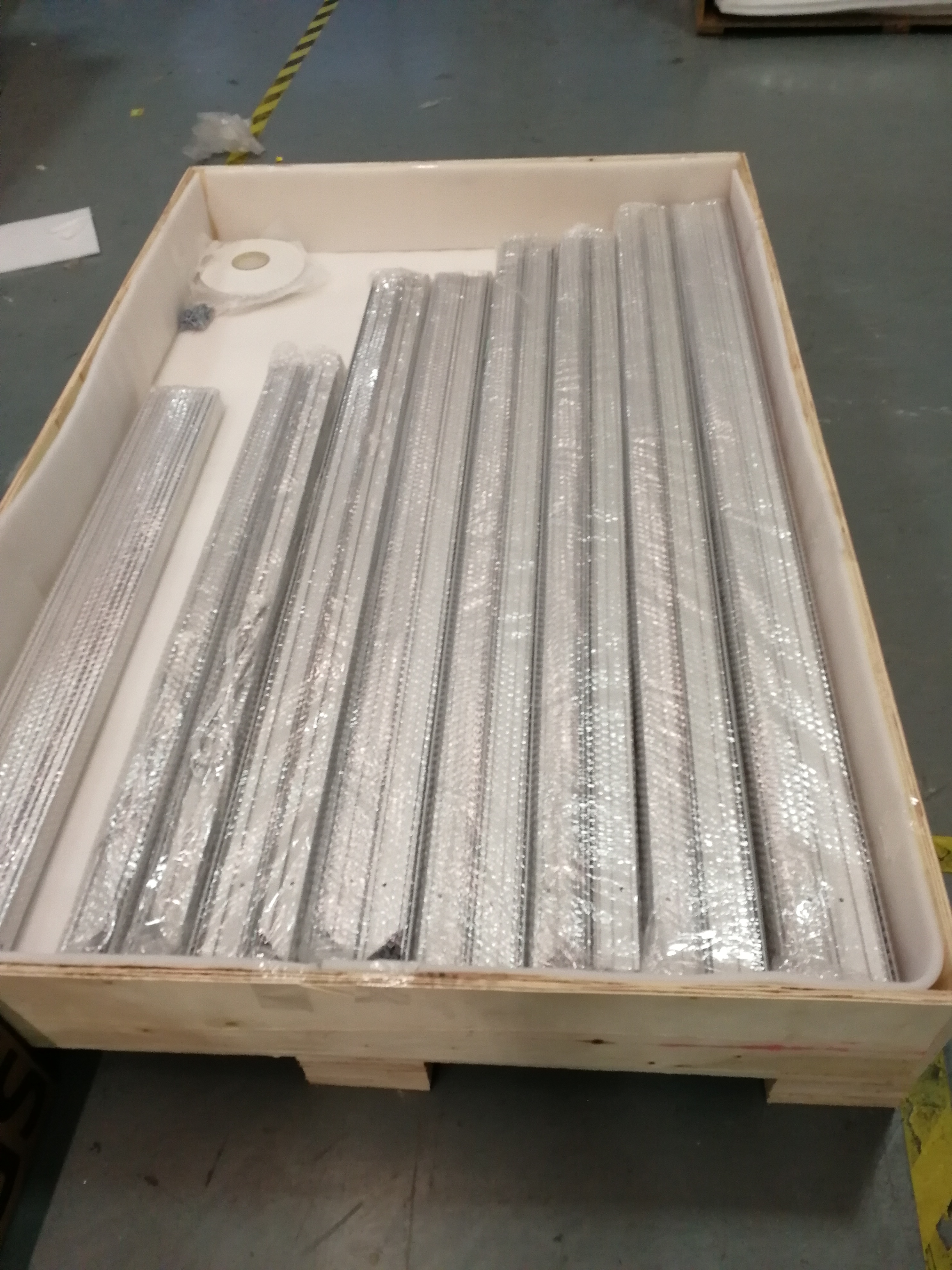
Large SEG frames are commonly shipped as knock-down kits. Aluminum profiles should be protected from bending and surface scratches, while LEDs, connectors, drivers and hardware should be individually labeled and secured.

Export Pallet Package

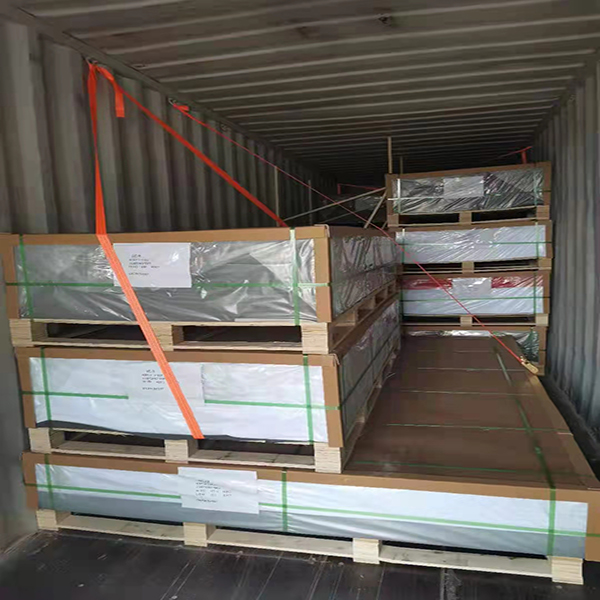
Container Loading
Information Needed for an Accurate Quote
Finished frame width and height
Maximum acceptable profile depth
Single-sided or double-sided display
Wall-mounted, free-standing, hanging or integrated installation
Required quantity
Indoor or outdoor location
Required frame color and surface finish
Required average luminance or lux
Required lighting uniformity
Required color temperature and CRI
Dimming requirement
Destination voltage and frequency
Power-cable outlet position
Frame only, frame with LEDs or complete system with graphics
SEG fabric print and silicone-edge requirement
Maximum shipping-section length
Required installation hardware
Electrical certification requirements
Packaging and shipping method
CAD, PDF or installation drawing
Frequently Asked Questions About Large SEG Light Boxes
What does SEG mean?
SEG means Silicone Edge Graphic. A silicone strip sewn around a printed fabric graphic is inserted into an aluminum-frame channel to create a tensioned, frameless display surface.
What is the Wallis model number?
The super-size SEG fabric LED light frame is identified as model AF5.
Is the frame made from aluminum or acrylic?
The AF5 uses an aluminum frame. If an acrylic optical panel or another acrylic component is required for a specific lighting construction, confirm it separately in the project specification.
What is the maximum size?
Maximum dimensions depend on profile depth, modular joints, internal supports, installation method, transport length and structural requirements. Confirm the feasible maximum size for the selected project configuration.
Can very long frames be supplied in sections?
Yes. Large frames can be divided into transportable profile sections and assembled with straight connectors and internal support bars. The final section length should match the shipping method and installation access.
Is the light box edge-lit or direct-lit?
The AF5 can use different lighting architectures. Edge-lit or direct-lit LEDs should be selected according to the profile depth, graphic size, brightness target and required uniformity.
What profile depth is available?
AF5 profile depth varies by configuration. Request a cross-section drawing showing the complete extrusion dimensions, SEG channel, LED position and support-bar channels for the selected design.
Can the graphic be changed without tools?
Yes. The silicone edge is pressed into the frame channel and can normally be removed by hand, allowing the printed fabric to be changed while keeping the frame and LED system.
Can the light box be wall mounted?
Yes. Wall-mounted installation is suitable when the wall structure, brackets and anchors are selected for the complete frame size and weight.
Can it be free standing?
Yes. A free-standing version can be evaluated with suitable feet, vertical supports and frame reinforcement. Large public displays may require additional stability assessment.
Can it be suspended from a ceiling?
A hanging version can be developed when the selected profile, suspension hardware, attachment points and ceiling structure are suitable for the load.
Can Wallis manufacture a double-sided SEG light box?
Double-sided configurations can be discussed. They normally require a deeper profile and a lighting system designed to illuminate both fabric faces without visible center shadows.
What color temperature is standard?
Pure white around 6500K is commonly supplied. Other color temperatures can be evaluated and should be confirmed before prototype production.
What is the brightness of the finished light box?
Final brightness depends on LEDs, profile depth, graphic transmission, reflector, print density and total power. Define the required cd/m² or lux target for the selected project when measurable brightness is important.
What lighting uniformity can Wallis guarantee?
Lighting uniformity depends on the frame depth, LED layout and fabric transmission. Buyers should define the required uniformity formula and approve a prototype made with the actual fabric and LED arrangement.
Are the printed graphics included?
Confirm whether the quotation includes the frame only, frame and LEDs, or a complete system with printed SEG fabric. The scope should be listed clearly in the proforma invoice and packing list.
Can replacement graphics be ordered separately?
Yes. Replacement graphics can be produced when the exact finished dimensions, silicone strip specification, stretch allowance and print file are available.
Can the frame color be customized?
Yes. Silver is the standard frame finish, black is available as a customization option, and other anodized or coated finishes can be evaluated according to quantity and color requirements.
Is the standard light box waterproof?
The standard AF5 system should be treated as an indoor display unless an outdoor enclosure, waterproof electrical components and supporting test documentation are specifically confirmed.
What is the MOQ?
The MOQ can start from 1 piece, supporting sample or project-based orders. Confirm the applicable MOQ for the final profile, size and customization level.
Are samples free?
Customized samples may be charged at approximately 30% above the standard unit price because of additional labor. Any deduction from a later bulk order should be confirmed in the quotation.
What is the sample lead time?
Sample production typically takes approximately 3–5 working days after payment. Very large or fully customized prototypes may require additional time.
What is the expected service life?
More than five years of optical performance may be achievable under normal indoor conditions, depending on LED quality, operating hours, driver quality, temperature and maintenance. For projects requiring a defined lifetime metric, confirm the applicable LED L70 data.
Can the light box be dimmed?
Dimming can be evaluated with compatible LEDs, power supplies and controllers. Specify the required control protocol before the electrical system is selected.
What certifications are available?
Electrical certification requirements depend on the destination market and selected components. Provide the required CE, UL, RoHS or other documentation so Wallis can confirm the applicable LED and driver configuration.
What information should I provide for a quotation?
Provide the finished dimensions, profile-depth limit, installation type, display sides, frame color, brightness target, color temperature, voltage, graphic requirement, shipping-section limit and installation drawing.
Request Custom SEG Light Box Samples and Pricing
Looking for a large-format SEG fabric LED light box manufacturer for retail walls, exhibitions, shopping malls, airports, showrooms or branded interiors? Wallis provides custom aluminum frames, modular structures, LED backlighting, SEG graphics, installation hardware and export packaging.
Send your frame dimensions, installation method, required brightness, graphic specifications and shipping requirements to receive a suitable profile recommendation, LED layout and factory quotation.